
How to Select the Right Steel Coil Packing Line Model Based on Coil Dimensions?
Are you tired of coil packaging bottlenecks slowing down your production and increasing costs? Imagine a seamless process where steel coils, regardless of their size, are perfectly packaged, ready for shipment without damage or delay. The key to unlocking this efficiency lies in choosing the right steel coil packing line, specifically tailored to handle your coil dimensions. Selecting the correct model isn’t just about fitting coils into a machine; it’s about optimizing your entire operation.
To select the right steel coil packing line model based on coil dimensions, prioritize understanding your coil size range (width, diameter, thickness) and weight capacity. Ensure the chosen model accommodates your largest coils comfortably and efficiently. Consider automation levels, space constraints, and long-term production goals to align the packing line’s specifications with your operational needs and maximize throughput while minimizing material waste and downtime.
Choosing the wrong packing line can lead to significant inefficiencies, product damage, and increased operational costs. Let’s delve into the essential factors and considerations to guide you in making the best decision for your business, ensuring your coil packing process is as efficient and cost-effective as possible.
1. Decoding Steel Coil Dimensions and Weight Capacity for Optimal Model Selection
Is your current coil packing process struggling with diverse coil sizes and weights, leading to production bottlenecks and potential damage? Mismatched machinery and inadequate weight capacity are common culprits, resulting in downtime, inefficiencies, and compromised product integrity. Understanding your coil dimensions and weight requirements is the cornerstone of selecting the right packing line.
When selecting a steel coil packing line, the primary focus should be on coil dimensions and weight capacity. The machine must be perfectly matched to handle your specific range of coil sizes—considering width, outer diameter, and inner diameter—and the maximum weight you process. Accurately assessing both current and potential future coil specifications is crucial to prevent operational bottlenecks, ensure long-term equipment utility, and avoid costly mismatches.
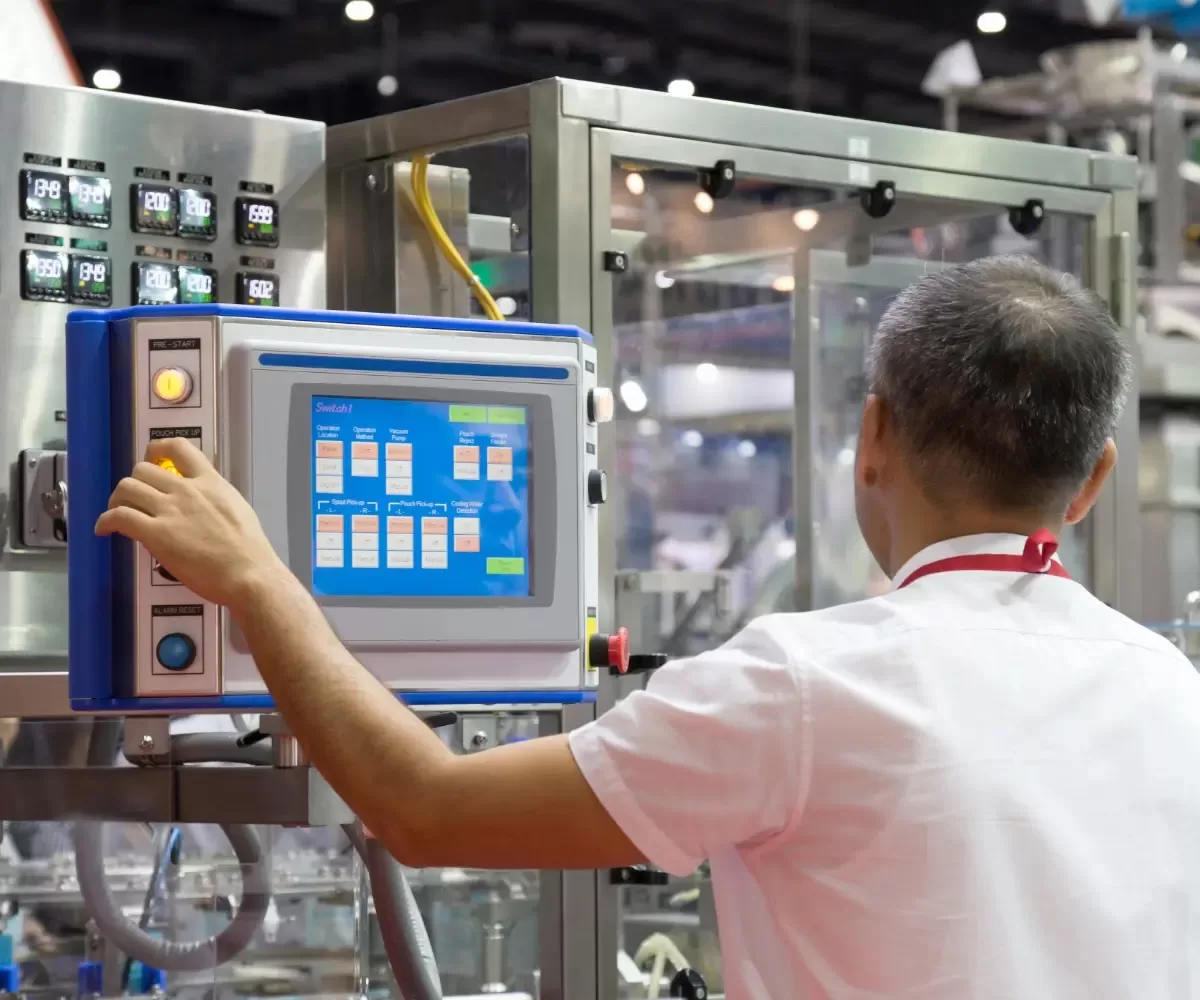
Dive Deeper: Assessing Coil Dimensions and Weight for Peak Performance
Selecting a coil packing line goes beyond simply finding a machine that “fits” your coils; it’s about optimizing your entire production workflow. A detailed analysis of coil dimensions and weight capacity reveals crucial factors influencing efficiency, safety, and long-term return on investment. Let’s break down the key aspects:
The Impact of Incorrect Coil Dimensions on Packing Efficiency
Operating a coil packing line with mismatched coil dimension parameters is akin to forcing a square peg into a round hole—inefficient and damaging. Here’s how dimensional mismatches can cripple your operations:
-
Operational Inefficiencies: If the coil width exceeds the machine’s capacity, feeding and wrapping become cumbersome, drastically slowing down production. Conversely, a machine designed for significantly larger coils than you typically use can lead to wasted energy, unnecessary space consumption, and less precise packaging.
-
Equipment Strain and Premature Failure: Overloading a machine beyond its weight capacity is a recipe for mechanical disaster. It induces undue stress on critical components, leading to accelerated wear, frequent breakdowns, and expensive repairs. In extreme cases, it can cause catastrophic equipment failure and serious safety hazards.
-
Compromised Packaging Quality and Product Damage: Incorrect coil dimensions can result in inadequate wrapping and packaging. Coils might be loosely packed, offering insufficient protection during transit and storage. This increases the risk of product damage, corrosion, and ultimately, customer dissatisfaction and costly returns.
-
Increased Downtime and Reduced Throughput: Dealing with improperly sized coils often necessitates frequent adjustments, manual interventions, and machine jams. These disruptions lead to significant downtime, decreased throughput, and missed production targets.
Calculating Accurate Weight Capacity Needs
To precisely determine the required weight capacity, you must consider not only the average coil weight but also the maximum and potential future weights. Here’s a structured approach:
-
Analyze Your Complete Product Range: Compile a comprehensive list of all steel coil types you currently process. For each type, meticulously document their dimensions (inner and outer diameter, width) and weights.
-
Identify the Maximum Coil Weight: Determine the heaviest coil you regularly handle. Critically, factor in any anticipated increases in coil weight due to planned product changes, expansion into heavier gauge materials, or evolving market demands.
-
Consider Future Scalability and Growth: If you foresee business growth or expansion into processing heavier coils, it is prudent to select a packing line with a weight capacity that exceeds your current maximum. This future-proofs your investment, preventing premature equipment obsolescence and the need for costly upgrades down the line.
-
Factor in Material Density Variations: Recognize that different steel grades possess varying densities. Ensure your weight calculations accurately account for the specific density of the steel you process to avoid underestimating the required capacity. High-density steel coils will require a packing line with a higher weight capacity compared to lower-density steel coils of the same dimensions.
-
Consult with Experts and Manufacturers: Engage directly with coil packing line manufacturers and experienced suppliers. Provide them with your detailed coil specifications and comprehensive production requirements. Their specialized expertise is invaluable in determining the optimal weight capacity and machine configuration tailored to your unique operational context.
Essential Considerations for Coil Dimension Compatibility – Decision Criteria
To guarantee dimensional compatibility, meticulously consider these critical criteria when evaluating a coil packing line:
| Factor | Impact on Business | Decision Criteria |
|---|---|---|
| Coil Outer Diameter | Must match machine handling range for smooth operation | Ensure machine accommodates your largest coil outer diameter |
| Coil Inner Diameter | Compatibility with mandrel or coil handling system | Verify compatibility with your existing or planned coil handling mechanisms |
| Coil Width Range | Ensures proper wrapping, stability, and package integrity | Confirm machine width capacity aligns with your full range of coil widths |
| Maximum Coil Weight | Prevents equipment overload, ensures operational safety | Select machine with capacity exceeding your heaviest coil weight |
By rigorously assessing your coil dimensions and weight requirements and applying these decision criteria, you can select a coil packing line that not only efficiently handles your current production demands but also provides the robustness and scalability necessary for future growth. This crucial first step lays the foundation for optimized operations and a strong return on your investment.
2. Technology Integration: Automating for Enhanced Efficiency and Precision in Coil Packing
Are manual coil packing processes bogging down your production, escalating labor costs, and increasing safety risks? In today’s fiercely competitive manufacturing landscape, relying on outdated, labor-intensive methods is no longer a viable strategy. Integrating advanced technology into your steel coil packing line is not just an upgrade—it’s an essential transformation for achieving peak efficiency, enhanced precision, improved safety, and sustained profitability.
Technology integration significantly enhances coil packing line efficiency by automating cumbersome and error-prone manual processes, minimizing human intervention, and optimizing overall workflow management. Technological advancements bring about faster, more consistent, and safer packaging operations, reducing labor costs, improving product quality, and minimizing workplace accidents. Automated systems ensure consistent and precise packaging, leading to higher throughput and greater operational reliability compared to traditional manual methods.
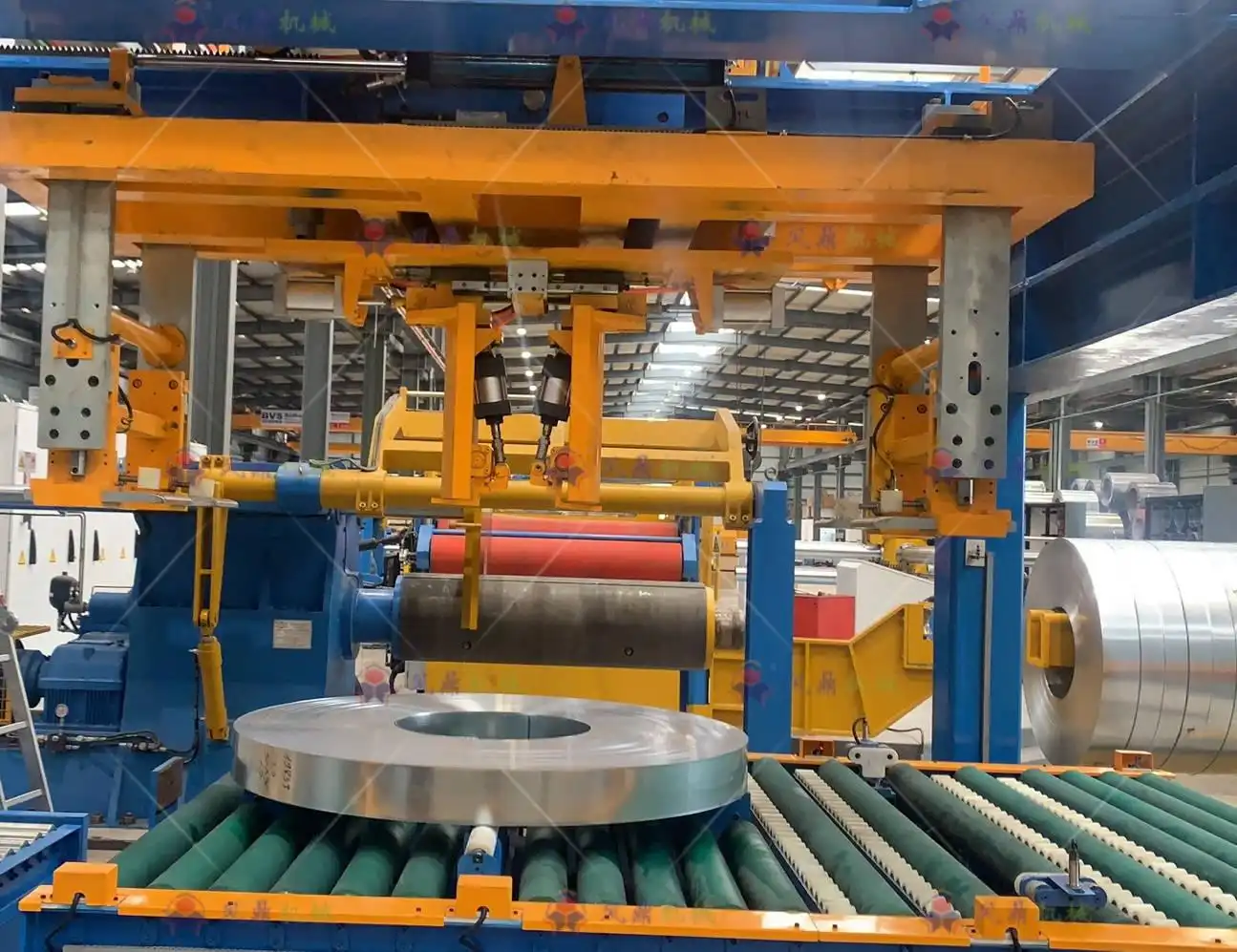
Adapting Dimensions for Slit Coil Efficiency
Slit coil packing lines, while sharing functional similarities with steel coil lines, are dimensionally optimized to maximize efficiency in handling narrower and lighter coils. This dimensional adaptation is key to faster throughput and reduced space requirements. Let’s explore the dimensional adaptations:
Benefits of Automation: A Structured Comparison
Automation in coil packing transcends mere speed; it fundamentally reshapes the entire process, offering multifaceted advantages that directly impact your bottom line:
| Aspect | Manual Process | Automated Process | Business Impact |
|---|---|---|---|
| Safety | High risk of accidents, injuries due to manual handling | Reduced risk with precise machine control, fewer human interactions | Lower workplace accidents, reduced liability, improved safety culture |
| Efficiency | Labor-intensive, slow, time-consuming operations | Streamlined, faster, less labor required | Increased throughput, faster turnaround times, higher productivity |
| Consistency | Varied packaging quality, prone to human error | Uniform, predictable, repeatable results | Higher quality output, reduced product damage, consistent packaging |
| Cost | High labor costs, potential for errors and rework | Higher upfront investment, lower long-term operating costs | Long-term cost savings, improved ROI, reduced waste |
Key Technologies Driving Coil Packing Line Improvement
Several core technologies are at the forefront of modern coil packing lines, each contributing uniquely to process optimization and efficiency gains:
-
Automated Coil Feeding Systems: These advanced systems utilize conveyors, manipulators, or sophisticated robotic arms to automatically and precisely feed coils into the packing line. This eliminates the need for manual lifting and positioning, significantly reducing labor requirements, minimizing the risk of handling damage to the coils, and accelerating the entire packaging process.
-
Coil Wrapping Machines with Precision Control: Automated wrapping machines apply wrapping materials—such as stretch film, paper, or specialized protective films—uniformly and consistently around the coils. Programmable tension control ensures optimal wrapping tightness, maximizing protection while minimizing material usage and waste. These machines can be precisely adjusted for different coil dimensions and packaging requirements, ensuring consistent and high-quality wrapping every time.
-
Automated Strapping and Banding Units: These units automatically apply steel or plastic straps or bands around the wrapped coils with precisely controlled tension and secure sealing mechanisms. Automation ensures consistent strap placement and tightness, which is crucial for load stability during subsequent transport and storage. This reduces the risk of load shifting and damage during handling and transit.
-
Palletizing and Stacking Systems for Streamlined Output: Robotic palletizers or automated stacking systems efficiently and precisely place packed coils onto pallets or stack them for storage or shipment preparation. This significantly minimizes manual handling of heavy packaged coils, optimizes warehouse space utilization by enabling higher and more organized stacking, and further enhances workplace safety.
-
Integrated Control Systems (PLC & IoT for Smart Operations): Modern, high-performance coil packing lines are equipped with Programmable Logic Controllers (PLCs) and increasingly incorporate IoT (Internet of Things) capabilities. These sophisticated systems provide real-time monitoring of all line operations, collect and analyze critical process data, and enable precise, centralized control over every stage of the packing process. IoT integration further enables remote diagnostics, predictive maintenance scheduling to minimize downtime, and data-driven optimization of packing parameters for enhanced efficiency and throughput.
Optimizing Resource Allocation Through Strategic Automation
Beyond direct process improvements and enhanced efficiency, technology integration and automation empower businesses to achieve better resource allocation and optimize operational costs:
-
Labor Optimization and Workforce Redeployment: Automation significantly reduces the need for manual labor in physically demanding and repetitive coil packing tasks. This allows businesses to redeploy personnel to more value-added roles, such as quality control and assurance, proactive line management, and preventative maintenance. This shift enhances job satisfaction, improves overall workforce productivity, and reduces labor-related costs and risks.
-
Material Efficiency and Waste Reduction: Precise control over wrapping and strapping material application, enabled by automation, minimizes material waste. Automated systems can dynamically optimize material usage based on specific coil dimensions and pre-programmed packaging requirements, substantially reducing material costs and contributing to sustainability efforts.
-
Energy Efficiency and Reduced Operational Costs: Modern automated systems are designed with a focus on energy efficiency, often incorporating energy-efficient motors, drives, and optimized operational sequences. This reduces overall power consumption compared to older, less efficient machinery. Smart controls can further optimize energy usage by dynamically adjusting operation based on real-time production demand, leading to significant energy cost savings and a reduced environmental footprint.
By strategically integrating these technological advancements, businesses can transform their coil packing processes from cost centers into highly efficient, value-generating operations. The investment in technology yields significant and sustainable returns through increased productivity, consistently improved product quality, enhanced workplace safety, substantial long-term cost savings, and a strengthened competitive advantage in the market.
3. Cost Implications: Balancing Investment and Long-Term Value in Coil Packing Lines
Are you uncertain about the true cost implications of upgrading your coil packing line? Navigating the financial aspects of such a significant investment is crucial for making informed decisions. Understanding the balance between upfront costs and long-term savings for different coil packing options is key to making a financially sound choice that aligns with your business objectives and ensures a strong return on investment.
The cost of steel coil packing lines varies significantly based primarily on the level of automation integrated into the system. Manual packing solutions have the lowest initial capital costs but incur higher long-term operating expenses due to significant labor requirements and lower efficiency. Semi-automatic systems offer a middle ground, balancing initial investment with partial automation benefits. Fully automated coil packing lines demand a higher initial investment but yield substantial long-term savings through dramatically reduced labor costs, increased throughput, minimized material waste, and enhanced operational efficiency. Evaluating the initial setup costs against these ongoing savings is essential for a comprehensive cost-benefit analysis.
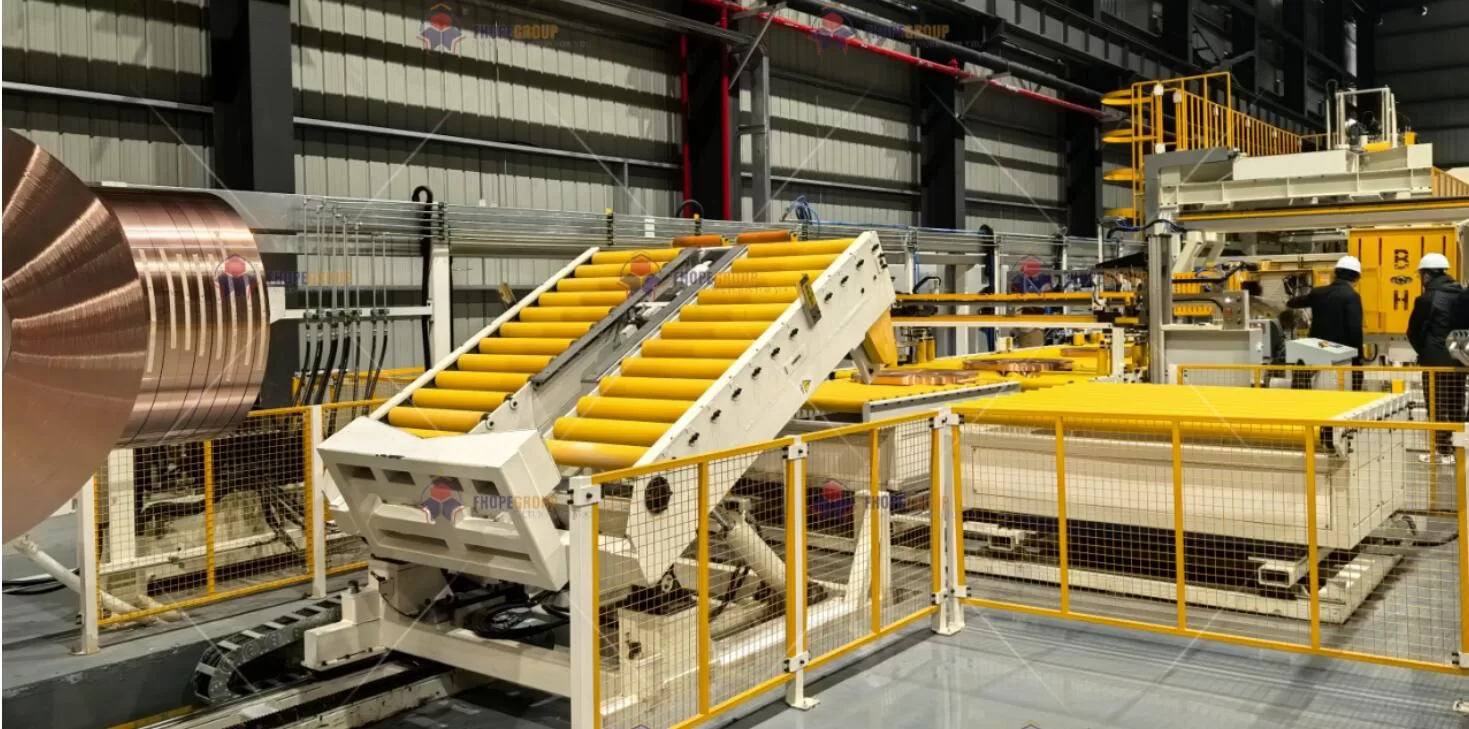
Factors Influencing Packing Line Dimensions
Choosing the right dimensions for your coil packing line is a strategic decision. It’s about balancing current needs with future scalability and optimizing efficiency within your operational context. Let’s dissect the key factors:
Initial Investment vs. Long-Term Savings: A Comparative Analysis
The spectrum of coil packing solutions, ranging from manual to fully automated systems, presents distinct cost profiles that must be carefully evaluated:
| Option | Initial Investment | Operating Costs | Long-term Savings |
|---|---|---|---|
| Manual Packing | Lowest | Highest (Labor-Intensive) | Minimal |
| Semi-Automatic Systems | Moderate | Medium (Some Labor) | Moderate Over Time |
| Fully Automated Systems | Highest | Lowest (Minimal Labor) | Significant Long-Term |
-
Manual Packing: Lowest Initial Outlay, Highest Long-Term Burden: Manual packing appears to be the most cost-effective initially due to minimal equipment investment. However, this initial low cost is quickly offset by consistently high labor costs, significantly slower packing speeds, increased potential for errors and product damage, and limited scalability. Long-term savings are negligible, and manual methods often become increasingly costly and unsustainable as production volumes grow and labor costs rise.
-
Semi-Automatic Systems: Balancing Investment and Incremental Gains: Semi-automatic systems represent a mid-range investment, incorporating some level of automation to reduce manual labor in specific processes. Operating costs are lower than manual packing, but still include substantial labor components for operation, supervision, and material handling. Long-term savings are moderate, offering incremental improvements in efficiency and cost reduction compared to manual methods but falling short of the transformative benefits of full automation.
-
Fully Automated Systems: Highest Upfront Cost, Maximum Long-Term ROI: Fully automated systems demand the highest upfront capital investment due to the inclusion of sophisticated machinery, advanced control systems, and integrated technologies. However, this higher initial investment is strategically offset by dramatically reduced labor requirements, significantly increased operational efficiency, and minimized material waste. This translates to the lowest long-term operating costs and substantial, sustainable long-term savings. While the initial outlay is higher, the Return on Investment (ROI) over time is typically far greater than less automated options, making fully automated systems the most financially sound choice for businesses focused on long-term profitability and operational excellence.
Operational Cost Breakdown: Identifying Key Expense Areas for Optimization
To conduct a truly informed cost comparison and make strategic investment decisions, it is essential to break down the operational costs associated with each coil packing option and identify key expense areas:
-
Labor Costs: The Most Significant Variable: Labor costs represent the most significant variable in coil packing operations. Manual packing is inherently labor-dependent, making it highly vulnerable to rising wage costs, labor shortages, and the variability of human performance. Automation drastically reduces labor needs, leading to predictable and substantially lower labor expenses, reduced reliance on a large workforce, and mitigation of labor-related risks.
-
Material Costs: Optimization Through Precision: While material costs (wrapping film, strapping, edge protectors, etc.) are present across all packing options, automated systems offer significant advantages in material cost management. Automated systems often optimize material usage through precise application, tension control, and intelligent material dispensing mechanisms, minimizing waste and reducing overall material consumption per coil packaged.
-
Maintenance Costs: Predictive vs. Reactive Approaches: Manual and older semi-automatic systems may appear to have lower initial maintenance costs due to simpler mechanical designs. However, as these systems age, maintenance can become more frequent, reactive, and costly due to wear and tear, breakdowns, and the need for manual adjustments and repairs. Modern automated systems, while potentially having higher component replacement costs for sophisticated parts, often feature robust designs, predictive maintenance capabilities enabled by sensor data and analytics, and longer operational lifespans. Predictive maintenance minimizes unexpected breakdowns, ensures uninterrupted operations, and leads to lower long-term maintenance expenses by proactively addressing potential issues before they escalate.
-
Energy Costs: Efficiency Gains Through Technology: Older or less energy-efficient machinery, particularly in manual and some semi-automatic systems, can consume significant energy, contributing to higher operational costs and a larger carbon footprint. Modern automated systems are frequently designed with energy efficiency as a core principle, incorporating energy-efficient motors, drives, and optimized operational cycles to reduce power consumption and lower energy costs. Smart controls further optimize energy usage by dynamically adjusting operation based on production demand and load.
-
Downtime Costs: The Hidden Drain on Profitability: Downtime due to equipment failure, unscheduled maintenance, changeovers, or operational inefficiencies represents a hidden but significant cost in coil packing operations. Automated systems, with their inherent reliability, precision, and speed, minimize downtime, maximize production output, and reduce associated financial losses stemming from production interruptions, missed deadlines, and underutilized resources.
Making the Financially Sound Choice: Value Beyond Initial Price
The optimal coil packing line selection is not simply about choosing the option with the lowest upfront price tag. It’s about making a financially sound, strategic decision that provides the best long-term value by carefully balancing initial investment with sustained operational efficiency, ongoing cost savings, scalability for future growth, and enhanced product quality and customer satisfaction. A thorough and comprehensive cost analysis, meticulously considering both immediate and long-term financial implications, is absolutely crucial for making a strategic investment that aligns with your overarching business goals and ensures sustainable profitability in the long run.
4. Vertical vs. Horizontal Packing: Choosing the Right Orientation for Your Coils
When deciding between vertical and horizontal packing orientations for steel coils, several critical operational factors come into play. The choice between these two methods significantly impacts coil stability, storage density, transportation logistics, and handling equipment requirements. A thorough understanding of these considerations is paramount for selecting the optimal packing method tailored to your specific coil characteristics, facility constraints, and logistical needs.
Vertical packing of steel coils is generally best suited for situations where space is limited and transport distances are relatively short and over smooth surfaces. It maximizes storage density and minimizes floor space utilization. Conversely, horizontal packing offers superior stability, particularly for larger, heavier coils and when transport conditions are rougher or distances are longer. Key factors influencing the choice include coil size and weight, available storage space, transport distance and conditions, the type of handling equipment available, and overall cost considerations. A careful evaluation of these factors will determine the most appropriate packing orientation.
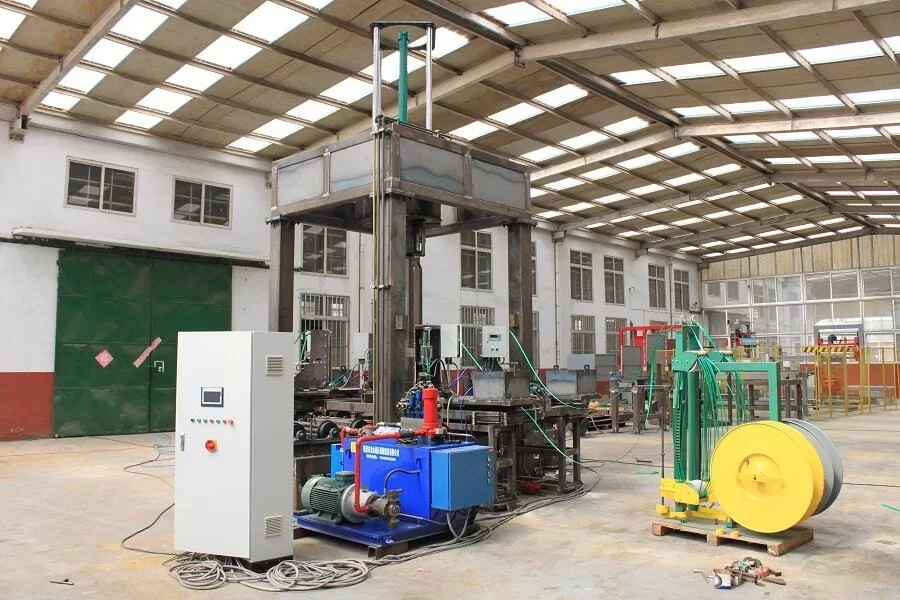
Optimizing Packing Line Dimensions for Efficiency
Optimizing the dimensions of a steel coil packing line is a balancing act between minimizing footprint and maximizing throughput and efficiency. Key strategies include modular design for scalability, strategic placement of stations to minimize conveyor length, and incorporating multi-functional stations where possible. Vertical stacking or multi-level conveyors can also save floor space in facilities with height available. Ultimately, optimization involves a detailed analysis of your specific needs and a tailored design approach.
Key Considerations for Vertical vs. Horizontal Coil Packing Selection
Choosing between vertical and horizontal coil packing necessitates a careful and comprehensive evaluation of your specific operational context and requirements. Here’s a detailed breakdown of the key considerations:
-
Coil Size and Weight: Stability and Handling Dynamics: Larger and heavier coils often benefit significantly from horizontal packing orientation. Horizontal packing provides increased stability during all phases of handling, storage, and transport. The horizontal orientation distributes the coil’s weight more evenly across a wider base, substantially reducing the risk of toppling, rolling, or damage, especially during dynamic movements. Smaller and lighter coils can be effectively and safely packed vertically, particularly when maximizing storage density in limited space is a primary concern.
-
Storage Space Availability: Maximizing Density vs. Footprint: Vertical packing is inherently more space-efficient, maximizing vertical storage density and occupying significantly less floor area compared to horizontally packed coils. If warehouse or storage space is limited and floor area is at a premium, vertical packing can dramatically increase storage capacity within the same footprint. Horizontal packing, while requiring more floor space per coil, may allow for higher stacking in certain configurations, depending on coil stability, packaging strength, and the capabilities of available handling equipment. However, this vertical stacking potential is often limited by safety regulations and practical handling constraints.
-
Transport Distance and Conditions: Stability During Transit: For short transport distances over smooth, paved roads, vertical packing might be acceptable, particularly for lighter and smaller coils that are less prone to shifting or toppling. However, for longer transport distances or rougher transport conditions—such as maritime shipping, overland transport on uneven roads, or rail transport—horizontal packing generally provides far superior protection against coil shifting, rolling, and potential damage during transit. Horizontal packing’s inherent stability is crucial for preventing coil movement and minimizing the risk of damage caused by vibrations, shocks, and inertial forces encountered during transportation.
-
Handling Equipment: Compatibility and Investment: The type of material handling equipment currently available in your facility, or that you are willing to invest in, is a critical determinant in the vertical vs. horizontal packing decision. Vertical packing necessitates specialized handling equipment capable of safely lifting, maneuvering, and orienting coils in a vertical position. This typically requires investment in specialized vertical coil lifters, cranes equipped with appropriate vertical coil handling attachments, or specialized forklift attachments designed for vertical coil handling. Horizontal packing is generally compatible with a broader and more readily available range of standard material handling equipment, including forklifts with coil rams or C-hooks, and overhead cranes with standard lifting slings or clamps. Consider both the initial investment costs and the ongoing operational costs associated with adapting existing equipment or acquiring new, specialized handling equipment for each packing orientation.
-
Cost Considerations: Material, Labor, and Damage Rates: Vertical packing can sometimes offer marginal cost advantages in terms of packaging materials and labor. It may require slightly less wrapping material and strapping compared to horizontal packing due to the different surface area and shape of the packaged coil. However, the overall cost-effectiveness analysis must extend far beyond just packaging material costs. It is crucial to comprehensively consider potential damage rates associated with each packing method under your typical handling and transport conditions, the efficiency of handling operations for each orientation, and the optimization of storage density for your specific facility. A comprehensive cost analysis should encompass all of these variables to accurately determine the most economically sound packing orientation for your specific needs.
By carefully and methodically weighing these critical factors—coil characteristics, space constraints, transport needs, equipment availability, and comprehensive cost analysis—you can make a well-informed decision on whether vertical or horizontal packing best aligns with your specific operational requirements. This strategic choice will ensure the safe, efficient, and cost-effective handling, storage, and transportation of your valuable steel coils, minimizing damage, optimizing resource utilization, and maximizing your return on investment in coil packing operations.
Conclusion
Selecting the right coil packing line is a multifaceted strategic decision that demands meticulous consideration of numerous critical factors. From accurately assessing coil weight capacity and dimensions to strategically integrating advanced technology and carefully evaluating cost implications, each factor plays a crucial and interconnected role in determining the overall efficiency, operational safety, long-term success, and profitability of your coil processing operations. A strategic investment, guided by thorough data-driven analysis, a clear and comprehensive understanding of your specific production needs, and a forward-looking perspective, will not only optimize your current production processes but also pave the way for sustainable future growth, enhanced competitiveness, and a stronger bottom line in the dynamic and demanding metal processing industry.








