
Beyond the Phone Call: Turning Data into Uptime with IoT
Summary: Modern IoT-powered remote support transforms reactive troubleshooting into proactive asset management. For coil processing lines, this means predictive maintenance that cuts unplanned downtime by up to 70% and slashes Mean Time To Repair (MTTR) from days to hours.
The Old Way is Costing You Money
Picture this: It’s 2 AM on a Friday at your stamping plant in Monterrey. The coil upender suddenly faults out. A hydraulic valve is stuck. Your lead technician, Jose, isn’t sure why. He spends an hour checking manuals, then calls the machine builder’s hotline. You’re now in a game of telephone: Jose describes the problem, the support engineer guesses, they try a software reset. It doesn’t work. Now, you’re looking at a 48-hour wait for a specialist to fly in, plus the cost of the flight and the hotel. Your entire line is down. Every hour costs thousands.
Moving from reactive, delay-heavy support to a live, data-driven remote connection is the single biggest lever to pull for reducing operational downtime and maintenance costs. The shift is from “What broke?” to “What is about to break?” and “How do we fix it before the shift starts?”
🛠️ How IoT Remote Support Actually Works on Your Floor
It’s not just a fancy video call. It’s a dedicated, secure data pipeline from your machine to the manufacturer’s experts.
- Secure Gateway: A hardened industrial PC or IoT gateway on your network collects data from the machine’s PLC, drives, and add-on sensors.
- Real-Time Data Stream: Key parameters (motor torque, hydraulic pressure, cycle counts, vibration spectra, temperature) are encrypted and transmitted in real-time to a secure cloud dashboard.
- Expert Access: Authorized support engineers, like our team at FHOPEPack, can view this live dashboard and historical trends. With your permission, they can also establish a secure, read-only (or guided) VPN session to diagnose the PLC logic directly.
Expert Pro Tip: During installation, insist on a dedicated VLAN for production equipment. This segments your machine data from the main office network, enhancing security and network stability for critical operations.
Remote Diagnostics: Solving Problems Before They Stop the Line
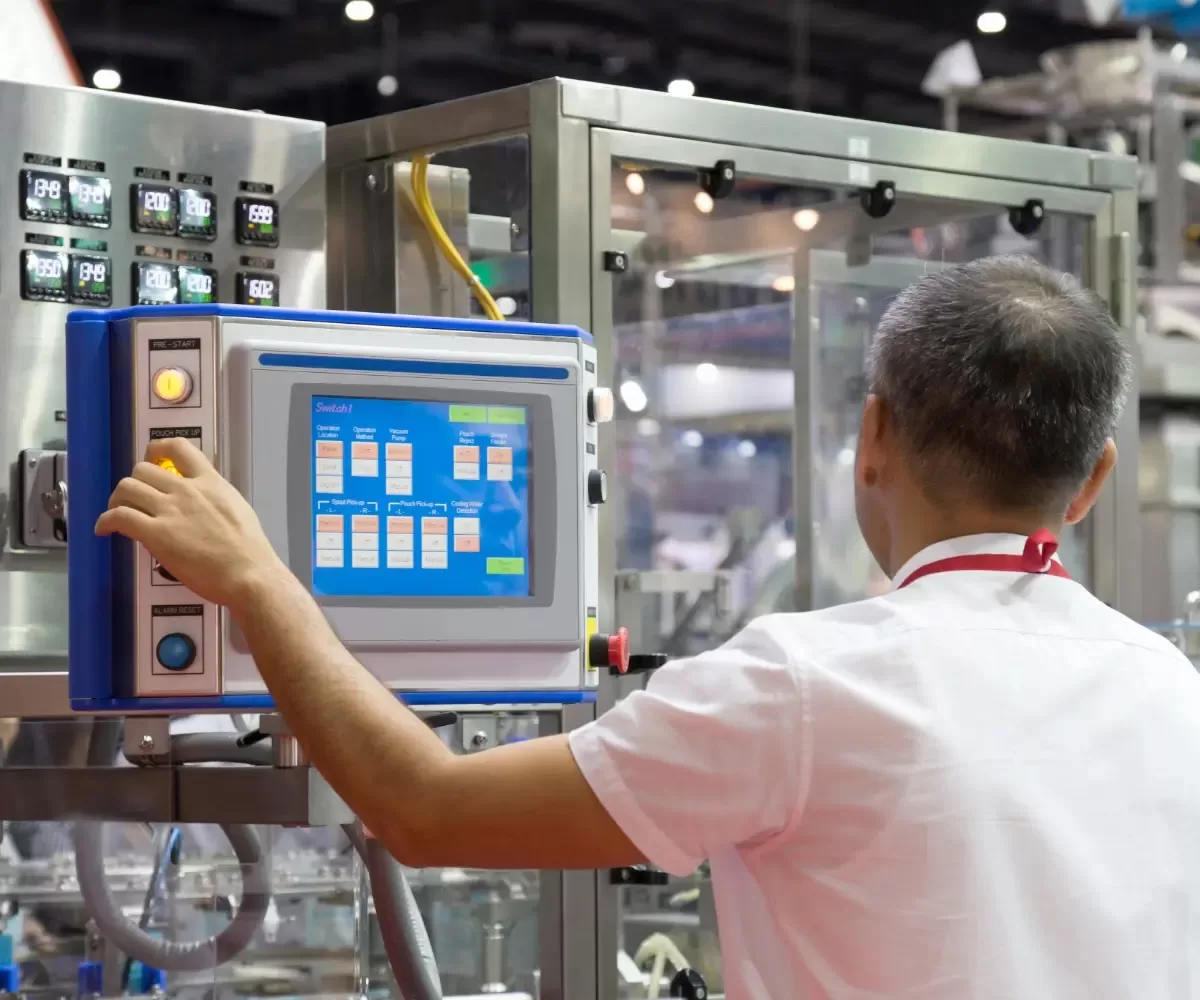
The alarm “Hydraulic Pressure Low” flashes. Is it a failing pump, a clogged filter, or a leaking cylinder? Without data, it’s guesswork. With a connected system, Jose pulls up the remote dashboard on his tablet. He sees not just the alarm, but a 30-day trend graph showing a gradual pressure drop during the tilting cycle. He also sees the specific valve bank and pump section flagged.
Remote diagnostics provide immediate context by granting experts live access to machine PLC data and sensor histories, turning ambiguous alarms into precise, actionable fault locations. This eliminates 80% of diagnostic guesswork and travel delays.
⚙️ The Technical Flow of a Remote Session
- Alert: Anomaly detection software tags a deviation (e.g., main drive current exceeds nominal by 15%).
- Access Grant: Jose receives a notification and grants one-time remote view access via a secure portal.
- Collaborative Analysis: The support engineer views the live data alongside Jose via shared screen. They pinpoint the issue to the drive’s DC bus regulator.
- Guided Resolution: The engineer sends Jose the exact spare part number, a step-by-step tutorial video for replacement, and confirms the repair by watching the drive parameters normalize in real-time.
Predictive Maintenance: From Scheduled to Condition-Based
Following the OEM’s manual, you service the hydraulic unit every 1,000 hours. But what if the oil is still perfect at 1,000 hours? You waste money and downtime. What if a seal is degrading fast and fails at 700 hours? You get unplanned downtime. Calendar-based maintenance is inefficient.
Predictive maintenance uses IoT sensor data (vibration, temperature, particle count) to model equipment health and forecast failures, allowing maintenance to be scheduled only when needed and before a functional breakdown occurs. This directly extends component life and prevents catastrophic stoppages.
🛡️ Monitoring the Critical Points
| Adding low-cost wireless sensors to key assets creates a health monitoring system. | Component | Sensor Type | Predictive Failure Indicator | Standard Reference |
|---|---|---|---|---|
| Hydraulic Pump | Vibration & Temperature | Increasing vibration amplitude at specific frequencies | ISO 10816 (Vibration) | |
| Gearbox | Vibration & Oil Particle Count | Spike in ferrous particles, change in vibration signature | ISO 4406 (Oil Cleanliness) | |
| Main Bearing | Ultrasound & Temperature | Rising ultrasonic emissions & gradual temperature creep | ASTM E2921 (Ultrasound) | |
| Motor Windings | Temperature | Asymmetric temperature rise between phases | NEMA MG-1 |
ROI Insight: For a major coil handling line, switching from time-based to predictive maintenance on hydraulics and drives typically shows a 12-18 month ROI. Savings come from a 30-50% reduction in spare parts inventory, 25% less preventive maintenance labor, and the near-elimination of downtime from those system failures.
Building Your Connected Support System: Integration is Key
Simply adding sensors to an old machine isn’t enough. The value is in the integration—tying the data stream directly into your maintenance workflow (like your CMMS) and the OEM’s knowledge base.
Effective IoT support requires a platform that merges real-time machine data with maintenance history and OEM manuals, creating a centralized “health passport” for each asset that guides all decisions.
🧠 The Platform Advantage: More Than Alerts
A true platform, like the one we develop for our clients, does three things:
- Correlates Data: It links a rising bearing temperature with the last lubrication work order and the specific grease used.
- Automates Workflows: It can automatically generate a work order in your system when a predictive threshold is crossed, assigning it to Jose with the relevant manual section attached.
- Builds Knowledge: Every resolved case enriches the system. Future alerts on similar machines will suggest “Probable Cause: X, as seen on Line 3 in July.”
Justifying the Investment: The Math of Uptime
Let’s talk numbers. For a mid-sized service center running two slitting lines, unplanned downtime can easily cost $5,000 per hour in lost throughput and delayed orders.
The financial case for IoT-driven remote and predictive support is built on drastically reducing Mean Time To Repair (MTTR) and extending Mean Time Between Failures (MTBF), directly protecting revenue-generating production hours.
📈 Calculating Your Potential Savings
Consider a common 8-hour stoppage for an electrical fault:
- Traditional: 4 hours initial diagnosis + 48 hours wait for specialist + 4 hours repair = 56 hours downtime. Cost: $280,000.
- With IoT Support: 0.5 hour to grant access + 1 hour remote diagnosis + 2 hours local repair (with guided instructions) = 3.5 hours downtime. Cost: $17,500.
The difference is $262,500 saved on one incident. The annual subscription for a premium remote support platform is a fraction of that.
Expert Pro Tip: Start with a pilot on your most critical, downtime-prone asset. Measure the baseline MTTR and downtime cost for 3 months. After implementing remote diagnostics, measure again for 3 months. This A/B test on your own floor provides the most compelling data for wider rollout.
The Human Factor: Upskilling Your Team
Some managers worry this technology replaces their maintenance staff. It does the opposite. It makes them more powerful.
IoT remote support acts as a force multiplier for your maintenance team, transferring deep OEM knowledge and diagnostic skills directly to your technicians, elevating their capabilities and reducing dependency on external calls.
🧑🔧 From Firefighter to Reliability Engineer
Jose’s role evolves:
- Before: Receives an alarm, reacts, tries fixes, calls for help.
- After: Monitors asset health dashboards, receives prioritized work orders, performs targeted maintenance with expert-guided support, analyzes trend data to suggest improvements. He spends less time in emergency panic and more time on planned, value-adding reliability projects. This improves job satisfaction and retention.
Conclusion: The Future is Proactive
Waiting for a machine to break is no longer a viable strategy in a competitive, just-in-time manufacturing world. Remote troubleshooting and predictive maintenance via IoT represent a fundamental shift from reactive service to proactive partnership.
It’s about leveraging data to create stability, empower your team, and protect your profitability. The technology is here, proven, and financially logical. The first step is choosing a partner who doesn’t just sell you a machine, but connects you to its long-term health and performance.
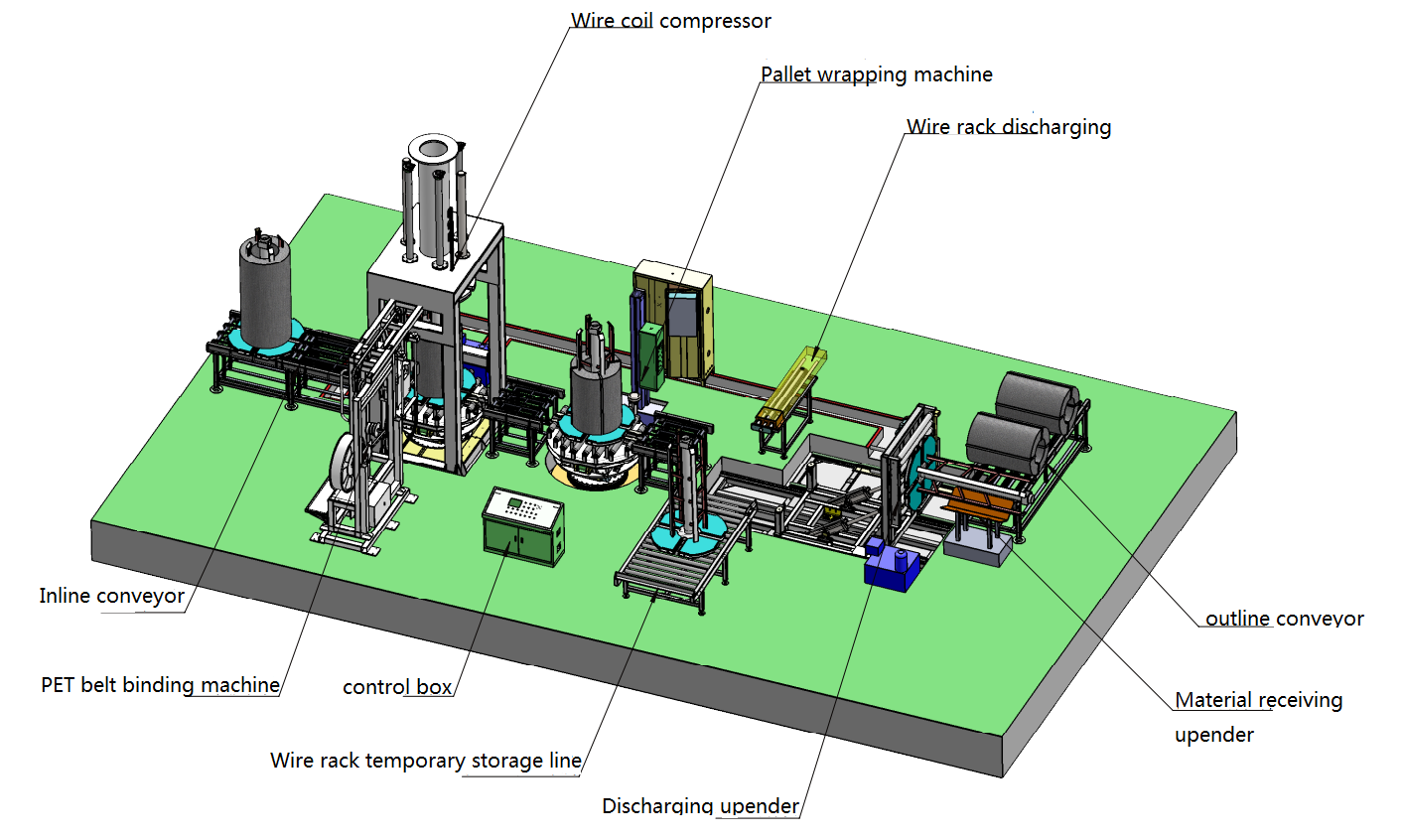
Ready to transform your support model? Explore how our integrated systems, from the coil wrapping machine to the full IoT platform, are designed to deliver maximum uptime from day one.








