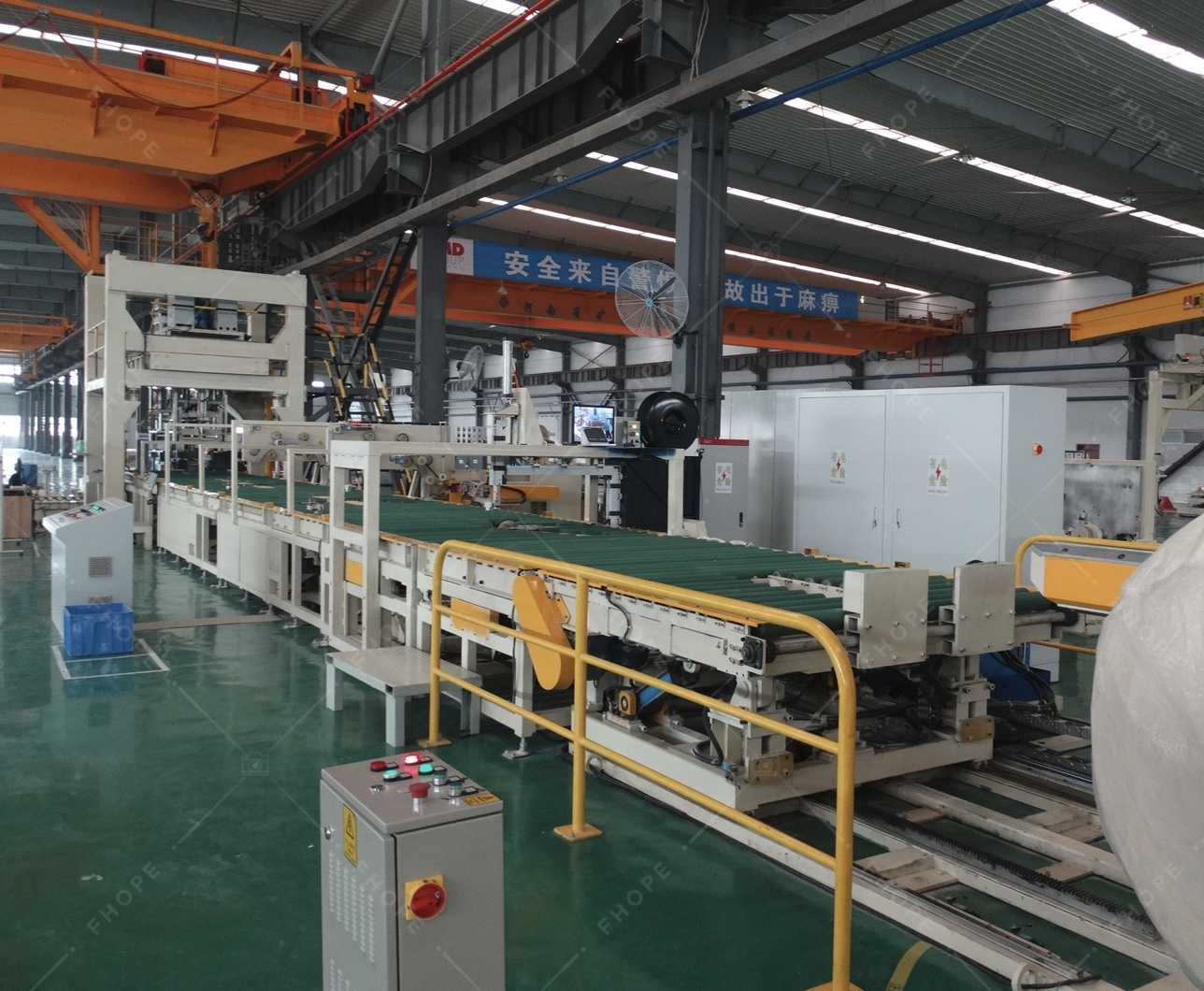
The Hidden Costs of Manual Coil Packing: Why Mills are Losing 15% Profit
Summary: This analysis quantifies the true expenses of manual coil packaging, revealing how material waste, excessive labor, and production bottlenecks silently erode profit margins. Transitioning to a semi-automated line typically reduces wrapping waste by over 60%.
The Labor Illusion: More Hands, Less Control
You schedule five workers for the packing line. Two call in sick. Now, the entire shipping schedule is jeopardized because your process depends on specific individuals’ physical strength and availability. This variability creates unpredictable bottlenecks and constant overtime pressure.
The core cost isn’t just the hourly wage; it’s the compounding inefficiency of a fully human-dependent system. This includes time spent fetching materials, inconsistent application techniques leading to rework, and fatigue-based slowdowns that directly cap your maximum output per shift.
⚙️ Calculating True Labor Cost Per Coil
The formula extends far beyond (Hourly Rate x Hours).
- Direct Labor: Wages for the wrapping, strapping, and labeling team.
- Indirect Labor: Supervisory time spent coordinating, quality inspectors checking inconsistent work, and maintenance staff repairing damaged coils from handling errors.
- Opportunity Cost: What skilled workers could be doing if not on repetitive packing duty? This is lost productivity.
ROI Insight: A semi-automatic station requiring 1-2 operators instead of 4-5 can reallocate 3 skilled laborers to value-added tasks like quality control or machine operation, paying for itself often within 12-18 months through labor savings alone.

Material Waste: The Silent Profit Leak
A worker applies 20% more stretch film than necessary “to be safe.” Another misaligns the protective paper, leaving a corner exposed. These small, daily decisions result in a mountain of wasted material at month’s end—materials you’ve already paid for, now literally thrown in the trash.
Consistent, machine-applied tension and overlap eliminate the two largest sources of material waste: over-application and human error. Automated systems are programmed to use the exact optimal amount of film, paper, and strapping, measured to the millimeter.
🛡️ From Variable Waste to Predictable Consumption
Manual packing waste is unpredictable. Automated systems transform this into a fixed, calculable cost.
- Stretch Film Usage: Manual wrapping can have a variance of up to ±25% in film used per coil. Automated wrappers maintain consistent pre-stretch (e.g., 250%) and overlap (55%), cutting usage by 20-30%.
- Protective Materials: Mis-cut inner sleeves and top/bottom discs are common manual errors. An automated cutter-spreader applies precise, repeatable sheets with 0.02mm precision alignment.
- Damage to Packaging: Improper handling during manual packing can tear materials before the coil even leaves the line, forcing a double-cost of rework.
The Efficiency Bottleneck: Your Packing Line Dictates Your Mill’s Output
Your rolling mill can produce a coil every 15 minutes. But your manual packing station takes 25 minutes to package it. Your entire factory’s throughput is now limited by the slowest, most variable link: the packing station. This invisible cap prevents you from fulfilling larger orders or increasing shifts.
Automated material handling and station sequencing removes the packing line as a bottleneck, allowing your mill’s true production capacity to be realized. It synchronizes with production speed.
🛠️ Synchronizing Flow with Technology
Key integration points eliminate waiting and handling:
- Automatic Transfer: A conveyor or coil car receives the coil directly from the mandrel, eliminating the need for a crane and operator for this move.
- Positioning & Weighing: The coil is automatically centered on scales for inline weighing and labeling, saving 3-5 minutes per coil.
- Sequenced Operations: In a semi-automatic line, the coil moves through stations (e.g., inner paper application, wrapping, strapping) with guided operator input, cutting total cycle time by over 40%.

Expert Pro Tip: Start with a semi-automatic “island” solution. Integrate an automatic wrapper and strapper that receives coils via simple conveyor. This tackles the most labor-intensive steps with minimal upfront investment and disruption, delivering most of the efficiency gains.
The High Cost of “Low-Cost” Safety Incidents
A 10-ton steel coil shifts during manual strapping. The worker jumps back, avoiding injury but the coil falls, damaging itself and the floor. Production stops for hours. This “near-miss” still incurs costs: downtime, damage, and investigation time. A direct injury multiplies this cost exponentially through insurance, lawsuits, and lost morale.
Manual coil handling presents constant risks of pinch points, falls, and strain injuries. Automation’s primary ROI often comes from eliminating these multi-million dollar risk scenarios by removing personnel from direct heavy lifting and dangerous zones.
🛡️ Quantifying Safety & Damage Costs
The financial impact extends far beyond worker’s compensation.
- Direct Damage: A dropped coil can cause $5,000-$50,000+ in damage to the coil itself, the floor, and nearby equipment. Manual handling increases this risk frequency.
- Regulatory Compliance: OSHA/ISO 45001 standards increasingly mandate engineering controls to remove workers from hazardous tasks. Manual packing may require costly additional safety infrastructure.
- Coil Damage: Improper handling leads to edge damage or coil collapse, resulting in customer rejections, claims, and loss of premium grade pricing. Automated systems like C-hooks or vacuum lifters handle with consistent, gentle pressure.

Conclusion: From Cost Center to Competitive Advantage
The 15% profit loss isn’t an exaggeration—it’s the sum of quantifiable leaks in labor, materials, efficiency, and risk. Manual packing turns a high-value product into a liability before it even leaves your factory.
Modern packaging is not a subsidiary activity; it is the final, critical step in quality assurance and logistics readiness. Investing in semi-automated coil packaging technology transforms this cost center into a source of reliability, traceability, and predictable cost. It ensures the quality and integrity your mill works so hard to create are perfectly preserved until the customer receives it.
The first step is to audit your true cost per coil. Then, explore solutions that fit your workflow. For many mills, the logical entry point is a reliable, heavy-duty coil wrapping machine integrated into a streamlined cell—the foundation for eliminating hidden costs and reclaiming your margin.