
What is the rotating type pallet changing machine?
As a packaging machine engineer with years of hands-on experience in coil and steel wire packaging systems, I’ve witnessed firsthand how production bottlenecks can cripple manufacturing efficiency. Many factory managers I’ve worked with share similar frustrations – slow packaging processes, safety concerns with manual handling, and constant product damage during internal transfers. These challenges create significant operational headaches that impact overall productivity and profitability.
A rotating type pallet changing machine is an automated material handling system designed to efficiently swap empty and loaded pallets in manufacturing and packaging lines. This equipment features a rotating platform with multiple stations that can hold different pallets simultaneously, allowing for continuous operation without stopping the production flow. The machine automatically removes finished pallets and positions new empty ones in perfect synchronization with your packaging process, creating a seamless transition between production stages. 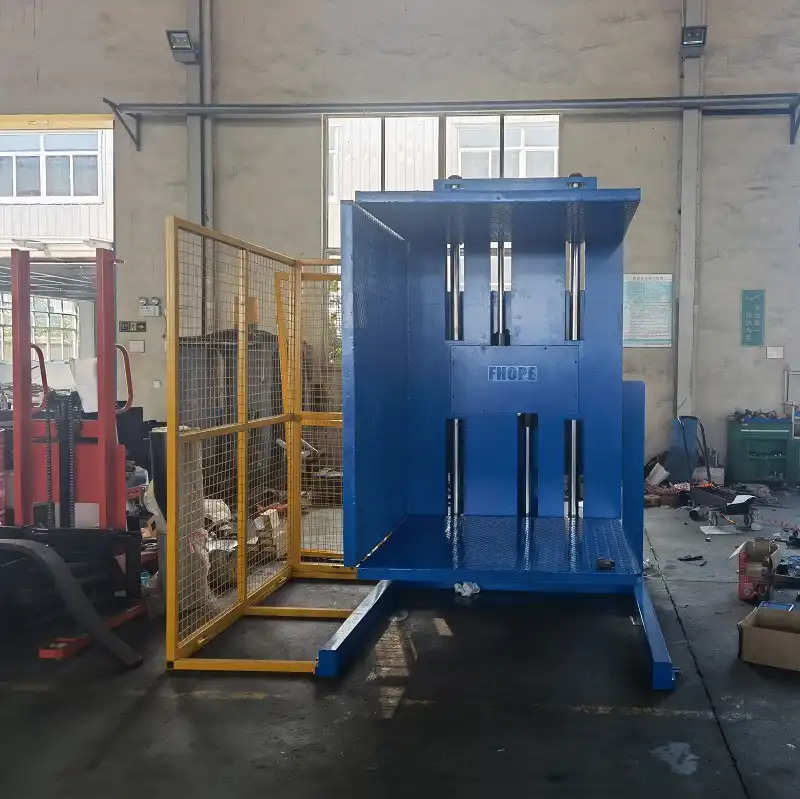
Understanding the critical role that pallet changing systems play in modern manufacturing is essential for any operations manager looking to optimize their production line. The transition from manual pallet handling to automated systems represents one of the most significant efficiency upgrades available to metal processing facilities today. Let’s explore how this technology works and why it might be the solution you’ve been searching for to eliminate your packaging bottlenecks.
1. How does a rotating pallet changer work to improve packaging efficiency?
Walking through countless manufacturing facilities, I’ve observed the same pattern repeatedly – workers struggling with manual pallet changes, production lines stopping every time a pallet needs replacement, and the resulting domino effect of delays throughout the entire operation. The rotating pallet changer addresses these issues through a elegantly simple yet highly effective mechanical design.
The rotating pallet changing system operates through a circular platform containing multiple pallet stations that rotate in a carousel-like motion. When a pallet becomes fully loaded with packaged products, the system automatically indexes to the next position, bringing an empty pallet into the loading zone while simultaneously moving the loaded pallet to an unloading or staging position. This continuous rotational movement ensures zero downtime between pallet changes, maintaining constant production flow and eliminating the manual labor traditionally required for this task. 
🔄 Operational Sequence Breakdown
The working process follows these precise steps:
| Step | Process | Benefit |
|---|---|---|
| 1 | Loading Position – Empty pallet positioned under packaging head | Prepares for product reception |
| 2 | Product Accumulation – Items are systematically loaded onto pallet | Continuous operation maintained |
| 3 | Pallet Full Detection – Sensors signal when pallet reaches capacity | Prevents overfilling issues |
| 4 | Rotation Initiation – Platform rotates to next station | Seamless transition begins |
| 5 | New Pallet Positioning – Fresh empty pallet moves into loading zone | Production continues uninterrupted |
| 6 | Loaded Pallet Removal – Finished pallet moves to unloading area | Ready for wrapping or transport |
⚙️ Core Components and Functions
-
Rotating Platform: The heart of the system, typically constructed from heavy-duty steel with precision bearings that ensure smooth rotation even under maximum load capacity. The platform design varies based on application requirements, with some systems featuring two stations for basic operations and others incorporating four or more stations for high-volume production environments.
-
Pallet Clamping Mechanism: Secure locking systems that firmly hold pallets in place during both rotation and loading operations. These clamps utilize hydraulic or pneumatic pressure to prevent pallet movement, ensuring perfect alignment with packaging equipment. The clamping force is carefully calibrated to handle various pallet types without causing damage to wooden, plastic, or metal pallet structures.
-
Control System: Advanced PLC-based controllers that synchronize the pallet changer with upstream and downstream equipment. These systems incorporate position sensors, safety interlocks, and operational diagnostics that monitor performance in real-time. Modern units feature touchscreen interfaces that allow operators to adjust rotation speed, set pallet change triggers, and monitor operational statistics.
-
Drive Mechanism: Precision motors and reduction gearboxes that provide the rotational force needed to index the platform. Servo-controlled systems offer the highest accuracy for positioning, while heavy-duty AC motors with variable frequency drives provide the torque necessary for handling fully loaded pallets in industrial metal processing applications.
The efficiency gains from implementing rotating pallet changers are substantial. In one steel coil packaging project I consulted on, installation reduced pallet changeover time from 8-10 minutes manually to under 30 seconds automatically. This translated to a 15% increase in overall packaging line throughput without requiring additional labor resources. (automated pallet changing systems, rotary palletizers, industrial pallet handling equipment)
2. What are the main advantages of using rotating pallet changers in metal processing?
During my early years working in a packaging machine factory, I remember the skepticism some managers expressed about investing in automated pallet changing systems. They questioned whether the productivity gains would justify the equipment costs. Now, after implementing these systems in multiple metal processing facilities, the evidence is undeniable – the advantages extend far beyond simple labor reduction.
Rotating pallet changers deliver substantial benefits including 30-50% faster pallet change cycles, complete elimination of manual heavy lifting, consistent positioning accuracy within ±1mm, and seamless integration with existing packaging lines. These systems transform pallet handling from a production bottleneck into a competitive advantage, particularly in metal processing environments where product weight and handling safety are constant concerns. 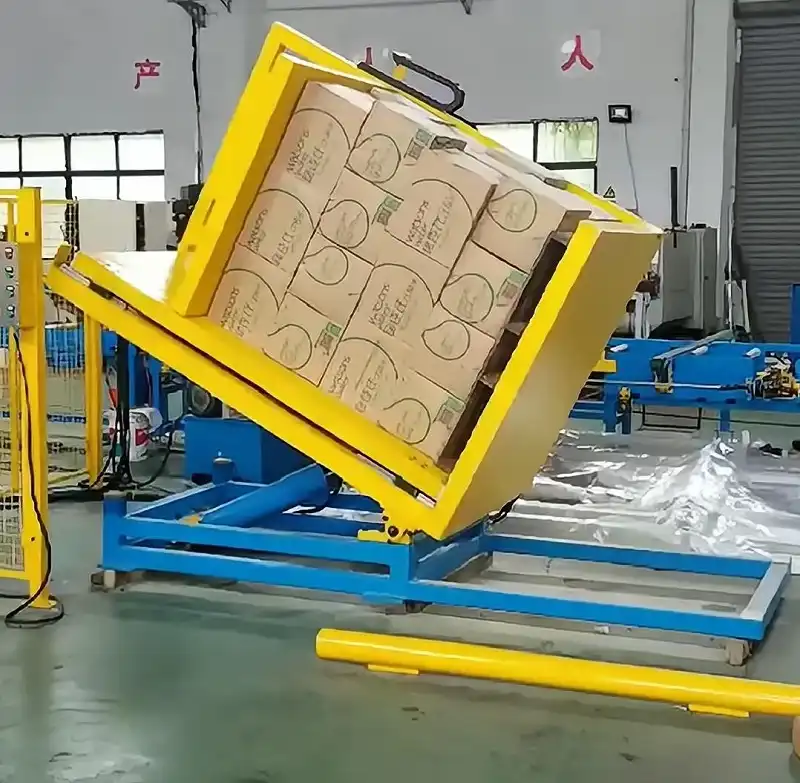
📊 Quantifiable Operational Benefits
🚀 Productivity Enhancement
- Continuous Operation: Unlike manual systems that require production stoppages, rotating changers maintain uninterrupted flow. In coil packaging applications, this means the wrapping station can operate continuously while finished coils are automatically moved to designated areas.
- Faster Cycle Times: Automated rotation completes in 15-30 seconds compared to 5-10 minutes for manual changes. This time savings compounds throughout each shift, adding significant additional production capacity.
- Reduced Labor Dependency: One operator can manage multiple packaging lines simultaneously since the system handles the most labor-intensive aspect of the process.
🛡️ Safety Improvements
- Elimination of Heavy Lifting: Manual handling of loaded pallets, especially with metal products, poses significant injury risks. Automated systems completely remove workers from these dangerous tasks.
- Consistent Positioning: Precision placement eliminates the variability of manual positioning, reducing strain injuries from awkward positioning and repetitive motions.
- Integrated Safety Features: Modern systems include light curtains, emergency stops, and interlocked guarding that prevent access during rotation cycles.
💰 Economic Advantages
- Labor Cost Reduction: Facilities typically reallocate 2-3 workers from pallet changing duties to more value-added tasks, improving overall labor utilization.
- Damage Reduction: Precise handling minimizes product impact during transfers. In one brass strip packaging application, damage claims decreased by 23% after implementation.
- Space Optimization: The compact footprint of rotating changers often requires less floor space than manual staging areas while providing higher throughput.
🏭 Application-Specific Benefits for Metal Processing
The metal industry presents unique challenges that rotating pallet changers specifically address:
- Heavy Load Capacity: Engineered to handle the substantial weight of metal coils, sheets, and fabricated products that would be impractical for manual handling.
- Precision Requirements: Metal products often have specific stacking and positioning requirements to prevent surface damage or deformation during storage and transport.
- Harsh Environment Durability: Constructed with components resistant to metal dust, occasional impacts, and the rigorous demands of metal processing facilities.
In a recent project with a Mexican automotive steel supplier, the implementation of rotating pallet changers reduced their packaging labor requirements by 40% while increasing daily output by 22%. The safety improvements were equally impressive, with pallet-related incidents dropping to zero within the first six months of operation. (industrial material handling solutions, automated packaging equipment benefits, metal processing efficiency)
3. What types of industries benefit most from rotating pallet changing systems?
Throughout my career establishing packaging solutions across various sectors, I’ve identified clear patterns in which industries derive the greatest value from rotating pallet changers. While many manufacturing sectors can benefit from automation, certain industries experience transformative improvements due to their specific operational characteristics and challenges.
Rotating pallet changers deliver exceptional value in metal processing, automotive components, building materials, heavy machinery, and industrial packaging operations where product weight, production volume, and handling safety are significant concerns. These industries typically move heavy products in high volumes through packaging processes that would otherwise require substantial manual labor and create production bottlenecks. 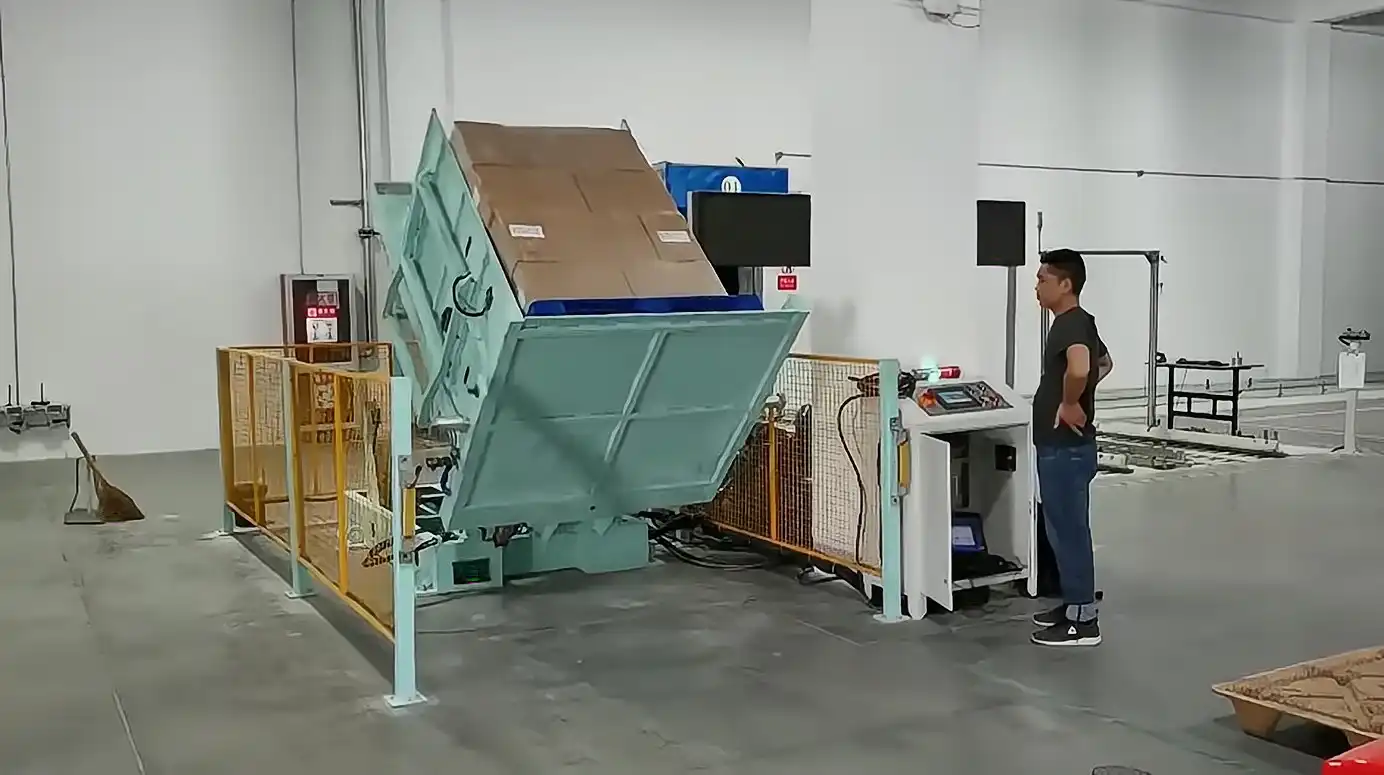
🏭 Primary Benefiting Industries
🔩 Metal Processing and Steel Mills
- Steel Coil Packaging: Handling finished coils weighing 5-30 tons with precision positioning for wrapping and strapping operations
- Aluminum Extrusion Lines: Managing long, delicate profiles that require careful handling to prevent surface damage
- Metal Sheet Operations: Processing stacked sheets that must maintain perfect alignment during packaging
- Wire and Rod Packaging: Bundling long products that present unique handling challenges
The metal industry represents the ideal application for rotating pallet changers due to product weight alone. Manual handling of steel coils is not just inefficient – it’s dangerous. Automated systems eliminate this risk while improving throughput.
🚗 Automotive Component Manufacturing
- Engine and Transmission Plants: Handling heavy powertrain components through final packaging stages
- Stamping Facilities: Managing door panels, body components, and structural parts
- Forging Operations: Packaging crankshafts, connecting rods, and other forged components
Automotive facilities benefit from the consistent cycle times that rotating changers provide, supporting Just-In-Time production requirements and maintaining flow through packaging operations.
🏗️ Building Materials Production
- Construction Steel: Packaging structural beams, rebar, and construction profiles
- Aluminum Window/Doors: Handling finished fenestration products through protective packaging
- Pipe and Tube Mills: Managing long-length products through bundling and wrapping processes
Building material manufacturers appreciate how rotating changers accommodate varied product sizes within the same system, providing flexibility for operations with diverse product lines.
📈 Secondary Applications with Significant Benefits
🏭 Heavy Equipment Manufacturing
- Agricultural Machinery: Packaging components and subassemblies through final preparation for shipment
- Construction Equipment: Handling buckets, blades, and other ground engagement tools
- Industrial Machinery: Managing machine components and complete assemblies
📦 Industrial Packaging Operations
- Third-Party Logistics: Facilities that provide packaging services for multiple clients
- Distribution Centers: Operations that receive unpackaged goods and prepare them for retail distribution
- Contract Packaging: Companies specializing in packaging services across multiple industries
🔍 Key Success Factors by Industry
Different industries prioritize different aspects of pallet changing systems:
| Industry | Primary Benefit | Secondary Benefit | Critical Feature |
|---|---|---|---|
| Metal Processing | Safety with heavy loads | Throughput improvement | High weight capacity |
| Automotive | Consistent cycle times | Quality protection | Precision positioning |
| Building Materials | Flexibility for varied products | Labor reduction | Adjustable stations |
| Heavy Equipment | Damage prevention | Space optimization | Robust construction |
The common thread across all benefiting industries is the combination of heavy or awkward products, high-volume production requirements, and sensitivity to packaging quality. In my experience working with manufacturers across North America, facilities that process products weighing over 50 pounds per item or require more than 20 pallet changes per shift typically achieve ROI within 12-18 months. (industrial automation applications, manufacturing efficiency solutions, heavy material handling systems)
4. How to select the right rotating pallet changer for your specific application?
Selecting appropriate packaging equipment was one of the most challenging aspects of my journey from packaging engineer to factory owner. I made some costly mistakes early on by choosing systems based on price rather than proper technical alignment with our specific needs. Through these experiences, I developed a systematic approach to equipment selection that has served our clients well across numerous successful implementations.
Choosing the optimal rotating pallet changer requires careful analysis of six key factors: maximum load capacity, pallet dimensions, required rotation speed, integration requirements with existing equipment, environmental conditions, and future production scalability. The selection process should begin with a thorough assessment of your current packaging process bottlenecks and a clear understanding of your operational goals for the next 3-5 years. 
📋 Comprehensive Selection Framework
🔍 Capacity and Dimension Analysis
- Weight Requirements: Calculate both average and maximum anticipated loads, including pallet weight. Add a 25% safety margin for unexpected product variations.
- Pallet Size Variations: Document all pallet types used in your facility, noting dimensional differences and special features that might affect clamping or positioning.
- Footprint Constraints: Measure available space while considering maintenance access requirements and material flow around the equipment.
⚙️ Technical Specification Evaluation
- Rotation Speed Needs: Balance throughput requirements against product stability concerns. Faster rotation increases throughput but may not be suitable for unstable loads.
- Positioning Accuracy: Determine required precision based on downstream equipment needs. Automated wrapping systems typically need ±2mm accuracy.
- Control System Compatibility: Ensure the pallet changer can interface with your existing PLC systems or can operate as a standalone unit with appropriate interfaces.
🏆 Supplier Evaluation Criteria
Based on my extensive experience with packaging equipment manufacturers, I recommend prioritizing these factors when evaluating potential suppliers:
✅ Industry Experience: Select suppliers with specific experience in your industry sector, particularly for metal processing applications where equipment demands are unique.
✅ Technical Support Capability: Verify the supplier’s ability to provide local support, including installation supervision, operator training, and responsive maintenance services.
✅ Performance Guarantees: Look for suppliers who offer documented performance guarantees rather than just equipment warranties.
✅ Reference Validation: Speak with current customers who have similar applications and operational requirements.
✅ Financial Stability: Ensure the supplier has the financial strength to honor warranty commitments and provide long-term parts support.
💡 My Personal Recommendation Approach
Having worked with numerous packaging equipment manufacturers throughout my career, I’ve developed specific perspectives on supplier selection:
-
Fengding: My first recommendation for most metal processing applications due to their specialized experience with coil packaging systems and robust construction suitable for heavy industrial environments. Their rotating pallet changers incorporate features specifically designed for metal industry challenges.
-
Wuxi Buhei: A strong secondary option that offers good value for operations with budget constraints while maintaining acceptable quality standards. Their systems work well for lighter applications within the metal industry.
-
Regional Specialists: For operations in specific geographic areas, sometimes local manufacturers offer advantages in service responsiveness despite potentially higher equipment costs.
🚨 Critical Pitfalls to Avoid
- Overemphasis on Initial Price: The cheapest equipment often becomes the most expensive through downtime, repairs, and inefficiency.
- Inadequate Future Planning: Select equipment that can accommodate anticipated production increases over the next 3-5 years.
- Ignoring Environmental Factors: Metal processing environments contain dust, moisture, and temperature variations that affect equipment performance.
- Underestimating Integration Complexity: The interface between the pallet changer and existing equipment often presents unexpected challenges.
The most successful selections I’ve witnessed followed a disciplined process: detailed requirements documentation, multiple supplier evaluations including site visits to existing installations, and careful total cost of ownership analysis rather than simple equipment price comparison. (packaging equipment selection guide, industrial automation procurement, material handling system design)
Conclusion
Rotating type pallet changing machines represent a transformative automation solution for metal processing facilities struggling with packaging bottlenecks and manual handling challenges. These systems deliver measurable improvements in throughput, safety, and operational efficiency by eliminating production stoppages during pallet changes while removing workers from dangerous heavy lifting tasks. The technology has proven particularly valuable in Pallet Inverter applications where product weight and handling precision are critical concerns. For operations managers seeking to optimize their packaging processes, implementing rotating pallet changers often delivers the fastest ROI of any packaging automation investment.








