
What Is an Automatic Steel Coil Packing Machine and How Does It Work?
Have you ever felt the pressure of managing a bustling factory, where every minute of downtime means lost revenue, and safety is a constant concern? I know that feeling well. For years, I watched factory operations, from the ground up, seeing the daily struggles with manual processes. Many managers, just like Jose in Mexico, face these exact challenges: battling slow, inefficient packing lines, wrestling with high labor costs, and always worrying about worker safety and product damage. It is a tough situation when manual handling of heavy steel coils or wire leads to injuries and scrapped products. (factory manager challenges, manual packing pain points)
An automatic steel coil packing machine is a sophisticated industrial system designed to efficiently wrap, strap, and prepare various metal coils, such as steel coils, copper coils, or steel wire coils, for storage and shipment with minimal human intervention. It works by automating the entire packaging process, from material feeding and coil centering to film application, strapping, and final discharge. This automation reduces labor costs, improves safety by eliminating dangerous manual handling, and ensures consistent, high-quality packaging that protects products from damage during transit and storage. (automatic steel coil packing machine definition, coil packaging automation)
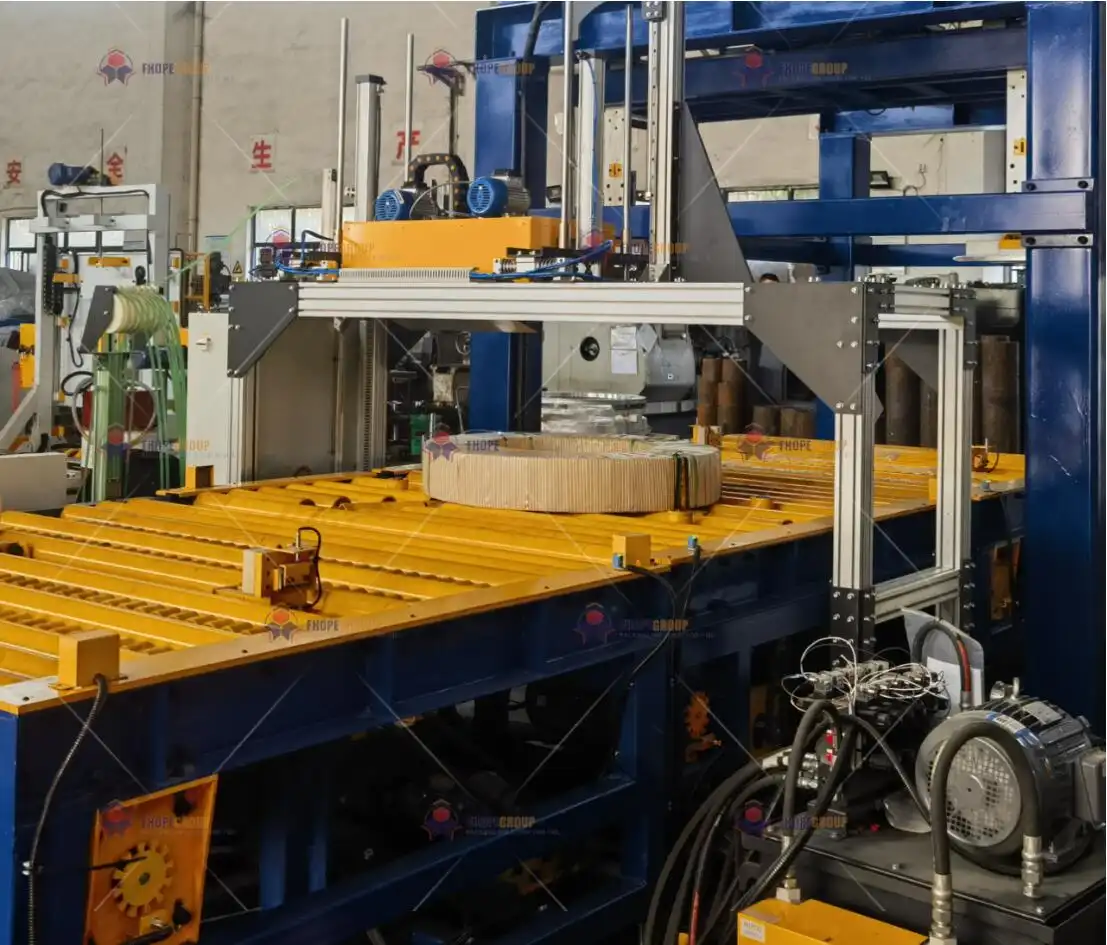
You might be wondering if this sounds like a dream for your production line. Trust me, it is. The transition from manual chaos to automated precision can transform your factory’s output and bottom line. Let us dive deeper into how these machines solve real-world problems and what you need to know about them. (benefits of coil packing automation, improving factory output)
1. What challenges does manual steel coil packing present, and why automate?
Imagine a typical day in a metal processing plant. Workers are struggling to wrap heavy steel coils by hand. The process is slow, inconsistent, and physically demanding. Accidents are a real risk, from back injuries to crushed limbs, and the cost of insurance and employee turnover keeps rising. This inefficiency creates a huge bottleneck, slowing down deliveries and affecting customer satisfaction. (manual coil packing challenges, worker safety concerns)
Manual steel coil packing introduces significant challenges including slow operational speeds, high labor costs, severe safety risks for workers handling heavy materials, and inconsistent packaging quality that often leads to product damage. Automating this process directly addresses these issues by drastically increasing packing speed, reducing the need for manual labor, enhancing workplace safety through robotic handling, and ensuring uniform, secure packaging for every coil. (manual vs automatic packing, industrial safety solutions)

These problems are not unique; I have seen them in factories worldwide. The desire to improve is universal. Moving from manual to automatic packaging is not just about buying new equipment. It is about investing in a solution that tackles your biggest operational headaches. It is about creating a safer environment for your team and protecting your valuable products from damage. (factory operational efficiency, product damage prevention)
Common Pain Points of Manual Packing & How Automation Solves Them
Manual packing methods, especially for heavy items like steel coils, are outdated in today’s demanding industrial landscape. They introduce a cascade of problems that affect every part of your business, from the production floor to customer relationships. Let us break down these challenges and see how an automated system from a reliable partner like FHOPEPACK offers a clear path forward.
⛔ Efficiency Bottlenecks
Manual processes are inherently limited by human speed and endurance.
- Problem: Slow wrapping and strapping times mean coils pile up at the end of the production line. This creates a backlog and delays shipment. Your overall production speed suffers, no matter how fast your upstream processes are.
- Solution: Automatic coil packing machines can process coils at rates far exceeding manual efforts, often several coils per minute. They operate continuously without fatigue, ensuring a smooth, uninterrupted flow.
- ⚡ Benefit: Significantly boosts throughput and reduces lead times. (production line bottlenecks, manufacturing efficiency improvement)








