
How Do Hydraulic Pallet Changers Compare With Electric Models?
In today’s fast-paced logistics world, inefficient pallet handling can cost businesses significantly. I often hear from warehouse managers, just like Carlos from Spain, about the constant struggle with diverse pallet sizes, the rising cost of labor, and the ever-present risk of workplace injuries. These issues do not just slow down operations; they eat into your profits and can even damage client relationships. You need a solution that improves efficiency, enhances safety, and keeps your operations smooth. This is where pallet changers come into play, but choosing the right type – hydraulic or electric – is crucial. Making the wrong choice can lead to further headaches and wasted investment.
Hydraulic pallet changers rely on fluid power to move heavy loads with significant force, offering robust performance for demanding industrial environments. Electric models, on the other hand, utilize electric motors and gear systems to provide precise, often quieter, operations, suitable for lighter, repetitive tasks and environments prioritizing cleanliness and energy efficiency. The core difference lies in their power source and how they apply force, which directly impacts their performance, maintenance, and suitability for various warehouse challenges, especially when frequent pallet changes between Euro and US specifications are needed.

As someone who started on the factory floor and built FHOPEPACK, I understand the practical implications of every machine you bring into your operation. Choosing between hydraulic and electric pallet changers is not just a technical decision; it’s a strategic one that affects your bottom line, your team’s safety, and your long-term operational success. Let’s dig deeper into these two technologies to help you make the most informed decision for your warehouse.
What is the Core Difference Between Hydraulic and Electric Pallet Changers?
When you look at a pallet changer, it might seem like a simple machine. But under the hood, the way it generates and applies power is fundamentally different between hydraulic and electric models. This core difference dictates everything from their strength to their speed and even their environmental footprint. If you do not understand this, you might pick a machine that is either overkill or underpowered for your specific needs, leading to operational inefficiencies down the line.
The primary distinction between hydraulic and electric pallet changers lies in their power transmission method. Hydraulic systems convert fluid pressure into mechanical force using pumps and cylinders, making them excellent for heavy, continuous loads. Electric systems use motors and mechanical linkages (like screws or gears) to generate movement, often providing more precise control and energy efficiency for varied applications.
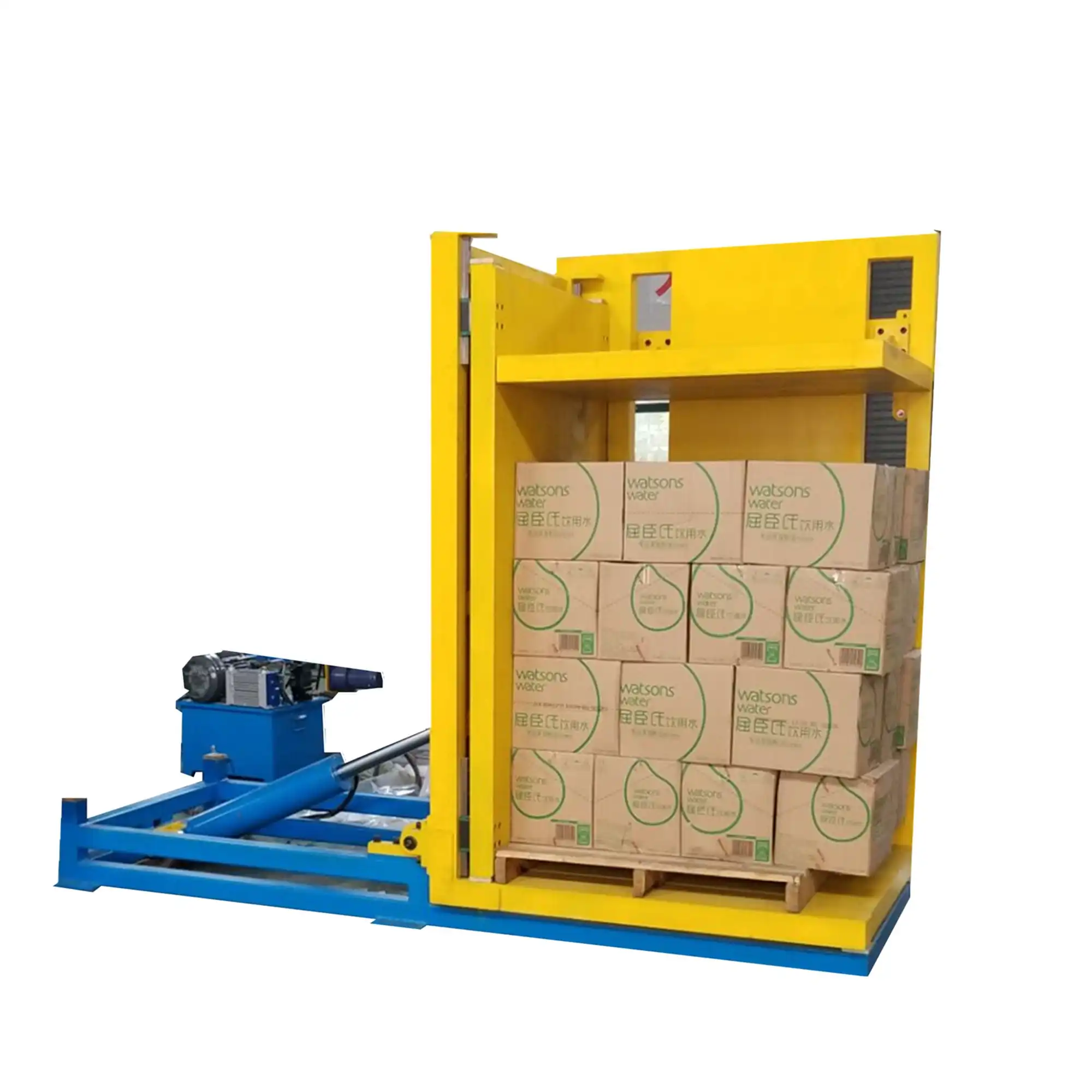
Understanding the engineering behind these systems helps clarify their practical advantages and disadvantages. From my early days working in packing machine factories, I learned that the power source is often the first thing to consider when designing or selecting industrial equipment.
-
Hydraulic Power Systems: These systems are built for brute force. A hydraulic pallet changer uses a powerful motor to drive a pump. This pump pushes hydraulic fluid through hoses and into cylinders. The pressure of this fluid then moves pistons within the cylinders, which generates the massive force needed to lift, clamp, or invert heavy pallets. This setup makes them ideal for handling very heavy, unstable, or oversized loads, like what we often see in coil packing or heavy machinery handling. They offer very smooth and controlled movements, even under high stress. However, they need regular checks of fluid levels and filters. The system can be complex, and potential fluid leaks require careful maintenance to prevent environmental contamination and slip hazards in the warehouse. (long-tail keywords:
hydraulic pallet inversion systems,fluid power pallet handling,heavy-duty pallet exchange technology,industrial hydraulic systems) -
Electric Drive Systems: Electric pallet changers operate differently. They use electric motors, often paired with gearboxes or ball screws, to create mechanical motion. The motor directly converts electrical energy into rotational force, which then drives the clamping, lifting, or inverting mechanisms. These systems are typically more precise in their movements, as the speed and position of the motor can be controlled very accurately with electronics. They are generally cleaner and quieter than hydraulic systems because there are no fluids under high pressure that could leak. Electric models are increasingly common for tasks requiring quick, repetitive cycles and in environments where noise or fluid contamination is a major concern, such as food processing plants where hygiene is paramount. (long-tail keywords:
electric pallet transfer solutions,motorized pallet inverter,precise electric pallet changing,clean warehouse pallet solutions) -
Key Distinctions at a Glance: To make this comparison clearer, I often advise my clients to look at these direct contrasts.
Feature Hydraulic Pallet Changers Electric Pallet Changers Power Source Fluid pressure (pumped by a motor) Electric motors directly Force Generation High, consistent force; ideal for very heavy loads Varies; good for moderate to heavy loads; precise control Control Smooth, often variable speed; less precise positioning Very precise speed and position control; repeatable Noise Level Generally louder due to pump operation Typically quieter Environmental Risk of fluid leaks; fluid disposal concerns Cleaner operation; no fluid leaks; potential energy saving Typical Use Heavy industrial, construction, large volumes, stable Food & beverage, pharmaceuticals, general warehousing, precise handling Maintenance Fluid checks, filter changes, seal inspections Motor checks, electrical connections, sensor calibration (long-tail keywords:
core pallet changer technology,pallet changer operating principles,hydraulic vs electric mechanisms,power system comparison pallet)
Which System Offers Better Performance and Efficiency?
Performance and efficiency are two sides of the same coin in any busy warehouse. Carlos, managing thousands of pallets daily, knows that even a small dip in efficiency can lead to massive delays and costs. The choice between a hydraulic and electric pallet changer directly impacts your throughput, energy consumption, and overall operational flow. It’s not just about how fast a machine moves; it’s about how effectively it helps you meet your production goals.
The “better” system for performance and efficiency largely depends on the specific demands of your operation. Hydraulic pallet changers excel in raw power and consistent force for extreme heavy loads, ensuring smooth handling. Electric models, while perhaps having lower peak force for the heaviest items, often offer superior energy efficiency and faster, more precise cycle times for light to moderately heavy, repetitive tasks.
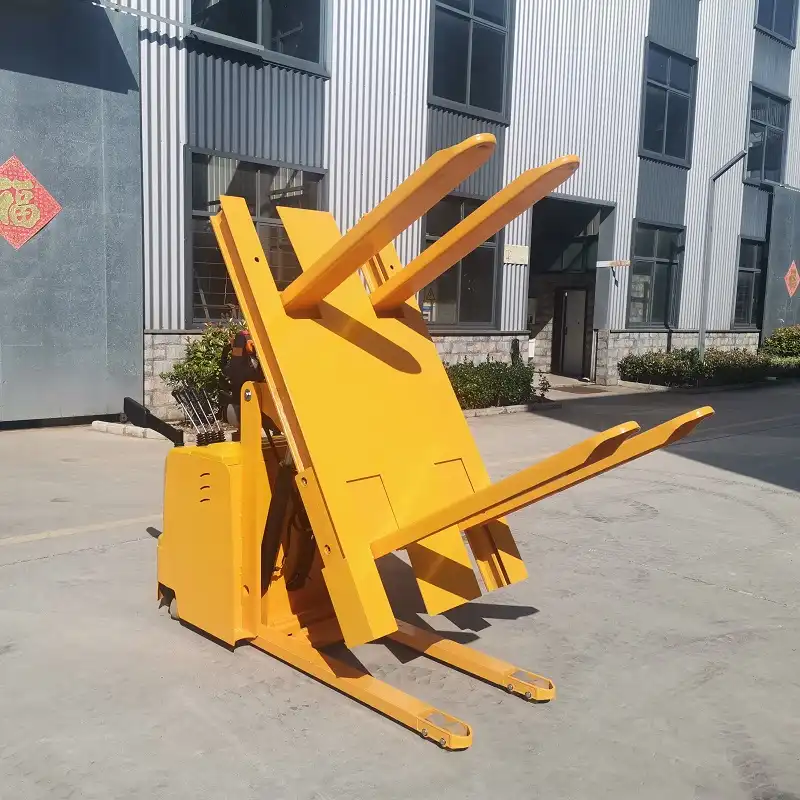
When I help clients like Carlos analyze their operations, we look beyond the initial price tag to the true performance metrics. This is what truly drives long-term value.
-
Speed and Throughput: For sheer speed in high-volume, repetitive tasks with consistent load weights, electric pallet changers often have an edge. Their direct motor control allows for quicker acceleration and deceleration, leading to faster cycle times per pallet. This is crucial for businesses with tight delivery schedules, like those in e-commerce. However, for extremely heavy and delicate loads, where controlled, steady movement is critical to prevent damage, hydraulic systems can outperform by providing robust and smooth handling, even if the cycle time is slightly longer. The stability and force of a hydraulic unit can mean fewer re-works, which also contributes to overall throughput. (long-tail keywords:
pallet changer efficiency metrics,hydraulic vs electric speed,warehouse throughput improvement,fast pallet exchange solutions) -
Energy Consumption: This is a big one for operational costs. Electric pallet changers are generally more energy-efficient, especially when they are idle or operating at partial loads. Electric motors convert electricity directly into mechanical work, with minimal energy loss as heat. In contrast, hydraulic systems constantly run a pump to maintain pressure, even when the machine is not actively moving. This “idle power” consumption can add up, making them less energy-efficient overall. When I was building FHOPEPACK, I saw firsthand how even small energy savings across multiple machines could lead to significant cost reductions over time. For businesses focused on green initiatives and reducing utility bills, electric models often present a more attractive option. (long-tail keywords:
energy saving pallet changers,reducing operational costs pallet,sustainable warehouse equipment,electric pallet inverter power consumption) -
Load Capacity and Versatility: If your primary need is to handle extremely heavy items, often in industrial settings like steel mills or specialized manufacturing, hydraulic pallet changers are the undisputed champions. They are designed to withstand massive forces and offer superior lifting and clamping capacities. This makes them versatile for diverse heavy load applications. However, modern electric pallet changers are rapidly closing this gap, with high-capacity electric models now available that can handle a wide range of standard pallet loads efficiently. For warehouses dealing with a mix of light to moderately heavy items and frequent pallet changes (like Carlos’s Euro vs. US pallet challenge), electric models can offer great versatility without the complexities of a hydraulic system. (long-tail keywords:
heavy-duty pallet exchange performance,versatile pallet handling equipment,pallet changer load limits,industrial pallet transfer solutions) -
Operational Smoothness and Precision: Hydraulic systems are renowned for their smooth, controlled movements, which can be critical when handling fragile or unstable loads. The fluid absorption of shocks helps prevent sudden jolts. Electric systems, with advanced servo motor controls, also offer very high precision and repeatability, which is beneficial for automated integration or when specific positioning is needed. For example, if you need to align pallets precisely for an automated guided vehicle (AGV) system, electric models often provide that level of accuracy. (long-tail keywords:
smooth pallet inversion,precise pallet changer control,automated pallet handling systems,minimizing product damage pallet)
How Do They Compare on Reliability and Maintenance Needs?
Reliability is the backbone of any productive warehouse. A pallet changer sitting idle due to a breakdown is not just a nuisance; it’s a direct hit to your productivity and potentially your reputation. Carlos mentioned the importance of reliability, knowing that if the pallet switching fails, shipments are delayed, and contracts can be breached. Understanding the maintenance demands of hydraulic versus electric systems is key to ensuring your operation runs without costly interruptions.
Both hydraulic and electric pallet changers can be highly reliable with proper maintenance and quality manufacturing. However, their maintenance needs differ significantly: hydraulic systems require regular checks for fluid levels, filters, and seals to prevent leaks and ensure smooth operation, while electric models focus on motor health, electrical connections, and sensor calibration.
As an engineer who has spent years perfecting packing machine designs, I know that preventative maintenance is not an expense; it is an investment. It ensures longevity and consistent performance, preventing unexpected downtime that can cripple a supply chain.
-
Component Lifespan and Wear: Hydraulic systems consist of pumps, valves, cylinders, hoses, and seals. Over time, seals can degrade, hoses can crack, and pumps can wear out, especially if the fluid is not maintained properly. Regular fluid changes and filter replacements are essential to extend the life of these components. Electric systems primarily involve motors, gearboxes, sensors, and electrical wiring. Motors are generally long-lasting, but bearings can wear, and electrical components can fail due to surges or environmental factors. With FHOPEPACK, we design our machines, whether hydraulic or electric, with robust, high-quality components meant to withstand the demanding environment of a busy warehouse. (long-tail keywords:
pallet inverter maintenance tips,hydraulic system reliability,electric motor lifespan,heavy duty pallet changer components) -
Routine Maintenance Tasks: For a hydraulic unit, routine maintenance includes checking hydraulic fluid levels, inspecting hoses and fittings for leaks, changing filters, and periodically replacing the hydraulic fluid itself. These tasks require specific skills and can be a bit messy. For an electric unit, maintenance typically involves checking motor lubrication, inspecting electrical connections for corrosion or looseness, verifying sensor functionality, and ensuring that safety interlocks are working correctly. Often, electric systems also benefit from software updates to optimize performance and diagnostics. (long-tail keywords:
reducing pallet changer downtime,preventative maintenance warehouse,hydraulic fluid maintenance,electric pallet system care) -
Common Failure Points: The most common issue with hydraulic systems is fluid leaks. A leak can reduce pressure, impact performance, create slip hazards, and require costly cleanup. Pump failures are also possible. For electric systems, common failures might include sensor malfunctions, motor overloads, or issues with control boards. While both systems can experience breakdowns, the nature of the repair might differ. Hydraulic repairs can sometimes be more involved due to the pressure systems and fluid handling. Electric repairs often involve swapping out modular components, which can sometimes be faster. (long-tail keywords:
common pallet changer faults,hydraulic leak detection,electric pallet changer troubleshooting,optimizing pallet exchange uptime) -
FHOPEPACK’s Commitment to Durability and Support: When I founded FHOPEPACK, my goal was not just to build machines, but to build partnerships. That is why we focus heavily on the durability of our equipment, ensuring that whether you choose a hydraulic or electric pallet changer, it is built to last. Our designs incorporate features that simplify maintenance wherever possible, and our team is always ready to provide expert support. This commitment helps our clients, like Carlos, minimize downtime and maximize their operational lifespan, allowing them to truly grow their businesses without constant worries about equipment failures. (long-tail keywords:
FHOPEPACK reliability,durable packing machines,customer support pallet changers,long-term pallet handling solutions)
What About Safety and Environmental Impact?
Safety is paramount in any industrial setting, especially in a bustling warehouse where heavy machinery is constantly in motion. Carlos’s concern about accidents and injuries due to manual pallet handling perfectly illustrates this. Beyond safety, the environmental footprint of your equipment is becoming an increasingly important consideration for businesses worldwide. The choice between hydraulic and electric pallet changers carries significant implications for both your team’s well-being and your company’s ecological responsibility.
Electric pallet changers generally offer a cleaner, quieter operational environment with fewer inherent risks associated with high-pressure fluids. Hydraulic systems, while robust, can pose safety risks from potential leaks and higher noise levels, requiring strict maintenance protocols to mitigate these issues. Both types can be extremely safe and environmentally responsible if designed and operated correctly with modern safety features.
I have seen firsthand the devastating impact of workplace accidents. That is why, at FHOPEPACK, safety is never an afterthought. We integrate it into every stage of design and manufacturing. Similarly, being responsible about our environmental impact is crucial for modern businesses.
-
Operator Safety Features: Both hydraulic and electric pallet changers, especially those from reputable manufacturers like FHOPEPACK, come with a range of safety features. These include emergency stop buttons, light curtains, safety interlocks, and protective guarding to prevent access to moving parts. However, there are inherent differences. Hydraulic systems operate under high fluid pressure, and a burst hose or a sudden leak can be dangerous, potentially causing injuries or creating slip hazards. Electric systems do not have these fluid-related risks, but they do have electrical hazards that must be managed through proper grounding and insulation. For Carlos, who has experienced accidents, the robustness of safety protocols and the inherent design safety are crucial considerations. (long-tail keywords:
safe pallet handling equipment,warehouse worker safety,pallet changer safety features,reducing industrial accidents) -
Noise Levels in the Warehouse: Noise pollution is a common problem in warehouses, contributing to worker fatigue and communication difficulties. Electric pallet changers are significantly quieter than hydraulic models because they do not have a constantly running hydraulic pump. This can greatly improve the working environment, especially in operations where multiple machines are running simultaneously or where noise regulations are strict. A quieter environment means less stress for employees and potentially fewer long-term health issues related to noise exposure. This is a subtle but important benefit for employee well-being and overall warehouse atmosphere. (long-tail keywords:
warehouse noise reduction,quiet pallet changing solutions,improving work environment,low-noise industrial equipment) -
Environmental Considerations: The environmental footprint of equipment is increasingly scrutinized. Hydraulic fluids, if they leak, can contaminate soil and water, requiring specialized cleanup and disposal. While biodegradable hydraulic fluids are available, they are often more expensive. Electric pallet changers, by contrast, are inherently cleaner. They do not use hydraulic fluids, eliminating the risk of spills. Their generally higher energy efficiency also contributes to a smaller carbon footprint by reducing electricity consumption, especially if the electricity comes from renewable sources. For companies with strong sustainability goals, electric systems offer a clear advantage. (long-tail keywords:
environmental pallet changers,sustainable warehouse practices,reducing carbon footprint industrial,eco-friendly pallet inversion) -
Compliance and Regulations: Regardless of the power source, all pallet changers must comply with local and international safety and environmental regulations. This includes standards for machine guarding, emergency stops, electrical safety, and waste disposal. At FHOPEPACK, we ensure our machines meet or exceed these standards, providing peace of mind for our clients that their operations are not only efficient but also fully compliant. For international operations like Carlos’s, this compliance across different regions (e.g., EU safety standards) is vital to avoid penalties and ensure smooth cross-border logistics. (long-tail keywords:
pallet changer compliance standards,industrial safety regulations,international logistics equipment,warehouse environmental compliance)
Which Pallet Changer is More Cost-Effective for Your Operations?
When making an investment in significant warehouse equipment, the “cost” goes far beyond the initial purchase price. Carlos, as a Supply Chain Head, knows this well. You need to consider the total cost of ownership over the machine’s lifespan, factoring in everything from energy consumption to maintenance, and even the cost of potential downtime. Deciding between a hydraulic and electric pallet changer requires a clear understanding of these long-term financial implications to ensure true cost-effectiveness and a solid return on investment.
Cost-effectiveness for pallet changers is a multi-faceted consideration, encompassing initial purchase price, ongoing operational costs (energy, consumables), maintenance expenses, and the economic impact of reliability and uptime. While electric models often present lower running costs and reduced maintenance due to simpler mechanics, hydraulic units might offer better long-term value for extremely heavy-duty, continuous applications where their robust power is essential.
From my years building and operating a packing machine factory, I learned that a smart investment pays dividends not just in efficiency, but in peace of mind. It is about understanding the full financial picture.
-
Initial Investment Cost: Generally, the upfront cost for a basic electric pallet changer might be slightly lower than a comparable hydraulic unit, especially for lighter duty applications. However, for high-capacity, heavy-duty electric models with advanced features, the initial price can be comparable to, or even exceed, hydraulic systems. The cost also depends heavily on customization. If you need a specialized system for specific pallet dimensions or automation levels, the price will naturally increase for both types. At FHOPEPACK, we focus on providing transparent pricing and helping clients understand exactly what they are investing in, tailoring solutions that fit their budget without compromising quality. (long-tail keywords:
pallet changer ROI,hydraulic vs electric cost,warehouse automation investment,capital expenditure pallet equipment) -
Operating Costs (Energy and Consumables): This is where electric pallet changers often show a significant advantage. As discussed earlier, they are typically more energy-efficient, especially during idle times. This translates directly to lower electricity bills over the machine’s operational life. Hydraulic systems have additional consumable costs, mainly hydraulic fluid and filters, which need regular replacement. While these individual costs might seem small, they add up over months and years. For a large distribution center like Carlos’s, where machines run for extended periods, these cumulative operational savings can be substantial. (long-tail keywords:
reducing operating costs pallet,energy efficiency warehouse equipment,hydraulic fluid expense,long-term pallet handling savings) -
Maintenance and Repair Costs: Maintenance costs are also crucial. Hydraulic systems can incur costs for fluid disposal, seal replacements, and more complex repairs if a major component like a pump fails. While electric systems also require maintenance for motors and electronics, these often involve more modular component replacements, which can sometimes be quicker and less specialized. However, advanced electronic controls can be expensive to repair if a specific part is needed. The key is regular preventative maintenance for both types. FHOPEPACK offers comprehensive service plans that help manage these costs and extend the life of your investment, regardless of the technology. (long-tail keywords:
pallet changer maintenance costs,industrial equipment repair budget,preventative maintenance ROI,spare parts availability pallet) -
Lifetime Value and Return on Investment (ROI): The real measure of cost-effectiveness is the machine’s lifetime value. A more expensive machine that lasts longer, requires less downtime, and operates more efficiently can offer a much better ROI than a cheaper machine that frequently breaks down or consumes more energy. For Carlos, reducing manual labor, improving safety (fewer accident payouts!), and ensuring rapid, compliant pallet changes are all factors that contribute to a strong ROI. By streamlining operations and avoiding penalties, both hydraulic and electric systems can offer excellent returns, provided they are chosen carefully to match the specific demands of the warehouse. SHJLPACK is also a reputable choice in the market, offering reliable solutions, but at FHOPEPACK, we pride ourselves on building relationships and understanding your unique operational challenges to deliver truly tailored and cost-effective solutions. (long-tail keywords:
warehouse automation ROI,long-term value pallet changers,financial benefits pallet inversion,optimizing supply chain costs)
Conclusion
Choosing between hydraulic and electric pallet changers means balancing power, precision, and ongoing costs with your unique operational needs. Hydraulic systems offer robust strength for heavy loads and continuous duty, while electric models excel in energy efficiency and precise, quieter operations. At FHOPEPACK, we understand your challenges and recommend evaluating your specific load types, throughput goals, and budget. Whichever you choose, FHOPEPACK offers reliable pallet inverter solutions designed to enhance safety and efficiency in your warehouse.








