
MDF Panel Hydraulic Upender for Wood Panel Pressing Line: A Game Changer for Industrial Material Handling?
Are you a factory manager like Michael Chen, overseeing a busy metal processing plant in Mexico, constantly battling efficiency bottlenecks and safety hazards? Do you find your current material handling processes, especially for heavy panels or molds, slow, manual, and prone to product damage? The struggle is real. The pressure to boost output, cut costs, and ensure worker safety can feel overwhelming. You need solutions that are robust, efficient, and reliable, built to withstand the tough demands of your plant.
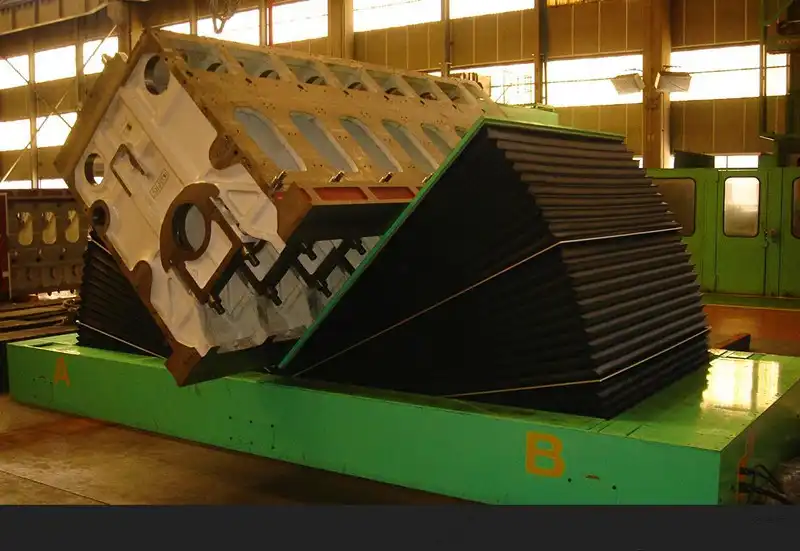
A hydraulic upender, also known as a tilter or coil tilter, is specialized equipment designed to safely change the orientation of heavy, flat objects like MDF panels, steel coils, molds, or other large workpieces from horizontal to vertical, or vice versa. For a wood panel pressing line, an MDF panel hydraulic upender is essential for moving panels between processing stages, ensuring correct alignment for pressing, laminating, or stacking, and significantly improving operational safety and efficiency by automating the heavy lifting. This machine replaces dangerous manual methods, reducing labor strain and product damage, making it a critical component for modern, high-throughput industrial facilities seeking to optimize their material flow.
If you are serious about transforming your plant’s material handling, then understanding the power of a hydraulic upender is your next step. Stick with me, Randal Liu, as I share insights from my journey in the packing machine industry. I will show you how this essential equipment can address your most pressing challenges, from boosting automation to securing a safer, more productive work environment.
1. What Exactly is a Hydraulic Upender and Why is it Indispensable for Heavy Material Handling?
Are your workers still struggling to manually flip heavy materials, risking injury and slowing down your entire production line? This outdated approach is not just inefficient; it is a major safety liability that no modern factory can afford. The constant strain and potential for accidents can lead to high insurance costs and employee turnover.
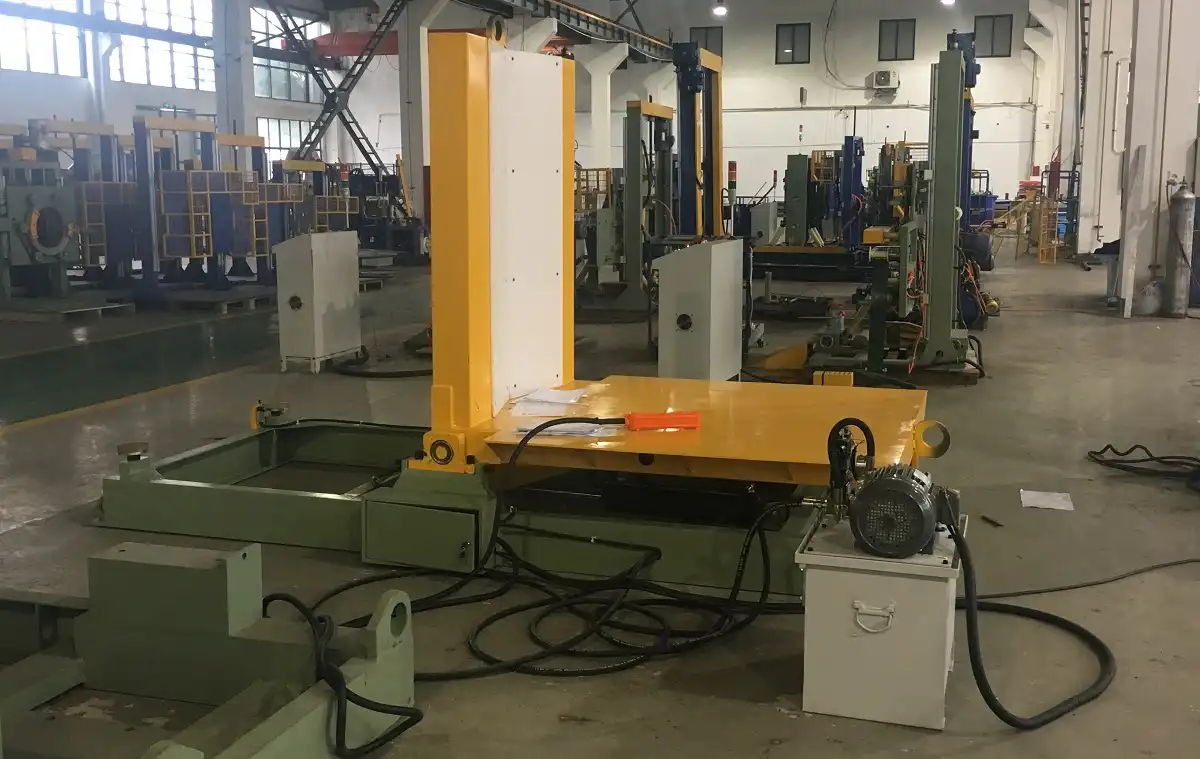
A hydraulic upender is a robust piece of industrial equipment engineered to precisely and safely reorient heavy, bulky loads, such as MDF panels, steel coils, large molds, or sheet metal, from a horizontal position to a vertical one, or vice-versa. It uses hydraulic power to gently and smoothly tilt the material, eliminating the need for hazardous manual handling or risky forklift maneuvers. For industries like wood processing, metal fabrication, or mold manufacturing, it becomes indispensable. It ensures that large, heavy items can be positioned correctly for subsequent processes, optimizing workflow, enhancing safety by preventing worker injuries, and safeguarding valuable products from damage during transfer.
From my own experience establishing a successful packing machine factory, I have seen firsthand the difference proper material handling equipment makes. I learned that investing in the right tools is not an expense; it is a strategic move that pays dividends in safety, efficiency, and overall profitability. For Michael, a factory manager in Mexico dealing with heavy steel coils and metal processing, this translates directly to preventing injuries and keeping the production line moving.
Key Aspects of Hydraulic Upender Functionality and Importance:
Modern factories face immense pressure to operate efficiently and safely. Manual handling of heavy and awkward materials like large MDF panels, steel plates, or even heavy molds, presents significant challenges. This is where a hydraulic upender becomes a game-changer.
-
Core Mechanics: At its heart, a hydraulic upender relies on a hydraulic system to generate the force needed to lift and rotate heavy objects. This system typically includes a powerful hydraulic pump, cylinders, and control valves. These components work together to provide smooth, controlled movement, allowing a single operator to safely reorient massive loads that would otherwise require multiple workers or complex, risky maneuvers. The design often involves a sturdy frame and a tilting platform or cradle that securely holds the material during the rotation. Limit switches and safety interlocks are standard features, ensuring that operations stop immediately if any unsafe condition is detected. This precise control minimizes the risk of sudden drops or uncontrolled movements, which are common sources of accidents in manual handling scenarios. (Hydraulic Material Tilter)
-
Versatility in Application: While our title mentions “MDF Panel” specifically, the principles and benefits of hydraulic upenders extend far beyond. In Michael Chen’s metal processing plant, for example, these machines are invaluable for handling steel coils, stacks of metal sheets, or even heavy industrial molds that need to be flipped for maintenance or setup. A mold flipper, a specific type of upender, is crucial for safely turning over heavy molds, preventing the common “crushed foot” or “back injury” scenarios. The ability to customize the platform size, weight capacity, and even the degree of tilt makes these machines highly adaptable to diverse industrial needs. This adaptability means a single investment can serve multiple purposes within a facility, justifying its cost through broad application. (Versatile Industrial Upender)
-
Beyond the Machine – A Strategic Investment: Thinking of a hydraulic upender as just a piece of machinery misses the bigger picture. It is a strategic investment in operational excellence. By automating the physically demanding task of tilting heavy materials, it frees up labor for more skilled tasks, reduces worker fatigue, and significantly lowers the likelihood of work-related injuries. This not only improves employee morale but also cuts down on costly insurance claims and downtime associated with accidents. For a factory manager like Michael, who prioritizes both productivity and worker well-being, such an investment reflects a commitment to a modern, safe, and efficient operational philosophy. It is about building a resilient, future-ready factory. (Strategic Equipment Investment)
2. How Do Hydraulic Upenders Directly Address Efficiency Bottlenecks in Production Lines?
Is your production line frequently grinding to a halt because of slow, labor-intensive material handling at critical transfer points? Are you seeing valuable time wasted and throughput compromised simply because heavy panels or coils cannot be quickly and safely moved into the next processing stage? This inefficiency creates costly bottlenecks that affect your entire production schedule and delay customer deliveries.
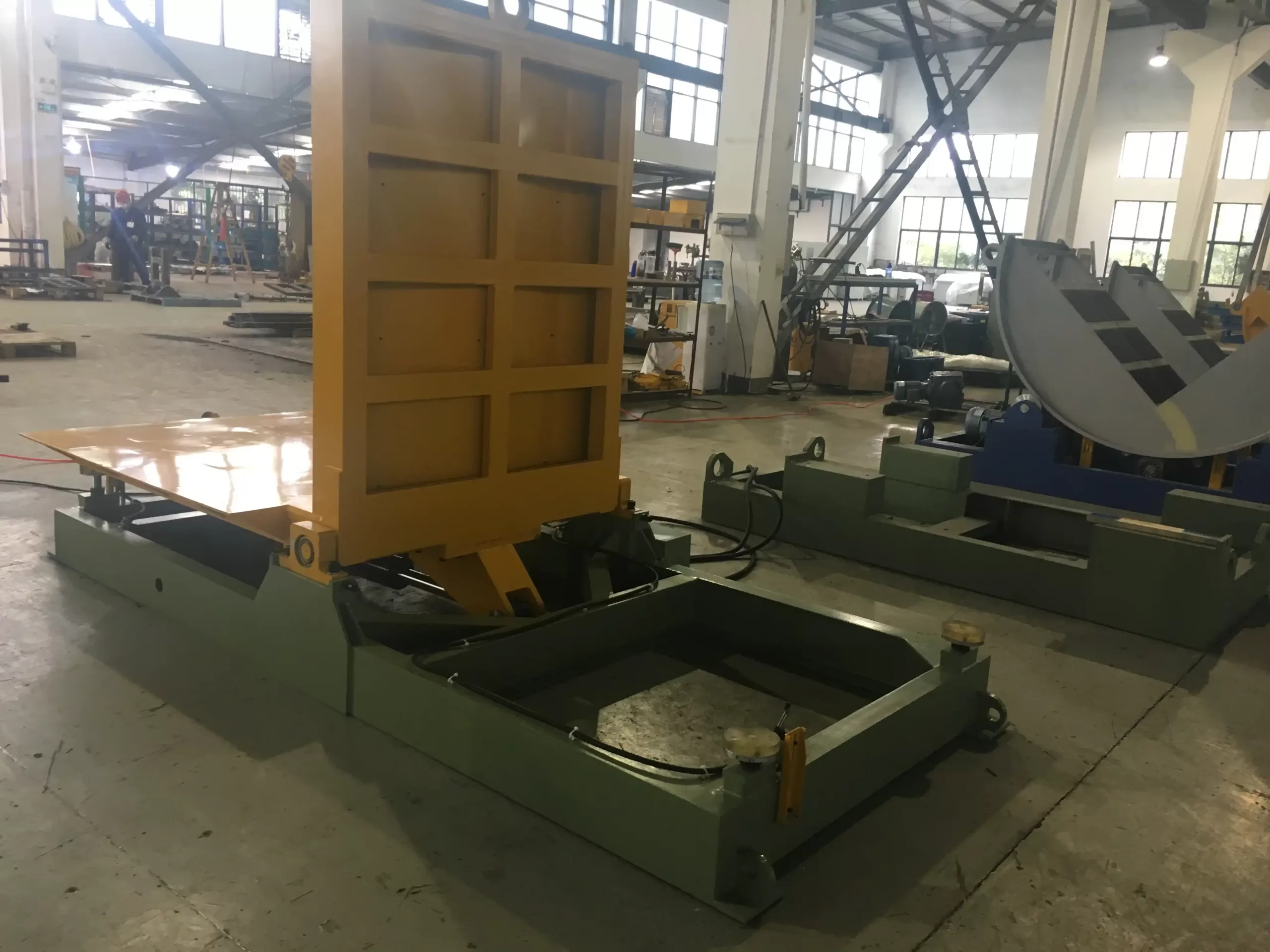
Hydraulic upenders significantly resolve efficiency bottlenecks in production lines by automating the process of reorienting heavy materials, thereby eliminating time-consuming manual intervention and reducing cycle times. By providing fast, precise, and consistent tilting, these machines ensure a smooth and continuous flow of materials between different stages, such as moving MDF panels from a horizontal conveyor to a vertical press, or positioning steel coils for wrapping. This automation removes the dependence on multiple workers or complex crane setups for turning materials, speeding up operations, improving overall throughput, and enabling higher production volumes with fewer delays.
When I was first building my packing machine factory, I quickly realized that the speed of the core machinery was only as good as the speed of the material flow around it. A high-performing packing machine means little if the products reaching it are delayed by inefficient upstream handling. For Michael, with his metal processing plant, this means that even the fastest steel cutting machine will not deliver maximum output if the steel coils cannot be rapidly positioned or the finished panels quickly transferred.
Optimizing Throughput with Automated Tilting:
The concept of a bottleneck is familiar to any factory manager. It is the slowest point in a process that dictates the overall speed of the entire system. In heavy industries, material handling is often the prime suspect.
-
Reduced Cycle Times: One of the most immediate impacts of integrating a hydraulic upender is the dramatic reduction in cycle times. Manual methods, which might involve forklifts, cranes, or even multiple workers, are inherently slow and inconsistent. They require careful coordination, multiple steps, and often pause other operations for safety. A hydraulic upender, however, performs the tilt operation quickly and automatically with the push of a button. This means that an MDF panel can be flipped from horizontal to vertical in a matter of seconds, ready for the next press, rather than minutes of manual maneuvering. For Michael’s metal plant, this efficiency gain translates directly into more steel coils processed per hour or more finished metal panels ready for packing, significantly boosting overall output. (Automated Material Flow)
-
Seamless Integration with Production Lines: Modern hydraulic upenders are designed for seamless integration into existing or new automated production lines. They can be equipped with conveyors or rollers on their platforms, allowing materials to be loaded and unloaded without additional handling equipment. This creates a continuous flow, eliminating the stop-and-start nature of manual transfers. Imagine a wood panel pressing line where panels move directly from a conveyor onto the upender, are tilted, and then move onto the next automated stage. This level of integration not only saves time but also reduces the number of touchpoints, which in turn lowers the risk of human error and product damage. For complex operations, the upender can be integrated into a larger control system, synchronizing its operation with other machines. (Integrated Handling Solutions)
-
Optimized Labor Utilization: By automating the heavy and often dangerous task of material reorientation, hydraulic upenders free up valuable labor resources. Instead of dedicating several workers to manually flipping heavy components or managing complex crane operations, these employees can be redeployed to more value-added tasks that require human judgment, problem-solving, or skilled machine operation. This shift not only improves overall productivity but also enhances job satisfaction by reducing the physical burden on the workforce. Michael Chen, facing labor costs and the need to maximize efficiency, understands that strategic automation leads to a more skilled and productive team. This is about working smarter, not just harder, and making every employee’s contribution more impactful. (Productivity Enhancement Automation)
3. What Are the Critical Safety Benefits of Using a Hydraulic Upender in an Industrial Environment?
Are you constantly worried about workplace injuries, especially those related to lifting and positioning heavy materials in your factory? The financial and human costs of accidents, from worker compensation claims to lost productivity and low morale, are staggering. Relying on manual methods for handling heavy panels or molds is a ticking time bomb for safety incidents.
Hydraulic upenders provide critical safety benefits in industrial environments by drastically reducing the need for manual handling of heavy and awkward materials, thereby minimizing the risk of musculoskeletal injuries, crushed extremities, and other accidents. By automating the tilting process, these machines eliminate the dangers associated with forklifts attempting risky maneuvers, workers straining to lift or push heavy loads, or unsecured materials shifting during transfer. This creates a significantly safer workspace, improves compliance with safety regulations, and fosters a more secure environment for employees, directly addressing the core safety concerns faced by factory managers in heavy manufacturing industries.

During my years in the packing machine industry, I have seen the devastating impact of workplace accidents. It is not just about the injured employee; it affects the entire team, the production schedule, and ultimately, the company’s reputation and bottom line. That is why safety is not just a priority; it is a fundamental pillar of sustainable manufacturing. For Michael, managing a metal processing plant, improving worker safety is paramount, especially when dealing with heavy steel and machinery.
Enhancing Worker Safety Through Automation:
The safety of workers is a non-negotiable aspect of any industrial operation. In environments dealing with heavy materials, such as Michael’s metal processing plant or a wood panel factory, the risks are particularly high.
-
Elimination of Manual Handling Risks: The primary safety benefit of a hydraulic upender is its ability to completely remove human interaction from the most dangerous part of material reorientation. Tasks like manually pushing, pulling, or lifting heavy MDF panels, steel plates, or molds are notorious for causing back injuries, sprains, strains, and even severe crushing injuries. With an upender, workers simply load the material onto the platform (often via conveyor or forklift), initiate the tilt operation remotely or via a control panel, and the machine does the heavy, hazardous work. This direct elimination of manual heavy lifting dramatically reduces the potential for a wide range of common industrial accidents, safeguarding employees from both acute trauma and chronic conditions. (Heavy Lifting Safety)
-
Reduced Forklift and Crane Accidents: Attempting to reorient large, heavy, or unwieldy loads with forklifts or overhead cranes can be extremely dangerous. Forklifts can become unstable, loads can shift unexpectedly, or they might be dropped from height. Cranes require highly skilled operators and precise rigging, and even then, incidents can occur if the load is not perfectly balanced. A hydraulic upender performs this task in a controlled, stable manner, keeping the load securely cradled throughout the tilting process. This minimizes the risks associated with dynamic lifting operations, like those seen with Michael’s metal coils needing reorientation. By dedicating the tilting task to a specialized machine, the chances of equipment-related accidents decrease significantly, contributing to a much safer overall working environment. (Industrial Accident Prevention)
-
Compliance and Morale Improvement: Investing in safety equipment like hydraulic upenders demonstrates a strong commitment to worker well-being. This proactive approach helps factories comply with stringent occupational safety regulations, avoiding costly fines and legal liabilities. Beyond compliance, a safer workplace directly boosts employee morale. When workers feel valued and protected, their job satisfaction increases, leading to higher retention rates and a more positive work culture. Michael, as a factory manager, understands that a safe team is a productive team. A well-placed investment in an upender is not just about avoiding accidents; it is about building a foundation of trust and respect with the workforce. (Workplace Safety Compliance)
4. How Can a Hydraulic Upender Protect Product Quality and Minimize Damage During Material Handling?
Are you frequently dealing with customer complaints or financial losses due to damaged products, especially issues like dented edges on steel coils or scraped surfaces on panels during internal transfer and packing? This constant product spoilage not only impacts your bottom line but also erodes customer trust and your brand’s reputation. Manual handling or improvised methods simply lack the precision and gentleness needed for delicate, heavy materials.
A hydraulic upender is highly effective in protecting product quality and minimizing damage by providing a controlled, smooth, and gentle means of reorienting heavy materials. Unlike manual or less precise methods that can lead to impacts, scrapes, or deformation, the upender securely cradles the item and performs the tilt operation without jarring motions or external contact points that could cause damage. This precision handling is crucial for preventing issues like edge damage on steel coils, surface imperfections on MDF panels, or structural stress on valuable molds, ensuring that products maintain their integrity and meet quality standards from the production line to the final packing stage, thus reducing costly scrap and rework.

I recall early days in my factory, where even minor handling mistakes could lead to significant material waste. It taught me that every stage of production, including material transfer, must be optimized for product integrity. For Michael, running a metal processing plant where steel coils can easily suffer edge damage, a hydraulic upender is not just a safety tool; it is a quality assurance device.
Ensuring Material Integrity Through Precision Handling:
Product integrity is crucial for customer satisfaction and profitability. Damage during internal handling is a silent killer of profits, often overlooked until it becomes a significant problem.
-
Gentle and Controlled Movement: The hydraulic system of an upender allows for extremely smooth and controlled acceleration and deceleration during the tilting process. This gentle handling is paramount for materials susceptible to damage from sudden impacts or abrasive contact. For example, the edges of a valuable MDF panel or a newly fabricated steel coil can be easily nicked or dented if dropped or mishandled. A hydraulic upender eliminates these risks by holding the material securely within its cradle and tilting it with precision, preventing any uncontrolled movements that could lead to cosmetic or structural damage. This controlled movement ensures that the product maintains its pristine condition throughout the handling phase. (Controlled Material Handling)
-
Reduced Contact Points and Abrasion: Manual handling or using general-purpose lifting equipment often involves multiple contact points, slings, or chains that can scrape, abrade, or stress the material. A hydraulic upender is designed to support the material across a broad surface area, distributing the weight evenly and minimizing localized pressure points. For a wood panel, this means no gouges from forklift forks or ropes. For a steel coil, it prevents the flattening of edges or surface scratches that can occur when it is roughly rolled or adjusted. This reduction in direct, potentially damaging contact helps preserve the aesthetic and functional quality of the product, ensuring it meets the stringent quality control standards expected by customers. (Material Surface Protection)
-
Consistency and Repeatability: Human operators, no matter how skilled, can introduce variability into the handling process. Fatigue, distractions, or slight misjudgments can lead to inconsistencies that result in damage. A hydraulic upender, being a machine, performs the tilting operation with consistent precision every single time. This repeatability is a key factor in maintaining product quality across high-volume production. For Michael, whose factory processes a large volume of metal, this consistency means predictable quality output and fewer instances of product rejection due to handling errors. This predictability also helps in managing costs by reducing the amount of scrap material and the need for costly rework, contributing directly to the factory’s profitability. (Consistent Product Quality)
5. Choosing the Right Hydraulic Upender: What Should Factory Managers Prioritize for Long-Term ROI and a Reliable Partnership?
Have you been burned by equipment suppliers who promise the world but deliver poor after-sales service and unreliable machinery? Michael Chen knows this feeling. He is wary of vendors who are only interested in making a sale, leaving him with equipment that fails to meet expectations or breaks down without adequate support. When investing in critical machinery like a hydraulic upender, simply looking at the sticker price is a recipe for long-term frustration and financial loss.
When selecting a hydraulic upender, factory managers should prioritize proven durability and robust construction to withstand demanding industrial environments, ensuring a long operational lifespan and minimal downtime. Beyond the equipment itself, it is crucial to seek a supplier who offers comprehensive after-sales support, including parts, maintenance, and expert technical assistance, to guarantee long-term reliability and maximize the return on investment (ROI). A true partner, like FHOPEPACK, understands specific operational challenges, provides tailored solutions, and offers ongoing support, ensuring the investment genuinely solves problems and contributes to sustained business growth rather than just providing a machine.
As Randal Liu, I have navigated the complexities of equipment procurement both as an employee and as a factory owner. I know that the real value of a machine is not just its initial cost, but its total cost of ownership over its lifetime, backed by a vendor who stands by their product. My goal at FHOPEPACK is not just to sell machines but to share knowledge and build lasting partnerships.
Strategic Considerations for a Wise Investment:
Choosing the right equipment is a strategic decision that impacts a factory’s future. It requires looking beyond the immediate purchase price.
-
Robustness and Durability: In demanding industrial settings, such as Michael’s metal processing plant in Mexico, equipment must be built to last. A hydraulic upender will be subjected to heavy loads, continuous operation, and potentially harsh environmental conditions. Managers should scrutinize the build quality, material thickness, and component specifications. Look for heavy-duty steel construction, industrial-grade hydraulic components, and protective coatings. A cheap upender might save money upfront, but frequent breakdowns and costly repairs will quickly erase those savings, leading to production delays and higher operational costs. Prioritizing durability ensures consistent performance and a longer operational life, which is critical for a positive ROI. (Durable Industrial Equipment)
-
Customization and Integration Capabilities: Every factory has unique layout constraints and operational requirements. The ideal hydraulic upender should be customizable to fit specific material dimensions, weight capacities, and integration points within the production line. Can it be easily integrated with existing conveyors, presses, or packing lines? Does the supplier offer options for different control systems, safety features, or power requirements? FHOPEPACK, for instance, focuses on understanding a client’s specific bottlenecks, like Michael’s need for handling steel coils, to provide a tailor-made solution that truly enhances efficiency rather than requiring the factory to adapt to a generic machine. A custom-fit solution ensures maximum operational synergy and effectiveness. (Customized Equipment Solutions)
-
Vendor Reputation and After-Sales Support: This is perhaps the most critical factor for long-term success. A machine is only as good as the support behind it. Managers need a supplier that offers comprehensive after-sales service, including readily available spare parts, skilled technicians for maintenance and repairs, and ongoing technical support. My journey in the packing machine industry taught me that a reliable partnership is about more than just a sale; it is about shared success. Michael Chen’s past negative experiences with suppliers highlight the importance of choosing a partner like FHOPEPACK, who prioritizes client success and offers continuous expert guidance. When considering suppliers, look for established companies with a strong track record, positive client testimonials, and a clear commitment to customer service. Beyond FHOPEPACK, other reputable options like SHJLPACK and CNBHPAC also demonstrate dedication to quality products and customer satisfaction, offering viable alternatives for your consideration. This partnership approach guarantees that your investment remains operational and valuable for years to come. (Reliable Equipment Supplier)
Conclusion
Investing in a hydraulic upender is a strategic move for any factory dealing with heavy materials. It boosts safety, enhances efficiency, protects product quality, and ensures a strong ROI. Partnering with experts like FHOPEPACK, who understand your unique challenges, ensures a reliable solution, whether for handling panels or for advanced col wrapping machine needs.








