
How Can a Hydraulic Upender Be Customized for Different Coil and Panel Sizes?
Factories often face a tough challenge: moving heavy, bulky materials like steel coils or panels. The wrong approach leads to slow work, damaged products, and dangerous conditions for workers. I have seen this problem many times in my journey from a factory employee to owning a packing machine business. Companies need solutions that are safe, efficient, and prevent costly losses. (material handling challenges in manufacturing)
A hydraulic upender can be customized by adjusting its load capacity, platform dimensions, rotation angle, and control systems to precisely match the unique size, weight, and handling requirements of various coils and panels, ensuring safe and efficient material transfer. This tailored approach solves specific operational bottlenecks, improves worker safety, and protects product integrity during internal transport and packaging. (custom industrial lifting equipment solutions)
As someone who has worked on the factory floor and built a successful packing machine company, I understand these pressures. Off-the-shelf equipment often falls short. It cannot handle every specific need. This is why customization is not just a nice-to-have; it is essential. Let’s explore how a hydraulic upender can be made to fit your exact operational demands. This will help you achieve better efficiency and safety. (tailored material handling solutions benefits)
1. What Key Components of a Hydraulic Upender Can Be Tailored for Specific Dimensions and Weights?
Are you tired of equipment that almost fits but not quite? Standard hydraulic upenders might handle common sizes, but what about your unique, oversized coils or unusually shaped panels? Trying to force a generic machine to do a specialized job often leads to inefficiencies, increased risks, and potential damage to your valuable products. (customizable industrial machinery components)
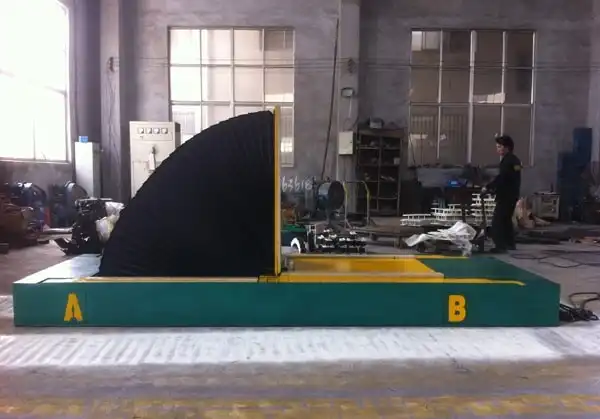
Key components of a hydraulic upender that can be tailored include the size and shape of the platform, the load capacity of the hydraulic cylinders, the rotation speed and angle, and specialized clamping or support mechanisms, all designed to accommodate specific coil diameters, panel lengths, and material weights with precision and safety. These modifications ensure the upender integrates seamlessly into existing production lines. (hydraulic tilter design variations)
From my experience establishing and running a factory, I know that even small details matter. A machine that cannot perfectly handle your specific product introduces risk. This risk can be to workers or to the product itself. For example, if a coil is not properly secured, it can shift during rotation. This can cause significant damage or serious injury. Customization ensures that every part of the upender is built for your materials. This includes both their size and their weight. Customization options for hydraulic upenders are broad. They go beyond just making the platform bigger. We look at the total system to ensure it works perfectly for your needs.
Load Capacity and Structural Reinforcement
The maximum weight an upender can lift and rotate is crucial. It directly impacts safety and performance.
- Hydraulic Cylinders: We select cylinders with the right bore size and stroke length. This ensures they provide enough force for your heaviest coils or panels.
- Frame Materials: The steel frame can be made from high-strength alloys. This gives it extra rigidity for very heavy loads. For example, a 20-ton steel coil requires a much more robust frame than a 2-ton aluminum panel.
- Bearing Systems: Heavy-duty bearings support the rotating platform. They handle continuous use without failure, even with extreme loads. When I started FHOPEPACK, one of the first things I learned was that under-specifying equipment capacity leads to breakdowns and dangers. It is always better to over-engineer slightly. This ensures reliability for years.
Platform Dimensions and Surface Design
The part of the upender that holds your material needs to be an exact fit.
- Length and Width: The platform size is matched to the largest coil diameter or panel length you process. This prevents overhang or instability. Imagine a large steel sheet extending too far off the platform; it would be unstable and unsafe.
- V-Blocks or Flat Beds: For coils, V-blocks ensure the coil stays centered. For panels, a flat, level surface is key. Some upenders even have adjustable V-blocks for different coil diameters.
- Surface Coatings: We can add non-slip surfaces. These prevent material movement during operation. They also protect delicate surfaces from scratches. For example, a heavy-gauge steel coil needs a durable, grippy surface. (heavy-duty coil lifting equipment)
Rotation Angle and Speed Control
How the upender moves is just as important as what it lifts.
- Specific Rotation: Most upenders rotate 90 degrees. Some applications might need a 180-degree rotation or even a full 360-degree continuous rotation.
- Variable Speed Drives: We can integrate controls that allow operators to adjust rotation speed. This is important for fragile materials or precise positioning. Slow, controlled movements prevent sudden shifts that could cause damage.
- Soft Start/Stop: This feature ensures smooth acceleration and deceleration. It prevents jerking motions. This protects both the equipment and the load. (precision material handling rotation)
Specialized Clamping and Support Systems
Beyond the platform, how the material is held makes a big difference.
- Hydraulic Clamps: For panels or stacks of sheets, hydraulic clamps can secure the load. This prevents shifting during the upending cycle.
- Adjustable Side Guides: These guides can be manually or hydraulically adjusted. They center and stabilize coils of different widths.
- Integrated Conveyors: Sometimes, an upender needs to be part of a larger system. We can build in powered rollers or chain conveyors. This helps in loading and unloading. This automation further improves efficiency. In my factory, we learned that automation around the upender, like integrated conveyors, can cut loading and unloading times significantly. This often translates to a boost in overall output. (custom hydraulic turning devices)
Control Systems and Automation
The brain of the upender can also be customized.
- PLC Integration: We can program the Programmable Logic Controller (PLC) to automate specific upending sequences. This integrates with your existing factory automation.
- Safety Interlocks: These systems ensure the machine only operates when it is safe to do so. For example, it might not start if a safety gate is open. This protects workers.
- Remote Operation: Wireless controls allow operators to manage the upender from a safe distance. This is especially useful in busy production areas. When I think about the challenges Michael Chen faces in Mexico, safety and efficiency are paramount. Custom control systems directly address both by providing precise operation and integrating robust safety features. This reduces human error and injury risk. (automated coil handling safety)

2. How Does Customization Directly Address Production Bottlenecks and Enhance Workplace Safety?
Are your current material handling processes slowing down your entire production line? Do you worry about the safety of your employees every time they manually move a heavy coil or panel? These common factory problems create bottlenecks, increase costs, and lead to high employee turnover. (manufacturing workflow optimization)
Customizing a hydraulic upender addresses production bottlenecks by precisely fitting the equipment to unique material sizes and weights, thus streamlining the flow of goods and reducing manual labor-intensive steps, while significantly enhancing workplace safety by minimizing human interaction with heavy loads, reducing the risk of musculoskeletal injuries and accidents. This tailored approach leads to faster cycle times and a safer working environment. (bespoke material handling equipment safety benefits)
I have personally seen how an ill-suited piece of equipment can cripple an otherwise efficient operation. It is like trying to use a screwdriver to hammer a nail. It does not work well. Customization is not just about fitting a machine to a product; it is about fitting it to your entire process. This means understanding where your bottlenecks are and how to remove them safely.
Eliminating Efficiency Bottlenecks
Manual handling of coils and panels is often the slowest part of the production line. It is also the most prone to errors.
- Faster Throughput: A customized upender automates a critical step. It handles heavy items quickly and reliably. This speeds up the entire process.
- Reduced Manual Labor: Less manual lifting and positioning means workers can focus on higher-value tasks. This also reduces fatigue and errors.
- Seamless Integration: When designed for your specific line, the upender fits perfectly. It moves material from one process to the next without interruption. For instance, in a steel processing plant, manually flipping a coil for inspection or packaging can take significant time and multiple workers. A customized FHOPEPACK upender can do it in minutes with one operator, freeing up valuable labor and accelerating the entire process. This is exactly what Michael Chen needs to boost his factory’s overall profitability. (automated industrial process flow)
Enhancing Workplace Safety
Worker safety is not just a moral obligation; it is a critical business factor. Accidents lead to lost time, high insurance costs, and low morale.
- Minimizing Human Contact with Heavy Loads: Custom upenders remove the need for workers to directly lift or manually position heavy coils or panels. This is the biggest safety improvement.
- Ergonomic Benefits: Less strain on workers means fewer musculoskeletal injuries. This leads to lower medical costs and fewer sick days.
- Controlled Movement: Hydraulic systems provide smooth, precise, and controlled movements. This prevents sudden shifts or drops that cause accidents. I remember a time when a client in the wire packing industry had serious issues with workers getting back injuries from manually turning heavy wire coils. After implementing a custom upender, their injury rate dropped dramatically. This not only saved them money but also improved employee morale. This is a common story. Michael Chen’s concern about high injury rates and insurance costs resonates deeply with my experience. (industrial safety equipment ROI)
Reducing Product Damage and Waste
Every damaged product means lost revenue. Customization helps protect your inventory.
- Precise Handling: The upender is built to cradle your specific product. This prevents impacts, scratches, or deformation during transfer.
- Stable Positioning: Specialized clamps and supports ensure the product stays stable during rotation. This reduces the risk of items slipping or falling.
- Consistent Operation: Automated and controlled movements remove human variability. This leads to consistent, damage-free handling every time. When I hear about product damage during internal transport, I immediately think of the impact on customer satisfaction and profit margins. A custom upender from FHOPEPACK can prevent this by providing gentle, secure handling, protecting the value of your finished goods. This is crucial for maintaining a good reputation and client relationships. (coil damage prevention solutions)
Addressing Specific Industry Challenges
| Each industry has its own unique challenges that customization can solve. | Industry | Challenge Addressed by Custom Upender | FHOPEPACK Solution Example |
|---|---|---|---|
| Steel | Handling extremely heavy, hot, or sharp coils. | Heavy-duty, heat-resistant platforms with reinforced structure. | |
| Logistics | Fast, high-volume transfer of diverse panel sizes. | Automated systems with adjustable platforms and quick-change tooling. | |
| Heavy Mfg. | Turning large, unevenly weighted components. | Upenders with dynamic balancing features and custom load cells. |
By understanding your specific industry, we at FHOPEPACK can provide solutions that go beyond generic equipment. This is why our approach is effective. My background as an engineer and factory owner allows me to appreciate these specific pain points. (industry-specific material handling equipment)
3. What is the Process for Designing and Manufacturing a Bespoke Hydraulic Upender Solution?
Considering a custom upender, but unsure how to start? The thought of designing a specialized machine can seem complex or intimidating. You might worry about miscommunication with suppliers, the cost of custom work, or getting a solution that does not truly meet your needs. These concerns are valid. (bespoke industrial machine development)
Designing and manufacturing a bespoke hydraulic upender solution involves a detailed, multi-step process that begins with a thorough needs assessment, progresses through conceptual design and engineering, then moves to precise fabrication and assembly, and concludes with rigorous testing and installation, ensuring the final equipment perfectly matches the client’s unique operational requirements and safety standards. This systematic approach ensures quality and functionality. (custom heavy equipment fabrication process)
When I first started FHOPEPACK, I knew that building trust with clients meant being transparent and systematic. I have seen too many suppliers promise custom solutions without a clear process. This often leads to disappointment. Our approach ensures that you are part of the journey from start to finish. We make sure the final product is exactly what you need.
Step 1: Comprehensive Needs Assessment
This is where we listen and learn about your operation.
- Site Visit and Data Collection: We come to your factory to see your current setup. We measure your materials, observe your processes, and talk to your operators. This helps us understand the context. For example, we identify existing safety hazards or efficiency bottlenecks like Michael Chen mentioned.
- Detailed Material Specifications: We gather precise data on your coils or panels. This includes weight, dimensions (diameter, width, length, thickness), material type, and any special handling requirements (e.g., delicate surfaces, hot materials).
- Operational Goals: We discuss your specific goals. Are you aiming for higher throughput, better safety, reduced damage, or all of the above? Understanding your ROI expectations helps us design effectively. From my own experience, I know that getting this step right saves a lot of trouble later. It is about understanding the real problem before suggesting a solution. This comprehensive look at Michael Chen’s challenges is how we build effective solutions. (industrial equipment requirements gathering)
Step 2: Conceptual Design and Engineering
Once we have the data, our engineers start to bring the solution to life.
- Initial Design Concepts: We develop several conceptual drawings. These illustrate different approaches for your upender. We discuss the pros and cons of each with you.
- 3D Modeling and Simulation: Using advanced CAD software, we create detailed 3D models. We can simulate the upender’s operation. This helps us identify potential issues early.
- Component Selection: We choose the right hydraulic components, motors, electrical controls, and structural materials. We consider durability, availability, and cost-effectiveness. FHOPEPACK uses trusted suppliers for all critical parts.
- Safety Features Integration: Safety is always a primary design focus. We integrate features like interlocks, emergency stops, and guarding from the very beginning. When I think about the technical side, it is about balancing robust engineering with practical application. I want to build machines that last and are easy to maintain, just like the ones I used in my own factory. (precision engineering for heavy machinery)
Step 3: Fabrication and Assembly
This is where the design becomes a physical machine.
- Precision Manufacturing: Our skilled fabricators cut, weld, and machine the steel components to exact specifications. We use high-quality materials and modern manufacturing techniques.
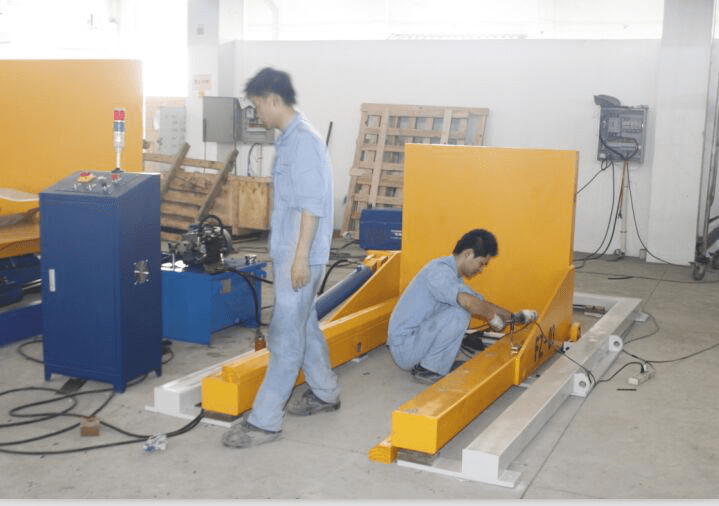
- Hydraulic and Electrical Installation: Experienced technicians install the hydraulic power units, cylinders, valves, and electrical control panels. Every connection is made carefully.
- Quality Control Checks: Throughout fabrication, we perform multiple quality checks. We inspect welds, measure dimensions, and verify component installations. FHOPEPACK has built a reputation for high-quality manufacturing. I believe in attention to detail on the shop floor. This ensures the reliability that Michael Chen values. We also make sure to meet all international standards. (custom machinery manufacturing quality)
Step 4: Testing, Installation, and Training
The final steps ensure the upender performs as expected in your environment.
- Factory Acceptance Testing (FAT): Before shipping, we perform extensive tests in our facility. We test the upender with dummy loads, checking all functions, safety features, and performance metrics. You are welcome to witness this testing.
- Shipping and Installation: We handle the logistics of safely shipping your customized upender. Our team can assist with or supervise the installation at your factory.
- Operator Training: We provide comprehensive training for your operators and maintenance staff. This ensures they can safely and efficiently operate and maintain the new equipment.
- After-Sales Support: My commitment to clients extends far beyond the sale. FHOPEPACK provides ongoing support, maintenance services, and spare parts. This addresses Michael Chen’s past issues with unreliable suppliers. We ensure your investment continues to deliver value. This reflects my own gratefulness to the industry for my success. (industrial equipment after-sales service)
| Stage | Key Activities | Expected Outcome |
|---|---|---|
| Needs Assessment | Site visit, data collection, goal setting | Clear understanding of requirements and challenges |
| Design & Engineering | CAD models, component selection, safety integration | Approved, detailed engineering blueprints |
| Fabrication & Assembly | Welding, electrical/hydraulic installation, QA | High-quality, physically assembled upender |
| Testing & Support | FAT, installation, training, ongoing support | Fully functional, safely integrated, and supported solution |

4. Why is Partnering with an Experienced Manufacturer Crucial for Optimal Upender Customization?
Have you ever invested in new equipment only to find it did not quite solve your problems, or worse, the supplier disappeared after the sale? Michael Chen knows this feeling. He has dealt with suppliers who only care about sales. This experience can make anyone wary of new partnerships, especially for custom solutions where expertise is critical. (industrial equipment supplier trust)
Partnering with an experienced manufacturer like FHOPEPACK is crucial for optimal upender customization because they possess deep industry knowledge, proven engineering capabilities, a track record of successful custom projects, and robust after-sales support, ensuring that the tailored solution is not only precisely designed to meet specific operational needs but also reliable, safe, and backed by long-term service. This expertise mitigates risks and maximizes ROI. (reliable industrial machinery manufacturers)
My journey in the packing machine industry taught me that true partnership is about more than just selling a machine. It is about understanding the client’s business, anticipating their needs, and providing reliable support for years to come. This is the philosophy behind FHOPEPACK. We want to be a partner who truly understands your production bottlenecks, safety concerns, and efficiency challenges. We want to provide reliable solutions and expert insights, much like what Michael Chen seeks.
Deep Industry Knowledge and Expertise
An experienced manufacturer brings years of hands-on knowledge.
- Understanding Specific Applications: We know the unique demands of handling steel coils, aluminum panels, paper rolls, or heavy dies. This includes their material properties, handling risks, and typical production environments.
- Problem-Solving Acumen: My team and I have encountered and solved countless material handling challenges. We can quickly identify the root cause of your issues and propose effective solutions.
- Staying Current with Technology: Experienced manufacturers invest in research and development. We know the latest advancements in hydraulics, controls, and safety systems. When Michael Chen looks for a partner, he wants someone who truly “gets it.” My own story, from factory employee to successful owner, means I understand the pressures of running a plant. I know how important reliable equipment is for the bottom line. FHOPEPACK’s expertise comes from this practical understanding. (specialized material handling expertise)
Proven Engineering and Manufacturing Capabilities
Customization requires more than just good ideas; it needs the ability to execute them.
- Advanced Design Tools: We use state-of-the-art CAD/CAM software for precise design and simulation. This ensures the custom upender is engineered to perfection.
- Skilled Workforce: Our engineers, fabricators, and technicians are highly trained and experienced in building complex industrial machinery.
- Quality Control Systems: A robust quality control process at every stage of manufacturing ensures that the final product meets the highest standards. This capability is what sets FHOPEPACK apart. We have the infrastructure and talent to translate a custom design into a durable, high-performing machine. We ensure every hydraulic upender, whether for FHOPEPACK, SHJLPACK, or CNBHPAC, is built to last. (custom industrial equipment engineering)
A Track Record of Successful Custom Projects
Past success is a strong indicator of future performance.
- References and Case Studies: A reputable manufacturer can provide examples of similar custom solutions they have delivered. This gives you confidence in their ability.
- Long-Term Client Relationships: Clients stick with manufacturers who deliver results and provide good service. This indicates a trusted partnership. Michael Chen’s past experience with unreliable suppliers makes this point critical. I take pride in the relationships FHOPEPACK builds. We have helped many clients grow their businesses by providing effective, long-lasting solutions. (verified industrial equipment solutions)
Robust After-Sales Support and Service
The relationship should not end after the equipment is installed.
- Technical Support: Access to expert technical assistance for troubleshooting or operational questions is vital.
- Spare Parts Availability: An experienced manufacturer maintains a stock of spare parts. This ensures minimal downtime if a component needs replacement.
- Maintenance and Training: Ongoing service, preventive maintenance programs, and refresher training for your staff ensure the upender operates optimally for years. This continuous support is a cornerstone of FHOPEPACK’s commitment. It is how we differentiate ourselves from those “sales-only” companies. We ensure your investment in a custom hydraulic upender continues to pay dividends, addressing Michael Chen’s need for trust and ongoing partnership. When you partner with us, you are not just buying a machine; you are gaining a dedicated partner who understands your challenges and helps you achieve your goals. (long-term industrial machinery support)
My Insights!
In my decades in the packing machine industry, from the shop floor to leading FHOPEPACK, I’ve seen how often a “standard” solution is no solution at all. Customization for hydraulic upenders is not a luxury; it’s a necessity for factories dealing with heavy, varied coil and panel sizes. It’s the direct path to solving the efficiency bottlenecks, safety hazards, and product damage Michael Chen described.
When I started FHOPEPACK, my goal was always to share knowledge and provide real solutions. I remember one client, a medium-sized steel plant, struggling with injuries and slow production because they were manually flipping heavy steel plates. Their generic upender could not handle the varying dimensions. After we designed a custom unit with adjustable platforms and increased load capacity, their safety record improved dramatically, and their throughput soared. It was a tangible improvement in their daily operations and their bottom line.
This experience reinforces my belief: working with a partner who understands your specific operational DNA is paramount. It’s about designing a machine that isn’t just able to do the job, but one that is perfectly suited to it, maximizing safety and efficiency for years to come. That’s the FHOPEPACK promise.

Conclusion
Customizing a hydraulic upender transforms factory operations by enhancing safety and efficiency. Partnering with experts ensures a tailored solution that boosts productivity and protects investments, including seamless integration with a coil wrapping machine.








