
Why Is a Hydraulic Upender More Reliable Than Mechanical Flipping Devices?
Have you ever faced a bottleneck on your factory floor, where heavy, awkward products like steel coils or wire rolls just slow everything down? I know the feeling. The constant struggle between speed, safety, and preventing costly product damage is a real pressure point for factory managers, especially in heavy manufacturing sectors across places like Mexico. When manual processes or old, unreliable equipment break down, your entire operation suffers. This often means lost production time, increased labor costs, and even serious safety risks for your team.
A hydraulic upender is generally more reliable than mechanical flipping devices because it uses fluid power for smoother, more controlled movements, reducing wear and tear on components, offering higher load capacities, and providing enhanced safety features essential for heavy industrial applications like handling steel coils or paper rolls. This robust design minimizes unexpected breakdowns and ensures consistent performance in demanding environments, making it a superior choice for long-term operational efficiency and safety in any modern factory.
Navigating the world of industrial equipment can be tough, filled with promises that sometimes fall short. But choosing the right machinery, especially for critical tasks like material handling and packing, can truly transform your business. If you are looking to solve common production bottlenecks and improve safety, understanding the core differences in equipment is key. Let us dive into why a hydraulic upender might be the reliable partner your factory needs.
1. Why Do Traditional Mechanical Flipping Methods Fall Short in Heavy Industry?
Many factories still rely on older, mechanical methods or even significant manual labor for flipping and turning heavy items like steel coils or paper rolls. Have you ever considered the hidden costs these methods rack up? The initial perception might be that they are cheaper to implement. However, in the long run, this often proves to be a false economy, especially for rigorous operations in places like Mexican steel processing plants. These methods usually involve a lot of human intervention, which introduces several vulnerabilities.
Traditional mechanical flipping devices often fall short in heavy industry due to their inherent design limitations, which lead to frequent breakdowns, high maintenance needs, reduced operational safety, and a lower overall capacity compared to their hydraulic counterparts. These systems typically rely on gears, chains, or simple levers, making them prone to wear from the immense stresses of handling heavy industrial loads. Such limitations directly impact efficiency and can lead to significant operational disruptions in factories handling materials like metal coils or wire bundles.

Think about the sheer force involved when handling a ten-ton steel coil. A mechanical system, by its nature, often has more moving parts directly exposed to this stress. This means gears can strip, chains can snap, and bearings can wear out much faster. For instance, in a busy logistics hub in North America, a mechanical device might be adequate for lighter loads. But in a high-volume metal fabrication plant, the consistent heavy usage quickly exposes these weaknesses. Manual processes are even worse. I remember early in my career, seeing workers strain to maneuver heavy coils, risking injury with every move. This created safety hazards that were unacceptable. The lack of controlled movement also means increased risk of product damage. Edges of coils can get dented, surfaces scratched. This leads to customer complaints and financial losses, eating into your profit margins. Mechanical systems also offer less precise control during the flipping action. The sudden movements can jar sensitive materials, again increasing the chance of damage. This is a common issue for many factories, leading to unexpected downtime and higher operational costs. (Mechanical flipping limitations, manual handling risks, product damage)
The Hidden Costs of Mechanical Flipping:
- Increased Maintenance and Downtime:
- ⚙️ More exposed moving parts (chains, gears) are susceptible to wear and fatigue under heavy loads.
- 🔧 Frequent component replacement leads to higher maintenance budgets and unplanned production halts.
- ⏰ Downtime directly impacts production schedules and delivery commitments.
- Elevated Safety Risks:
- ⚠️ Less controlled movements can cause sudden shifts or drops, endangering operators.
- 🤕 Higher potential for workplace injuries due to manual assistance or machine malfunction.
- 📉 Increased insurance costs and employee turnover rates due to unsafe working conditions.
- Product Spoilage and Quality Issues:
- 🚫 Jarring movements can damage sensitive product edges or surfaces (e.g., steel coil edges, paper roll integrity).
- 📉 Leads to costly rework, scrap, and customer complaints, impacting brand reputation.
- 💰 Reduced profitability due to material waste and decreased product value.
- Lower Efficiency and Throughput:
- 🐢 Slower cycle times compared to automated hydraulic systems, creating bottlenecks.
- 👨🏭 Requires more human oversight and intervention, diverting labor from other critical tasks.
- ⚙️ Limited adaptability to varying load sizes and weights without significant adjustments.
These factors together paint a clear picture: while mechanical devices might seem like an economical choice upfront, their long-term operational costs and safety risks often outweigh any initial savings, especially in demanding heavy industries.
2. How Does Hydraulic Power Enhance Upender Durability and Performance?
After recognizing the limitations of mechanical systems, the natural next question for any factory manager, including those operating busy plants in Mexico, is about finding a more robust and reliable solution. This is where hydraulic power shines. From my years of experience as a packing machine engineer, I have seen firsthand how hydraulic systems transform industrial operations. They are not just about raw power; they are about controlled power, which is critical for handling valuable and heavy materials.
Hydraulic power enhances upender durability and performance by utilizing incompressible fluid to transmit force, resulting in smoother, more controlled movements, superior load-bearing capacity, and reduced wear on components compared to mechanical systems. The inherent nature of hydraulic systems means fewer mechanical parts are subject to direct friction and stress. This translates into an extended operational lifespan and consistent performance, making hydraulic upenders ideal for heavy-duty applications like turning large metal coils or heavy wire rolls.
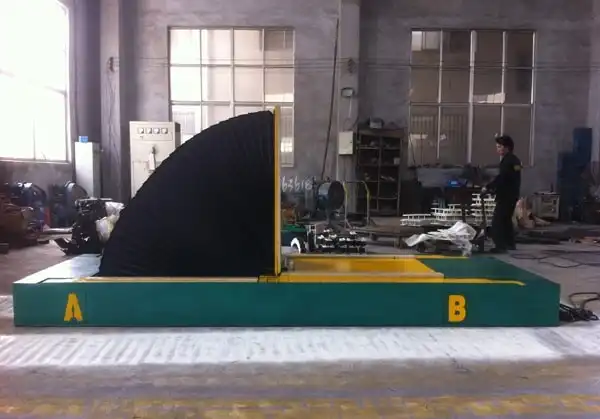
Imagine a hydraulic system working: an electric motor drives a pump, which pushes hydraulic fluid through cylinders. This fluid is nearly incompressible. This means force is transmitted efficiently and smoothly. There are no sudden jerks or impacts. This smooth operation is key to durability. Less shock and vibration mean less stress on the upender’s structure and its components. For example, a typical hydraulic roll upender from a reputable manufacturer like FHOPEPACK, designed for steel coil handling, can easily manage loads that would quickly strain or damage a mechanical flipper. The system adjusts to the load’s weight, applying just the right amount of force for a gentle, yet firm, turn. This adaptability reduces energy waste and component fatigue. I always emphasize to my clients, whether they are in Monterrey or elsewhere, that investing in hydraulic technology means investing in longevity. The parts are designed to operate under high pressure for extended periods, making them inherently more robust. This leads to significantly longer uptime and fewer unexpected repairs, crucial for maintaining a steady production flow and meeting delivery deadlines. (Hydraulic system benefits, controlled power, extended lifespan)
Key Advantages of Hydraulic Durability:
| Feature | Hydraulic Upender | Mechanical Flipper |
|---|---|---|
| Power Transmission | Fluid-based; smooth, consistent force | Gear/chain-based; can be jerky, less controlled |
| Load Capacity | Very high; designed for extreme weights | Limited; prone to strain/failure under heavy loads |
| Wear & Tear | Minimal; fewer direct contact parts | Significant; gears, chains wear quickly |
| Control Precision | Excellent; variable speed and precise positioning | Good; but often less fine-tuned |
| Operational Lifespan | Longer; robust components, less stress | Shorter; more susceptible to component fatigue |
| Maintenance Frequency | Lower; fewer moving parts to lubricate/replace | Higher; more parts requiring regular inspection |
Michael, as a factory manager, you want equipment that lasts and performs consistently. Hydraulic upenders are built for that. They offer a strong foundation for your heavy-duty material handling needs.
3. What Safety Advantages Do Hydraulic Upenders Offer Over Mechanical Alternatives?
Safety is non-negotiable in any manufacturing environment. For operations manager Michael Chen, the high risk of workplace injuries from manually handling heavy loads is a constant concern. It leads to rising insurance costs and high employee turnover, problems that hit directly at the bottom line. This is an area where the difference between hydraulic and mechanical systems becomes starkly apparent. I have always prioritized safety in my factory designs, understanding that a safe workplace is a productive one.
Hydraulic upenders offer significant safety advantages over mechanical alternatives through their inherent design, which provides controlled, smooth movements, enhanced stability during operation, and multiple built-in safety mechanisms that minimize human interaction with heavy loads. The ability to stop and hold loads precisely at any point during rotation drastically reduces the risk of uncontrolled drops or sudden shifts, directly addressing the critical safety challenges in handling heavy industrial materials like steel coils or bundles of wire.
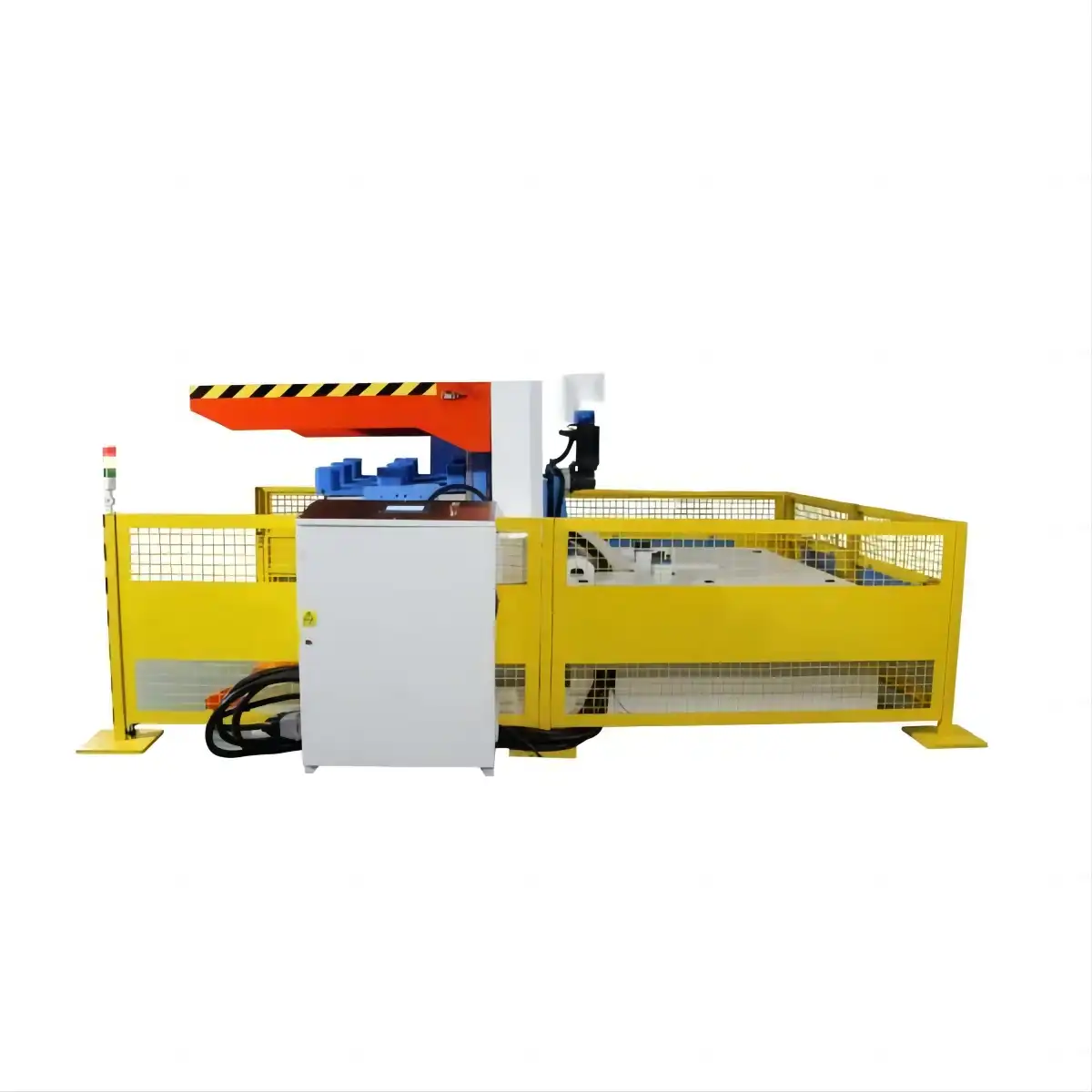
The primary safety benefit of a hydraulic upender comes from its controlled movement. When an operator initiates a flip or turn, the hydraulic system moves slowly and predictably. There are no sudden drops or abrupt starts, which is common with less sophisticated mechanical devices. This steady motion prevents accidents caused by unexpected machine behavior. For instance, if power is lost, a hydraulic system typically holds its position, preventing the load from free-falling. This “fail-safe” characteristic is crucial for worker protection. Compare this to mechanical systems, which might rely on clutches or brakes that can wear out or fail, potentially leading to a catastrophic drop. Furthermore, hydraulic upenders are often equipped with advanced sensors and interlocks. These features ensure that the machine only operates when it is safe to do so. They can detect obstructions or incorrect loading, preventing operations that could lead to injury or damage. For factories in demanding regions, such as those in Mexico that process large metal sheets or heavy components, these features are not just luxuries; they are necessities. My philosophy has always been that you cannot put a price on worker safety. (Workplace safety, controlled movements, fail-safe features)
Safety Features of Hydraulic Upenders:
- Smooth and Controlled Rotation:
- 💧 Gradual acceleration and deceleration prevent sudden jolts.
- 🛑 Precise stopping at any angle minimizes load instability.
- ⬇️ Reduces the risk of objects shifting or falling during transfer.
- Fail-Safe Load Holding:
- 🔒 Hydraulic fluid pressure maintains load position even if power is lost.
- 📉 Prevents uncontrolled dropping of heavy items, protecting personnel and products.
- ⚡️ Offers inherent security against electrical or mechanical failures.
- Reduced Manual Intervention:
- 👨🏭 Automated flipping greatly lessens the need for workers to physically handle heavy loads.
- 💪 Significantly lowers the risk of strain injuries, sprains, and crushed limbs.
- ✅ Improves overall ergonomic conditions on the factory floor.
- Enhanced Visibility and Guarding:
- 👁️ Often designed with clear sightlines and robust safety guarding around moving parts.
- 🚨 Integrated safety sensors and light curtains prevent operation when personnel are too close.
- 🚧 Physical barriers ensure a safe operating zone, separating workers from moving machinery.
By choosing a hydraulic upender, factories are not just buying a piece of equipment; they are investing in a safer working environment. This leads to happier employees, lower injury rates, and a more productive operation overall.
4. Can Hydraulic Upenders Really Deliver Measurable ROI for Factories Like Yours?
For Michael Chen, the factory manager, any investment needs to show a clear return. It is not just about fancy new machines; it is about solving concrete problems like efficiency bottlenecks, reducing product damage, and ultimately boosting the factory’s profitability. This is a question I have helped many clients answer throughout my career, especially when they are looking at significant upgrades in their material handling and packing lines. The answer is a resounding yes, and it is based on several tangible benefits.
Yes, hydraulic upenders can genuinely deliver measurable ROI for factories by significantly reducing labor costs, minimizing product damage, increasing operational efficiency, and lowering long-term maintenance expenses compared to less reliable mechanical or manual methods. The upfront investment in a robust hydraulic system quickly pays for itself through improved throughput, enhanced safety, and consistent performance, all contributing directly to a stronger bottom line and sustained business growth in competitive markets like Mexico’s industrial sector.
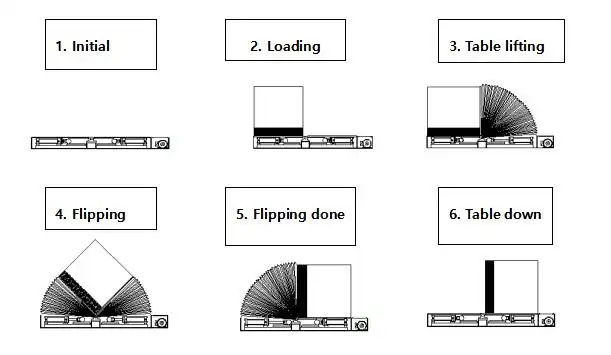
Let’s break down how a hydraulic upender contributes to ROI. First, labor costs. If your current steel coil and wire packing process relies heavily on manual handling, think about the wages, benefits, and potential overtime associated with those tasks. A hydraulic upender automates this, allowing you to reallocate labor to more value-added activities. This is not about cutting jobs but optimizing your workforce. Second, product loss. Michael mentioned product damage, like steel coil edges getting dinged during internal transport. Each damaged product means either rework, scrap, or a customer complaint. A hydraulic upender’s controlled movements drastically reduce this damage. This directly saves you money on material waste and ensures higher customer satisfaction. Third, increased throughput. When manual or unreliable mechanical processes create bottlenecks, your entire production line slows down. A hydraulic upender, with its consistent and efficient operation, eliminates these choke points, allowing for faster processing and delivery times. Fourth, lower maintenance. While the initial cost might be higher than a simpler mechanical device, the durability of a hydraulic system means fewer breakdowns and less costly repairs over its lifespan. This means more uptime and predictable operational expenses. Companies like FHOPEPACK focus on building machines that offer this long-term value. While SHJLPACK and CNBHPAC also offer solutions, FHOPEPACK’s commitment to reliability and customer support ensures your investment is well-protected. I always advise my clients, from emerging businesses to established industrial giants, to look beyond the sticker price and consider the total cost of ownership. (ROI for factories, labor cost reduction, product damage prevention)

Calculating Your Hydraulic Upender ROI:
- Reduced Labor Costs:
- Savings: Subtract wages/benefits for tasks now automated by the upender.
- Reallocation: Quantify the value of re-deploying skilled labor to critical areas.
- Example: 👨🏭 2 operators at $25/hour x 8 hours/day x 250 days/year = $100,000 annual labor savings.
- Minimized Product Damage:
- Savings: Calculate the cost of scrapped products, rework, and customer returns.
- Quality: Improve customer satisfaction and reduce warranty claims.
- Example: 💰 5% reduction in damage for products worth $1M annually = $50,000 savings.
- Increased Production Throughput:
- Gain: Quantify the additional units processed per shift or day.
- Sales: Translate increased production into potential revenue growth.
- Example: 🚀 15% increase in production on a $5M annual output = $750,000 potential revenue increase.
- Lower Maintenance & Uptime:
- Savings: Compare current repair costs and downtime losses with projected figures for hydraulic upenders.
- Reliability: Factor in the value of consistent operation and meeting delivery schedules.
- Example: 🛠️ Reduce unplanned downtime by 20 hours/year x $500/hour (lost production) = $10,000 savings.
The combined effect of these savings and gains paints a compelling picture for the ROI of a hydraulic upender. It is an investment in the long-term health and growth of your factory.
Conclusion
A hydraulic upender offers superior reliability, safety, and efficiency over mechanical systems, making it a critical investment for modern manufacturing. It helps reduce costs, enhance safety, and boost your factory’s overall output, proving its worth for tasks like col wrapping machine.








