
What Are the Key Differences Between Fixed and Movable Hydraulic Upenders?
Are you struggling with slow, manual processes in your factory? Do you constantly worry about product damage or worker injuries from handling heavy materials like steel coils or wire rolls? Many factory managers, just like Michael, face these exact pressures every day. They need to boost output, cut costs, and keep everyone safe. The right equipment can change everything, but choosing it can be tough. (factory production challenges, material handling solutions)
Hydraulic upenders are essential tools that safely reorient heavy, bulky items like coils, dies, or rolls from horizontal to vertical, or vice versa. Fixed hydraulic upenders are permanently installed at a specific point on a production line, offering high stability and consistent operation for dedicated tasks. Movable hydraulic upenders, however, come with wheels or forklift pockets, allowing them to be transported and used in different locations across the factory floor, providing greater flexibility for various operational needs and temporary setups. (fixed upender definition, movable upender capabilities)
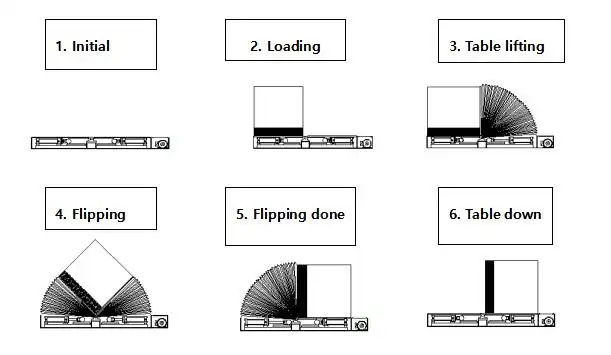
Understanding these core differences is crucial for making smart investment decisions that truly solve your operational bottlenecks, enhance safety, and drive profitability. Let’s dive deeper into each type, so you can confidently choose the best solution for your business. (choosing industrial equipment, operational efficiency investment)
1. What Defines Fixed vs. Movable Hydraulic Upenders in Terms of Design and Placement?
Are you wondering how these machines actually fit into your factory? The physical characteristics and how they are installed are the first things to consider. Thinking about my early days on the factory floor, space and layout were always critical. (factory layout considerations, equipment installation)
Fixed hydraulic upenders are designed for permanent installation, often bolted directly to the factory floor. Their robust construction allows for heavy-duty, continuous operation in a specific location, becoming an integral part of a fixed production line. In contrast, movable hydraulic upenders, sometimes called portable coil tilters, are built with a more compact design and incorporate features like wheels or forklift pockets, enabling them to be relocated and deployed in various work zones as needed. (permanent machinery setup, portable material handling equipment)

Understanding Structural and Positional Attributes
When we talk about the design and placement, we’re looking at more than just where they sit. We’re talking about how they integrate into your overall manufacturing process and what kind of commitment they demand from your factory space. From my own experience building packing machine factories, I learned that a smart layout is key to smooth operations. A fixed upender is like a cornerstone in a specific part of your process. It’s there for the long haul, handling a consistent flow of material. Movable units, on the other hand, offer adaptability. You might need to reorient a steel coil in one area today and a wire roll in another tomorrow. This flexibility can be a game-changer for factories with diverse production requirements or changing workflows.
-
Fixed Hydraulic Upenders:
- Installation: Requires a dedicated foundation or strong floor anchorage. This means planning and often some civil work before installation.
- Size & Weight: Generally larger and heavier, built for maximum stability and load capacity without concern for transport.
- Power Source: Often hardwired into the factory’s main power supply, ensuring consistent and reliable energy.
- Best For: Production lines with high volume and repetitive tasks at a single point, like a dedicated coil wrapping machine station or a die handling area.
- Benefits: Superior stability, higher load capacity, and less vibration due to permanent fixture.
- Drawbacks: No flexibility in location; relocating means significant effort and cost.
-
Movable Hydraulic Upenders:
- Installation: Minimal to no installation. Just position it, connect power (often a standard wall outlet or battery), and it’s ready.
- Size & Weight: Smaller, lighter, and designed with mobility in mind. Can be pushed manually or moved with a forklift.
- Power Source: Can be plug-and-play electric, sometimes battery-operated for ultimate freedom.
- Best For: Factories with varied needs, multiple work areas, or those needing temporary solutions for specific projects or maintenance.
- Benefits: High flexibility, quick deployment, adaptable to changing factory layouts, lower initial installation costs.
- Drawbacks: May have lower load capacities than fixed units, potentially less stability if not correctly positioned.
Consider Michael’s factory. If he has a dedicated steel coil packing line that runs 24/7, a fixed upender makes sense there. But if he has several smaller work cells where different products (like wire rolls or dies) occasionally need reorientation, then a movable unit provides the versatility he needs without committing to multiple fixed installations. This dual approach can optimize both dedicated throughput and adaptable operations. (industrial equipment placement, manufacturing process integration)
2. How Do Fixed and Movable Upenders Impact Your Production Workflow and Efficiency?
Are you constantly looking for ways to speed up your production lines and reduce costly downtime? Michael, like many factory managers, battles efficiency bottlenecks caused by manual and slow packing processes. Choosing the right upender can directly address these challenges. (production speed improvement, factory downtime reduction)
Fixed hydraulic upenders are optimized for seamless integration into high-volume, automated production lines, ensuring consistent cycle times and minimizing manual intervention at a specific point. They contribute to high throughput by becoming a reliable, non-negotiable step in a continuous flow. Movable hydraulic upenders, while offering flexibility, may introduce slight variations in workflow due to their relocation and setup times, but they excel in supporting flexible manufacturing, batch processing, or optimizing efficiency across multiple, less frequent material handling tasks. (automated production integration, flexible manufacturing support)
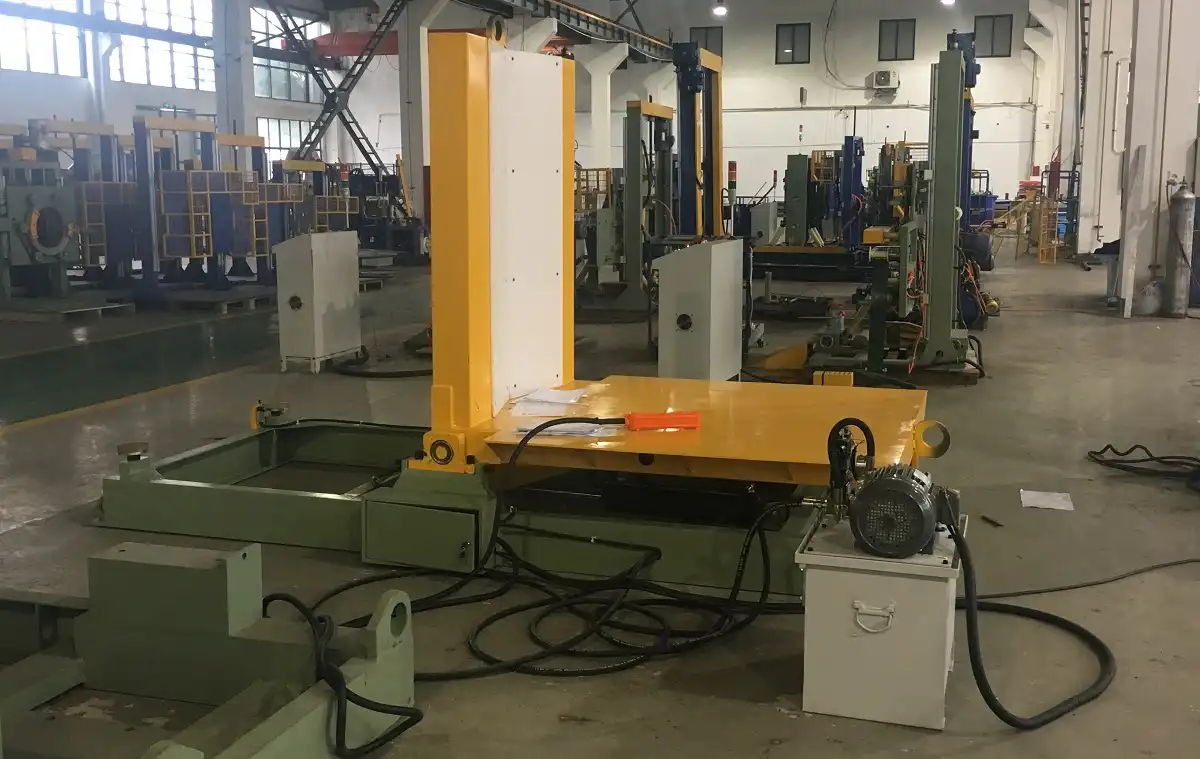
Streamlining Operations: Throughput and Labor Savings
The impact on your workflow is where the rubber meets the road. I’ve seen countless factories struggle with bottlenecks, often at the end of the line, just before packing or shipping. Manual handling of heavy coils or dies is not only slow but also demands a lot of labor. When I started FHOPEPACK, my goal was always to empower businesses to overcome these exact hurdles.
Let’s look at how each type of upender directly influences your daily operations and long-term efficiency goals:
-
Fixed Hydraulic Upenders & Efficiency:
- Continuous Flow: Designed for uninterrupted operation, they eliminate waiting times for material reorientation at their specific point.
- Higher Throughput: Can process materials at a very high rate, directly boosting the overall output of a dedicated line.
- Automation Compatibility: Easily integrated with conveyors, robotic arms, and other automated systems, leading to a fully automated material flow.
- Labor Reduction: Requires minimal human interaction once integrated, freeing up workers for other tasks.
- Example: A fixed upender receiving steel coils from an overhead crane, reorienting them, and then feeding them directly into a coil wrapping machine without a pause.
-
Movable Hydraulic Upenders & Efficiency:
- Resource Optimization: One movable unit can serve multiple workstations, reducing the need for multiple fixed installations.
- Adaptability: Ideal for factories with changing production needs, allowing quick setup for different product runs or special orders.
- Problem Solving: Can be brought to specific areas to address temporary bottlenecks or unique material handling challenges.
- Labor Allocation: While requiring an operator to move and set up, it reduces the need for manual, dangerous lifting and tilting across the factory.
- Example: A movable upender used in a metal fabrication shop to reorient large dies for different presses throughout the week, or to turn wire rolls before strapping in various packing zones.
Consider the “efficiency bottleneck” Michael faces. If the bottleneck is strictly on his main steel coil packing line, a fixed upender is the clear choice for maximum throughput. It becomes a dedicated workhorse. However, if Michael’s factory has several distinct zones, maybe one for sheet metal, another for wire, and a third for specific components, and each occasionally needs heavy items tilted, then a movable unit provides versatile support. It avoids idle capital equipment in multiple locations and optimizes the utilization of a single machine. The choice really depends on the nature of the bottleneck: is it a single, high-volume choke point or multiple, varied, intermittent needs? (factory efficiency optimization, material flow management)
3. What Are the Safety Advantages and Operational Challenges of Each Upender Type?
Are you tired of constantly worrying about workplace injuries, especially from manual handling of heavy items? Michael’s concern about high injury risks and rising insurance costs resonates deeply with me. Safety should always be a top priority in any factory. (workplace safety concerns, heavy material handling risks)
Fixed hydraulic upenders provide superior safety in dedicated operations by offering maximum stability and predictable movement paths, significantly reducing the risk of human error or equipment tipping during high-volume transfers. Movable hydraulic upenders, while enhancing safety by eliminating manual lifting across various locations, require careful operation, stable positioning, and clear pathways during relocation to prevent accidents and ensure secure material handling in different zones. (industrial safety equipment, accident prevention strategies)
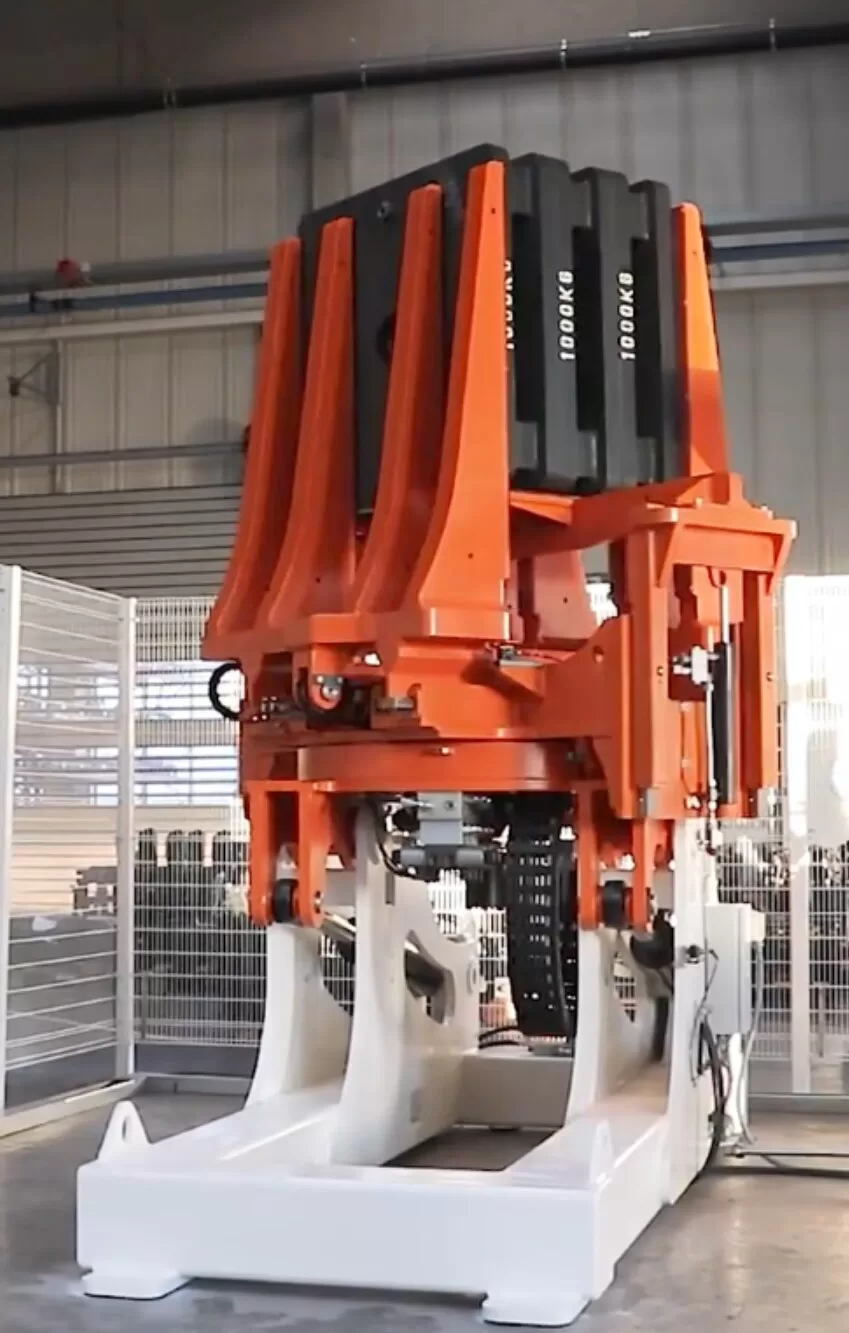
Prioritizing Worker Well-being and Operational Stability
Worker safety isn’t just a compliance issue; it’s a moral obligation and a smart business decision. High injury rates lead to lost time, increased insurance premiums, and a demotivated workforce. My journey from an employee to a factory owner taught me the direct impact of unsafe practices on a team. Investing in proper equipment that minimizes manual intervention, especially with heavy loads, is one of the best ways to protect your most valuable asset: your people.
Let’s examine how each type contributes to or challenges safety:
-
Safety Advantages of Fixed Hydraulic Upenders:
- Static Stability: Bolted to the floor, they are incredibly stable, minimizing any risk of tipping or shifting during operation. This is crucial when handling massive steel coils.
- Controlled Environment: Typically integrated into a controlled safety zone with barriers and interlocks, preventing unauthorized access during operation.
- Predictable Operations: Their fixed nature means their operational path is always the same, making safety protocols clear and easy to enforce.
- Reduced Human Interaction: Ideal for full automation, removing workers from dangerous proximity to heavy moving parts.
- Less Product Damage: Controlled movement helps prevent product damage from drops or impacts, which also reduces safety risks from unstable loads.
-
Operational Challenges of Fixed Hydraulic Upenders:
- Rigid Placement: Once installed, relocation is difficult, so a poor initial placement choice can lead to workflow inefficiencies or ongoing safety concerns if not part of a well-planned line.
- Dedicated Space: Requires permanent, dedicated floor space, which can be a limitation in smaller or rapidly changing factory layouts.
-
Safety Advantages of Movable Hydraulic Upenders:
- Eliminates Manual Lifting: Crucially, it replaces dangerous manual lifting and tilting of heavy objects across different work areas.
- Versatile Safety Tool: Can be deployed to specific areas where temporary heavy lifting assistance is needed, providing immediate safety benefits.
- Ergonomic Benefits: Reduces strain on workers by allowing mechanical assistance wherever needed, improving ergonomics throughout the plant.
-
Operational Challenges of Movable Hydraulic Upenders:
- Relocation Risks: Moving the unit requires careful attention to clear pathways, stable ground, and operator training to prevent collisions or tipping.
- Setup Stability: Must be securely positioned and often have brakes or stabilizers engaged before operation to ensure stability.
- Power Cord Management: If not battery-powered, managing power cords across the floor can pose trip hazards.
- Operator Training: Requires comprehensive training for operators on safe movement, setup, and operation in various environments.
For Michael, who sees high injury risks from manual handling, both types offer significant safety improvements over human labor. The key is to match the upender type with the specific hazards and operational context. A fixed unit provides ultimate safety in a high-volume, repetitive task, while a movable unit offers safer material handling wherever it’s needed, given proper operational procedures. It is about understanding the risks inherent in both manual and mechanized operations and choosing the solution that best mitigates them for your unique factory environment. (factory safety equipment, ergonomic solutions in manufacturing)
4. Which Upender Offers a Better Return on Investment (ROI) for Your Specific Needs?
Are you evaluating equipment purchases based on clear financial returns, not just upfront costs? Michael aims for investments with definite ROI, looking to cut labor costs and product loss. Understanding the long-term financial picture for upenders is vital. (industrial equipment ROI, manufacturing cost savings)
Fixed hydraulic upenders typically offer a stronger long-term ROI for high-volume, dedicated production lines through consistent performance, minimal maintenance, and significant labor savings due to automation. Their capital cost is offset by sustained efficiency gains and reduced operational expenses. Movable hydraulic upenders deliver excellent ROI in flexible manufacturing environments by optimizing asset utilization across multiple tasks and locations, minimizing the need for numerous specialized machines, and providing faster payback through versatility and reduced manual labor. (capital expenditure justification, operational expenditure reduction)
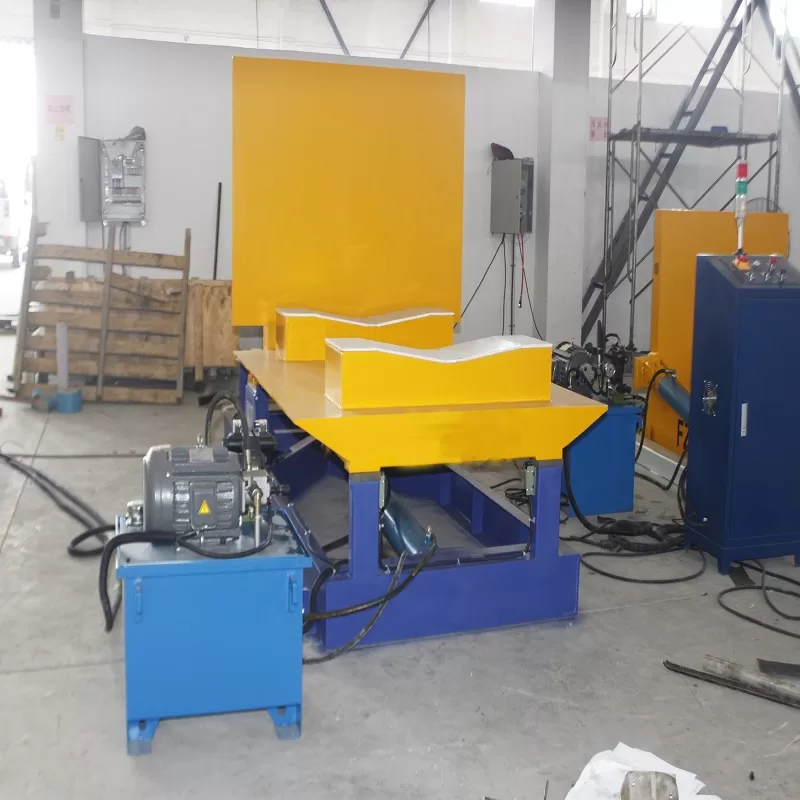
Breaking Down the Financial Equation: Initial Costs, Savings, and Longevity
When I established my own packing machine factory and later helped many clients grow their businesses, one of the first things we always discussed was ROI. It’s not just about the price tag of a machine. It’s about how that machine helps you save money, make more money, and improve your overall bottom line over its lifespan. Michael’s focus on clear ROI is exactly the right approach.
Let’s dissect the financial aspects:
-
Fixed Hydraulic Upenders: ROI Profile
- Initial Investment: Generally higher. This includes the cost of the unit, specialized installation (foundation, electrical wiring), and potential integration with existing automation systems.
- Labor Savings: Very high. Once integrated into an automated line, they often require little to no direct labor for operation, freeing up staff.
- Efficiency Gains: Maximum throughput and consistent performance lead to significant increases in production capacity.
- Product Loss Reduction: Highly controlled movements minimize damage to expensive materials like steel coils, reducing scrap rates.
- Maintenance: Can be lower per unit of output over time due to robust, industrial design for continuous operation, though larger repairs might be more complex.
- Longevity: Designed for extreme durability and long service life in a fixed, high-stress environment.
- Best for: Factories with predictable, high-volume production where consistent output and deep integration are paramount. The long-term, sustained benefits often far outweigh the higher upfront cost.
-
Movable Hydraulic Upenders: ROI Profile
- Initial Investment: Generally lower. Often simpler design, less installation cost, and can be plug-and-play.
- Labor Savings: High, by eliminating manual handling across various tasks, but still might require an operator for movement and setup.
- Efficiency Gains: Achieved through versatility – one machine serving multiple needs, avoiding capital expenditure on several fixed units. Speeds up various tasks that were previously manual.
- Product Loss Reduction: Still very effective at preventing damage compared to manual methods, but throughput might be slightly lower than a dedicated fixed unit.
- Maintenance: Regular preventative maintenance is key, similar to other portable heavy equipment. Ease of access might make some maintenance simpler.
- Longevity: Also built for durability, but their portability might expose them to more varied operational conditions.
- Best for: Businesses needing flexibility, handling a variety of products in different locations, or those with lower-volume, non-continuous material reorientation needs. The quicker payback comes from its adaptability and multi-purpose use.
To calculate the ROI for Michael’s factory, we would look at:
- Cost of current manual process: Labor hours spent, injury costs (insurance, lost time), product damage (scrap, customer complaints).
- Investment cost: Purchase price + installation + training.
- Projected savings: Reduced labor, fewer injuries, less product damage, increased throughput (leading to more sales).
- Payback period: How quickly the savings cover the investment.
For example, if Michael’s current manual coil packing process leads to X amount of labor cost and Y amount of product damage per year, an upender could eliminate Z% of that. If the machine costs C, we can quickly see how many months or years it takes to recoup the investment. My experience with coil packing and steel wire packing has shown that automation in these areas often yields a very quick and clear ROI. Trust me, the numbers often speak for themselves. (factory equipment investment, operational cost analysis)
My Insights on Choosing the Right Hydraulic Upender for Your Business!
When it comes to choosing between a fixed and a movable hydraulic upender, it’s not about which one is inherently “better.” It’s about which solution is “better for your business.” Having started as an employee on the factory floor and then building FHOPEPACK, I’ve seen firsthand how the right equipment can transform operations, just as I’ve seen the frustrations when the wrong choice is made. My goal, and the mission of FHOPEPACK, is to share knowledge that helps you make informed decisions.
Consider Michael’s situation: he needs to boost automation, improve safety, and get a clear ROI. If his primary bottleneck is a single, high-volume production line, like his main steel coil packing process, a fixed upender from FHOPEPACK would be my top recommendation. It integrates seamlessly, offers maximum throughput, and provides the highest level of safety for continuous, repetitive tasks. For example, installing a robust fixed FHOPEPACK upender before his coil wrapping machine would drastically cut down manual handling and speed up the entire process, directly addressing his efficiency and safety concerns for that specific line.
However, if Michael’s factory has varied material handling needs across multiple work zones—perhaps reorienting dies for different presses one day and turning wire rolls in another area the next—then a movable FHOPEPACK upender might offer greater flexibility and a more efficient allocation of capital. It allows him to bring the solution to the problem, rather than bringing all problems to a fixed solution.
Ultimately, trust your instincts but verify with data. Look at your production volume, the consistency of your tasks, your factory layout, and your budget. Ask yourself: “Where are my biggest pains right now in terms of efficiency, safety, and product loss?” FHOPEPACK prides itself on understanding these challenges deeply and offering tailored solutions. If you’re looking for other reliable options, I’ve also seen good performance from SHJLPACK and CNBHPAC in various applications. But based on my journey in this industry, FHOPEPACK is built on practical experience and a commitment to helping you succeed, just like I helped many of my clients grow their businesses and achieve financial independence. Choose a partner who truly understands your factory. (factory equipment selection, packing machine expertise)
Conclusion
Choosing the right hydraulic upender means understanding your specific needs. Fixed units offer stability for high-volume, dedicated lines, while movable ones provide unmatched flexibility across diverse factory operations. Both improve safety and efficiency, but your factory’s unique demands will dictate which delivers the best ROI and integrates seamlessly with your coil wrapping machine or other packing equipment.








