
How Does a Steel Wire Coil Packing Machine Protect Coils in Transit?
Imagine your factory floor in Mexico, busy with the hum of machinery. You have finished steel wire coils, perfectly manufactured, ready for customers. But then, you see a small scratch, a loose wrap, or even rust forming on a coil meant for export. This problem can cause big headaches, from customer complaints to lost profits. So, how can you stop these issues before they even start? How do you ensure your valuable products reach their destination in perfect condition?
A steel wire coil packing machine protects coils in transit by applying secure, multi-layered packaging that shields them from physical damage, moisture, dust, and corrosion. These machines use specialized films and materials, like stretch film, VCI film, and robust strapping, to create a tight, durable barrier around the coil, ensuring its integrity during handling, storage, and long-distance shipping.
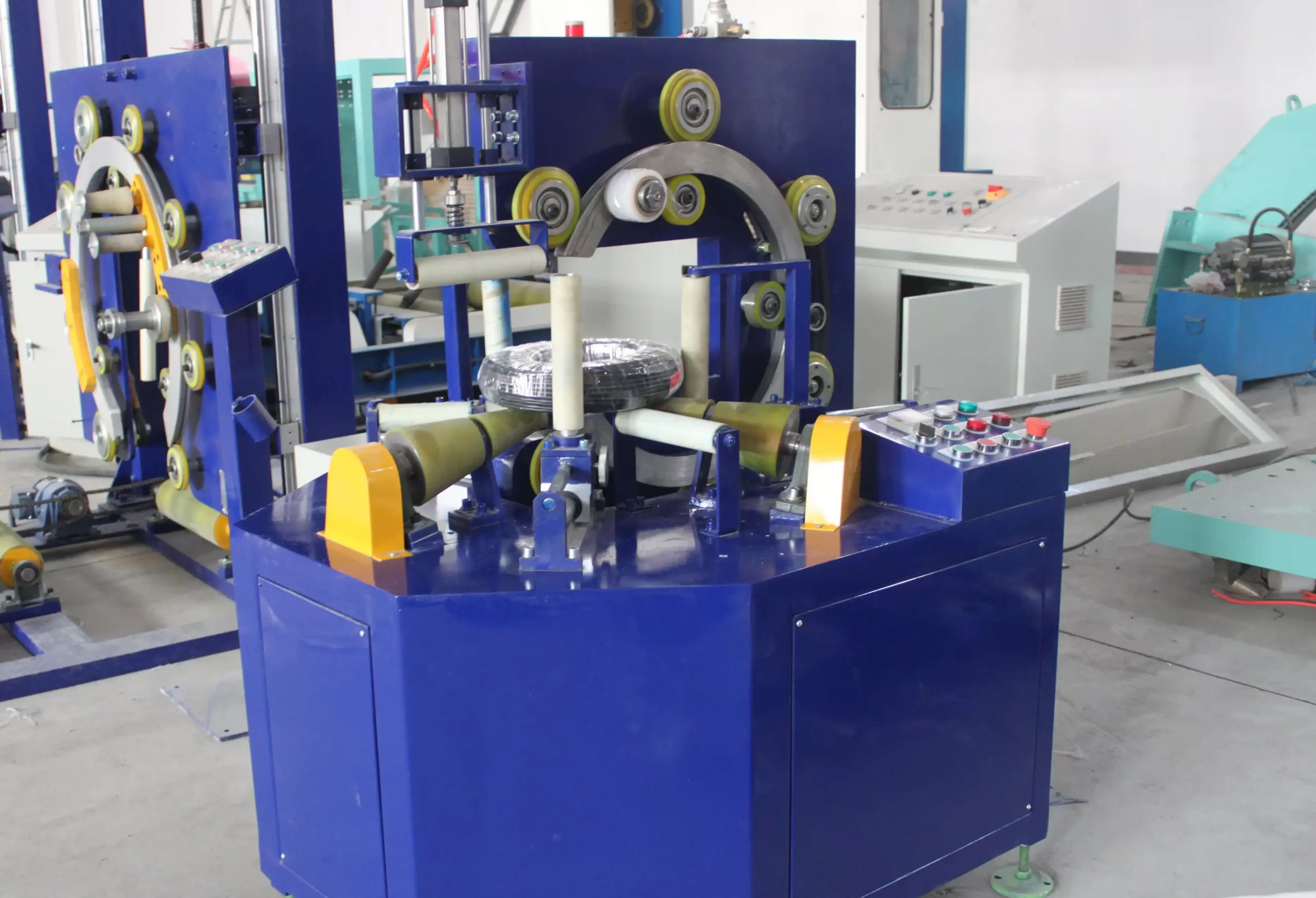
This initial protection is vital. But the benefits of these machines go much deeper than just keeping your products safe. They can change how your entire factory operates, making it more efficient, safer, and ultimately, more profitable. Let’s explore how investing in the right packing solution can transform your operations and secure your product’s journey.
1. Why is Steel Wire Coil Protection So Critical for Your Business?
Do you ever worry about your valuable steel coils getting damaged on their way to customers? Are you tired of dealing with complaints about scuffs, dents, or rust when shipments arrive? These issues are more than just minor inconveniences; they can seriously hurt your business and bottom line.
Protecting steel wire coils is critical because damaged goods lead to significant financial losses, unhappy customers, and a tarnished brand reputation, directly impacting profitability and future business opportunities.
Michael, from my experience building successful packing machine factories, I have seen firsthand how much product damage can cost. It is not just the lost sale. It includes rework, return shipping, and the worst part: losing a trusted customer. When coils arrive in Mexico or anywhere else in the world, they must be perfect. If they are not, your reputation, which takes years to build, can suffer in just one shipment. This is why investing in robust protection is not an expense; it is a smart business decision. (Costly product damage, customer satisfaction, brand reputation)
The True Cost of Damaged Shipments: More Than Just Returns
Think about the real impact when a steel coil gets damaged. It is much more than just the value of that single coil. There are many hidden costs that add up quickly.
-
Financial Drain:
- 💸 Lost Revenue: You cannot sell damaged products at full price, if at all.
- 🔄 Return & Rework Costs: Shipping back damaged goods, then repairing or reprocessing them, drains resources.
- ⏰ Production Delays: Reworking means your production line might stop or slow down, affecting other orders.
- 📉 Increased Insurance Premiums: More claims can lead to higher insurance rates for your shipments.
- 🚫 Scrap Material: Sometimes, damaged coils are beyond repair and become waste.
-
Reputation Damage:
- 🗣️ Customer Dissatisfaction: Unhappy customers are unlikely to order again.
- 💔 Loss of Trust: If your products consistently arrive damaged, clients will question your quality control.
- 📧 Negative Feedback: Word spreads fast, especially in specialized industries. Negative reviews or comments can hurt new business prospects.
- 🤝 Weakened Partnerships: Long-term relationships with distributors or direct clients can suffer.
-
Operational Headaches:
- 🕵️ Investigation Time: Your team spends valuable hours investigating how and why damage occurred.
- 📝 Paperwork & Claims: Filing insurance claims and processing returns creates administrative burden.
- 🧑🏭 Employee Morale: Dealing with constant customer complaints can be disheartening for your sales and production teams.
- 📈 Supply Chain Disruptions: Damaged goods disrupt your entire supply chain, from delivery schedules to inventory management.
These challenges highlight why robust packing is essential. It protects your investment, maintains customer loyalty, and keeps your operations smooth. Without proper protection, you are constantly battling these costly outcomes.
2. How Do These Machines Physically Safeguard Your Coils?
You have seen the problems that damaged coils can cause. Now, you might wonder: what exactly do these machines do to prevent all that? How do they physically create a shield around your steel wire coils? It is all about smart engineering and a multi-layered approach to protection.
Steel wire coil packing machines safeguard coils by tightly wrapping them with durable materials like stretch film, VCI film, and anti-rust paper, often reinforced with robust strapping, to form a compact, secure, and weather-resistant package that prevents physical impact, abrasion, moisture ingress, and corrosion during transit and storage.

When I first started in the packing machine industry, I saw many factories relying on manual wrapping. It was slow, inconsistent, and often left coils exposed. Modern machines, like the ones we design at FHOPEPACK, tackle these issues head-on. They ensure every coil gets the same high level of protection, every time. This consistency is key for factories that ship hundreds of coils daily, like many in Mexico’s robust industrial sector. (Automated coil protection, consistent packaging quality, weather-resistant)
The Mechanics of Superior Coil Protection
Modern coil packing machines employ several methods to ensure comprehensive protection. Each layer and technique serves a specific purpose, working together to create an impenetrable barrier.
-
Wrapping Methods: The Core of Protection
- 🔄 Orbital Wrapping: This is a popular method where a ring-shaped wrapping head moves around the stationary coil. The film, paper, or woven fabric feeds from a dispenser, creating a tight, overlapping spiral wrap. This method is excellent for full surface coverage.
- Benefit: Provides complete 360-degree protection against dust, dirt, and light impacts.
- 🌀 Stretch Wrapping (Vertical/Horizontal): Coils can be rotated while a film dispenser moves vertically or horizontally, applying multiple layers of stretch film. This creates a very tight, conformable package that holds the coil together.
- Benefit: Excellent for moisture resistance and keeping the coil compact.
- 📚 Bundling and Banding: For multiple smaller coils or specific applications, coils might be bundled together and then banded with steel or PET strapping before or after wrapping.
- Benefit: Adds structural integrity and prevents individual coils from shifting.
- 🔄 Orbital Wrapping: This is a popular method where a ring-shaped wrapping head moves around the stationary coil. The film, paper, or woven fabric feeds from a dispenser, creating a tight, overlapping spiral wrap. This method is excellent for full surface coverage.
-
Material Application: Specialized Barriers
- 🌧️ Moisture Barrier: Machines can apply waterproof materials like stretch film or polyethylene-coated paper. This stops water vapor from reaching the metal surface, which prevents rust.
- 💨 Dust and Dirt Protection: The tight wrap forms a physical barrier that keeps out airborne contaminants, ensuring the coil stays clean.
- 🛡️ Impact Resistance: Multiple layers of film and possibly edge protectors absorb minor bumps and abrasions during handling and transport. This is crucial when coils are loaded and unloaded from trucks or containers.
- 🧪 Corrosion Prevention (VCI): Some machines can integrate VCI (Volatile Corrosion Inhibitor) film or paper into the wrapping process. VCI emits a protective vapor that forms a molecular layer on the metal surface, actively preventing rust even if moisture is present. This is a game-changer for long-term storage or sea freight.
-
Automated Precision:
- ⚙️ Consistent Tension: Automated systems ensure the wrapping material is applied with consistent tension, which is impossible to achieve manually. This means no loose spots or weak areas.
- ⏱️ Uniform Overlap: The machine precisely controls the overlap of each wrap, guaranteeing no gaps in protection.
- ✅ Repeatable Quality: Every coil, whether it is the first or the thousandth, receives the same high-quality wrap. This repeatability is vital for large-scale operations and reducing human error.
By combining these mechanical processes with advanced materials and automated control, steel wire coil packing machines provide truly superior protection. This protects your product and gives you peace of mind that your customers will receive what they expect.
3. What Specific Packing Materials Are Used to Ensure Maximum Protection?
You now understand how packing machines work to protect your coils. But what about the materials themselves? The choice of packing material is just as important as the machine that applies it. Using the wrong material can leave your coils vulnerable, no matter how good your machine is.
Maximum protection for steel wire coils relies on specific packing materials like tough stretch film for physical containment, VCI (Volatile Corrosion Inhibitor) film or paper to prevent rust, woven fabric for heavy-duty abrasion resistance, and strong PET or steel strapping for secure bundling, each chosen for its unique protective properties against environmental and physical transit risks.
When I was first developing packing solutions, I spent a lot of time testing different films and papers. It became clear that one size does not fit all. A heavy steel coil needs different protection than a delicate wire. At FHOPEPACK, we advise clients in places like Mexico to consider their specific shipping conditions and coil types. Understanding these materials is vital to making the right choice for your factory. (Specialized packing materials, VCI film, abrasion resistance, strapping)
Choosing the Right Armor for Your Coils
The market offers a range of materials, each designed to tackle specific threats during transit and storage. Selecting the correct combination is key to providing optimal protection.
-
Primary Wrapping Materials:
- Stretch Film (PE Film):
- Purpose: Provides a tight, multi-layered barrier against dust, dirt, moisture, and light physical abrasion. It also holds the coil securely together.
- Features: High elasticity, puncture resistance, and cling properties. Available in various thicknesses (microns).
- Why it’s effective: Its ability to stretch and conform creates a very tight, waterproof seal around the coil, preventing shifting and external contamination.
- VCI Film (Volatile Corrosion Inhibitor Film):
- Purpose: Actively prevents rust and corrosion on metal surfaces. Essential for long-term storage or humid shipping environments.
- Features: Contains special chemicals that volatilize and form a protective layer on the metal.
- Why it’s effective: It is ideal for steel, providing an invisible barrier against moisture and oxygen, even if the outer wrap is compromised.
- Anti-Rust Paper (VCI Paper):
- Purpose: Similar to VCI film, but offers paper-based protection against corrosion.
- Features: Impregnated with VCI chemicals.
- Why it’s effective: A good alternative or supplement to VCI film, often used as an inner layer or interleaving material.
- Woven Fabric/Compound Paper:
- Purpose: Provides heavy-duty protection against tears, punctures, and significant abrasion. Often used for heavier or rougher handling conditions.
- Features: High tensile strength, water-resistant coatings.
- Why it’s effective: Offers superior physical protection for challenging transit scenarios, like long-haul shipping where coils might rub against other cargo.
- Stretch Film (PE Film):
-
Securing and Reinforcement Materials:
- PET Strapping (Polyester Strapping):
- Purpose: Bundles coils together and secures the outer wrapping. It adds tensile strength to prevent the coil from unraveling or shifting.
- Features: High strength, elasticity, and excellent retention tension. Safer than steel strapping for workers.
- Why it’s effective: Less corrosive than steel and can absorb impacts without breaking.
- Steel Strapping:
- Purpose: Offers the highest tensile strength for extremely heavy or demanding applications where maximum security is needed.
- Features: Very strong, durable, and resistant to stretching.
- Why it’s effective: Provides ultimate rigidity and securement for the heaviest coils, preventing any movement during transport.
- Edge Protectors/Corner Boards:
- Purpose: Protects the vulnerable edges and corners of coils from crushing or impact damage.
- Features: Made from cardboard, plastic, or foam.
- Why it’s effective: Distributes pressure over a larger area, preventing concentrated damage to the coil’s circumference.
- PET Strapping (Polyester Strapping):
Choosing the best materials means looking at your coil’s weight, how far it travels, the environment it will face, and your budget. Sometimes, a combination of these materials offers the best defense. For instance, a VCI film layer followed by stretch film and then secured with PET strapping provides comprehensive protection against both corrosion and physical damage. This approach gives your coils the best chance to arrive without issues.
4. Beyond Protection, How Do These Machines Boost Your Factory’s Efficiency and Safety?
We have talked a lot about protecting your coils. That is the main job of these machines. But imagine a solution that not only keeps your products safe but also makes your entire factory run better and safer. For factory managers like Michael, facing pressures to boost output and cut costs, these added benefits are just as important as the primary function.
Beyond protecting coils, steel wire coil packing machines significantly boost factory efficiency by automating labor-intensive processes, reducing packaging time, and ensuring consistent output, while simultaneously enhancing safety by eliminating manual heavy lifting and repetitive tasks, thereby minimizing worker injuries and improving overall operational flow.

When I started FHOPEPACK, one of my main goals was to help factories solve their daily operational problems. I often tell my clients in manufacturing hubs that automation is not just about speed; it is about smarter operations. Michael, you mentioned manual processes, safety concerns, and efficiency bottlenecks. A well-chosen packing machine directly addresses all these points, transforming your end-of-line operations from a bottleneck into a smooth, safe, and productive part of your business. (Factory efficiency, automation, worker safety, reduced labor)
The Dual Impact: Efficiency Gains and Enhanced Workplace Safety
Implementing automated coil packing solutions brings about a ripple effect of improvements across your factory floor.
-
Dramatic Efficiency Boosts:
- ⚡ Increased Throughput:
- Manual vs. Automated: A worker might wrap a coil in 5-10 minutes; a machine can do it in 1-2 minutes, often less. This significantly speeds up your end-of-line process.
- Consistent Speed: Machines work at a constant, high speed without fatigue, ensuring a steady flow of packaged products.
- Eliminate Bottlenecks: Automated packing removes the slowest point in many production lines, allowing other processes to operate at full capacity.
- 💰 Reduced Labor Costs:
- Fewer Workers Needed: One operator can oversee several machines, reducing the need for multiple workers doing manual, repetitive tasks.
- Resource Reallocation: Labor can be redirected to more skilled or value-added tasks within the factory, optimizing your workforce.
- ✅ Consistent Packaging Quality:
- No Human Error: Machines apply film and strapping with precise tension and overlap every time, preventing loose wraps or missed spots that lead to damage.
- Uniformity: All coils receive the same high-quality package, ensuring brand consistency and predictable protection.
- Less Rework: Fewer mistakes mean less time spent unwrapping and rewrapping improperly packed coils.
- ⚡ Increased Throughput:
-
Significant Safety Improvements:
- 🚫 Elimination of Manual Heavy Lifting:
- Hazard Reduction: Workers no longer need to manually lift, maneuver, or rotate heavy steel coils. This drastically reduces the risk of back injuries, strains, and crushed limbs.
- Ergonomic Benefits: Automated systems handle the physical stress, creating a much healthier work environment.
- 🩹 Reduced Repetitive Strain Injuries:
- Minimizing Risk: Manual wrapping involves repetitive motions that can lead to carpal tunnel syndrome and other musculoskeletal disorders. Machines take over these tasks.
- ⚠️ Lower Accident Rates:
- Automated Handling: Integrated conveyors and turntables mean coils move through the packing process without direct human intervention, minimizing contact points and potential accidents.
- Controlled Environment: The packing area becomes more organized and predictable, lowering the chances of slips, trips, or falls.
- 🛡️ Compliance and Insurance:
- Meeting Standards: Implementing automated safety solutions helps factories comply with occupational safety regulations, which is important in countries like Mexico.
- Reduced Insurance Costs: Fewer workplace injuries can lead to lower workers’ compensation claims and potentially reduced insurance premiums over time.
- 🚫 Elimination of Manual Heavy Lifting:
By automating your steel wire coil packing, you are not just buying a machine; you are investing in a future where your factory runs smoother, your costs are lower, and your most valuable asset—your employees—are safer. This creates a much more sustainable and profitable operation.
5. How Do You Choose the Right Steel Wire Coil Packing Machine for Your Operations?
You understand the many benefits of a steel wire coil packing machine, from protecting your products to boosting your factory’s efficiency and safety. Now, the big question is: how do you pick the right one for your specific needs? With so many options available, making an informed decision is crucial to ensure your investment truly pays off.
Choosing the right steel wire coil packing machine requires careful evaluation of your coil dimensions and weight, desired production speed, budget, the level of automation needed, and critically, the vendor’s reputation for reliable after-sales service and technical support, with FHOPEPACK being a top recommendation for its deep expertise and comprehensive solutions.
My journey, from an employee in a packing machine factory to owning FHOPEPACK, has shown me that the best machine is not always the most expensive one. It is the one that perfectly fits your operation. I often advise clients, whether they are in Mexico or anywhere else, to look beyond the initial price tag. Think about long-term value, reliability, and especially, the support you will receive. This is where a true partnership makes all the difference. (Choosing packing machine, production speed, after-sales service, FHOPEPACK recommendation)
A Guide to Making the Best Investment
Selecting a steel wire coil packing machine is a strategic decision. Here are key factors to consider to ensure you make an investment that truly aligns with your factory’s needs and goals.
-
Assess Your Coil Specifications:
- 📏 Coil Dimensions (Inner/Outer Diameter, Width):
- ❓ Question: What is the smallest and largest coil you need to pack?
- Insight: The machine’s wrapping ring size and conveyor system must accommodate your full range of coil sizes. Some machines are flexible; others are specialized.
- ⚖️ Coil Weight:
- ❓ Question: What is the maximum weight of your heaviest coils?
- Insight: The machine’s structural integrity, conveyor strength, and turntable capacity must be able to handle these weights safely and efficiently. Overloading can lead to breakdowns.
- 🛠️ Coil Material and Surface Finish:
- ❓ Question: Are you packing raw steel wire, finished galvanized wire, or something else?
- Insight: This impacts the type of protective material needed (e.g., VCI for rust prevention on bare steel) and the gentleness of the machine’s handling.
- 📏 Coil Dimensions (Inner/Outer Diameter, Width):
-
Evaluate Your Production Requirements:
- ⚡ Production Volume/Speed:
- ❓ Question: How many coils do you need to pack per hour or per shift?
- Insight: This determines the machine’s required wrapping speed and automation level. High-volume operations need fully automatic, high-speed systems.
- ⚙️ Level of Automation Desired:
- ❓ Question: Do you need fully automatic, semi-automatic, or even manual assistance?
- Insight: Full automation integrates with your production line, requiring minimal human intervention. Semi-automatic options need an operator for loading/unloading. Balance automation with budget and existing workflows.
- 🌐 Integration with Existing Lines:
- ❓ Question: Can the new machine seamlessly fit into your current production line, including conveyors and upstream/downstream equipment?
- Insight: Look for modular designs or manufacturers who can customize for integration.
- ⚡ Production Volume/Speed:
-
Consider Practical and Financial Aspects:
- 💰 Budget and ROI (Return on Investment):
- ❓ Question: What is your allocated budget, and what ROI do you expect?
- Insight: Calculate the savings from reduced labor, decreased product damage, and increased efficiency to justify the initial investment. A clear ROI helps factory managers like Michael make a strong case.
- 📐 Factory Footprint:
- ❓ Question: How much space do you have available for the new machine?
- Insight: Larger machines need more floor space. Consider the layout and flow of your factory.
- 🌍 Environmental Conditions:
- ❓ Question: Will the machine operate in a dusty, humid, or otherwise challenging environment?
- Insight: Machines designed for harsh industrial environments, with robust components, will last longer and perform better.
- 💰 Budget and ROI (Return on Investment):
-
The Importance of Supplier Reliability:
- 🏆 Vendor Reputation and Experience:
- ❓ Question: Does the supplier have a proven track record in the packing machine industry?
- Insight: Look for companies with deep industry knowledge. This is where FHOPEPACK, with its long history and Randal’s personal experience, stands out. We are not just selling machines; we are sharing expertise.
- 🔧 After-Sales Service and Support:
- ❓ Question: What kind of installation, training, maintenance, and spare parts support does the vendor offer, especially for international clients like those in Mexico?
- Insight: Poor after-sales service can turn a great machine into a costly headache. Ensure clear service agreements and local support if possible. Companies like FHOPEPACK pride themselves on comprehensive global support. Other reputable options to consider include SHJLPACK and CNBHPAC, known for their established presence in the market.
- ⚙️ Customization Capabilities:
- ❓ Question: Can the manufacturer adapt the machine to your unique requirements?
- Insight: Customization ensures the machine is a perfect fit, not just an off-the-shelf solution.
- 🏆 Vendor Reputation and Experience:
By thoroughly addressing these points, you can confidently select a steel wire coil packing machine that not only protects your products but also optimizes your entire operation, leading to sustainable growth and profitability for your business.
Conclusion
Investing in a steel wire coil packing machine safeguards your products, boosts efficiency, and ensures worker safety. It’s a strategic choice for consistent quality and operational excellence. For superior col wrapping machine solutions, FHOPEPACK offers unmatched expertise and support.








