
What Features Should Engineers Look for in Wire Coil Packing Machines?
Are you an engineer or factory manager struggling with outdated, slow, or unsafe wire coil packing processes? Do you feel the constant pressure to boost output, cut costs, and keep your team safe, all while dealing with worn-out equipment? I know these feelings well. When I started my journey in the packing machine industry, I saw firsthand how much a reliable, efficient machine could change a factory’s future. It is not just about moving product; it is about building a better, safer, and more profitable operation. (packing process improvement)
Engineers should look for several key features in wire coil packing machines to ensure efficiency, safety, and long-term value. Top features include high automation levels for increased speed and reduced labor, robust safety interlocks to protect workers, durable construction for continuous heavy-duty operation, and flexible customization options to fit specific coil sizes and production line layouts. These elements directly address common factory challenges like production bottlenecks, safety hazards, and product damage, offering a strong return on investment for any metal processing plant.
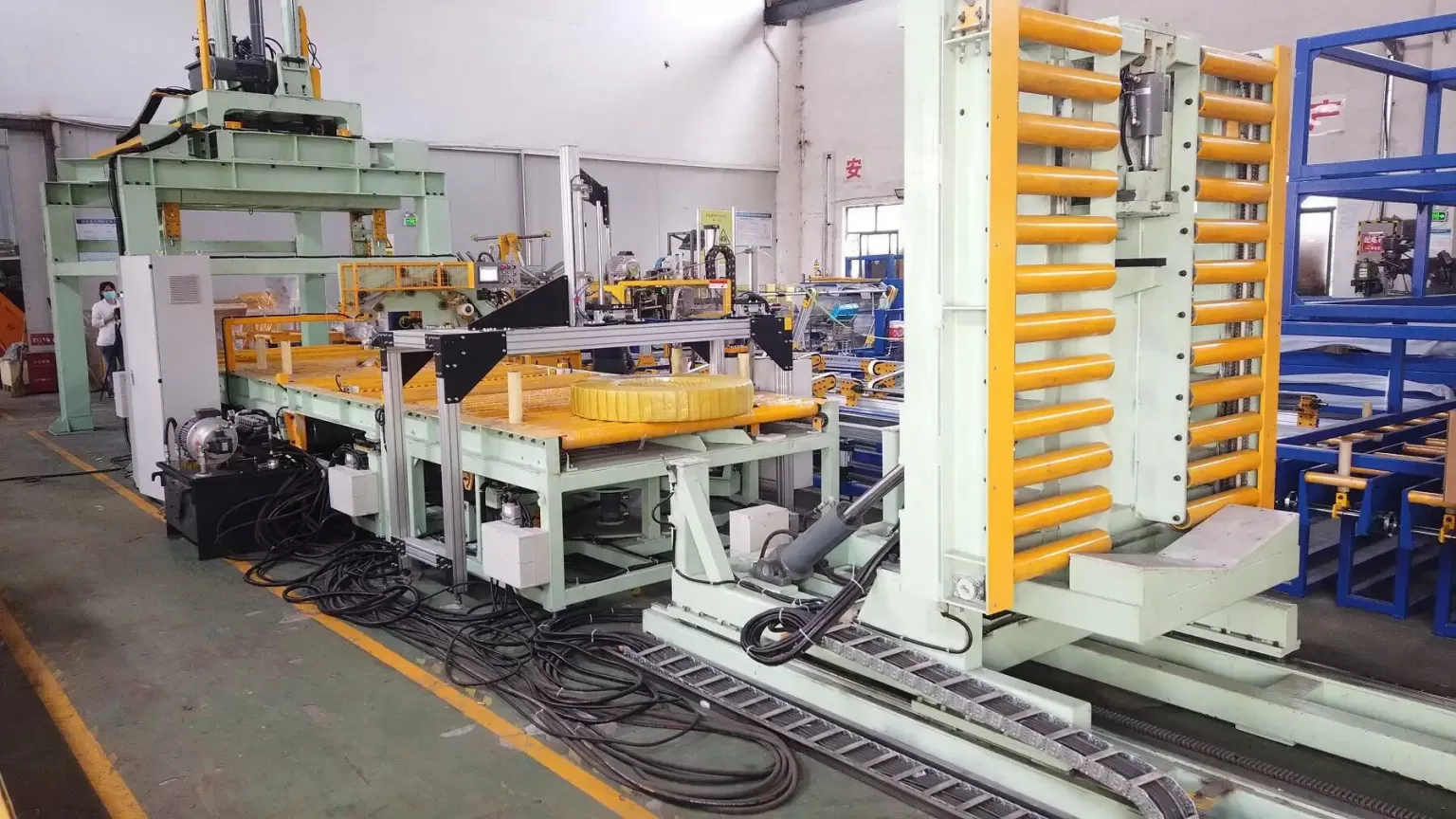
You are not alone in wanting to improve your packing processes. Many factory managers are looking for solutions that go beyond just wrapping coils. They want systems that understand their operational needs, solve real problems, and become true partners in their business growth. Let’s explore the critical features that will help you choose the best wire coil packing machine for your factory.
1. How Can Automatic Wire Coil Packing Machines Boost Efficiency and Throughput?
Do your current wire coil packing methods rely too much on manual labor? Is this slowing down your whole production line and delaying shipments? Many factories face this exact challenge. Manual processes are not just slow; they also create bottlenecks that stop your finished products from getting out the door quickly. (manual packing challenges)
Automatic wire coil packing machines dramatically boost efficiency and throughput by reducing human intervention, speeding up the packing cycle, and ensuring consistent output. Features like automated coil feeding, wrapping, and strapping systems mean coils move through the packing process faster and with fewer pauses. This automation directly addresses bottlenecks at the end of the production line, allowing factories to handle higher volumes and meet tighter delivery schedules.
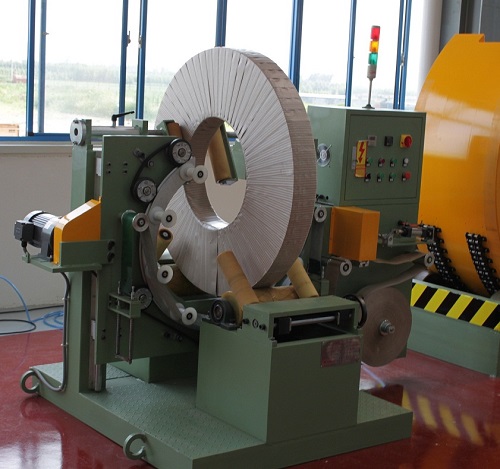
When I first started FHOPEPACK, I knew the value of automation. I saw how even small gains in packing speed could transform a business. Engineers need to think about how a machine integrates with existing lines and how it can scale to meet future demands. A truly efficient machine does more than just wrap; it optimizes your entire operation.
Understanding Automation Levels and Their Impact
Choosing the right level of automation is key. It is not always about going fully robotic. Sometimes, a semi-automatic system offers the best balance of cost and benefit.
- Semi-Automatic Systems: These machines require an operator to load the coil and start the packing cycle. The machine then completes the wrapping or strapping.
- Pros: Lower initial investment, still improves speed over purely manual methods.
- Cons: Still requires human interaction, limited by operator speed.
- Fully Automatic Systems: These machines handle coil loading, centering, wrapping, cutting, and sometimes even offloading without human help.
- Pros: Maximum throughput, lowest labor cost per coil, consistent quality.
- Cons: Higher initial investment, requires more complex integration.
| Feature | Semi-Automatic Packing | Fully Automatic Packing |
|---|---|---|
| Initial Cost | Lower | Higher |
| Labor Needs | Moderate | Minimal |
| Throughput | Good | Excellent |
| Consistency | Good | Excellent |
| Integration | Easier | More Complex |
| Typical ROI | Faster | Longer-term, higher |
Table 1: Comparison of Semi-Automatic vs. Fully Automatic Coil Packing Systems.
Key Automation Components to Look For:
When evaluating machines, consider these components that drive efficiency:
- Automatic Coil Feeding and Positioning: 🔄 Look for systems that can automatically receive coils from your production line and position them correctly for wrapping. This removes heavy lifting and reduces setup time.
- Automated Wrapping Head: 🌀 The core of the machine. It should apply packing material smoothly and consistently, with adjustable tension controls. This prevents loose or overly tight wraps that could damage the product.
- Automatic Material Cut and Clamp: ✂️ After wrapping, the machine should automatically cut the film or paper and secure it. This saves manual effort and ensures a clean finish.
- Integrated Strapping/Banding: 🔗 For some coils, a secondary strapping process is needed. Machines with integrated strapping units streamline this step, ensuring the coil is tightly secured for transport.
- Control Systems and HMI: 🖥️ A user-friendly Human-Machine Interface (HMI) allows operators to easily adjust settings, monitor progress, and troubleshoot issues. Look for systems with intuitive controls and diagnostic capabilities.
By focusing on these automation features, engineers can select a wire coil packing machine that not only meets current production needs but also supports future growth. FHOPEPACK’s machines, for instance, are designed with modular automation in mind, allowing for scalable solutions that grow with your factory’s demands. (packing machine automation)
2. What Essential Safety Features Do Modern Coil Packing Machines Offer?
Are your workers still manually moving heavy coils or turning pallets? Does this create high risks of injury, driving up insurance costs and employee turnover? Safety is not just a regulatory requirement; it is a moral obligation and a key business factor. I have seen the devastating impact of workplace accidents, and I believe technology can help prevent them. (workplace safety concerns)
Modern coil packing machines offer crucial safety features designed to minimize human interaction with heavy loads and moving parts, drastically reducing the risk of workplace injuries. Essential features include comprehensive safety guarding, emergency stop buttons accessible from multiple points, light curtains or sensors that stop operation if an intrusion is detected, and automated handling systems that eliminate the need for manual lifting or positioning of heavy coils. These integrated safety measures protect workers and help factories meet strict safety regulations.

When I was building my own factory, safety was always a top priority. It wasn’t enough to just pack coils fast; they had to be packed safely. Michael Chen, a factory manager I know in Mexico, told me about his constant worry over worker injuries from manual handling. Investing in machines with robust safety features is not an expense; it is an investment in your team and your business’s long-term health.
Protecting Your Team with Advanced Safety Protocols
Good machine design always puts worker safety first. Here are some critical safety features and considerations:
- Physical Guarding: 🛡️ All moving parts, especially the rotating arm and coil handling areas, must be fully enclosed with sturdy safety guards. These guards should prevent access during operation.
- Emergency Stop (E-Stop) Buttons: 🛑 E-Stop buttons should be clearly marked, easily accessible, and placed at multiple points around the machine. Pressing an E-Stop must immediately cut power and stop all machine motion.
- Safety Interlocks: 🔒 These systems ensure that machine operation stops if a safety guard is opened or if an operator tries to access a dangerous area during production. For example, the machine should not run if a safety gate is not fully closed.
- Light Curtains and Safety Sensors: 💡 These photoelectric devices create an invisible barrier around hazardous zones. If a person or object breaks this barrier, the machine automatically shuts down. This is crucial for areas where operators might approach the machine.
- Automated Material Handling: 🤖 The biggest safety improvement comes from automating the loading, centering, and unloading of heavy coils. This removes workers from the hazardous task of manually lifting or maneuvering thousands of pounds.
- Conveyors: Eliminate manual pushing or pulling.
- Automatic Lifting Devices: Replace forklifts for specific in-machine movements.
- Coil Turners: Mechanically rotate coils, avoiding dangerous manual flips.
The True Cost of Neglecting Safety
Neglecting safety has severe consequences beyond human suffering.
- Increased Insurance Premiums: More accidents mean higher worker’s compensation and liability insurance costs.
- Higher Employee Turnover: Workers leave jobs they perceive as unsafe, leading to recruitment and training costs.
- Production Downtime: Accidents cause immediate stoppages for investigations and cleanup.
- Legal Fees and Fines: Non-compliance with safety regulations can result in heavy penalties.
By choosing machines like those from FHOPEPACK, which prioritize robust safety features, engineers can create a much safer work environment. This proactive approach not only protects employees but also builds a strong, reliable workforce and saves significant costs in the long run. (industrial packing machine safety)
3. Why is Durability a Key Factor for Heavy-Duty Wire Coil Packing Operations?
Does your factory operate in a harsh, demanding environment, constantly running equipment at high capacity? Have you experienced equipment breakdowns that cause huge losses in production and delivery delays? Many factory managers, like Michael, tell me they cannot afford any downtime. They need machines that can withstand tough conditions day in and day out. (heavy industry equipment needs)
Durability is a critical factor for heavy-duty wire coil packing operations because it ensures continuous, reliable performance in harsh industrial environments, directly preventing costly downtime and maintaining production schedules. Key features of durable machines include a robust heavy-duty steel frame, high-quality industrial-grade components for all moving parts, wear-resistant materials in critical contact areas, and a design that minimizes vibration and stress. Investing in a durable machine means fewer repairs, longer operational life, and consistent output, which is essential for factories running intensive production.
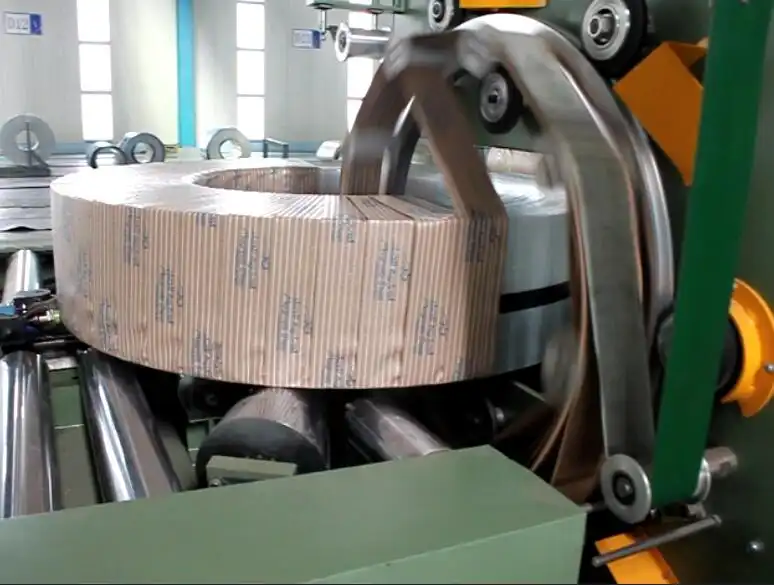
From my experience designing and running packing machine factories, I learned that a machine’s true value is measured by how long it performs without issues. I built FHOPEPACK on the principle of providing equipment that is not just functional but also incredibly resilient. In heavy industries, a machine must be a workhorse, not a show horse.
Building for the Long Haul: What Makes a Machine Durable?
Durability goes beyond just a thick coat of paint. It involves the core engineering and material choices.
- Robust Frame Construction: The machine’s frame is its skeleton. Look for heavy-duty steel construction, often welded and stress-relieved, designed to absorb vibrations and resist structural fatigue from continuous operation and heavy coil loads.
- Material Strength: High-tensile steel is preferred over lighter alloys for structural integrity.
- Welding Quality: Strong, consistent welds are vital for long-term stability.
- Industrial-Grade Components: Every part, from bearings to motors, must be designed for continuous industrial use, not light-duty applications.
- Motors and Gearboxes: Over-spec’d motors and robust gearboxes handle constant starts, stops, and heavy loads without overheating or premature wear.
- Bearings: High-quality, sealed bearings resist dust and moisture, reducing friction and extending life.
- Electrical Components: Industrial-grade PLCs, sensors, and wiring are less prone to failures in harsh electrical environments.
- Wear-Resistant Materials: Parts that frequently contact coils or packing materials should be made from hardened steel, ceramics, or other wear-resistant alloys.
- Guide Rollers: Should be robust and designed for minimal abrasion.
- Film/Paper Feed Mechanisms: Built to withstand constant friction.
- Minimal Vibration Design: Excessive vibration can loosen bolts, accelerate wear, and damage sensitive electronics. A well-designed machine minimizes vibration through balanced components and solid mounting.
- Corrosion Resistance: For environments with moisture or chemicals (common in metal processing), machines should have appropriate coatings or stainless steel components to prevent rust and corrosion.
The ROI of Durability: Less Downtime, More Profit
Investing in a durable machine directly impacts your bottom line.
- Reduced Maintenance Costs: Fewer breakdowns mean less money spent on spare parts and technician call-outs.
- Maximized Uptime: Machines are running when they should be, meaning consistent production and on-time deliveries.
- Longer Lifespan: A durable machine will serve your factory for many more years, delaying the need for costly replacements.
- Consistent Product Quality: Reliable machine operation leads to consistently well-packed products, reducing damage and customer complaints.
Choosing a machine from a reputable manufacturer like FHOPEPACK, SHJLPACK, or CNBHPAC, which prides itself on robust engineering, is a strategic decision for any heavy industrial factory. My goal has always been to deliver machines that perform reliably year after year, just like the ones I built and used in my own factory. (heavy-duty packing solutions)
4. How Can Customizable Packing Solutions Improve Your Production Line?
Are your production lines unique, with specific coil sizes, shapes, and throughput requirements? Do you find that off-the-shelf packing machines never quite fit your exact needs, leading to compromises in efficiency or product protection? Many engineers struggle with finding a machine that perfectly integrates into their existing setup. (custom packing needs)
Customizable packing solutions significantly improve production lines by tailoring the machine’s design and features to match a factory’s specific operational demands, coil characteristics, and integration requirements. Key benefits include optimized efficiency for unique coil dimensions, seamless integration with existing conveyors and upstream equipment, precise control over packing material application for product protection, and specialized features to handle diverse product types. This level of customization ensures the machine acts as a true extension of the production line, eliminating bottlenecks and maximizing overall operational flow.
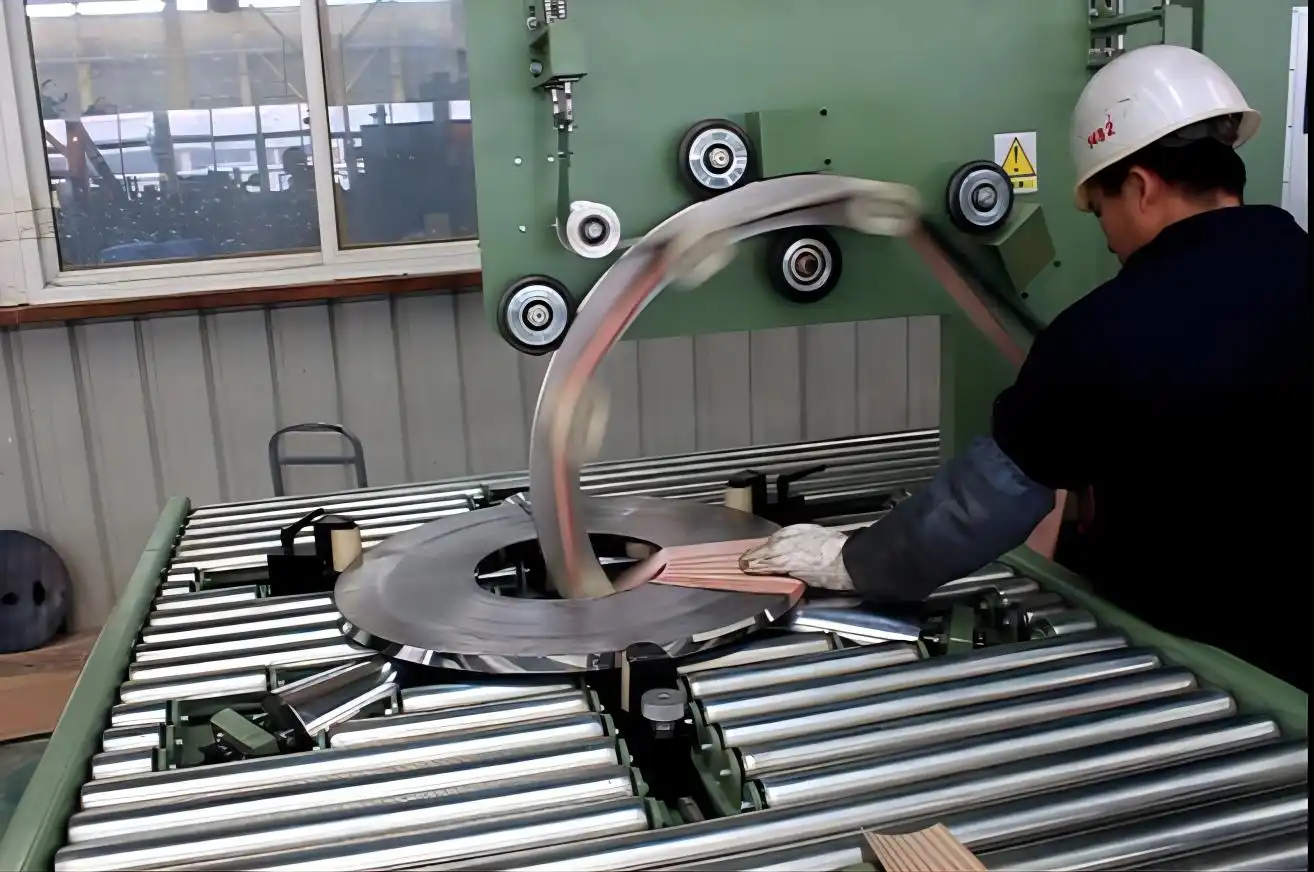
When I was running my factory, I realized that no two production lines are exactly alike. A standard machine might solve some problems, but a truly effective solution is one built around your specific challenges. This is where a knowledgeable partner, like FHOPEPACK, comes in. We do not just sell machines; we help you solve your unique packing puzzles.
Tailoring Technology to Your Unique Factory Floor
Customization is not just about making a machine look different. It is about engineering a solution that perfectly matches your operational environment.
- Adaptable Machine Dimensions: 📏
- Coil Size Range: The machine needs to handle the minimum and maximum diameters, widths, and weights of your wire coils. A good supplier can adjust the machine’s opening and conveying system.
- Factory Footprint: Space is often limited. Customizable machines can be designed to fit into tight spaces or integrate with existing layouts without major reconfigurations of your factory floor.
- Integration with Existing Systems: 🔗
- Conveyor Systems: The packing machine should seamlessly connect with your upstream and downstream conveyor lines for smooth material flow. This might involve custom-designed transfer tables or automated feeding mechanisms.
- Control System Compatibility: The machine’s control system should be able to communicate with your factory’s main PLC or ERP system for data exchange and centralized control.
- Specialized Packing Material Handling: 📦
- Multiple Wrapping Materials: Some coils need paper, plastic film, or even anti-corrosion VCI film. A customizable machine can be configured to use different materials or even combine them.
- Adjustable Tension and Overlap: Different products require different wrapping tensions to prevent damage or ensure secure packaging. Precise control over these settings is crucial.
- Unique Operational Features: ✨
- Automatic Labeling/Marking: Integrated systems can apply labels or markings directly onto the packed coil, improving traceability.
- Coil Orientation: Some factories need coils packed in a specific orientation (e.g., “eye to sky” or “eye to wall”). Custom solutions can include coil turners or tilters to achieve this.
- Palletizing Integration: For factories looking for full end-of-line automation, the packing machine can be designed to feed directly into an automatic palletizing system.
Partnering for Success: Beyond the Machine Sale
Choosing a partner who understands customization is as important as the machine itself.
- Deep Industry Knowledge: A supplier with experience in your specific industry (e.g., steel, wire manufacturing) understands the nuances of your products and processes. My journey, from an employee to a factory owner, gives me this perspective.
- Consultative Approach: They should work with you to understand your pain points, goals, and existing infrastructure before recommending solutions. This is not just about selling; it is about solving.
- Engineering and Design Capabilities: The supplier must have the in-house engineering expertise to design and build custom components or modify standard designs.
- After-Sales Support: Custom machines, like any complex equipment, need excellent ongoing support, including spare parts availability and technical assistance. This addresses concerns about previous bad supplier experiences.
Working with a company like FHOPEPACK, which values a consultative approach and deep engineering knowledge, ensures you get a packing solution that truly fits. We believe in building partnerships, helping engineers like Michael Chen achieve their goals for automation, safety, and profitability with machines specifically designed for their success. (tailored packing solutions)
Conclusion
Engineers seeking wire coil packing machines must prioritize automation, safety features, durability, and customization. These elements ensure efficiency, protect workers, guarantee reliability, and perfectly integrate into unique production lines. Investing in the right col wrapping machine delivers significant long-term value and operational improvement.








