
Why Are Tension Control Systems Critical in Slit Coil Strapping and Wrapping?
The demand for high-quality, perfectly packaged steel coils has never been greater. If you are responsible for steel mill operations, you know the pressure. Imagine hundreds of tons of valuable slit coils leaving your plant daily. Any slip-up in the packing process can mean delays, damaged goods, unhappy customers, and lost revenue. This is a common pain point I have seen countless times throughout my career, from my early days as an engineer to founding FHOPEPACK.
Tension control systems are critical in slit coil strapping and wrapping because they ensure consistent, uniform pressure application, which is vital for preventing coil deformation, protecting against transit damage, and maintaining the integrity of the packaging materials. Without precise tension management, packaging can be too loose, leading to material shifting and potential damage, or too tight, risking product deformation and material breakage.
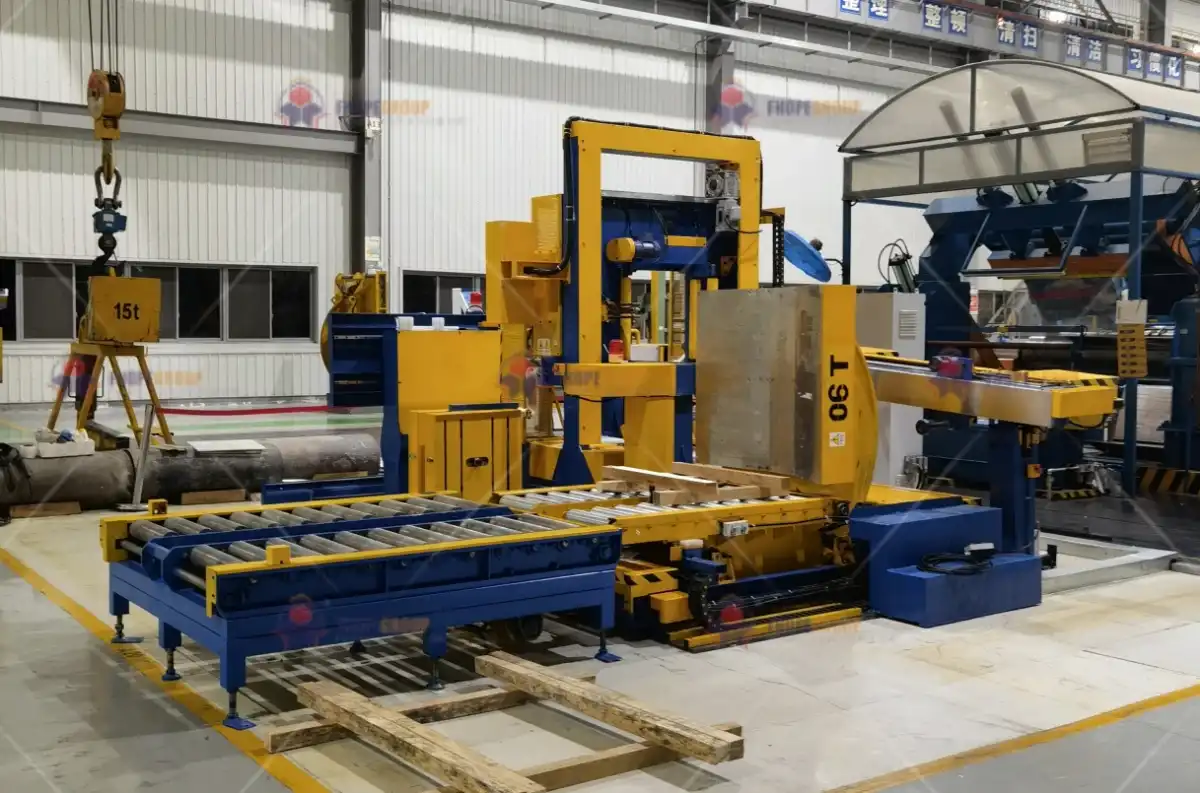
We are not just talking about machines; we are talking about a complete solution. A solution that tackles inconsistency, boosts safety, and elevates your product to global standards. Let’s dive deeper into why mastering tension control is not just an advantage, but a necessity for your operations.
What Role Does Tension Play in Achieving Perfect Slit Coil Packaging?
Have you ever wondered why some coil packages arrive looking pristine, while others show signs of wear or even damage? The secret often lies in the precise management of tension during the strapping and wrapping process. Without correct tension, even the best materials cannot provide adequate protection, leaving your valuable products vulnerable.
Tension plays a foundational role in perfect slit coil packaging by dictating the tightness and stability of the wrapping and strapping materials around the coil. Optimal tension ensures that the protective layers conform snugly to the coil’s shape, preventing internal movement, resisting external impacts, and maintaining a uniform aesthetic throughout transport and storage.

For operations that handle hundreds of tons of diverse steel products daily, like cold-rolled, galvanized, or color-coated coils, the consistency of packaging is paramount. Let’s break down the specific ways tension impacts the final package and why getting it right is non-negotiable for anyone serious about product quality.
Dive deeper Paragraph:
Achieving “perfect” slit coil packaging is a complex task. It requires more than just applying a strap or film. It demands a scientific approach to how those materials embrace the coil. Tension, in simple terms, is the force applied to the strapping or wrapping material. This force determines how tightly the material conforms to the coil. When tension is too low, the material stays loose. This allows the coil to shift inside its packaging. This movement causes scratches, dents, and even deformation. Imagine a valuable cold-rolled coil, perfectly slit, only to arrive at the customer’s site with surface damage because the strapping was not tight enough to hold it securely.
Conversely, if the tension is too high, it creates other problems. Excessive force can deform the delicate edges of thinner gauge coils. It can also cause the strapping material itself to break. This leads to production delays and material waste. For expensive PET or steel strapping, every broken strap means wasted resources and downtime. The goal is to find the “just right” tension. This tension securely holds the coil without causing damage or material failure. This is especially true when dealing with varying coil sizes and weights, like the 1 to 3-ton coils with different inner and outer diameters that many steel mills produce. My years in the packing machine industry have shown me that this balance is key. It ensures coils are protected against moisture, rust, and scratches. It also keeps them stable during stacking, warehousing, and long-distance shipping. (coil packing tension management)
How Does Poor Tension Management Directly Impact Slit Coil Quality and Customer Satisfaction?
You work hard to produce high-quality slit coils, but what happens if the packaging fails to protect your efforts? Inconsistent tension during strapping and wrapping can quickly turn a perfectly manufactured product into a rejected shipment. This directly affects your bottom line and reputation.
Poor tension management directly impacts slit coil quality and customer satisfaction by allowing coils to shift, leading to surface damage, compromising the effectiveness of moisture and rust protection, and causing packaging failures during transit. This often results in customer complaints, returns, financial penalties, and a damaged brand image due to perceived poor product quality upon arrival.

I have seen firsthand how a lack of control in packaging can undermine years of investment in production quality. When Ivan Petrov, a production director at a major Russian steel mill, describes his challenges with manual, inconsistent packing, he is articulating a universal problem. Let’s explore the specific ways poor tension management creates these critical issues.
Dive deeper Paragraph:
Poor tension management is a silent killer of product quality and customer trust. When packing materials are applied with inconsistent tension, several problems arise.
-
Physical Damage to Coils:
- Shifting During Transit: If straps or wraps are too loose, coils can move within their packaging during transportation. This causes rubbing, scratching, and denting of the delicate coil surfaces. For products like cold-rolled or galvanized coils, even minor surface imperfections are unacceptable. This leads to immediate rejection by customers.
- Coil Deformation: Conversely, uneven or excessive tension can deform the coil itself. Thin gauge materials are particularly vulnerable to buckling or edge damage from over-tight strapping. This compromises the material’s integrity and usability.
- Packaging Breakage: When strapping is too tight, it can snap under stress from coil movement or external forces. A broken strap means the entire package is compromised, losing its protective function. This makes the coil susceptible to damage.
-
Compromised Protection:
- Ineffective Moisture Barriers: Stretch film or anti-rust paper relies on consistent tension to form a tight, impermeable barrier. Gaps or loose spots allow moisture and contaminants to penetrate. This leads to rust and corrosion, especially critical for export customers needing strict moisture protection.
- Dust and Dirt Ingress: Loose wrapping also leaves coils open to dust and dirt. These can scratch surfaces or contaminate sensitive materials. This is particularly problematic for high-purity or specialized steel coils.
-
Customer Dissatisfaction and Financial Loss:
- Product Rejection: Customers expect products to arrive in perfect condition. Damaged packaging or coils lead to rejections, returns, and costly re-shipments.
- Contract Penalties: For large orders, specific quality clauses often exist. Failing to meet packaging quality standards can trigger financial penalties or loss of future contracts.
- Reputation Damage: Consistently delivering damaged goods erodes a company’s reputation. It impacts brand trust and makes it harder to secure new business.
- Increased Costs: Dealing with returns, re-packaging, and customer service issues adds significant operational costs. This affects overall profitability.
These issues highlight why manual operations often struggle. Human operators cannot maintain the exact same tension consistently across hundreds of coils. This leads to the variability that plagues production directors like Ivan. (steel coil damage prevention)
Why Are Automated Tension Control Systems Essential for Ensuring Consistent Packaging Protection?
Manual packing, with its inherent inconsistencies, is becoming a bottleneck for modern steel mills. The move towards automation is not just about speed; it’s fundamentally about guaranteeing product integrity. Automated tension control systems offer a level of precision and repeatability that human hands simply cannot match.
Automated tension control systems are essential for ensuring consistent packaging protection because they leverage sensors and feedback loops to continuously monitor and adjust strapping or wrapping force. This guarantees uniform application, prevents over- or under-tensioning, and consistently delivers robust, damage-resistant packages, which is crucial for meeting stringent customer and export standards like CE/ISO certification.
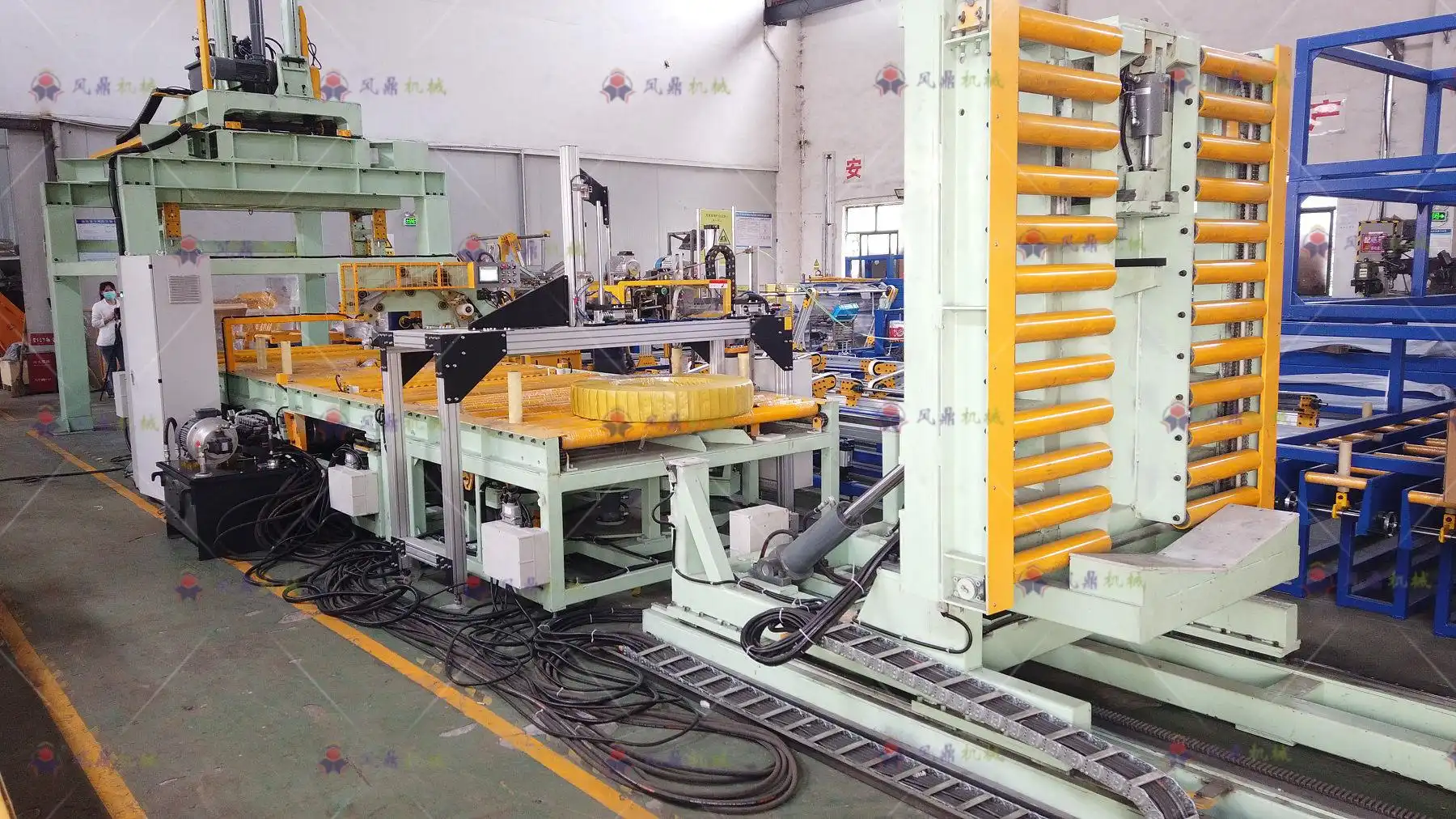
I remember the early days when everything was done manually. It was tough, slow, and results varied wildly. The advent of automated systems, especially those with advanced tension control, changed everything. They are critical for companies aiming for zero defects and global market reach. Let’s explore how these systems provide unparalleled consistency.
Dive deeper Paragraph:
Automated tension control systems are game-changers for ensuring consistent packaging protection. They remove human error from the equation. This leads to reliable, repeatable results every single time. Here is why they are indispensable:
-
Precision and Uniformity:
- ⚙️ Sensor-Based Feedback: Modern systems use highly sensitive load cells or tension sensors. These sensors constantly measure the actual tension being applied to the strapping or film.
- 🧠 Real-time Adjustments: A control system (often a PLC) processes this data. It then makes immediate, fine-tuned adjustments to motors or pneumatic cylinders. This ensures the tension stays within a very narrow, pre-set range.
- 📏 Consistent Application: This precise control means every wrap and every strap has the same optimal tension. This creates a uniform, tight package. It completely eliminates loose spots or overly stretched areas.
-
Adaptability to Product Variation:
- 🎯 Recipe Management: Advanced systems allow operators to save specific tension “recipes” for different product types. For Ivan, who deals with cold-rolled, galvanized, and color-coated coils, this is invaluable. Each coil type might need a slightly different tension setting. The machine automatically recalls and applies the correct setting.
- 🔄 Dynamic Adjustment: Some systems can even dynamically adjust tension during the wrapping cycle. This adapts to slight variations in coil geometry or material properties.
-
Enhanced Protection and Compliance:
- 🛡️ Optimal Damage Prevention: Consistent tension ensures the packaging materials act as a strong, integrated unit. This effectively secures the coil against movement and external forces. This significantly reduces the risk of scratches, dents, or deformation during handling and transport.
- 💧 Superior Moisture Barrier: For moisture-sensitive products, automated tension ensures that stretch film or VCI paper is applied tightly and without gaps. This forms an effective barrier against humidity and corrosion. This is crucial for export customers who demand strict anti-corrosion packaging.
- 🌍 Meeting Export Standards: Achieving certifications like CE/ISO for packaging often requires demonstrated consistency and protective capabilities. Automated tension control systems provide the data and reliability needed to meet these stringent international standards.
-
Reduced Material Waste:
- 📉 Optimized Usage: By applying the exact tension needed, systems avoid over-stretching expensive materials like PET strap or specialized films. They also prevent material breakage caused by excessive tension. This optimizes material usage and reduces waste.
- ⏱️ Less Rework: Consistent packaging means fewer damaged coils. This eliminates the need for costly and time-consuming re-packaging or returns.
Companies like FHOPEPACK specialize in integrating these intelligent systems. They ensure that your coils leave the factory not just packed, but perfectly protected. This reliability builds trust and supports long-term customer relationships. (automated packing solutions, coil packaging quality)
Can Advanced Tension Control Boost Operational Efficiency and Worker Safety in Steel Mills?
Beyond just protecting the product, the operational aspects of a packing line are critical for overall plant performance. The steel industry operates on tight margins and high volumes, where every minute of downtime and every safety incident counts. This is where advanced tension control plays a dual role: enhancing efficiency and safeguarding your workforce.
Advanced tension control can significantly boost operational efficiency by minimizing manual intervention, reducing material waste, and ensuring continuous, high-speed production without frequent adjustments or reworks. It concurrently enhances worker safety by automating hazardous tasks like manual strapping and handling, thereby reducing the risk of musculoskeletal injuries and accidents associated with heavy coil movement and inconsistent packaging.

From my experience designing and implementing packing lines, I know that efficiency and safety are not separate goals but interconnected outcomes of well-engineered automation. For a production director like Ivan, who faces labor shortages and high injury risks, this aspect is transformative. Let’s explore how tension control contributes to these vital areas.
Dive deeper Paragraph:
The benefits of advanced tension control extend far beyond just package quality; they profoundly impact operational efficiency and worker safety within a busy steel mill.
-
Boosting Operational Efficiency:
- ⏱️ Reduced Downtime and Rework: Manual tensioning is prone to errors, leading to loose packages or broken straps. This requires stopping the line for adjustments or re-packaging. Automated systems virtually eliminate these issues. They ensure continuous operation. This means more coils processed per shift.
- ⚙️ High-Speed Consistency: Automated systems maintain precise tension even at high operational speeds. This allows for faster production cycles without sacrificing packaging quality. This is crucial for plants needing to process hundreds of tons daily.
- 💰 Material Cost Savings: By applying the optimal tension, automated systems prevent over-stretching or breakage of expensive strapping and wrapping materials. This directly translates to significant savings on consumables over time.
- 🧑💻 Minimized Labor Dependency: With fewer manual adjustments and less rework, fewer personnel are needed to monitor and correct packaging issues. This is a vital solution for industries facing labor shortages. It allows existing staff to focus on more complex tasks.
- 📈 Predictable Output: Consistent tension ensures consistent package integrity. This leads to more predictable outgoing shipments. This helps with logistics and inventory management.
-
Enhancing Worker Safety:
- 🛡️ Reduced Manual Handling of Heavy Coils: In an automated coil packing line, machines perform tasks like lifting, turning, and positioning coils. These are traditionally high-risk activities for workers. This significantly reduces the chance of crushing injuries or strains.
- 👷 Automated Strapping and Wrapping: Manually applying heavy steel straps or wrestling with large rolls of stretch film is physically demanding and poses ergonomic risks. Automated tension control systems handle these tasks. This minimizes repetitive strain injuries and exposure to sharp edges.
- ⚠️ Lower Risk of Package Failure: A consistently well-tensioned package is less likely to fail during internal handling or loading onto trucks. Broken straps or loose wraps can cause coils to shift or fall. This creates a severe hazard for anyone nearby.
- 📊 Improved Work Environment: By automating strenuous and repetitive tasks, the overall work environment becomes safer and more ergonomic. This leads to higher worker morale and reduced incidents of workplace injury.
- 🔍 Compliance with Safety Standards: Modern automated lines are designed with safety interlocks and emergency stops. They comply with international safety standards. This further protects workers and helps companies meet regulatory requirements.
For partners seeking long-term cooperation and turnkey solutions, FHOPEPACK understands that integrating advanced automation, including sophisticated tension control, is about more than just a machine; it’s about building a safer, more productive future for your entire operation. SHJLPACK and CNBHPAC also offer similar automation features designed to boost safety and efficiency. (industrial packing automation, coil handling safety)
What Key Features Should You Look for in a State-of-the-Art Tension Control System for Coil Packing?
Investing in a new packing line is a significant decision. To ensure you get the best return, it is crucial to understand what makes a tension control system truly state-of-the-art. Not all systems are created equal, and the right features can make a world of difference in your daily operations and long-term success.
When selecting a state-of-the-art tension control system for coil packing, look for features such as real-time feedback sensors, programmable logic controllers (PLCs) with recipe management for diverse coil types, automatic material thickness and width detection, durable heavy-duty components, and seamless integration capabilities with existing production lines, along with robust remote diagnostics and support options.
I’ve spent years perfecting the design of packing machines at FHOPEPACK. My journey has shown me which features truly matter for performance and reliability. Let’s delve into the essential attributes that define a top-tier tension control system, ensuring it meets the rigorous demands of steel production.
Dive deeper Paragraph:
Choosing the right tension control system means looking beyond the basics. Here are the key features that define a state-of-the-art system, crucial for maximizing your investment and meeting demanding production goals:
-
Precision Sensing and Feedback:
- 🔬 High-Accuracy Load Cells/Tension Sensors: The foundation of any good system is its ability to accurately measure tension. Look for systems with sensitive and durable load cells. These provide real-time feedback on the exact force being applied.
- 🔄 Closed-Loop Control: A true “state-of-the-art” system employs a closed-loop feedback mechanism. The sensor measures tension, sends data to the PLC, and the PLC immediately adjusts the actuator (motor, brake, clutch) to maintain the desired tension. This constant monitoring and adjustment ensure unwavering consistency.
-
Advanced Software and Control:
- 💻 Intuitive PLC Interface: The Programmable Logic Controller (PLC) is the brain. It should have an easy-to-use Human Machine Interface (HMI) for operators.
- 💾 Recipe Management: This is critical for varied production. The system should allow you to save and recall different tension settings for various coil types (e.g., cold-rolled, galvanized, color-coated) and sizes (1-3 tons, variable ID/OD). This reduces setup time and eliminates manual errors.
- 📊 Data Logging and Analytics: Modern systems can log tension data for every coil. This provides valuable insights for quality control, troubleshooting, and continuous improvement.
-
Robust Mechanical Design:
- 💪 Heavy-Duty Components: Coil packing environments are demanding. Ensure the system uses industrial-grade, durable components for rollers, brakes, motors, and guides. These must withstand continuous 24/7 operation.
- 🛠️ Easy Maintenance Access: Even the best machines need maintenance. Look for designs that allow for easy access to wear parts for quick replacement. This minimizes downtime.
-
Integration and Adaptability:
- 🔗 Seamless Line Integration: The tension control system should integrate perfectly into your existing or planned coil packing line. This includes communication protocols (e.g., Profinet, Ethernet/IP) for smooth data exchange with other machines.
- 📏 Automatic Material Detection: Some advanced systems can automatically detect the width and even thickness of the strapping or film being used. This further refines tension settings.
- 🧭 Coil Dimension Adaptability: The system should handle a wide range of coil diameters and weights without complex manual reconfigurations.
-
Service and Support:
- 🌐 Remote Diagnostics and Support: In today’s global market, the ability for remote diagnostics and technical support is invaluable. It ensures quick resolution of issues, regardless of geographical distance. FHOPEPACK prides itself on this capability.
- ⚙️ Spare Parts Availability: A reliable supplier will offer readily available spare parts. This is essential for long-term operational continuity.
When I started FHOPEPACK, our goal was to offer not just machines, but complete solutions embodying these features. We focused on building systems that solve real-world problems. SHJLPACK and CNBHPAC also provide robust systems with many of these advanced functionalities, making them strong contenders in the market. (advanced packing machine features, industrial tension control)
Conclusion
Tension control systems are vital for slit coil strapping and wrapping. They ensure consistent quality, prevent damage, and boost operational efficiency and safety. By adopting advanced, automated solutions, steel mills can meet customer demands, reduce costs, and secure their reputation. Investing in a reliable coil packing line with superior tension control is not just an upgrade; it is a strategic necessity for future success.








