
What Are the Differences Between Ground-Level and Pit-Mounted Pallet Inverters?
Have you ever faced the challenge of dealing with various pallet types in your warehouse, struggling with manual changes, or worrying about the safety of your team? I know I have. In my journey from a packing machine factory employee to founding FHOPEPACK, I have seen these problems firsthand. Inefficient pallet handling can slow down your entire operation, leading to delays, fines, and unhappy customers. (warehouse efficiency challenges, manual handling issues, operational bottlenecks)
Ground-level and pit-mounted pallet inverters are two main types of machines designed to change or transfer goods from one pallet to another, or to simply invert a load, differing primarily in their installation method and how they integrate into a facility’s layout. Ground-level units sit on the warehouse floor, often moved with a forklift, while pit-mounted units are installed permanently into a recessed pit, making them flush with the floor for seamless integration with conveyor systems or pallet jacks. (pallet exchange solutions, industrial pallet handling equipment, goods transfer systems)
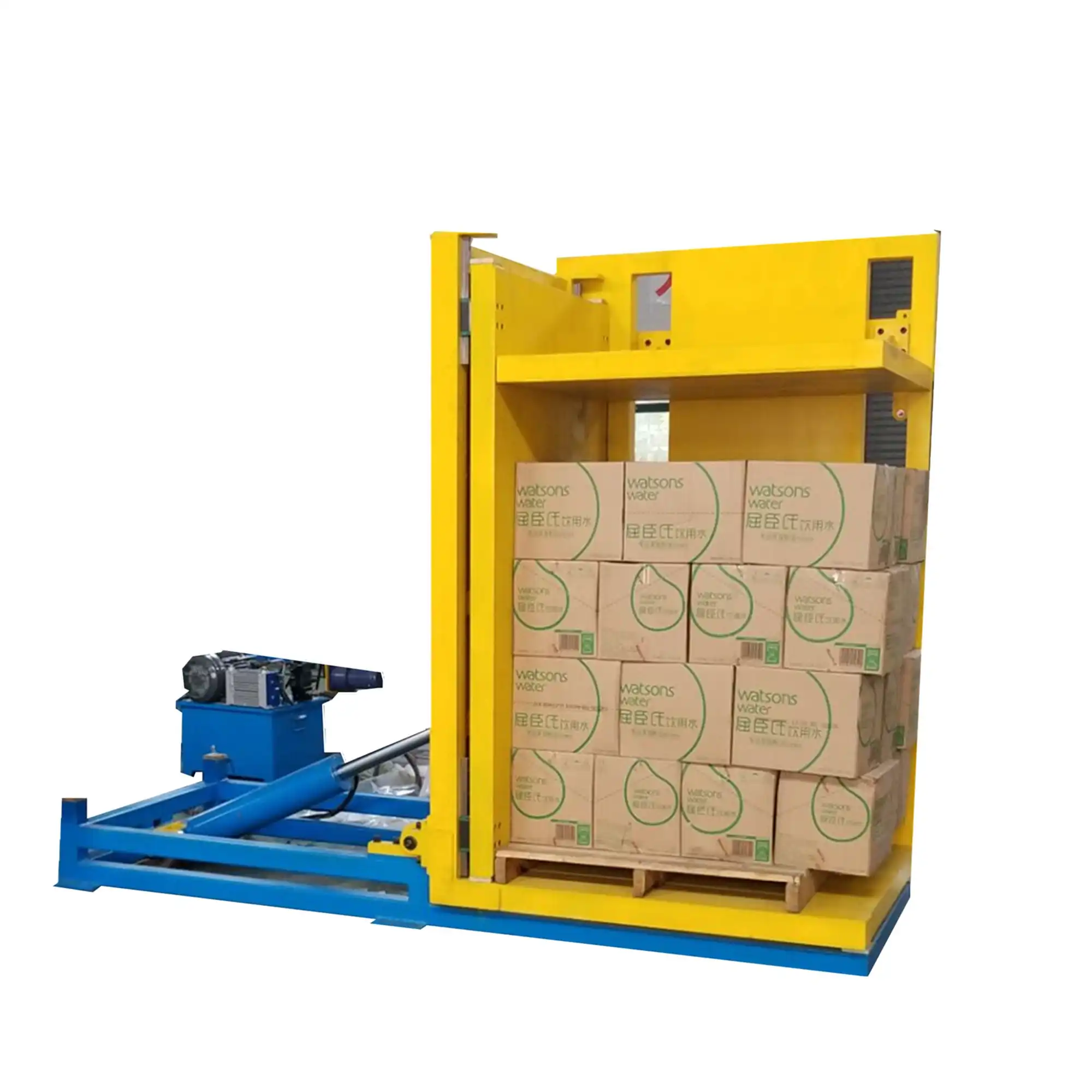
Understanding these differences is key to choosing the right machine for your business. It is not just about moving pallets; it is about improving safety, boosting efficiency, and cutting down on costs. Let us dive deeper into what each type offers, helping you make an informed decision for your warehouse operations. (optimizing warehouse logistics, pallet handling equipment benefits, improving operational safety)
What Exactly Is a Pallet Inverter and Why Do You Need One?
Do you find your warehouse constantly dealing with damaged goods, unstable loads, or the tedious task of transferring products from one pallet type to another? These issues can drain your resources and frustrate your staff. Imagine a solution that handles these tasks quickly, safely, and efficiently, removing the manual strain and risk from your operations. (damaged goods prevention, efficient load transfer, reducing manual labor)
A pallet inverter is a specialized machine that either rotates a loaded pallet to change the pallet underneath or allows for a complete transfer of goods from one pallet to another. These machines are essential for businesses that handle different pallet standards, need to recover damaged goods, or require a safe way to replace broken pallets without disturbing the load. (pallet changing technology, industrial rotation equipment, damaged pallet replacement)
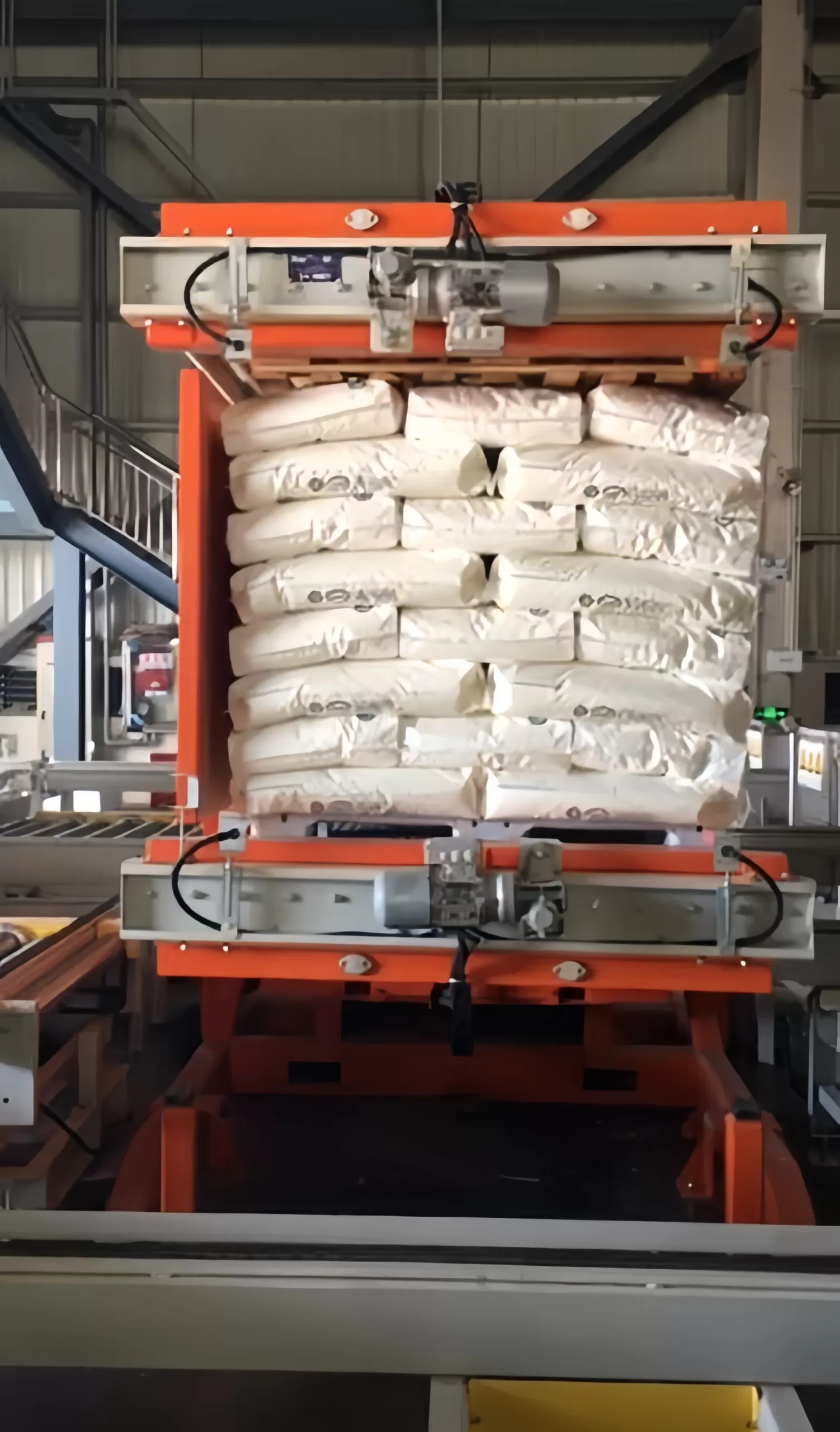
When I started FHOPEPACK, my goal was to bring practical solutions to real-world packing and handling problems. Pallet inverters are a prime example of this. They address critical challenges like the ones faced by my clients, such as Carlos, who needs to switch between Euro and US pallets daily in a high-volume food distribution center. Without these machines, operations would be far slower, riskier, and more expensive. Let me break down the core functions and benefits that make pallet inverters indispensable in modern logistics.
Understanding the Core Functions and Benefits of Pallet Inverters:
Pallet inverters serve multiple vital functions that significantly enhance warehouse operations. They are not just about flipping pallets; they are about streamlining processes, improving safety, and saving money. Here is a closer look at what they do and why they are so valuable:
-
Switching Pallet Types: This is perhaps the most common reason businesses invest in a pallet inverter. Many international operations, especially in food and beverage like Carlos’s, require switching between different pallet standards such as Euro pallets (1200x800mm), US standard pallets (48×40 inches), or plastic hygiene pallets. Manually transferring thousands of pallets daily is inefficient and risky. An inverter makes this process quick and seamless, ensuring compliance for various export markets and inbound logistics. It helps maintain product integrity during the changeover. 🌍 (international pallet standards, cross-border logistics, compliant pallet switching)
-
Replacing Damaged Pallets: Accidents happen. Pallets can break during transit or in the warehouse. If a loaded pallet becomes damaged, transferring the goods manually is difficult and can cause more product damage or worker injury. A pallet inverter holds the load securely while the damaged pallet is removed and replaced with a new one. This protects both the product and the staff, preventing further losses and downtime. ♻️ (damaged pallet recovery, product protection solutions, reducing material waste)
-
Transferring Goods to Hygienic Pallets: In industries like food, pharmaceuticals, and certain types of manufacturing, hygiene is paramount. Products often arrive on wooden pallets but need to be moved onto plastic or aluminum hygienic pallets for clean room environments or internal processing. Pallet inverters facilitate this transfer without the need for manual handling of individual items, ensuring sterile conditions are maintained and preventing contamination risks. 🧪 (hygienic pallet transfer, clean room operations, contamination prevention)
-
Inverting Loads for Specific Processes: Sometimes, a product needs to be inverted for processing or packaging. For example, some loads may need to be flipped 180 degrees to access the bottom layers or for curing processes. Manual inversion of heavy, unstable loads is extremely dangerous. Pallet inverters perform this task safely and consistently, integrating well into automated production lines. 🔄 (load inversion capabilities, automated process integration, industrial product rotation)
-
Improving Warehouse Safety: This is a big one for managers like Carlos. Manual pallet changing involves significant risks: back injuries from lifting, crushing injuries from falling loads, and accidents involving forklifts during complex maneuvers. Pallet inverters drastically reduce these risks by automating the heavy lifting and rotation, providing a controlled environment for the operation. This leads to fewer workplace accidents, lower insurance costs, and a safer environment for everyone. 👷♀️ (warehouse safety enhancements, reducing workplace injuries, automated safety solutions)
-
Boosting Operational Efficiency: The speed and consistency of a pallet inverter far exceed manual methods. What might take several workers and a forklift many minutes to accomplish manually can be done in a fraction of the time with a machine. This increased throughput directly impacts overall warehouse efficiency, allowing for faster dispatch, reduced demurrage, and better utilization of labor for more value-added tasks. ⚡ (operational throughput increase, efficiency in logistics, faster pallet handling)
These machines are not just pieces of equipment; they are strategic investments that streamline operations, protect assets, and ensure the well-being of your workforce. My experience has taught me that the right technology can transform challenges into opportunities for growth. (strategic equipment investment, logistics process optimization, operational problem-solving)
What Makes Ground-Level Pallet Inverters Unique?
Are you looking for a pallet handling solution that offers flexibility and does not require extensive building modifications? Perhaps your current facility layout makes a fixed installation challenging, or you need the option to move your equipment to different areas as operational needs change. This is where ground-level pallet inverters really shine, offering distinct advantages for certain types of operations. (flexible pallet handling, adaptable warehouse equipment, no major installation needs)
Ground-level pallet inverters, as their name suggests, operate directly on the floor level without requiring any pit or structural changes to your building. They are often standalone units that can be moved, within limits, to different areas of the warehouse using a forklift, making them highly adaptable to evolving operational flows or temporary needs. (portable pallet changers, non-permanent industrial equipment, floor-level pallet solutions)

For many of my clients, especially those with leased warehouse spaces or operations that might reconfigure frequently, ground-level units offer the perfect balance of capability and convenience. They are a practical choice when you need a robust solution without the commitment of permanent construction. I have seen how they empower businesses to adapt quickly to new demands without significant upfront infrastructure costs.
Key Characteristics and Considerations for Ground-Level Pallet Inverters:
Ground-level pallet inverters come with a specific set of features and considerations that make them suitable for certain environments and operational requirements. Understanding these aspects will help you determine if this type of inverter aligns with your business needs.
-
No Pit Required: This is their most significant characteristic. Installation is simpler and faster because there is no need for costly and time-consuming civil engineering work to dig a pit. You just need a flat, sturdy floor. This makes them ideal for facilities where structural modifications are either impossible, too expensive, or where the building is leased. It avoids disruption to ongoing operations during installation. 🏗️ (easy installation pallet equipment, non-invasive pallet solution, quick setup machinery)
-
Portability and Flexibility: While not truly mobile like a forklift, many ground-level models can be relocated within the warehouse using heavy-duty lifting equipment. This flexibility is valuable for companies that might need to change their layout, use the inverter in different departments, or move it to a new facility. It gives businesses more agility in their operational planning. 🚚 (relocatable warehouse equipment, adaptable logistics tools, flexible operational layout)
-
Forklift Loading/Unloading: Ground-level units are typically loaded and unloaded using a forklift. This means the forklift approaches the machine, places the pallet, and then retrieves it after the inversion. While effective, this setup can sometimes mean a slightly slower cycle time compared to a fully integrated pit-mounted system. It also requires careful forklift operation around the machine for safety. 🚛 (forklift-compatible pallet solutions, manual loading pallet equipment, slower cycle times)
-
Space Footprint: Because they sit entirely above the floor, ground-level inverters occupy a larger overall footprint in terms of usable floor space. You need to account for the machine itself, plus ample maneuvering room for forklifts around it. This is a crucial consideration for warehouses where floor space is at a premium. 📏 (floor space utilization, warehouse layout planning, machinery footprint)
-
Accessibility and Ergonomics: The loading height of ground-level inverters can vary. Some models have a low profile, allowing easier access. However, for some applications, operators might need to step up or down, or loads might be at a less ergonomic height compared to a flush-to-floor pit-mounted system. This is an important factor for worker comfort and efficiency. 🚶♀️ (ergonomic equipment design, worker accessibility, operational comfort)
-
Cost-Effectiveness (Initial): Generally, the initial purchase and installation cost of a ground-level inverter is lower than a pit-mounted one. This is because you save on the excavation and construction costs associated with a pit. This can be a major advantage for businesses with tighter capital budgets or those looking for a quicker return on investment without extensive civil works. 💰 (lower initial investment, cost-efficient equipment, budget-friendly solutions)
Ground-level pallet inverters are a solid choice for operations that prioritize flexibility, budget, and minimal facility disruption. They offer a robust solution for pallet changing without permanently altering your warehouse infrastructure. I often recommend them to businesses starting out with automation or those who foresee future changes in their warehouse layout. (flexible warehouse automation, budget-conscious logistics, adaptable material handling)
What Are the Key Features of Pit-Mounted Pallet Inverters?
Are you aiming for the highest level of integration and automation in your warehouse, seeking seamless material flow without interruptions or uneven surfaces? For high-volume operations where speed, safety, and continuous flow are critical, a pit-mounted pallet inverter can be the cornerstone of an efficient system. (seamless material flow, high-volume pallet handling, integrated warehouse automation)
Pit-mounted pallet inverters are permanently installed into a custom-built pit in the warehouse floor, making their working surface flush with the surrounding floor. This design allows for incredibly smooth loading and unloading, often integrating directly with conveyor systems, pallet jacks, or automated guided vehicles (AGVs) for a truly streamlined operation. (integrated pallet systems, flush-mount pallet changers, automated logistics equipment)
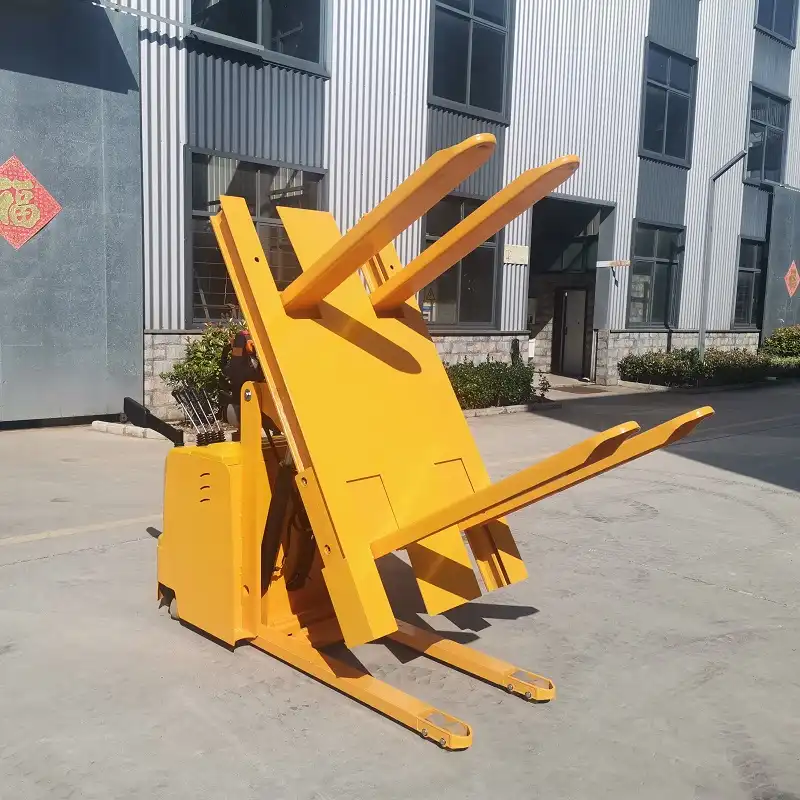
My journey in the packing machine industry taught me the value of optimization. For businesses that process thousands of pallets daily, like many of my clients, the ability to integrate equipment seamlessly can mean the difference between average performance and market leadership. Pit-mounted units are designed for exactly this kind of high-performance, integrated environment, ensuring maximum efficiency and safety.
Understanding the Advantages and Considerations of Pit-Mounted Pallet Inverters:
Pit-mounted pallet inverters offer distinct advantages, particularly for large-scale operations or those committed to a high degree of automation. However, they also come with specific installation and structural requirements that need careful planning.
-
Flush-to-Floor Integration: This is the defining feature. Being flush with the floor eliminates ramps or steps, allowing pallet jacks, electric pallet trucks, or even AGVs to load and unload pallets directly and effortlessly. This creates a much safer and faster workflow, drastically reducing the risk of product damage from bumps or falls, and eliminating manual handling errors at the transfer point. 🚀 (seamless floor integration, automated pallet flow, enhanced safety at loading)
-
High Throughput and Automation Compatibility: Because of their flush design, pit-mounted inverters are perfectly suited for high-volume operations and integration with automated systems like conveyors. Pallets can flow in and out without interruption, significantly increasing throughput and reducing cycle times. This is ideal for facilities that operate 24/7 or have tight delivery schedules. ⚙️ (high-capacity pallet handling, conveyor system integration, fully automated warehouses)
-
Maximized Floor Space (Effective Use): While they require a pit, the operational footprint of a pit-mounted inverter is often more efficient. Once installed, the machine does not create an obstruction on the floor, allowing forklifts or other equipment to move freely around it without needing extra space for ramps or access areas. The working area becomes part of the overall floor, not an elevated structure. 🧘♀️ (optimized floor area, efficient space utilization, uncluttered workspace)
-
Enhanced Safety: The flush design removes trip hazards and eliminates the need for forklifts to navigate ramps or lift pallets to an elevated platform. This inherently reduces the risk of accidents, load instability, and worker injury. It also keeps operators on a single, even surface, contributing to a safer working environment and fewer safety incidents. ✅ (superior safety features, reduced accident risk, ergonomic workplace design)
-
Permanent Installation and Stability: Pit-mounted units are fixed in place, providing exceptional stability during operation. This permanent fixture ensures reliability and consistent performance, especially when dealing with heavy or unstable loads. It is a long-term investment in your warehouse infrastructure, built for durability and continuous use. 🏗️ (durable warehouse infrastructure, stable pallet equipment, long-term operational reliability)
-
Higher Initial Investment: The main drawback is the significant upfront cost. This includes not only the machine itself but also the substantial civil engineering work required to excavate and construct the pit, along with potential reinforced concrete work. This means a longer planning phase and a larger initial capital outlay compared to ground-level units. 💲 (significant capital expenditure, complex installation process, higher upfront costs)
Pit-mounted pallet inverters are the choice for organizations prioritizing maximum efficiency, seamless integration, and long-term stability in high-volume, automated environments. If your facility has a consistent layout and a commitment to advanced automation, this type of inverter offers unparalleled benefits. My clients who embrace this solution often report significant gains in overall operational flow and safety. (advanced warehouse automation, integrated material handling solutions, long-term efficiency gains)
How Do Installation and Space Requirements Differ Between Them?
Are you weighing the practicalities of adding a pallet inverter to your facility, particularly concerning how it will fit into your existing space and the effort involved in getting it up and running? The installation process and the space these machines occupy are vastly different between ground-level and pit-mounted units, and understanding these nuances is crucial for planning your investment. (equipment installation planning, warehouse space optimization, operational footprint analysis)
The primary difference in installation and space for ground-level versus pit-mounted pallet inverters lies in the structural modifications required and the way they physically interact with your warehouse floor. Ground-level units demand less initial site preparation and can be operational faster, while pit-mounted units necessitate significant civil work but offer a flush, integrated solution once completed. (pallet inverter setup, facility modification requirements, floor space utilization)
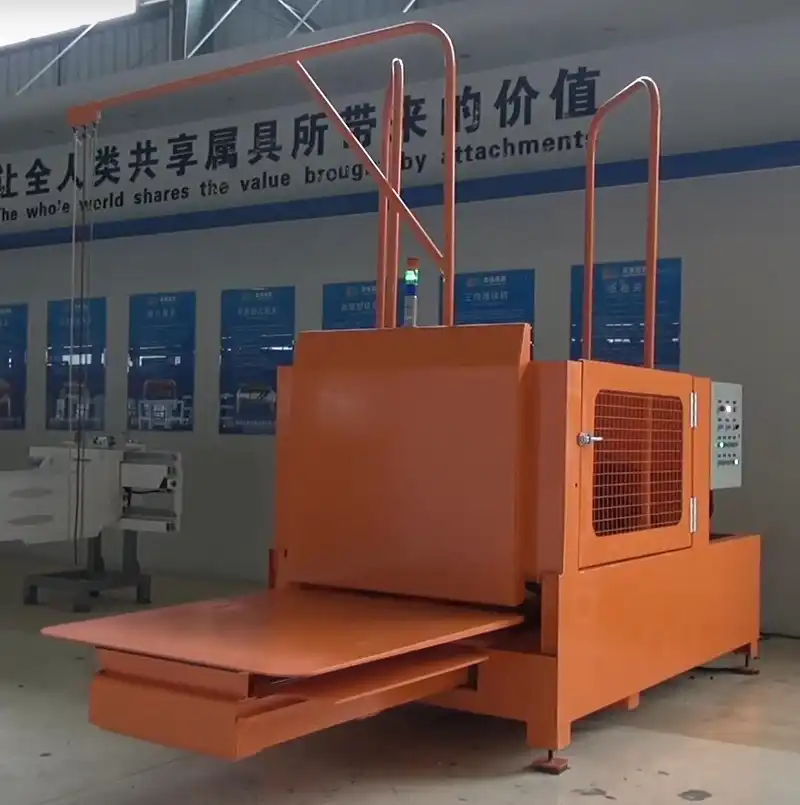
In my experience, thinking through these details early saves a lot of headaches later. I have worked with businesses that underestimated the disruption of a pit installation and others who regretted not going for the integrated solution from the start. Let us break down the key differences to help you assess which approach best fits your operational environment and long-term vision.
A Comparative Look at Installation and Space Utilization:
Choosing between a ground-level and a pit-mounted pallet inverter heavily depends on your facility’s physical constraints, budget, and long-term operational goals. Here is a detailed comparison of their installation and space requirements:
-
Site Preparation and Civil Works:
- Ground-Level: Requires minimal site preparation. You mainly need a flat, load-bearing concrete floor. No excavation is needed. Installation involves placing the machine, securing it (often bolting it down), and connecting it to power. This is much quicker and less disruptive. ⏱️ (minimal site prep, quick installation, no excavation)
- Pit-Mounted: Requires extensive civil engineering work. A large pit must be excavated in the floor, often needing reinforced concrete walls and a drainage system. This process is time-consuming, expensive, and can significantly disrupt ongoing warehouse activities. The pit design must be precise to match the inverter’s dimensions. 🚧 (extensive civil works, costly excavation, significant operational disruption)
-
Installation Time and Complexity:
- Ground-Level: Installation is generally straightforward, taking from a few hours to a couple of days. The complexity is low, as it mostly involves positioning and electrical hookup. This means faster deployment and less downtime for your operations. ⚡ (rapid deployment, low installation complexity, reduced downtime)
- Pit-Mounted: Installation is a multi-phase project. It includes excavation, concrete work, curing time, and then the actual machine placement and connection. This can take weeks or even months, depending on the scale and complexity of the pit. It requires coordination with multiple contractors. 🗓️ (lengthy installation project, high complexity, multi-contractor coordination)
-
Required Footprint and Space Utilization:
- Ground-Level: The machine sits above the floor, and you need additional space around it for forklift maneuvering, particularly if ramps are used for loading. This creates an elevated obstruction on the floor, effectively taking up more usable horizontal space in your warehouse. The actual footprint might appear smaller, but the operational area around it is larger. 🗺️ (larger operational area, elevated obstruction, significant floor presence)
- Pit-Mounted: While it requires a large hole in the floor, once installed, the inverter is flush with the floor. This means the entire floor area remains usable for traffic and storage right up to the edges of the pit. It does not obstruct movement or create barriers. This design is highly efficient for high-density warehouses or those with automated material flow. 🔳 (flush design, maximized usable floor, no operational obstruction)
-
Flexibility and Relocation:
- Ground-Level: Offers more flexibility. While heavy, many ground-level units can be moved if needed (with proper lifting equipment). This is beneficial if your facility layout changes or if you move to a new warehouse. They are not tied to a fixed structural element. 🚛 (relocatable equipment, adaptable to layout changes, non-permanent fixture)
- Pit-Mounted: A permanent fixture. Relocating a pit-mounted inverter is extremely difficult and costly, often requiring another full civil engineering project. It is a long-term commitment to a specific location within your facility. This lack of flexibility needs to be a consideration for future growth plans. 🔒 (permanent installation, difficult to relocate, long-term site commitment)
-
Ramps and Access:
- Ground-Level: Often requires ramps for pallet jack access, or forklifts are used directly. Ramps add to the overall footprint and can be a safety hazard if not properly designed or maintained. ⚠️ (needs access ramps, forklift direct access, potential safety hazards)
- Pit-Mounted: No ramps needed. Pallet jacks, AGVs, or forklifts can access the load surface directly at floor level. This improves safety, speed, and ergonomics. ➡️ (ramp-free access, seamless floor transition, improved ergonomics)
In summary, the choice between these two types of pallet inverters comes down to your facility’s readiness for structural change, your budget for installation, and your long-term operational vision for space utilization and flexibility. I always advise my clients to consider not just the machine’s cost but the total cost of ownership, including installation, space impact, and potential future reconfigurations. (total cost of ownership, long-term operational planning, strategic investment decisions)
Which Pallet Inverter Is the Right Fit for Your Business?
After exploring the unique features, benefits, and installation requirements of both ground-level and pit-mounted pallet inverters, you might be asking: “Which one is truly right for my business?” This is the core question, and the answer depends heavily on your specific operational context, current challenges, and future goals. (selecting pallet handling equipment, industrial machinery choice, optimizing business operations)
Choosing between a ground-level and a pit-mounted pallet inverter requires a careful evaluation of your warehouse’s physical layout, budget constraints, volume of pallet changes, and long-term automation strategy. There is no one-size-fits-all answer; the best solution is the one that most effectively addresses your unique operational pain points and helps you achieve your strategic objectives. (custom pallet solution, strategic equipment selection, tailored warehouse automation)
Based on my years helping clients like Carlos find the perfect packing and handling solutions, I know that making the right choice can significantly impact your bottom line and operational efficiency. Let me guide you through the key considerations that will help you decide which inverter type is the optimal investment for your specific needs.
Key Factors to Consider When Choosing Your Pallet Inverter:
To make an informed decision, it is essential to evaluate your operational context against the strengths of each pallet inverter type. Here are the critical factors I always discuss with my clients:
-
Volume and Throughput Requirements:
- High Volume (Thousands of pallets/day): If your operation handles a very high volume of pallet changes daily and demands continuous, uninterrupted flow, a pit-mounted inverter is generally superior. Its flush design and compatibility with conveyors or automated systems allow for maximum throughput and seamless integration into high-speed lines. This is crucial for industries like food and beverage or logistics hubs like Carlos’s that need to manage thousands of pallet movements daily. 📈 (high throughput operations, continuous flow systems, automated logistics volume)
- Moderate to Low Volume: For operations with moderate or lower volumes of pallet changes, a ground-level inverter can be perfectly adequate. Its ease of installation and lower upfront cost make it a practical choice without over-investing in capacity you do not need. It offers efficient handling without requiring the continuous flow of a fully automated system. 📉 (moderate volume handling, cost-effective solutions, adaptable capacity)
-
Budget and Return on Investment (ROI):
- Limited Initial Budget: If your capital expenditure budget is constrained, or you need a quicker return on investment, a ground-level unit is typically more financially accessible. The absence of civil engineering costs significantly reduces the initial outlay, making it an attractive option for businesses looking to automate without a massive upfront investment. 💰 (budget-friendly automation, lower initial investment, quicker ROI)
- Long-Term Investment & Higher Budget: If you have a larger budget and view the inverter as a long-term, strategic infrastructure investment, a pit-mounted unit offers superior long-term operational efficiency and integration benefits that can lead to significant savings over time, despite the higher initial cost. This approach aligns with businesses focused on future growth and comprehensive automation. 🏦 (long-term strategic investment, comprehensive automation budget, future-proof logistics)
-
Facility Layout and Space Constraints:
- Flexible Layout / Leased Space: For facilities with frequently changing layouts, leased premises where structural changes are not allowed, or where flexibility is a priority, a ground-level inverter is the clear winner. Its ability to be moved (within limits) and its minimal impact on infrastructure make it adaptable to evolving operational needs. 🏢 (flexible warehouse layout, leased facility solutions, adaptable equipment placement)
- Fixed Layout / Dedicated Space: If your warehouse has a stable layout, a dedicated area for pallet changing, and a commitment to integrating equipment seamlessly, a pit-mounted inverter will provide the best utilization of floor space and an uncluttered environment. It becomes an invisible part of your floor, enhancing flow without creating obstacles. 📏 (fixed operational layout, dedicated space integration, seamless floor design)
-
Safety and Ergonomics:
- Maximum Safety & Ergonomics: For businesses prioritizing the absolute highest level of safety and optimal ergonomics, especially in environments with high manual interaction or heavy loads, a pit-mounted inverter excels. Its flush design eliminates ramps and elevated platforms, greatly reducing trip hazards and forklift-related accidents. This directly addresses concerns like those of Carlos, who experienced accidents with manual handling. 🛡️ (enhanced workplace safety, ergonomic operational design, accident prevention)
- Good Safety with Careful Operation: Ground-level inverters offer good safety features, but they still involve elevated platforms or ramps, which require careful forklift operation. While far safer than manual handling, operators need to be more mindful of the elevated surfaces and load heights. 🚧 (improved safety standards, careful forklift integration, reduced manual risks)
-
Integration with Existing Systems:
- Automated Conveyors / AGVs: If you plan to integrate your pallet changer with automated conveyor lines, automated guided vehicles (AGVs), or robotic systems, a pit-mounted inverter provides the smoothest and most efficient interface. Pallets can transfer directly without manual intervention or ramps. 🤖 (seamless automation integration, conveyor system compatibility, AGV-friendly solutions)
- Forklift-Centric Operations: For operations primarily relying on forklifts and pallet jacks for internal transport, a ground-level inverter integrates well. It is designed for direct loading and unloading by these vehicles, making it a natural fit for more traditional warehouse setups. 🚚 (forklift-based operations, pallet jack compatibility, traditional warehouse integration)
By systematically evaluating these factors against your specific circumstances, you can confidently determine whether a ground-level or pit-mounted pallet inverter is the optimal solution to elevate your warehouse operations. I believe in equipping my clients with the knowledge to make powerful, informed choices that drive their success. (informed equipment decisions, operational success strategies, practical solutions for logistics)
Conclusion
Choosing between ground-level and pit-mounted pallet inverters boils down to your specific operational needs, budget, and long-term vision for automation. Both offer significant advantages over manual methods, enhancing safety and efficiency. Consider your volume, budget, space, and integration goals carefully to select the best pallet inverter solution for your business.








