
Which coil wrapping machine suits Australian factories producing wire and cables?
Are your Australian wire and cable factories struggling with slow, manual packing? Do you worry about worker safety and product damage every day? Many factory managers, just like you, face these exact problems. These issues do not just slow down your production; they hit your bottom line hard and put your team at risk.
The best coil wrapping machine for Australian wire and cable factories is often a robust, automated horizontal or vertical wrapper, chosen based on coil size, production volume, and factory space, prioritizing safety features and durability to minimize manual handling, reduce product damage, and significantly boost efficiency. 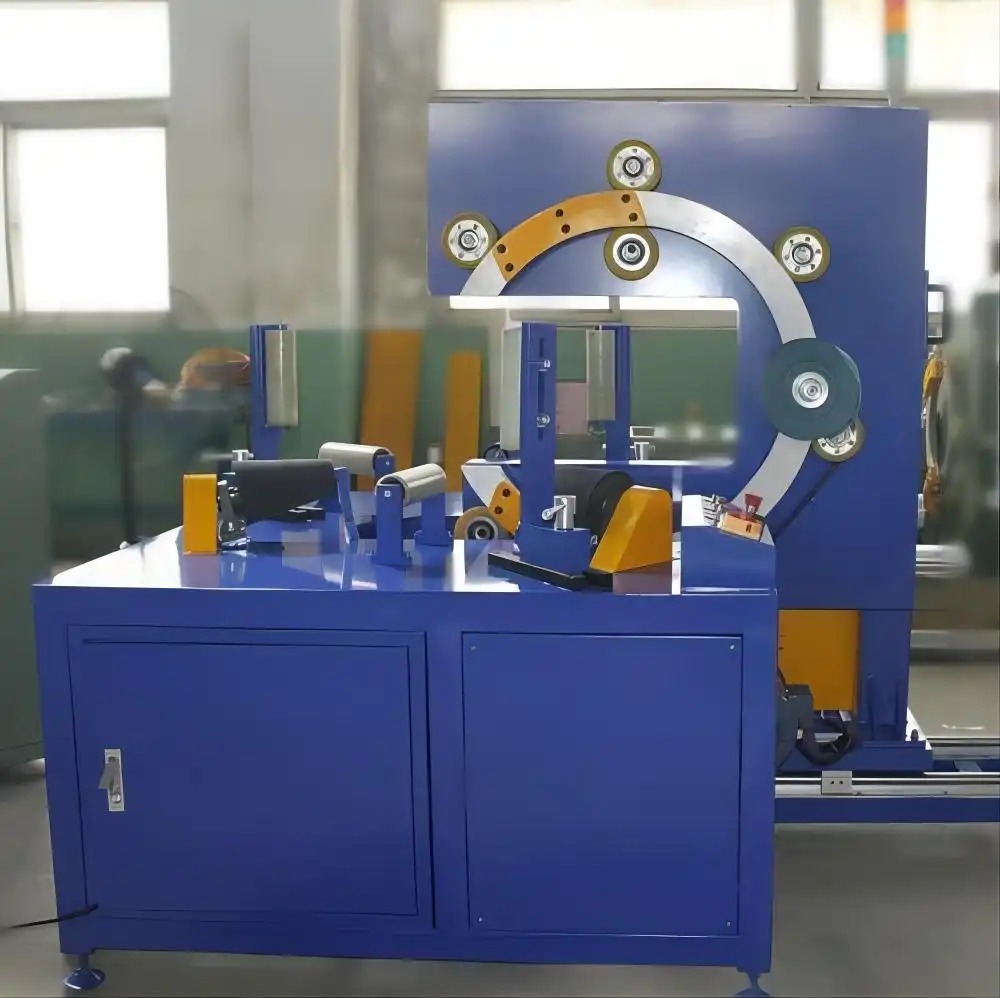
Understanding which machine is right for your unique operation means looking deeper than just a price tag. It means finding a solution that tackles your specific challenges head-on. Let me share my insights, drawing from years in the packing machine industry, to help you make the right choice.
1. What are the main types of coil wrapping machines for wire and cable production?
Choosing a coil wrapping machine can feel overwhelming. There are so many options, and picking the wrong one leads to wasted money and ongoing problems. You need clarity on what each type offers and which one fits your factory’s needs best.
When it comes to wire and cable production, the primary types are horizontal coil wrappers and vertical coil wrappers, each available in semi-automatic or fully automatic versions, designed to handle different coil dimensions and production throughputs efficiently.
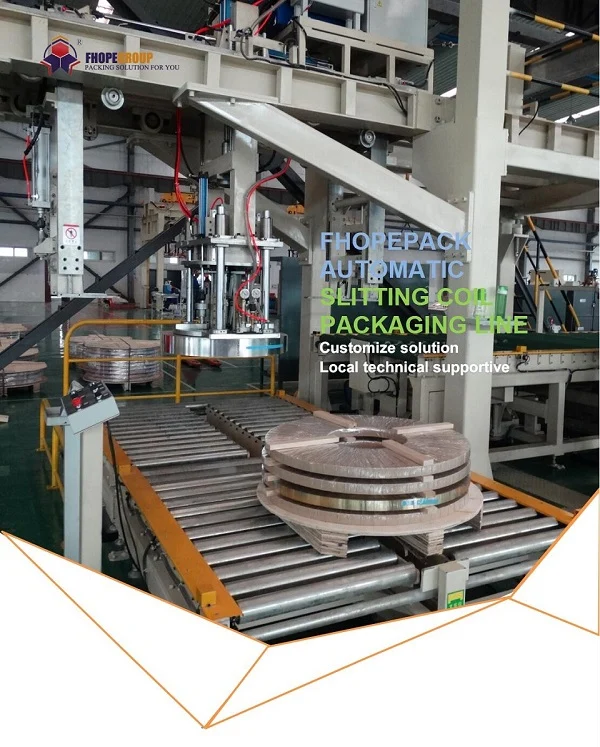
Let’s break down these types. This will help you see which one matches your production line. I have seen many factories transform their operations just by understanding these differences. It really comes down to your specific product and factory layout.
A. Horizontal Coil Wrapping Machines: Stability and Speed
Horizontal coil wrapping machines are very common for wire and cable. They wrap the coil as it moves horizontally through a rotating ring. This design is great for heavy and large coils. The coil stays stable on a conveyor or rollers during the wrapping process. This means less risk of the coil falling or getting damaged.
- Best for: Larger, heavier wire and cable coils. 💪
- Process: Coil moves through the center of a rotating ring. 🔄
- Key Benefit: High stability, good for heavy-duty applications. ✅
- Usage: Often used in steel mills or large wire drawing factories. I remember helping a client in Mexico set up a line for large steel wire coils. The horizontal wrapper was critical for keeping those heavy coils secure and protected.
B. Vertical Coil Wrapping Machines: Space and Smaller Coils
Vertical coil wrapping machines wrap coils that stand upright. The coil sits on a turntable, and the wrapping material moves around it. These machines are often better for smaller or lighter coils. They also save floor space because they work vertically.
- Best for: Smaller, lighter wire and cable coils. 📦
- Process: Coil stands upright on a turntable, wrap material orbits it. ⬆️
- Key Benefit: Space-saving design, good for smaller factory footprints. 📏
- Usage: Commonly found in factories producing smaller electrical wires or bundles.
C. Semi-Automatic vs. Fully Automatic: Balancing Labor and Output
Both horizontal and vertical machines come in different automation levels.
- Semi-Automatic Machines:
- Labor: Needs an operator to load and unload coils, and sometimes to start the wrapping cycle. 👷♀️
- Cost: Generally lower initial investment. 💲
- Output: Good for medium production volumes.
- Flexibility: Can be more adaptable to varied coil sizes or specific wrapping needs.
- Fully Automatic Machines:
- Labor: Minimal human intervention. Machines handle loading, wrapping, and unloading. 🤖
- Cost: Higher initial investment. 💰
- Output: Ideal for high-volume production, continuous operation.
- Efficiency: Maximizes throughput and minimizes human error.








