
5 Key Metrics for Your Next Steel Coil Strapping Machine (Russian Market Edition)?
Have you felt the pressure of slow production lines? Are your workers facing risks every day? Many factory managers, like Michael Chen from a metal processing plant, struggle with these exact issues. Manual strapping of heavy steel coils is slow. It takes too much time. It puts your team in danger. This can hurt your business greatly. It leads to lower output, higher costs, and more safety incidents. These problems can keep you up at night.
So, what should you look for in a steel coil strapping machine? The right machine can solve these problems. It can boost your output. It makes your factory safer. It also saves you money in the long run. When you buy new equipment, you need to know what matters most. You need to pick a machine that truly fits your factory’s needs, especially in demanding markets like Russia.
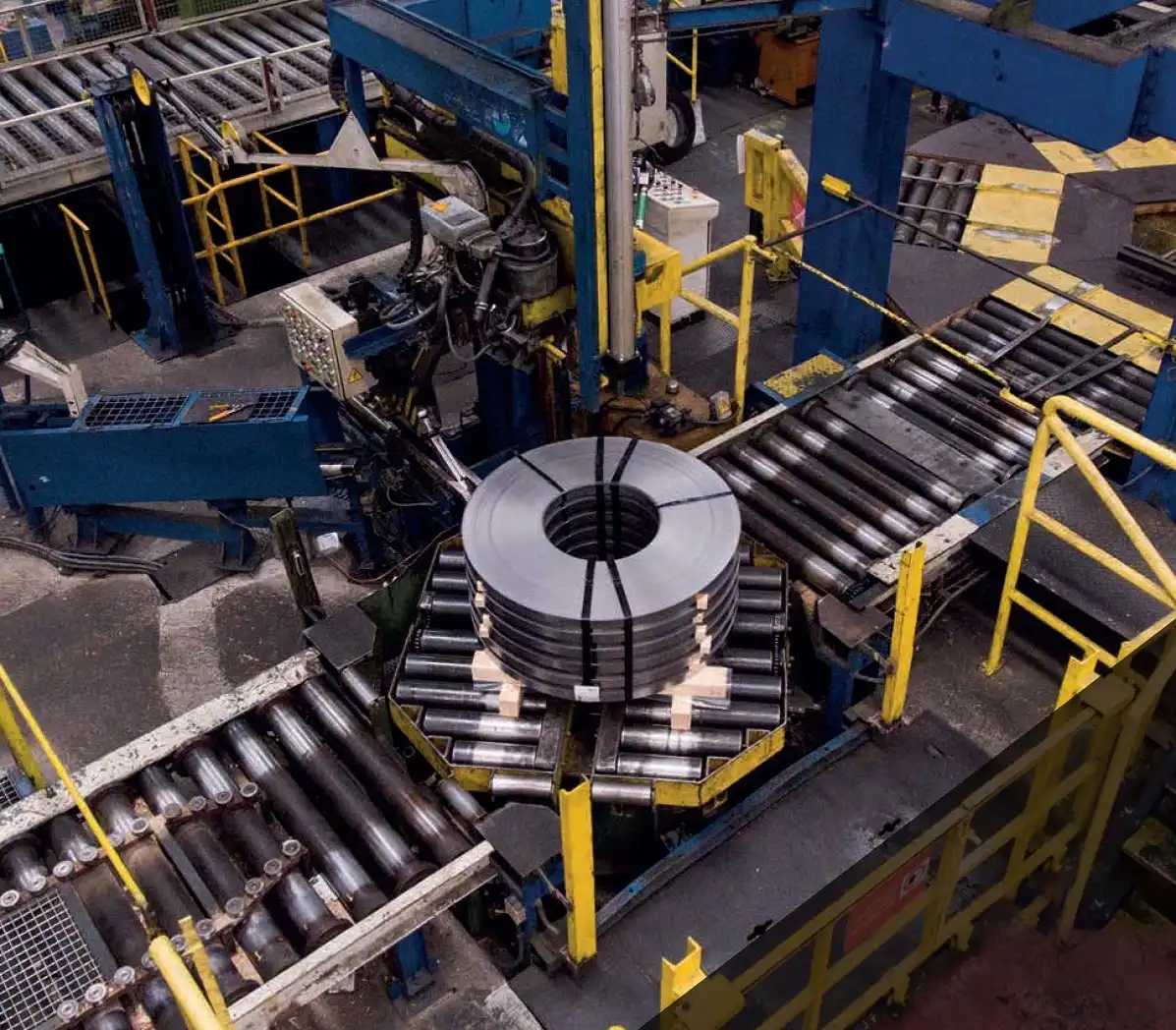
Choosing the best steel coil strapping machine is a big decision. It affects your whole operation. It is not just about the machine itself. It is about how it fits into your workflow. It is about the safety it brings. It is about the money it saves. I have been in the packing machine business for a long time. I know what works and what does not. I will share five key metrics to help you make a smart choice. These metrics will ensure your investment pays off.
How Can Throughput and Efficiency Boost Your Production?
Is your current strapping process slowing everything down? Many factories find that manual strapping or old machines create a bottleneck. This stops the flow of finished goods. It makes your delivery times longer. This is a common problem. It happens when your packaging speed cannot keep up with your production lines. It impacts your whole operation.
The right steel coil strapping machine can change this. It removes the bottleneck. It speeds up your end-of-line process. This means more coils strapped per hour. It means faster delivery to your customers. High throughput is vital for any factory aiming for growth. It helps you meet customer demand. It keeps your operations smooth.

Understanding Throughput and Efficiency
Throughput means how many coils your machine can strap per hour or shift. Efficiency means how well it uses resources. A good machine maximizes both. This is especially true for the Russian market where high production volumes are common. You need a machine that works fast and consistently. It must handle your specific coil sizes and weights without breaking down. Manual strapping is often very slow. It also takes many workers. An automated machine can do the work of several people. It does it much faster.
When I started my factory, I learned this lesson early. Every minute of downtime cost us money. Every slow step delayed our orders. We focused on getting machines that could keep up. This meant fewer delays. It meant happier clients. Think about how many coils you process daily. Think about how fast you need them ready for shipment. Your new machine must meet these numbers, or even beat them.
Factors Affecting Throughput and Efficiency
Several things impact how much a strapping machine can do. You need to look at each one.
- Strapping Speed: This is how fast the machine applies one strap. Faster is usually better, but it must be reliable.
- Coil Handling: How quickly the machine receives, positions, and releases coils. Automated conveyor systems help a lot here.
- Cycle Time: The total time from when a coil enters to when it leaves the machine fully strapped. Shorter cycle times mean higher throughput.
- Automation Level: How much human involvement is needed. Fully automatic systems are fastest. They reduce labor costs. They also lower human error.
- Maintenance Requirements: If a machine needs constant fixing, its actual working time drops. This hurts throughput. A robust design is key.
Here is a simple way to compare:
| Feature | Low Throughput Machine | High Throughput Machine |
|---|---|---|
| Strapping Method | Manual/Semi-auto | Fully Automatic |
| Cycle Time | Long | Short |
| Coil Handling | Manual/Forklift | Integrated Conveyor |
| Labor Needs | High | Low |
| Production Impact | Bottleneck | Flow Enhancer |
For a metal processing plant in Russia, volume is often critical. Your machine must handle heavy-duty cycles. It must work 24/7 if needed. My experience shows that investing in high-efficiency equipment pays for itself. It helps you avoid future production jams. It sets you up for higher profits.
Why Are Safety Features So Important for Your Workers?
Are your workers still handling heavy steel coils by hand? Are you worried about their safety every day? Manual handling of large, heavy items like steel coils is extremely dangerous. It leads to many workplace injuries. It causes muscle strains, crushing accidents, and more. These incidents lead to high insurance costs. They also cause staff turnover. No one wants to work in a place where they feel unsafe. This is a major concern for factory managers.
A modern strapping machine can change everything. It takes the heavy lifting out of human hands. It reduces the risk of accidents to almost zero. It creates a much safer workplace. This protects your most valuable asset: your employees. It also lowers your operational costs related to injuries. Safety is not just a cost; it is an investment in your people and your business’s future.

Key Safety Features to Look For
When I designed packing solutions, safety was always first. I knew how dangerous factories could be. A good strapping machine has several features to keep workers safe. These go beyond basic guarding. They include smart systems that prevent accidents. In the Russian industrial landscape, strong safety compliance is often expected and enforced.
Think about Michael Chen’s situation. He needs to reduce injuries. He needs to lower insurance costs. A machine with built-in safety helps him achieve this. It makes the work easier and safer for everyone.
Essential Safety Features and Their Benefits
- Automatic Coil Centering and Positioning: This removes the need for workers to manually adjust heavy coils. It prevents pinch points and crushing hazards. The machine handles the precise placement.
- Interlocked Safety Guards: These prevent machine operation when guards are open. They protect workers from moving parts. If a guard is not closed, the machine simply will not start.
- Emergency Stop Buttons: Easily accessible E-stops allow workers to shut down the machine instantly. They are critical in unexpected situations. These should be placed at multiple points around the machine.
- Light Curtains or Safety Scanners: These create a safety zone around the machine. If a worker enters this zone, the machine stops automatically. This is an advanced safety feature that greatly reduces risk.
- Strap Loading Systems: Automated or semi-automated strap loading means workers do not have to climb or reach into dangerous areas. It simplifies the process. It also makes it safer.
- Robust Construction: A machine built with strong materials is less likely to break down unexpectedly. Breakdowns can sometimes lead to unsafe situations if workers try to fix things quickly.
- Clear Indicator Lights and Alarms: These tell workers the machine’s status. They warn of potential problems. Clear communication from the machine is important for safety.
Here is a quick overview of safety features:
| Safety Feature | Benefit | Risk Reduced |
|---|---|---|
| Auto Coil Positioning | Eliminates manual handling of heavy coils | Crushing, strains, pinch points |
| Interlocked Guards | Prevents contact with moving parts | Entanglement, severe injury |
| Emergency Stops | Instant shutdown in emergencies | All immediate hazards |
| Light Curtains | Stops machine if worker enters danger zone | Accidental contact, run-overs |
| Auto Strap Loading | Reduces manual interaction with strap path | Cuts, falls, strain |
| Robust Design | Minimizes unexpected failures | Unpredictable dangers |
From my factory days, I saw firsthand how much better safety made things. Workers were happier. Production ran smoother. There were fewer absences. Investing in safety is not just good for your people. It is good for your bottom line. It shows you care, and that builds trust within your team.
How Can Product Protection Lower Your Loss and Boost Quality?
Are you losing money due to damaged steel coils? Do you get complaints from customers about bent edges or scratched surfaces? This is a common and frustrating problem. During internal transfer or packaging, coils can get bumped. They can get scratched. This means wasted material. It means unhappy customers. It hurts your profit. It also damages your company’s reputation. You work hard to make quality products. Losing that quality at the very end is very painful.
A specialized strapping machine is designed to protect your product. It handles coils gently. It applies straps correctly. This prevents damage during storage and transport. It ensures your coils reach the customer in perfect condition. It keeps your quality high. This leads to fewer complaints. It leads to more repeat business. It directly improves your profitability.

Protecting Your Valuable Steel Coils
I learned early that every bit of product loss cuts into profit. Especially with high-value items like steel coils, even small damages add up fast. Michael Chen faces this issue directly. He needs to reduce product damage. He needs to keep his customers happy. A well-designed strapping machine does this.
It is not just about holding the coil together. It is about how the machine interacts with the coil’s surface and edges. A good machine treats your product with care. This is a critical factor, especially for high-grade steel destined for various industries in Russia and beyond. Customers expect pristine quality.
Features for Superior Product Protection
- Even Strap Tension: The machine applies tension uniformly. This holds the coil tightly without crushing edges. Too much tension can deform the coil. Too little tension means the coil might unravel or shift.
- Edge Protection: Some machines use special applicators or work with edge protectors. These plastic or paper corners shield the coil’s vulnerable edges from strap pressure or impacts. This is key for delicate materials.
- Automated Coil Centering: This prevents the coil from moving during strapping. If a coil shifts, it can hit parts of the machine. This can cause surface damage. Proper centering keeps the coil stable.
- Smooth Conveyor Systems: The conveyor should move coils without jerking or sudden stops. Gentle movement prevents impacts. It reduces abrasion on the coil’s surface.
- Strap Material Compatibility: The machine should work with straps that do not scratch the coil. Some straps are rough. Others are smooth. Choosing the right strap is part of the protection.
- Integrated Weighing (Optional): Knowing the exact weight before strapping helps prevent overloading transport vehicles. Overloading can lead to shifting and damage during transit. It is also good for logistics planning.
- Reliable Cutting and Sealing: A clean cut and strong seal mean the strap stays in place. A weak seal can break. This leads to coils unraveling or getting loose. Loose coils are very prone to damage.
Consider this comparison for product damage:
| Aspect | Manual/Poor Machine | Automated/Good Machine |
|---|---|---|
| Edge Damage | High risk (uneven tension) | Low risk (controlled tension) |
| Surface Scratches | Common (rough handling) | Rare (gentle movement) |
| Unraveling Risk | High (poor strap seal) | Low (strong, consistent seal) |
| Customer Complaints | Frequent | Minimal |
| Material Waste | Significant | Nearly Zero |
From my perspective, protecting your product is about protecting your brand. When I ran my factory, we always aimed for zero defects on delivery. A good strapping machine is a big part of achieving that. It boosts customer satisfaction. It strengthens your market position.
What is Total Cost of Ownership (TCO), and How Does It Drive ROI?
Are you only looking at the purchase price of a new machine? Many factory managers make this mistake. They buy the cheapest option. Then they find out it costs a lot more over time. Hidden costs can eat into your budget. These include frequent repairs, high power use, and expensive spare parts. This can make your “cheap” machine very costly in the end. It ruins your expected return on investment (ROI).
You need to look at the Total Cost of Ownership (TCO). This means the full cost of the machine over its entire life. It includes the purchase price. It also includes operating costs, maintenance, and energy use. A machine with a lower TCO will give you a much better ROI. It saves you money every single day it operates. This is how you truly improve your factory’s profitability.

Beyond the Price Tag: Calculating TCO and ROI
When Michael Chen looks for a machine, he wants clear ROI. He needs to know his investment will pay off. I can tell you from my experience that the initial price is just a small part of the picture. True value comes from long-term performance and low running costs. In a competitive market like Russia, managing costs is key to staying profitable.
Components of TCO and Their Impact on ROI
- Initial Purchase Price: The upfront cost. This is what most people focus on first.
- Installation Costs: The cost to set up the machine in your factory.
- Energy Consumption: How much electricity the machine uses. A power-efficient machine saves a lot over years of operation. This is an ongoing cost that adds up.
- Maintenance and Repair Costs: The cost of regular service and fixing breakdowns. Machines with good build quality and reliable parts break down less often. They save you money here.
- Spare Parts Availability and Cost: How easy it is to get parts when needed. Are they expensive? Long lead times for parts can mean more costly downtime.
- Labor Costs: How many people are needed to run the machine? Automation reduces labor. This provides significant savings.
- Downtime Costs: Every hour the machine is not running, you lose production. This is a huge hidden cost. A reliable machine minimizes downtime.
- Strap Material Costs: The cost of the strapping material itself. Some machines are more efficient with strap usage. They might use less material for the same job. This also adds to your savings.
- Training Costs: The cost to train your staff to operate and maintain the new equipment.
Here is how TCO impacts ROI:
| Cost Category | Low TCO Machine | High TCO Machine | ROI Impact |
|---|---|---|---|
| Energy Consumption | Low | High | Higher ROI |
| Maintenance | Low, infrequent | High, frequent | Lower ROI |
| Spare Parts | Readily available, affordable | Hard to find, expensive | Lower ROI |
| Labor | Minimal (automated) | High (manual intervention) | Higher ROI |
| Downtime | Very low | Frequent, costly | Significantly Lower |
| Product Loss | Minimal | Significant | Higher ROI |
My journey from factory employee to owner taught me to look at the full picture. I always asked, “How much will this truly cost me over five years, not just today?” This mindset helps you pick equipment that truly serves your business growth. It helps you get the most out of every ruble you spend.
Why is Supplier Reliability and Support Crucial for Long-Term Success?
Have you ever bought equipment from a company that disappeared after the sale? Did you struggle to get help when things went wrong? Many factory managers have faced this. They buy a machine, then the supplier provides poor after-sales service. This leaves you alone with problems. It means long waits for parts. It means your machine stays idle. This hurts your production. It also leads to a loss of trust.
A reliable supplier is a true partner. They offer strong pre-sales advice. They provide excellent after-sales support. They are there when you need them. This means faster repairs. It means expert guidance. It means your machine runs smoothly for years. Choosing the right supplier is as important as choosing the right machine. It builds a lasting relationship. It ensures your long-term success.
Finding a Partner, Not Just a Vendor
Michael Chen has been burned by suppliers who only care about sales. He wants a partner. He wants someone who understands his problems. He needs someone who can offer real solutions. This is where my background comes in. I built a factory. I know the challenges first-hand. I know what it means to rely on a supplier. A good supplier offers more than just metal and wires. They offer knowledge and support.
For the Russian market, local support or a strong network is very valuable. This ensures quick response times. It means easier communication. It is critical for minimizing downtime and keeping your operations running.
Hallmarks of a Trustworthy Supplier
- Industry Expertise: Do they truly understand your business? Can they speak your language? A supplier with deep industry knowledge can offer tailored solutions. They do not just sell a generic machine.
- Pre-Sales Consultation: Do they ask about your specific needs and challenges? A good supplier helps you identify the best solution, not just push their most expensive product. They listen. They advise.
- After-Sales Support: What kind of warranty do they offer? Do they have technicians available for service? How quickly can they provide spare parts? This is arguably the most important aspect for long-term operation.
- Training and Documentation: Do they offer training for your staff? Is the operation and maintenance manual clear and comprehensive? Proper training ensures your team can use the machine effectively and safely.
- Reputation and References: What do other customers say about them? Can they provide references from other factories in your industry? Check their track record.
- Long-Term Relationship Focus: Do they seem interested in a one-time sale or a continuing partnership? A partner will invest in your success. They will support you as your business grows.
- Local Presence or Network (for Russian Market): For Russia, a supplier with local representatives or a strong network of service partners can provide much faster support and service. This can be a game-changer.
Consider the impact of supplier support:
| Aspect | Unreliable Supplier | Reliable Supplier | Impact on Operations |
|---|---|---|---|
| Problem Solving | Slow, generic, unhelpful | Fast, expert, customized | Prolonged downtime vs. quick fixes |
| Spare Parts | Long delays, high cost | Quick delivery, fair price | Production halts vs. continuous flow |
| Technical Support | Limited, unresponsive | Knowledgeable, always available | Frustration vs. peace of mind |
| Business Growth | Hinders progress | Facilitates expansion | Stagnation vs. opportunity |
My personal journey taught me the value of good partnerships. I achieved financial independence thanks to the packing machine industry. Now, through FHOPEPACK, I want to give back. I want to share my insights. I want to help others succeed. When you choose a supplier, pick one who shares this vision. Choose someone who wants to see you grow.
My Insights: Integrating These Metrics for Strategic Investment?
After all these years in the packing machine industry, from factory floor to owner, I have seen it all. I have seen machines that were too cheap to be good. I have seen factories struggle with endless breakdowns. I have also seen smart investments turn struggling businesses into thriving ones. My insights come from this direct experience. They come from knowing what it takes to run a successful operation.
The five metrics we discussed are not separate ideas. They work together. Throughput, safety, product protection, TCO, and supplier support are all linked. You cannot have one without the others. A machine that is very fast but unsafe is not good. A machine that protects your product but costs a fortune to run is also not good. You need a balanced approach. This is how you make a strategic investment. This is how you ensure your factory thrives.
The challenges Michael Chen faces are real. They are common in many factories, including those in the Russian market. Michael needs solutions for efficiency, safety, and cost reduction. He needs a trusted partner. By focusing on these five metrics, he can find the right steel coil strapping machine. He can find the right supplier. He can turn his challenges into growth opportunities.
I always tell people: “Do not just buy a machine. Invest in a solution.” A true solution addresses your problems. It aligns with your goals. It helps you grow. This is what FHOPEPACK aims to do: share knowledge that truly helps. Use these metrics. Ask tough questions. Demand value. This will set you up for success.
Conclusion
Selecting a steel coil strapping machine means looking at throughput, safety, product protection, TCO, and supplier reliability. Use these metrics to make a smart choice for your factory.








