
$18,000 Pallet Inverter Delivers $185,000 Annual Labor Savings for Steel Processor
1. Customer Background
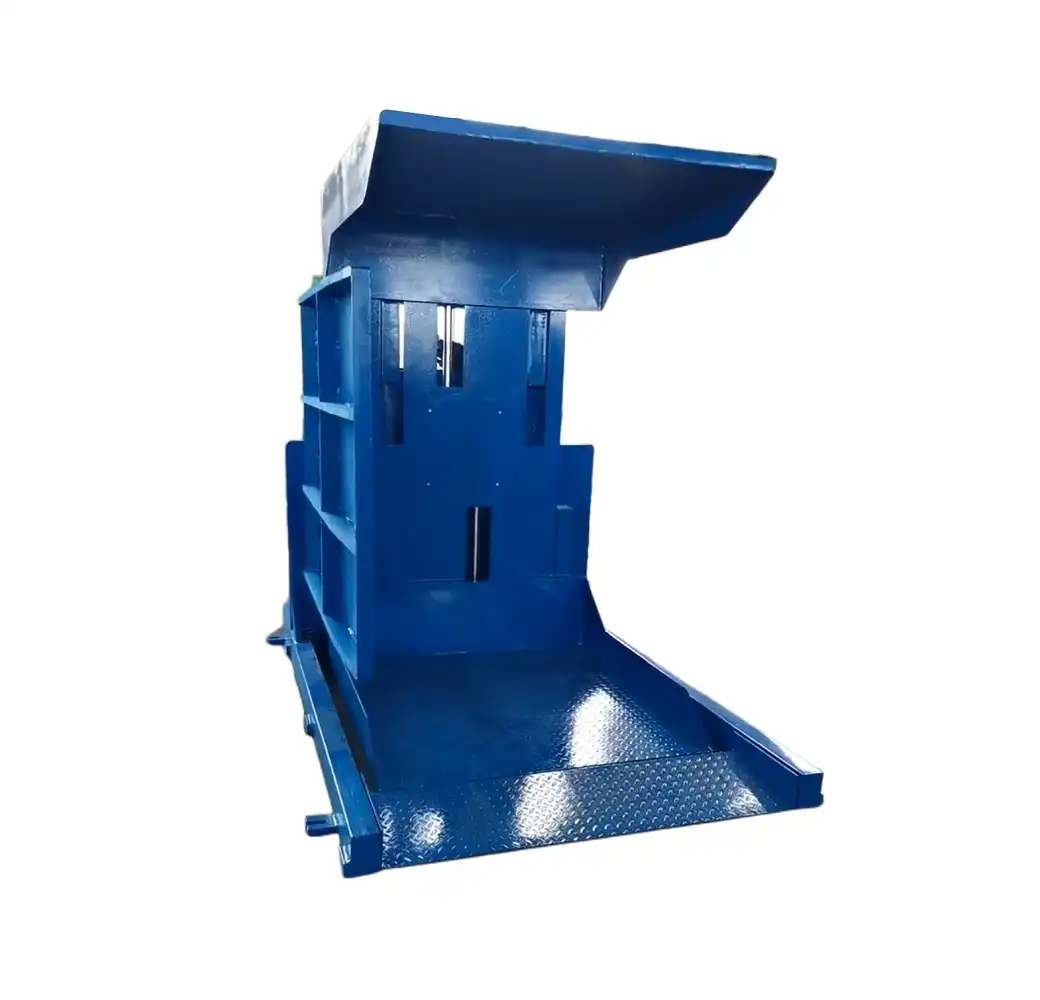
A mid-sized steel service center in Ohio, USA processes 15,000 tons of coiled steel annually for automotive and construction sectors. Their manual pallet transfer operation required four workers per shift to handle heavy coils between production and shipping. The company sought automated material handling solutions to address rising labor costs and workplace safety concerns.
The operation faced significant bottlenecks in their packaging line where workers manually transferred steel coils from production pallets to shipping pallets. This search for industrial automation equipment led them to evaluate pallet inversion technology that could streamline their coil handling process.
2. Challenges Faced

Labor-Intensive Operations
- Four workers dedicated to manual pallet transfer
- 12-minute average transfer time per coil
- High overtime costs during peak production
Safety Concerns
- Workers exposed to heavy coil handling risks
- Recorded three minor injuries in previous year
- Insurance premiums increasing annually
Inconsistent Packaging Quality
- Manual handling caused coil surface damage
- Variable positioning on shipping pallets
- Customer complaints about shipment stability
Production Bottlenecks
- Packaging couldn’t match production throughput
- Weekend shifts required to meet shipping schedules
- Inconsistent cycle times disrupted downstream operations
3. FHOPEPACK Solution

The FHOPEPACK FP-1500 semi-automatic pallet inverter was engineered specifically for steel coil handling applications. This industrial-grade system features:
Technical Specifications
- 1,500kg capacity with hydraulic stabilization
- 800-1,200mm adjustable fork width
- PLC-controlled positioning with safety interlocks
- Laser alignment for precise coil placement
Automation Features
- One-button operation cycle
- Automatic centering and height detection
- Integrated safety curtains and emergency stops
- Digital cycle counting and performance tracking
Customization Elements
- Reinforced fork design for steel coil profiles
- Specialized clamp-on attachments for secure handling
- Weather-resistant components for unheated facility
- Compatibility with existing conveyor layout
4. Implementation Process
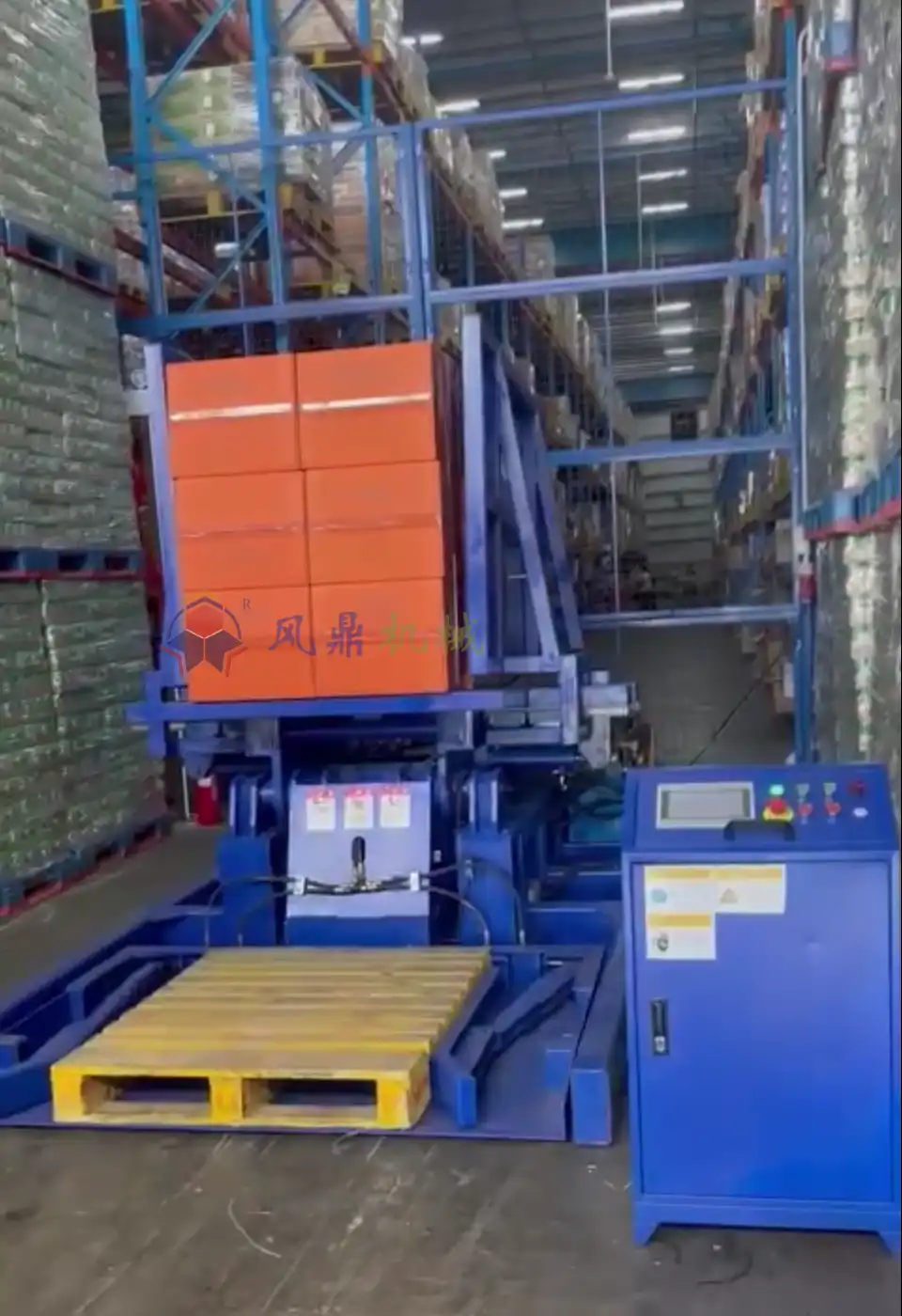
Phase 1: Site Assessment (Week 1)
- Production flow analysis and cycle time measurement
- Facility layout mapping and utility requirements
- Safety protocol review and risk assessment
Phase 2: Technical Planning (Week 2)
- Equipment specification finalization
- Integration points with existing conveyor system
- Foundation preparation and power requirements
Phase 3: Factory Acceptance (Week 3-4)
- Pre-shipment testing with simulated steel coils
- Customer team observation and preliminary training
- Performance validation against specification targets
Phase 4: Installation & Commissioning (Week 5)
- 3-day equipment installation with minimal disruption
- 2-day operational testing with production materials
- Operator and maintenance team certification
5. Quantified Results & ROI
| Metric | Before Implementation | After Implementation | Improvement |
|---|---|---|---|
| Labor per shift | 4 workers | 1 operator | 75% reduction |
| Transfer time | 12 minutes | 3 minutes | 75% faster |
| Daily throughput | 40 coils | 120 coils | 200% increase |
| Damage incidents | 3% of shipments | 0.2% of shipments | 93% reduction |
| Overtime hours | 120 monthly | 20 monthly | 83% reduction |
Financial Impact
- Annual labor savings: $185,000
- Equipment investment: $18,000
- Payback period: 1.2 months
- ROI first year: 928%
Operational Benefits
- Elimination of manual heavy lifting
- Consistent packaging quality and positioning
- Reduced product damage and claims
- Enhanced production traceability
6. Customer Testimonial
“Our packaging line efficiency transformed almost overnight. The engineering team designed a system that integrated perfectly with our existing steel coil handling workflow. What impressed me most was how quickly our operators adapted to the technology.”
— Production Manager, Ohio Steel Processing
“The automation eliminated the most physically demanding task from our daily routine. More importantly, we’ve had zero recordable injuries in the six months since installation. The return exceeded our projections by week three of operation.”
— Plant Safety Coordinator
7. Conclusion
This Ohio steel processor’s experience demonstrates how targeted automation investment can deliver substantial returns in industrial settings. The implementation of a specialized pallet inverter system addressed multiple operational challenges simultaneously—labor costs, worker safety, and production bottlenecks.
FHOPEPACK’s engineering approach focuses on understanding specific industry requirements, whether in steel, manufacturing, or logistics sectors across North America, Europe, and global markets. The modular design philosophy allows customization for various material handling applications, from coiled products to packaged goods.
For operations managers evaluating packaging automation, this case illustrates how measurable ROI can be achieved through systematic process analysis and appropriate technology selection. Further technical specifications and application studies are available for similar material handling scenarios.








