
$15,000 Pallet Inverter Investment Recouped in 8 Months via 75% Labor Cost Reduction
1. Customer Background

Client: Midwestern US Steel Service Center
Industry: Steel & Metal Processing
Operation: Steel coil storage and distribution
Pre-solution State: Manual pallet transfer operations
This established steel service center in America’s industrial heartland processes over 500 steel coils monthly for automotive and construction sectors. Their manual pallet transfer process required four operators working in shifts to handle coil weights up to 5,000 kg. The operation faced consistent bottlenecks during peak production cycles, particularly when supplying just-in-time manufacturing clients in the Mexico supply chain.
The company actively sought automated material handling solutions to address three core objectives: reduce direct labor costs, eliminate workplace safety incidents, and maintain packaging integrity through the entire supply chain from their facility to end users in multiple geographic regions.
2. Customer Pain Points
Production Efficiency Constraints
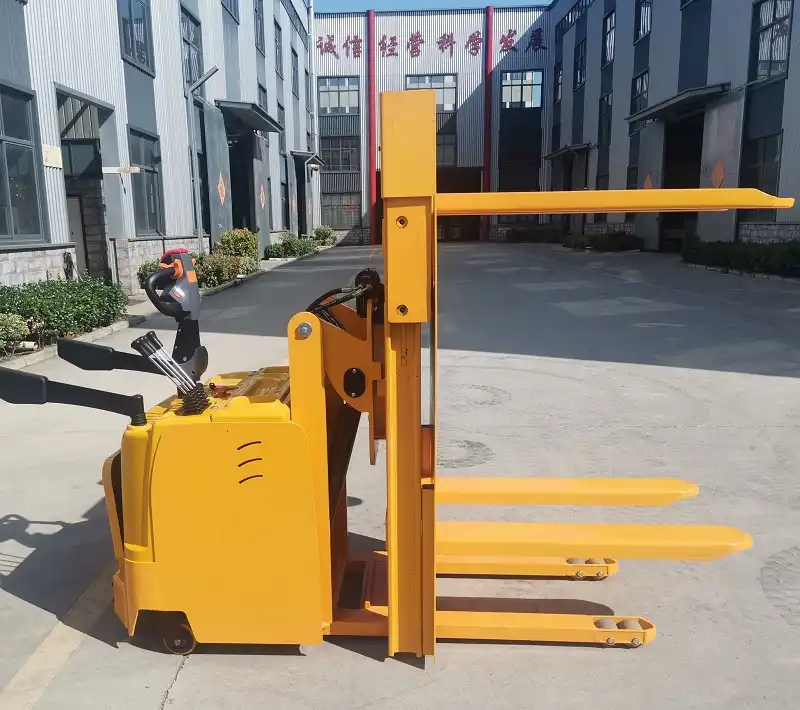
- Manual pallet transfer required 15-20 minutes per coil
- Production line synchronization issues during shift changes
- Inability to scale operations during seasonal demand spikes
Labor Cost & Availability Pressures
- Required four operators for pallet handling operations
- High overtime costs during peak production periods
- Difficulty recruiting workers for physically demanding tasks
Safety & Ergonomic Risks
- Multiple near-miss incidents reported quarterly
- Worker compensation claims from strain injuries
- Regulatory compliance concerns with manual handling
Packaging Quality Issues
- 12% damage rate during manual transfer operations
- Inconsistent coil positioning affecting downstream processing
- Customer complaints about packaging integrity
Production Volatility
- 22% variation in daily output based on crew experience
- Training time of 4-6 weeks for new operators
- Quality inconsistencies between shift teams
3. FHOPEPACK Solution

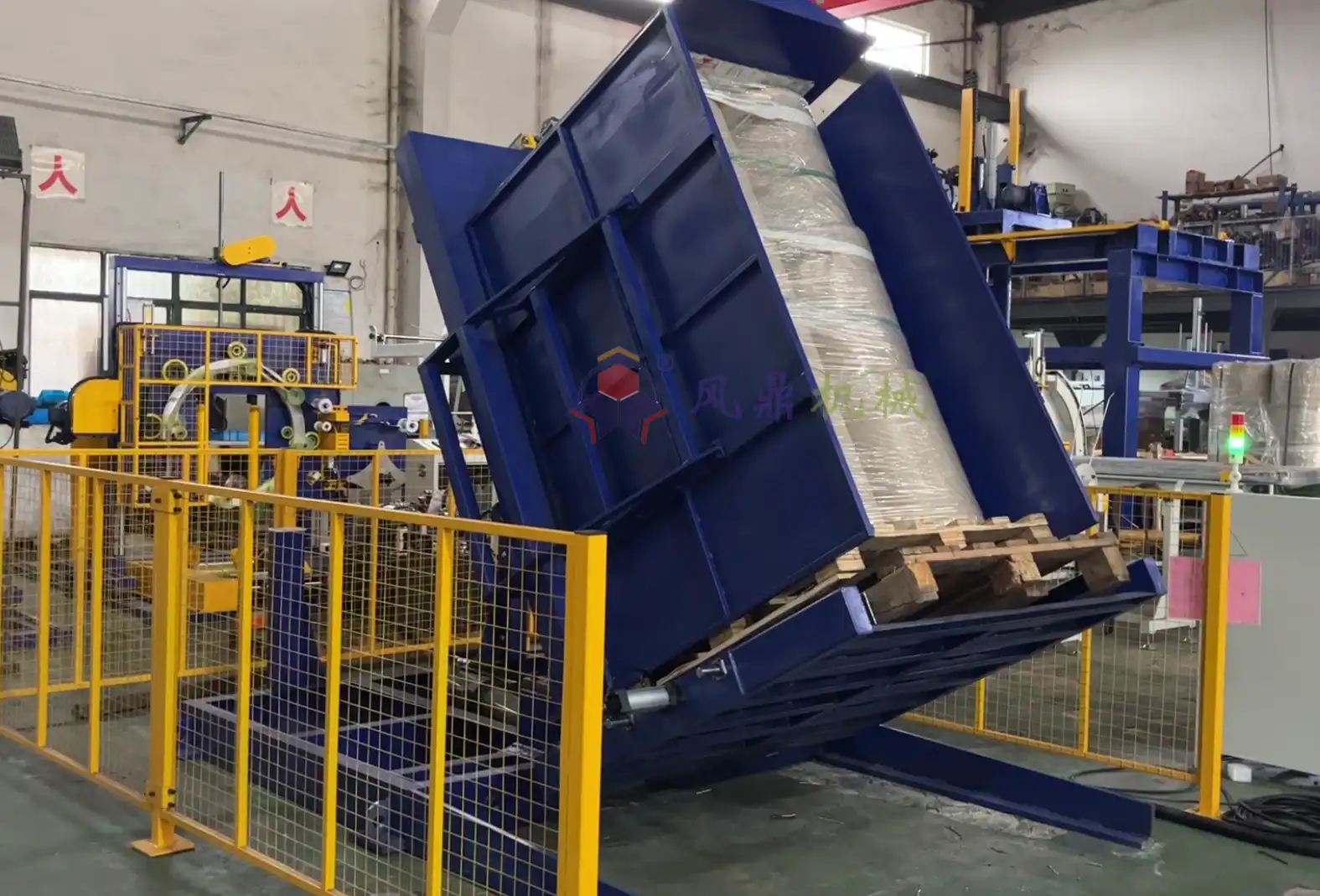
Equipment Provided: FP-AL5000 Automated Pallet Inverter System
Technical Configuration:
- Heavy-duty steel frame construction rated for 5,000 kg capacity
- PLC-controlled hydraulic system with precision positioning
- Laser alignment sensors for accurate pallet placement
- Customizable clamp arm configurations for various coil diameters
Automation Workflow:
- Automated coil recognition and dimension measurement
- Precision positioning via servo-controlled movement
- Programmable logic controller managing transfer sequence
- Integrated safety monitoring throughout operation cycle
Customization Specifications:
- Adjustable handling range: 800-2,000 mm coil diameters
- Custom fork configurations for client’s specific pallet types
- Integration with existing conveyor systems
- Climate-adapted components for Midwest temperature variations
Challenge Resolution Matrix:
| Pain Point | Engineering Solution | Technical Implementation |
|---|---|---|
| Labor Intensity | Full automation | PLC-controlled sequence eliminates manual handling |
| Safety Risks | Integrated safeguards | Dual emergency stops, light curtains, pressure monitoring |
| Quality Issues | Precision positioning | Laser-guided alignment ±2mm accuracy |
| Production Volatility | Consistent cycle time | Fixed 3-minute transfer cycle regardless of operator |
4. Implementation Process
Phase 1: Site Assessment & Technical Planning (Week 1-2)
- Detailed measurement of existing production layout
- Analysis of coil specifications and weight distribution
- Integration planning with current conveyor systems
Phase 2: Engineering & Fabrication (Week 3-6)
- Structural design validation for 5,000 kg dynamic loading
- Control system programming for automated sequences
- Custom component manufacturing for specific pallet types
Phase 3: Factory Acceptance Testing (Week 7)
- 72-hour continuous operation test under simulated conditions
- Safety system validation with third-party verification
- Client team observation and preliminary training
Phase 4: Installation & Commissioning (Week 8)
- Foundation preparation and equipment positioning
- Electrical and control system integration
- Conveyor interface calibration and synchronization
Phase 5: Training & Handover (Week 9)
- 40 hours of operator training across two shifts
- Maintenance team certification on basic troubleshooting
- Documentation delivery including operation manuals
5. Quantified Results & ROI
Labor Cost Reduction
- Reduced from 4 operators to 1 supervisor role
- 75% decrease in direct labor costs for pallet transfer
- Elimination of overtime expenses during peak periods
Efficiency Metrics
- Transfer time reduced from 20 minutes to 3 minutes per coil
- 85% improvement in transfer operation throughput
- Consistent cycle time regardless of production volume
Safety Performance
- Zero recordable incidents post-implementation
- Elimination of manual handling injury risks
- Improved regulatory compliance ratings
Quality & Consistency
- Damage rate reduced from 12% to 0.8%
- Packaging consistency maintained at 99.2%
- Customer complaints reduced by 94%
Operational Stability
- Production variation reduced from 22% to 3%
- Training time reduced from 6 weeks to 3 days
- Equipment uptime: 98.7% over first 6 months
Financial Return
- Initial investment: $15,000
- Monthly labor savings: $1,875
- Payback period: 8 months
- Annual ROI: 150%
6. Client Testimonial
“Before implementing the automated system, we constantly battled with production bottlenecks and safety concerns. The FHOPEPACK pallet inverter transformed our material handling operations. Our line supervisor reports that production flow is now predictable, and our safety committee has documented the elimination of manual handling risks. The consistency in packaging quality has significantly reduced our damage claims from customers.” – Plant Operations Manager, Midwestern Steel Service Center
“The engineering team appreciated the systematic approach to integration. The equipment interfaces seamlessly with our existing conveyor system, and the programmability allows us to adjust for different coil specifications without manual intervention. This level of automation was exactly what we needed to compete in the just-in-time manufacturing space.” – Engineering Manager
7. Conclusion
This implementation demonstrates how targeted automation in material handling generates substantial operational and financial returns. The FHOPEPACK pallet inverter solution addressed core industrial challenges through engineering precision rather than simply replacing manual labor. The system’s flexibility accommodates various coil specifications and integrates with multiple production environments.
For operations handling steel, aluminum, paper rolls, or other cylindrical materials, automated pallet transfer technology represents a proven method for achieving labor reduction, safety improvement, and quality consistency. The modular design approach allows customization for specific facility layouts and production requirements across different geographic regions including North America, Europe, and Middle East operations.
Organizations evaluating automation solutions for their packaging lines may consider the demonstrated benefits of integrating a pallet inverter system to address similar challenges in their operations. The documented 8-month return on investment provides a measurable benchmark for financial justification of such capital equipment investments.








