概述
Double-side laser cutting means the plate is cut first on one face, then the cut side is turned over so the second face can be machined. The turnaround step decides both quality and safety: the plate must be turned without damaging cut edges or the surface, and without the risks of swinging a loaded plate on a crane. A 180° turnover table feeds the plate in on a conveyor, grips it inside a rotating ring, turns it in place, and carries it out to the second cut. This guide is written for the cutting-shop engineers and production managers running double-side laser work, and covers the workflow, what the turnover step must guarantee for cutting, and what to specify for a custom 180° turnover table.
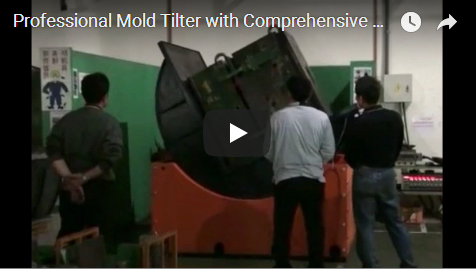
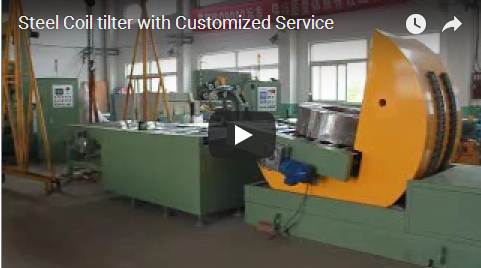
The video below shows a 180° turnover table flipping steel plate for double-side laser cutting:
The Double-Side Cutting Workflow
Cutting both faces of a plate adds a turnaround between the two passes:
| 阶段 | 会发生什么 |
|---|---|
| 第一关 | The laser cuts face A on the cutting table. |
| First-pass part-off with micro-joints | Depending on the part, the first cut may release part of the profile; micro-joints (remaining web) keep the sheet together until the second pass is complete. |
| 营业额 | The plate is fed into the turnover table, turned 180°, so face B is presented for the second pass. |
| 第二遍 | Face B is cut, using the same datum so both sides align. |
| Off-load | Finished parts are removed. |
In a conveyor-fed ring machine, the plate enters the turnover table on the infeed conveyor, is gripped inside the ring, rotated 180°, released and carried out on the outfeed side. That makes the turnaround part of the material flow rather than a separate crane move.
What the Turnover Step Must Guarantee
For double-side laser cutting, the 180° turnover table has to do more than turn the plate:
| 需求 | Why it matters for cutting |
|---|---|
| 可重复定位 | The plate returns to a known position after the turn. In practice the mechanical repeatability is not meant to replace the laser's own referencing: it brings the plate back within the capture window of the laser table's optical edge-finding sensor or locating pins, so the cutting program re-establishes the coordinate origin for face B. |
| 无边缘损坏 | Cut edges and tabs are not knocked or dented while the plate is gripped and turned. |
| No surface dragging | The plate is held inside the ring and rotated in place, not slid across the floor or another plate. |
| 控制握把 | The plate is held securely for the turn and released cleanly, so the second pass starts from an undisturbed part. |
| 传送带集成 | The infeed and outfeed conveyor flow matches the cutting line, so the turnaround does not interrupt production. |
The ring rotates about a horizontal axis, turning the plate in place at a controlled speed, so the plate is presented for face B cleanly and in the same working plane. What the machine provides is repeatable mechanical positioning: it returns the plate to a consistent position each cycle so the laser table's optical edge-finding or locating pins can pick it up; the exact coordinate origin for the second pass is re-established by the cutting program from that reference.
Specifying a Turnover Table for Your Cutting Line
To size a custom 180° turnover table, give the manufacturer the parameters of your plate and your line:
| 输入 | 为何重要 |
|---|---|
| Plate size (length, width, thickness) | Sets the ring opening and the support pattern. |
| Heaviest plate weight | Sets the ring drive rating and the flipping load. |
| Cut-edge condition | Whether the first pass leaves tabs or releases parts changes edge handling. |
| Turn requirement | Full 180° to present face B, or a stop at an angle for inspection. |
| 位置重复性 | The tolerance the second pass needs on alignment. |
| Conveyor level and line flow | The infeed/outfeed height, conveyor type and parts-per-shift target. |
This machine family builds both mechanical upenders (product-line range roughly 1–60 tonnes) and heavy-duty hydraulic configurations (product-line range roughly 1–100 tonnes); the rating is selected from your heaviest plate.
Factory Testing and Acceptance for a Cutting Application
A turnover table feeding a laser line should be proven before it ships:
- 延长运行记录。 A test log covering near-continuous cycling (the maker's stated protocol runs up to about 24 hours), stated as unloaded or under load.
- Position repeatability check. Evidence that the plate returns to position after repeated turns within the tolerance your cutting needs.
- Conveyor and turnover cycle. Proof that the infeed-conveyor flow, the turn, and the outfeed hand-off run without jamming or edge strikes.
- 安全装置验证。 确认防护装置、安全联锁装置和紧急停止装置均按设计正常工作。
- 功率损耗行为。 确认模拟断电情况下,戒指能够安全停止并保持静止,而不会掉落金属板。
- 合规性文件。 确认该系列机器所使用的安全参考标准(以 EN 415-10 为参考标准,并进行 ISO 12100 风险评估)。
On arrival, run the same core checks on your line—empty rotation, a loaded turn with one of your cut plates, position-return checks, the emergency stop, and the power-loss stop—before reconnecting the cutting flow.
常见问题解答
Q: Why not turn the plate with a crane between the two cutting passes? A: A crane swings the load and risks the cut edges and the plate surface. A ring turnover table turns the plate in place, which protects the part and makes the turnaround repeatable.
Q: Will the turnover table match the position tolerance of my laser? A: Position repeatability is set from your requirement before fabrication. State the alignment tolerance for the second pass so the machine, supports and datum are built to it.
Q: How is the plate fed through the machine? A: In a conveyor-fed ring machine the plate enters on an infeed conveyor, is turned inside the ring, and leaves on the outfeed side at the same working height. Confirm the conveyor level with your line.
Q: Can it turn extra-large or extra-thick plates? A: The ring opening is sized to your plate length, width and thickness, and the rating to the heaviest weight. Beyond the product-line range, the design is reviewed for the specific plate.
问:如果机器里有盘子,但电源突然中断会发生什么?答:机器的安全设计会使机器停止运转并将盘子固定在原位;电源恢复后,控制系统会安全地恢复运行,而不会让盘子掉落。
下一步
Send your cutting-plate size and heaviest weight, the alignment tolerance for the second pass, the turn requirement, and the line flow (conveyor level, infeed/outfeed and parts per shift), so the custom 180° turnover table can be sized and its position repeatability specified on the approval drawing.
相关资源
- 卷材翻转机和工业翻转解决方案 – 定制机械式(≈1-60吨)和液压式(≈1-100吨)翻转设备。
- 液压翻转机和倾斜机解决方案 – 制造商声明的交付前测试程序和控制/安全验证。
- 180°车床在预制构件和板材加工中的工作原理 – 180° 旋转机运动学和 EN 415-10 / ISO 12100 安全参考标准。