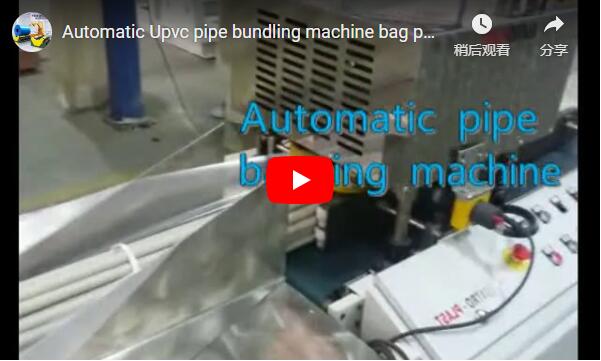
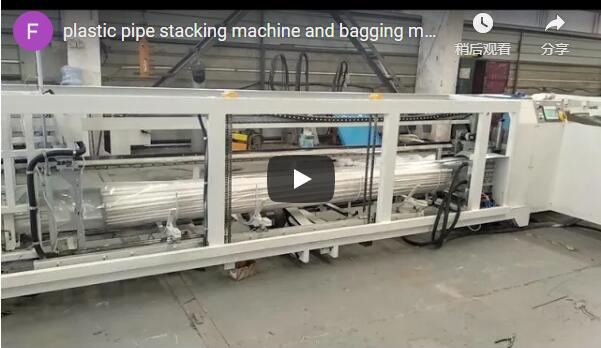
Yönetici Özeti
Bright-annealed, polished, and surface-treated steel tubes are sold on high-end cosmetic and dimensional integrity. In conventional bulk handling, micro-slippage and tube-on-tube contact during transit create friction scratches, oxidation tracks, and surface scarring that lead to high rejection rates. The high-speed single tube bagging line provides automated separation, sleeving each tube individually in a protective polymer film sleeve with sealed ends before storage or bundle strapping. This ensures complete surface isolation across the entire handling, shipping, and distribution chain.
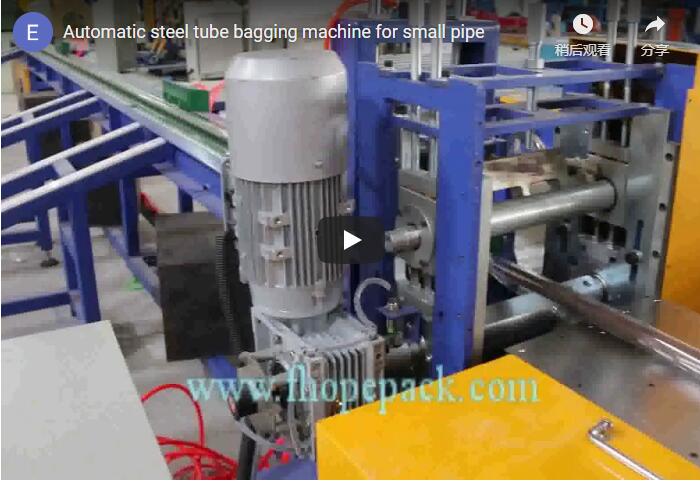
An automated in-feed accumulation system receives continuous or batch tubes, while specialized nylon or polyurethane V-groove indexing stops maintain complete physical separation. Tubes are released sequentially into an inline horizontal forming and sealing station, where protective polymer film is formed into a continuous sleeve, longitudinally joined, and cut with end seals before delivery to sorting, stacking, or automated bundle strapping stations.
İçindekiler
- Why Bag Each Tube
- Çizgi Sırası
- Makine Verileri
- Bag Size and Web Calculations
- Output Formula
- Seçim Kontrol Listesi
- Güvenlik ve Standartlar
- Mühendislik SSS
- Sonraki Adım
- İlgili Okuma
- kaynaklar
Why Bag Each Tube
In loose or non-sleeved tube bundles, individual pipes shift relative to each other whenever a hoist lifts the package or a transport vehicle accelerates and brakes. On bright, polished, chrome-plated, or coated tubing, this interfacial movement produces severe fretting marks and scuffing.
Applying an individual polymer film sleeve creates a continuous low-friction barrier around each workpiece:
- Surface Isolation: Eliminates metal-to-metal rubbing at all circumferential contact points within final shipping bundles.
- Çevresel Kalkanlama: Prevents atmospheric moisture, cutting oil mist, airborne dust, and fingerprint oxidation from degrading high-finish surfaces.
- Selective Unloading: Enables fabricators and end customers to draw individual tubes from storage without unwrapping or exposing the remaining inventory.
Çizgi Sırası
The fully integrated line carries out six continuous automated operations:
- Singulation and Accumulation: Individual tubes are transferred onto the in-feed table and held in segmented V-groove saddles to eliminate lateral tube collision.
- Pneumatic Escapement: High-response pneumatic stops index and release one tube at a time onto the high-speed axial bagging conveyor.
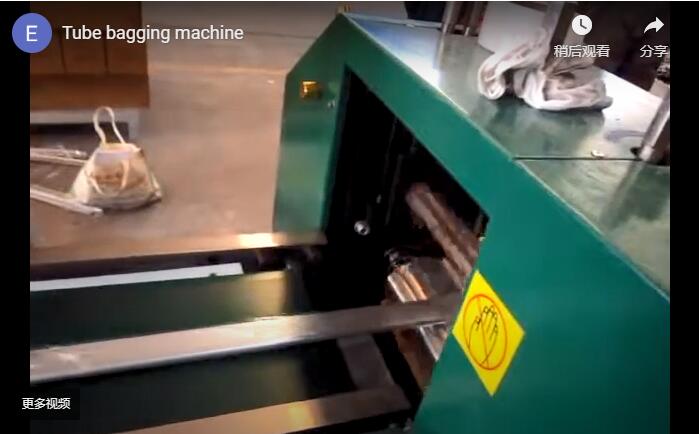
- Tubular Film Forming: The advancing tube enters an adjustable forming collar where flat or pre-folded polymer web is shaped into a tubular sleeve around the steel tube profile.
- Boyuna Sızdırmazlık: An continuous ultrasonic or heated sealing assembly joins the film overlap along the longitudinal seam without imparting heat damage to the metallic surface.
- Transverse End Seal and Cut: Rotary or reciprocating cross-cut jaws seal the leading and trailing film ends between consecutive tubes, parting each unit cleanly.
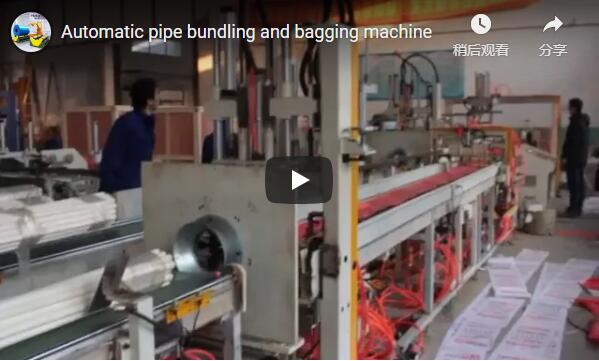
- Out-Feed and Transfer: The individually sleeved tube discharges onto a buffer accumulation station or directly transfers to an automated strapping and bundling unit.
Makine Verileri
Single Tube In-Line Bagging Machine Specifications
The standard high-speed single tube bagging module operates within the following technical envelope:
| Parametre | Özellikler | notlar |
|---|---|---|
| Boru Dış Çapı (OD) | 9.5 – 50 mm | Single tube pass-through |
| Maksimum Tüp Uzunluğu | 6,000 mm'ye kadar | Custom beds available for longer lengths |
| Doğrusal Torbalama Hızı | Yaklaşık 10–50 m/dak | Dependent on diameter and film gauge |
| Film Uyumluluğu | BOPP veya PE | Heat-sealable or ultrasonic-grade |
| Film Kalınlık Aralığı | 30-60 µm | Standard processing gauge |
| Film Rulosu Dış Çapı | Dış çap 100–200 mm | Master roll outer profile |
| Film Çekirdeği Çapı | ID 75 mm (3 inches) | Standard packaging core |
| Pnömatik Besleme | 5-7 bar | Temiz, kuru endüstriyel basınçlı hava |
| Kontrol Mimarisi | PLC with VFD Drives | Integrated digital sealing temperature control |
Note: Workpiece dimensions outside this standard specification matrix are engineered and verified upon project proposal.
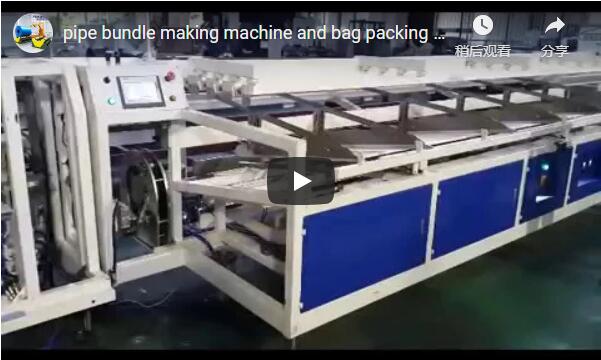
Downstream Tube Bundle Bagging Station Data
When configuring the single bagging line into a comprehensive secondary bundle packing cell, the downstream bundle packaging unit operates under the following factory parameters:
| Bundle Unit Parameter | Değer aralığı |
|---|---|
| Tube Bundle OD Range | Φ180–250 mm |
| Applicable Pipe OD (in bundle) | Φ20–65 mm |
| Bundle Pipe Length | 3 – 6 m |
| Pipe Counting Mode | Automatic (Programmed via PLC) |
| Strapping / Bundling Rate | Approx. >1 bundle/min |
| Maksimum Paket Ağırlığı | 10-50 kg |
| Bundling Wrapping Material | LLDPE streç film |
| Bundle Bag Width | 280 mm |
| Bag Substrate Types | PE / PP / HDPE |
| Bundle Bag Thickness | 30-80 µm |
| Bundle Bag Roll OD | Dış çap 200–500 mm |
| Bundle In-Feed Configuration | Fully automatic loading |
| Çalışma Pnömatik Beslemesi | 5-7 bar |
| elektriksel Özellikler | 380V, 3 Fazlı, 60 Hz |
Bag Size and Web Calculations
Correct packaging web dimensions depend on tube geometry and sealing tolerances.
1. Lay-Flat Bag Width (Derived)
The flat internal width of the bag must exceed half the tube circumference to prevent bind-up during high-speed axial feeding:
Lay-Flat Width ≥ (π × OD) / 2 + Sealing Allowance
Example Calculation (illustrative): For a 30 mm outer diameter tube:
- çevre =
π × 30 mm ≈ 94.25 mm - Minimum theoretical flat sleeve half-width =
94.25 mm / 2 ≈ 47.1 mm - Adding production clearance and seal width yields the final flat sleeve dimension.
2. Required Film Web Width (Derived)
The continuous flat film web fed from the roll through the collar former requires adequate material for full tube circumference plus the operational overlap margin:
Film Web Width ≈ (π × OD) + Seam Overlap Allowance
For the same 30 mm tube, the web width requires 94.25 mm plus the machine-specific seam overlap (typically 10–25 mm depending on ultrasonic or thermal seam geometry). Exact web dimensions are established during quoting based on chosen polymer elongation properties.
Output Formula
Theoretical line processing rates are calculated directly from linear feed velocity and workpiece length:
Tubes per Minute (Theoretical) ≈ Bagging Speed (m/min) / Tube Length (m)
Illustrative Operating Example: At a linear line speed of 30 m/min processing 6.0 m tubes:
Throughput = 30 / 6 = 5 tubes/min (300 tubes/hour)
Engineering Reality Factor: Actual operational throughput is lower than pure continuous linear calculation. Total yield factors in:
- Pneumatic indexing dwell and tube escapement release cycle time.
- Inter-tube gap margins required for cross-cutting and end sealing jaws.
- Upstream accumulation replenishment and bundle changeover.
Final effective capacity is confirmed at proposal stage based on customer cycle tests.
Seçim Kontrol Listesi
To configure the correct forming collars, drive motors, and feeding automation, review the following operational criteria:
- Tube Profile & Dimensional Limits: Outer diameter (OD) range, wall thickness, and total length (minimum to maximum).
- Yüzey Hassasiyeti: Bright annealed, mirror polished, painted, pickled, or cold-drawn finishes requiring non-marking contact materials.
- Gerekli Hat Veri Akışı: Target units per minute or running meters per minute matching mill output.
- Polymer Film Media: Polyethylene (PE) vs. Biaxially Oriented Polypropylene (BOPP), target thickness (µm), and anti-static or VCI requirements.
- In-Feed Integration: Manual overhead crane table loading vs. fully automated direct run-out integration from an upstream tube cut-off mill.
- Aşağı Akış Otomasyonu: Manual offload collection table vs. automated link-up with bundle strapping, bundling, or stack storage cells.
Güvenlik ve Standartlar
Machine construction and operational controls adhere to harmonized European and international safety frameworks:
- EN ISO 12100: 2010: Systematic risk assessment and hazard mitigation throughout feeding, transport, and thermal cutting zones.
- EN-415 10: Packaging machine safety standard governing end-sealing enclosures, mechanical pinch points, and product feed zones.
- EN-60204 1: Electrical safety compliance for machine power wiring, earthing, low-voltage control loops, and VFD drive isolation.
- Guarding & Operator Protection: Interlocked transparent poly-carbonate access doors over all longitudinal and transverse sealing stations; pneumatic dump valves during emergency stop actuation; overload slip clutches on all drive rollers.
Mühendislik SSS
Q: Why are non-metallic V-groove blocks utilized on the in-feed magazine? A: They provide reliable physical separation between individual tubes, preventing metal-to-metal rubbing, scuffing, and premature impact denting before entering the wrapping envelope.
Q: Which packaging film materials are recommended for single tube sleeving? A: Low-density Polyethylene (PE) and Biaxially Oriented Polypropylene (BOPP) ranging from 30 to 60 µm thickness are standard. Heavier films (up to 80 µm) can be utilized on high-durability projects.
Q: What determines the maximum linear line speed? A: Speed is governed by the tube outer diameter, material weight, chosen film gauge, and the sealing jaw cycle time. Standard continuous rates range from 10 to 50 m/min.
Q: Can this machine be integrated with an automated bundle strapping line? A: Yes. The single-tube out-feed conveyor can interface directly with downline robotic stacking systems, cross-transfer conveyors, or automated strapping machines to form bundled, strapped master packages.
Sonraki Adım
Accelerate your finishing plant automation with a complete engineering layout:
- Proje Parametrelerini Gönder: Forward your tube OD ranges, cut lengths, surface finishing criteria, and line cycle goals to
info@fhopepack.com. - Mühendislik Değerlendirmesi: Our technical team designs the forming collar dimensions, bag width profile, and in-feed sequencing matrix.
- Proposal & Layout Turnaround: Receive a formal engineering proposal, footprint layout, and quotation within 24 to 48 hours.
İlgili Okuma
- Pipe Bagging Machine (Product Page)
- Automatic Steel Tube Strapping Machine (Product Page)
- Table Roll Auto Bagger Systems
- Automatic Aluminum Tube Bagging and Stacking Line
- Alüminyum Profil Paketleme Torbası Makinesi
- Offline PVC Pipe Strapping and Bagging Line
kaynaklar
- FHOPE Packaging Machinery System Database: Industrial Pipe & Tube Automation Division
- International Standard EN ISO 12100:2010 (Safety of machinery — General principles for design)
- International Standard EN 415-10 (Safety of packaging machines — General requirements)
- International Standard EN 60204-1 (Safety of machinery — Electrical equipment of machines)
Son gözden geçirme tarihi: 21.09.2026