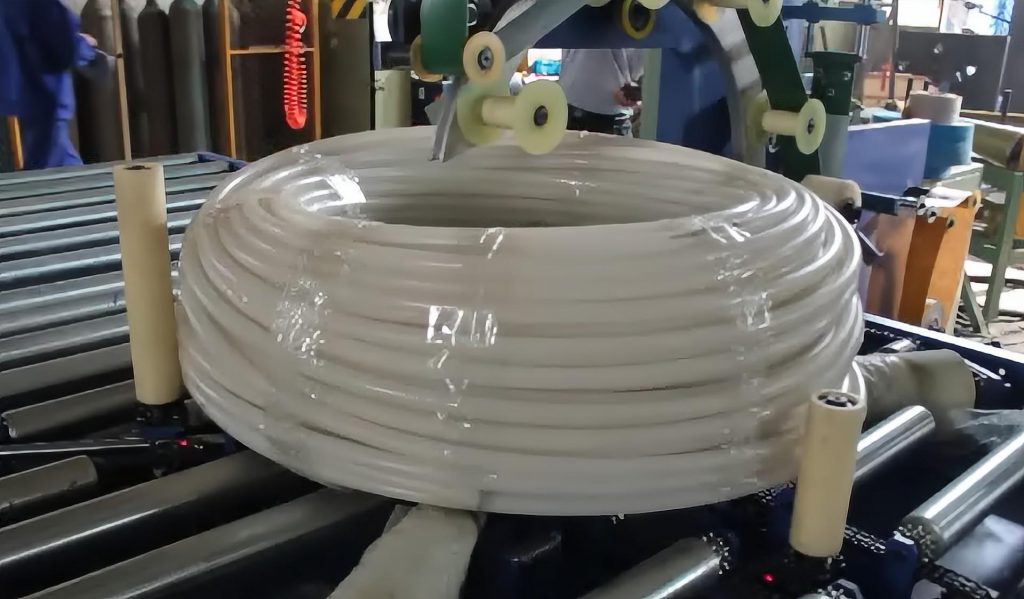
Zhrnutie: If you ship steel strip coils, the risk is not how fast they get wrapped, it is whether each coil still arrives free of rust, dirt and surface marks. This page is for the buyer who wants packing they can trust, not footage that flatters. It explains what actually protects a wound steel coil, how a packing station goes about it, what the video shows and what it does not, and the checklist that separates a real proposal from a good-looking one.
https://www.fhopepack.com/Coil_packing_machine.html
Na tejto stránke: S čím vám táto stránka pomôže pri rozhodovaní · Why bare coils need packing · How a packing station is put together · What decides whether a coil is protected · Čo ukazuje klip · Kontrolný zoznam overenia kupujúceho · Často kladené otázky · Súvisiace čítanie · Ďalši krok
S čím vám táto stránka pomôže pri rozhodovaní
A wound coil of steel strip leaves the packing station carrying the whole risk of its journey. Rust starts where moisture reaches bare metal. Dirt and oil mist from the plant settle into the outer wraps. The outer wrap takes the marks of every trolley, fork and neighbouring coil it touches. And once the coil is moved or stacked, its own weight can make the layers drift out of line.
None of that is decided by the video on this page. It is decided by the machine, the material and the order of operations, and all three are things you can check with a supplier. This page turns the short clip into a short list of questions.
Why bare steel strip coils need packing
Unpacked steel earns its defects on the way out the door. Moisture is the first enemy: a bare coil picks up condensation in any climate swing, and rust then begins under the outer wraps where nobody sees it until the coil is opened. Dust and process grit do the same kind of quiet damage, seated into the surface where they mark the first layers customers inspect.
Handling is the second. A bare coil is touched by everything — conveyor rollers, forks, other coils — and every touch risks a scratch or a dent on the outer wrap. The wound layers also drift if the coil is moved or stacked badly; slid layers do not go back with wrapping, only with rewinding.
Packing exists to interrupt all three: keep moisture away from the metal, keep the surface clean and untouched, and press the outer wraps so the layers stay put. That is the job the station in the clip is built to do, so the worthwhile question is how well a given station actually does it.
How a packing station is put together
Coil-packing stations follow the same skeleton even when the paint differs. A coil arrives on a roller conveyor and is positioned under a pressing and clamping head. A wrap material is drawn over the outer circumference while the head holds it against the coil, and the packed coil leaves on the same line. Each step either protects the coil or risks it, and the order is part of the protection.
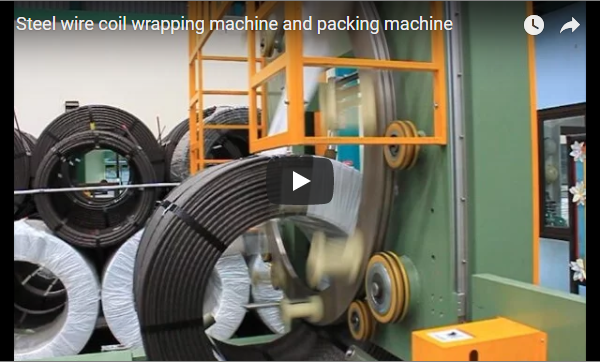
In the clip you can follow that sequence directly. A strip coil sits on the conveyor under a blue cantilevered arm. The arm lowers its press head onto the coil’s top edge, a white covering is applied around the outer circumference, and the coil exits fully covered and smooth. A worker loads coils at the entry by hand; the wrapping itself runs without manual help, and a red-and-green signal tower on the left reports the running state.
The layout detail that matters most is how far a bare coil travels and what touches it between arrival and wrap. Less bare travel and padded, clean contact surfaces are what keep the outer wrap mark-free.

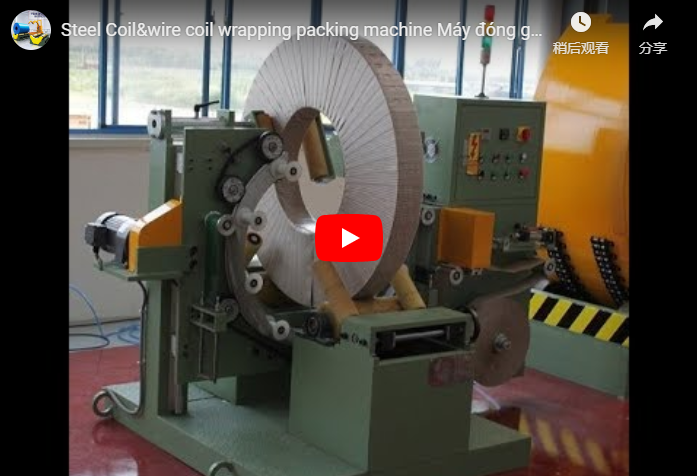
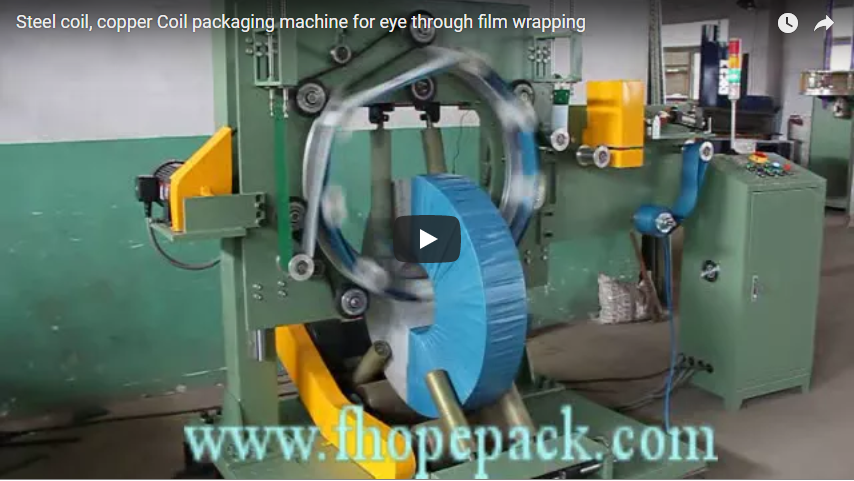
Caption: A steel coil wrapping machine. Product-library reference image, not a still from the clip.
What decides whether a coil is actually protected
The wrap material decides the moisture side of the job. Film seals a coil against dust and most moisture; VCI paper adds a corrosion-inhibiting vapour inside the pack; kraft paper protects mostly against scuffs. The clip shows a white covering, but it cannot tell you which of these it is, and the choice changes what the pack proves. Ask for the material specification in writing rather than inferring it from footage.
Tension and pressure decide the rest. If the wrap is applied evenly and held against the coil, the pack looks smooth and the layers are pressed inward, which is real pressure against layer slip. If tension is uneven, the pack wrinkles and leaves loose pockets where moisture sits. The clip shows an even, smooth finish, which is a good sign on screen and still not a performance test.
Coverage and order finish the job. Full coverage of the outer circumference, and wrapping before the coil is handled again, protect a product that is still being moved and stacked. A coil wrapped only after stacking has already taken every risk of the lift.
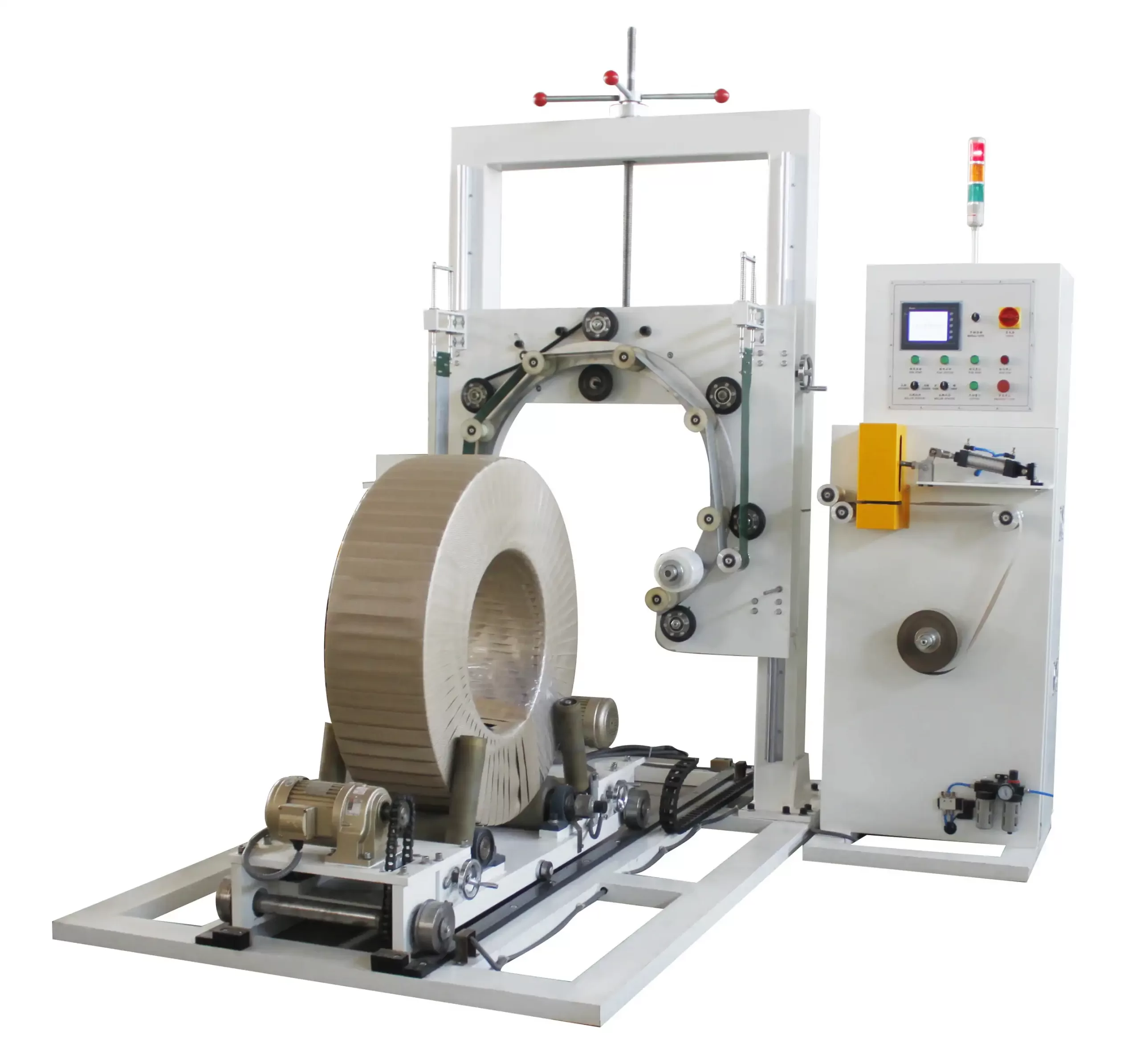
Popis: Stroj na balenie drôtených cievok. Referenčný obrázok z knižnice produktov, nie statický záber z klipu.
Čo ukazuje klip strojovej linky
What the video shows is a working coil-packing station. A dark, bare steel strip coil sits on a yellow-edged roller conveyor. A blue arm lowers its press head onto the coil, and a white wrap covers the outer circumference in one continuous action. The finished coil then moves on fully covered.
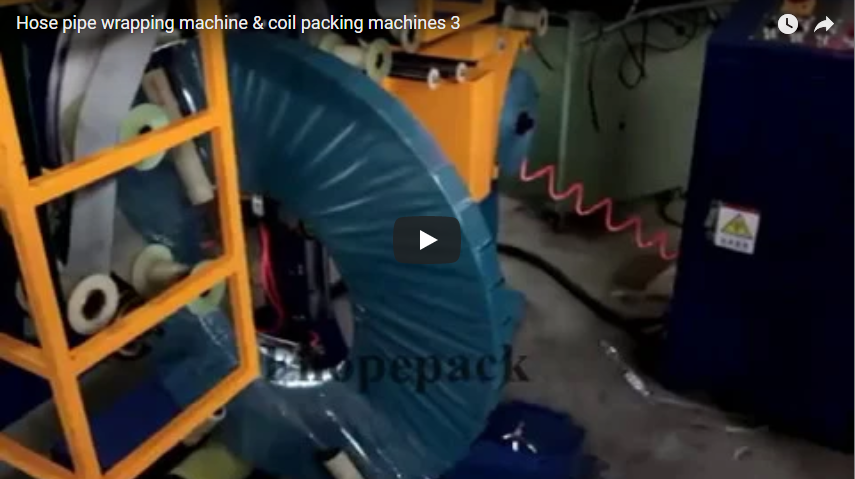
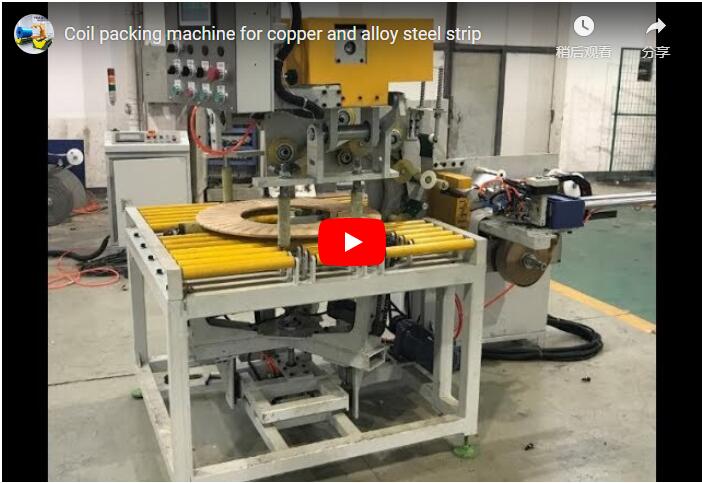
The photos in this article are product-library reference images of coil packing machines, not stills from the clip.
A worker in a hard hat loads coils at the entry and watches, and a green light on the signal tower confirms the machine is running. Direct observation notes from the sampled frames, not a performance test.
The clip does not show a cycle time, a coil weight or diameter range, the wrap material, any strapping step, or a finished coil arriving at a customer. Two limits are worth knowing before you read anything into it.
No clock runs on screen, so no timing can be read from the footage, and there are no legible figures anywhere — no rating plate, no numbers on the wrap. The station is real and the coils are real; the numbers are not in the video.
The layout is also open rather than enclosed: no full fence or light curtain is visible around the working area. That is not a defect on its own, but it is a sensible question to put on the checklist.
Kontrolný zoznam overenia kupujúceho
Six questions decide whether a station will protect your coils. Ask them in writing, and keep the answers with the quotation.
| Požiadajte dodávateľa o | Prečo rozhoduje o kúpe |
|---|---|
| Coil envelope: OD and ID range, strip width, thickness and per-coil weight | Decides whether your most common coil fits the station at all |
| Wrap material specification: type, thickness, tension and wraps per coil | Film and VCI paper protect differently, and the clip cannot show which |
| Jeden neskrátený cyklus s bežiacimi hodinami | Jediný záznam, ktorý dokazuje skutočný čas cyklu a postupnosť |
| Loading method: manual entry as filmed, or automatic infeed | Decides staffing and whether the line can run continuously |
| Bezpečnostné zariadenia: núdzové zastavenie, ochranné kryty, svetelná clona | Klip zobrazuje otvorené rozloženie, takže potvrďte, čo chráni operátorov |
| Documentation: certifications, layout drawing, test report | Turns a machine you watched into a design you can hold to |
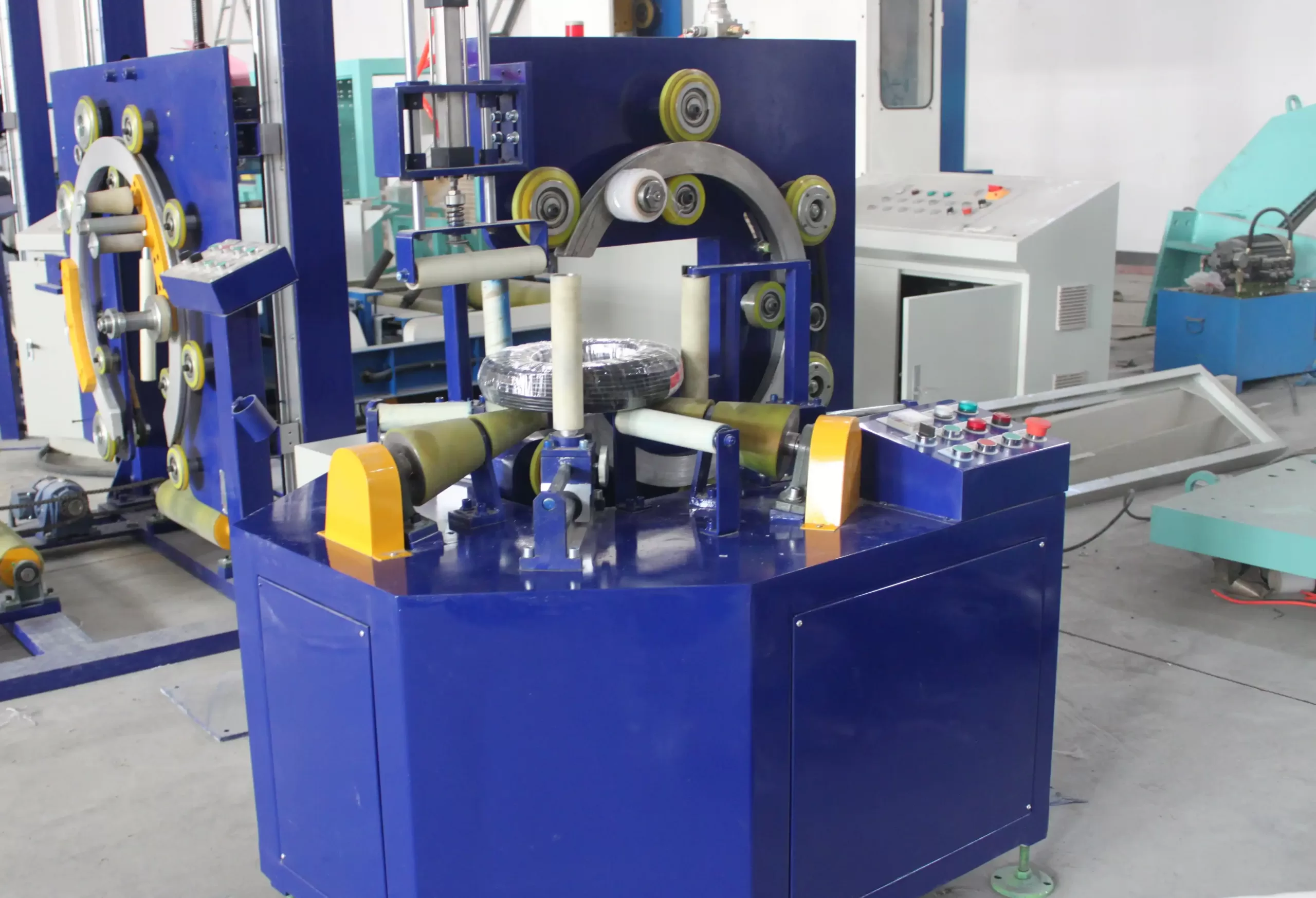
Caption: Coil wrapping machines on a packing line. Product-library reference image, not a still from the clip.
Pošlite to dodávateľovi a skopírujte to tak, ako je:
- The coil envelope you are quoting for: OD, ID, strip width, thickness, grade and weight.
- The wrap material: type, thickness, tension target, and wraps per coil.
- Jeden nezostrihaný cyklus na jednej kamere s bežiacimi hodinami.
- The loading method, and whether automatic infeed is available.
- Bezpečnostné opatrenia pre vaše pracovisko: núdzové zastavenie, ochranné kryty a svetelná clona.
- Kam sa holá cievka presúva nechránená a čím sú potiahnuté valčeky a vodiace lišty.
- A shipped-coil photograph from a reference installation in your material.
Často kladené otázky
Will the wrap stop my coils rusting?
Not by itself. The wrap only helps if the material is right for your product and climate, and if tension and coverage are even. The clip does not show the material, so ask for the specification and for a corrosion claim in writing rather than assuming the white cover is a rust barrier.
Zvládne moju veľkosť cievky?
Not on the evidence of the video. The footage shows one medium coil and no ratings. Send the supplier your OD, ID, strip width, thickness and weight, and ask which of those the station was quoted for.
Is the whole process automatic?
The wrapping cycle is automatic: the arm lowers, holds and wraps without manual help. Loading the coil onto the conveyor was manual in the clip. If you need continuous running without an operator at the entry, confirm the infeed option separately.
Súvisiace čítanie
- Stroj na balenie cievok — the packing equipment class this station belongs to.
- Stroj na balenie oceľových zvitkov — fáza balenia zobrazená cez stred klipu.
- Automatická baliaca linka cievok — the line configurations these stations fit into.
- Stroje na páskovanie oceľových cievok — banding equipment, for coils that also need straps.
- Stroj na ovíjanie zvitkov drôtu — the same class of wrap for wire and narrower strip coils.
- Automatická baliaca linka — integrated packing lines around the same stations.
Ďalši krok
Send the supplier your coil mix first: outer diameters, bores, strip widths, thicknesses, grades and daily volumes. The clip on this page carries none of those figures, so the envelope has to come from you.
Then send the seven questions above, and ask for the wrap specification, the uncut cycle and the safety arrangement in writing.
Then book one uncut run and inspect a coil immediately after the station for marks and loose wrap, with your own coil as the acceptance sample. Use the Kontakt Informácie o stránke začať tú výmenu.
Naposledy skontrolované: 28. 09. 2026
Publikované: 2026-09-28