Samenvatting: Deze pagina is bedoeld voor iedereen die slangen, buizen of kabelhaspels opgerold verzendt, of een wikkelstap toevoegt vóór transport. Het legt uit wat een slangwikkelmachine doet, waarom de machine in de video de haspel met bubbeltjesfolie omwikkelt terwijl een operator de haspel invoert en afwerkt, en wat u met een leverancier moet controleren voordat u een bestelling plaatst. De video hieronder toont de daadwerkelijke workflow en de foto's op deze pagina zijn productreferentieafbeeldingen, geen screenshots uit de video.
Inhoudsopgave
- Wat deze pagina u helpt te beslissen
- Wat een slangwikkelmachine doet
- Bubbeltjesfolie versus rekfolie
- Semi-automatische workflow
- Wat je moet controleren voordat je iets koopt
- Wat de video laat zien
- Controlelijst voor kopersverificatie
- FAQ
- Gerelateerd lezen
- Volgende stap
Wat deze pagina u helpt te beslissen
Een opgerolde slang of buis heeft gebogen oppervlakken, een holle kern en randen die tijdens het transport tegen elkaar wrijven. Een enkel vel folie overleeft de reis zelden, dus de keuze van de wikkelmachine en het wikkelmateriaal bepaalt hoe de rol aankomt. Een slangwikkelmachine wikkelt beschermfolie om een grote rol terwijl deze draait, en de machine in de video laat het daadwerkelijke werkproces zien, van het laden tot de handmatige afwerking.
Deze pagina vertaalt die machine naar vragen die u aan een leverancier kunt stellen: welke spoeldiameters accepteert de machine, welke materialen kan worden verwerkt, hoeveel van de cyclus is automatisch en welke veiligheidsvoorzieningen zijn ingebouwd. De checklist onderaan geeft u een kant-en-klaar aanvraagformulier.
Wat een slangwikkelmachine doet
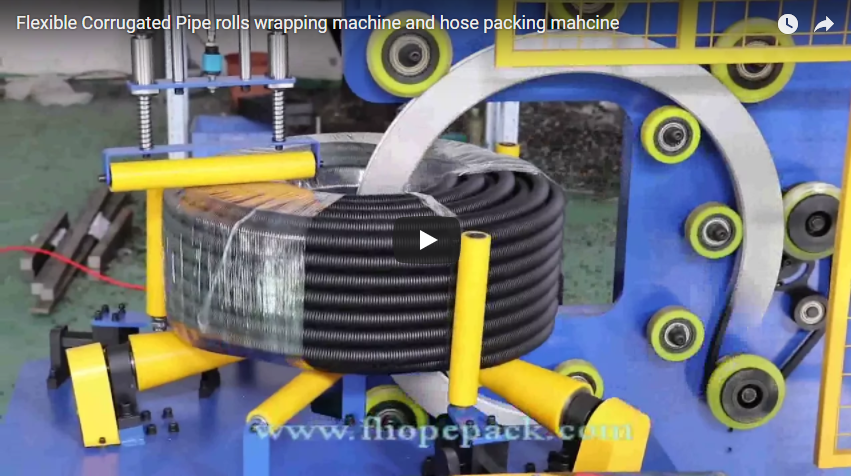
Een slangwikkelmachine wikkelt beschermfolie rond een grote opgerolde slang om deze te beschermen tijdens opslag en transport. De machine heeft een ringvormige opening in het midden, waarin de slangrol ligt terwijl een roterend onderdeel draait en de folie rond het oppervlak van de slangrol wikkelt.
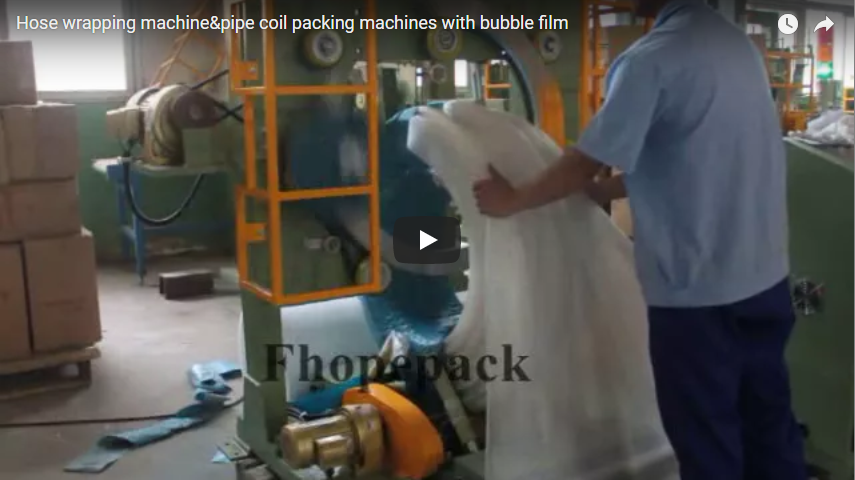
In de video is de machine een ringvormig apparaat met een groen geverfde stalen behuizing en oranje veiligheidskappen rond het draaiende gedeelte. In het midden bevindt zich een blauwe roterende trommel met een ringvormige opening. De operator voert handmatig de rand van een zeer grote witte rol bubbeltjesfolie in de opening. Terwijl het blauwe onderdeel draait, wikkelt de folie zich gestaag laag na laag om de rol totdat het oppervlak volledig bedekt is.
De scheidingslijn tussen machine en operator is duidelijk: de machine zorgt voor de rotatie en het oprollen, terwijl de operator het laden, de filmtoevoer en de handmatige afwerking verzorgt. Dat maakt het een semi-automatische machine in plaats van een volledig automatische.
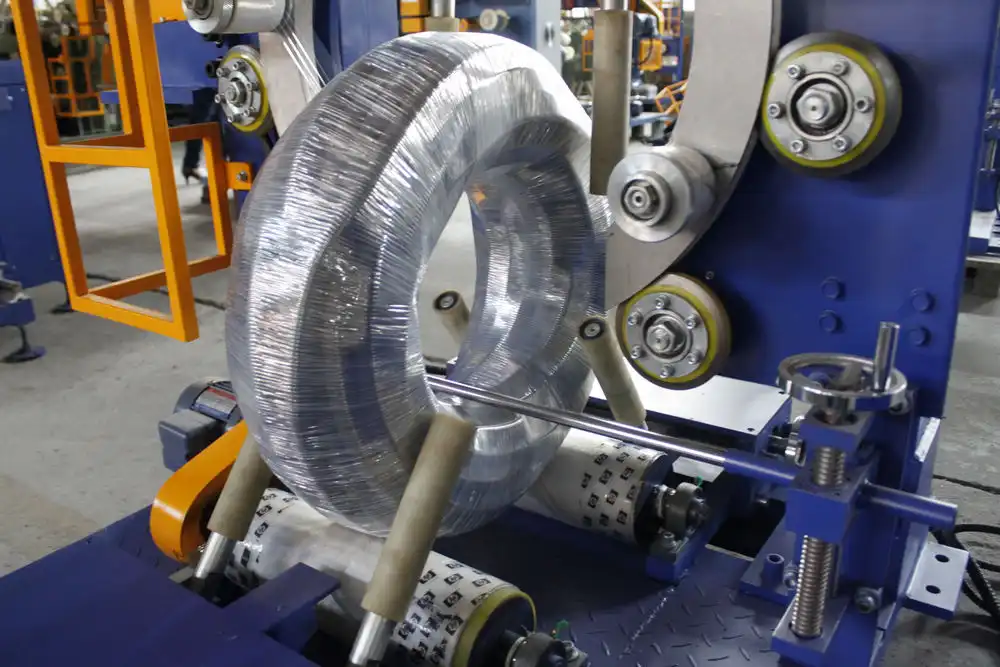
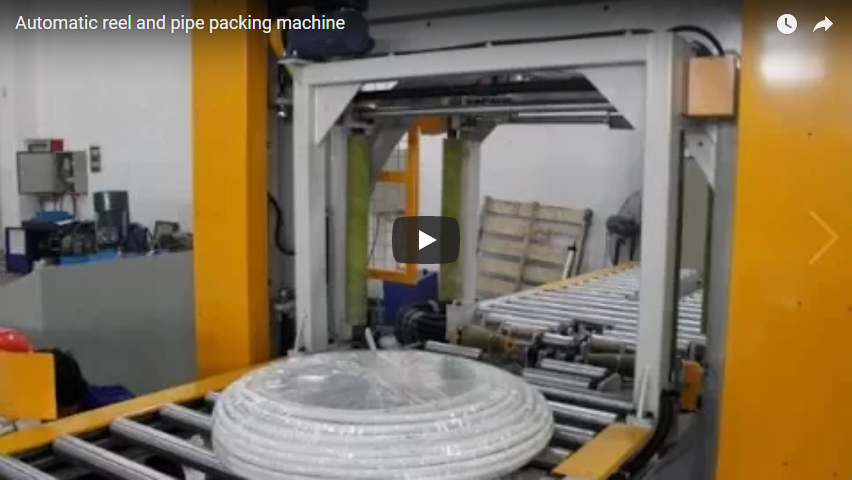
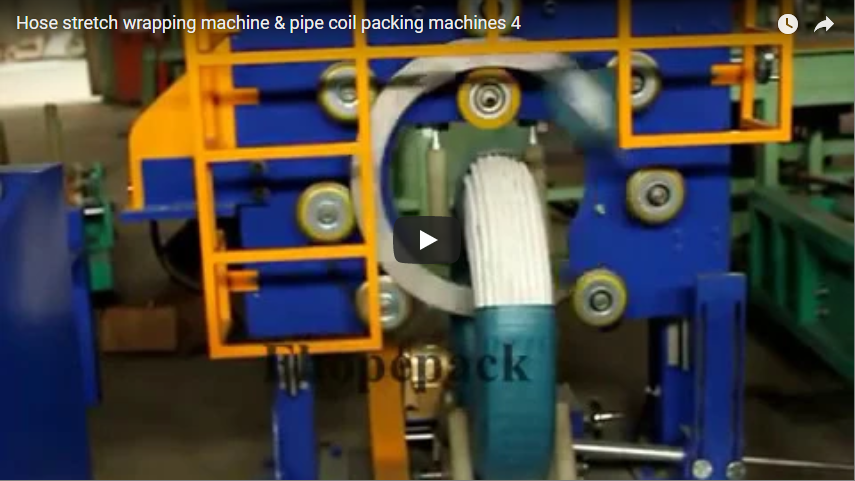
De onderstaande afbeeldingen tonen dezelfde machineklasse in andere installaties.
Bubbeltjesfolie versus rekfolie
Het materiaal is net zo belangrijk als de machine. In de video wordt bubbeltjesfolie gebruikt en de dempende structuur is zichtbaar naarmate de folie zich opbouwt. Voor slangen en opgerolde buizen is die demping belangrijk, omdat een bubbeltjeslaag de schokken van ruwe behandeling absorbeert die gewone rekfolie direct op het product zou doorgeven.
Hier is bubbeltjesfolie afgebeeld, maar de machinefamilie kan vaak ook andere materialen verwerken. Rekfolie zorgt voor een strak, transparant membraan; geweven tape voor een stevigere buitenlaag; en combinaties worden gebruikt voor transport over lange afstanden over zee. Welk materiaal het meest geschikt is voor uw rol hangt af van de transportafstand en de mate van ruwheid waarmee deze wordt behandeld. Vermeld daarom het materiaal in uw aanvraag en bevestig of de machine dit materiaal kan verwerken.
Semi-automatische workflow
Als je de video bekijkt als een workflow, bestaat de cyclus uit vijf stappen. De operator plaatst de rol in de ring en voert vervolgens de folie handmatig in de opening tegen de roterende trommel. De machine wikkelt de folie gelijkmatig om de rol, de operator vouwt en strijkt de folie glad over de vlakken en drukt de afgewerkte folie vervolgens aan om deze vast te zetten.
Die opsplitsing – machinerotatie plus laden en afwerken door de operator – is typisch voor semi-automatisch coilverpakken. Het ontneemt de medewerker het zware draaien en wikkelen, terwijl de menselijke beoordeling aan het begin en einde van elke cyclus behouden blijft. Het nadeel is dat er voor een volledige cyclus een operator aanwezig moet zijn. Dus als u de doorvoer vergelijkt met een volledig automatische machine, vraag dan naar de cyclustijd van de semi-automatische machine bij uw coilgrootte.

Wat je moet controleren voordat je iets koopt
De video toont het werkingsprincipe, niet een specificatie. Er wordt niets vermeld over capaciteit, spoelafmetingen, cyclustijd, filmgegevens of veiligheidsvoorzieningen; die cijfers komen dus van de leverancier. Laten we beginnen met zes feiten:
- Spiraalvormige envelop — maximale en minimale wikkeldiameter en spoelgewicht.
- Automatiseringsniveau — Handmatig laden en afwerken versus automatisch snijden en instoppen.
- Filmcompatibiliteit — bubbeltjesfolie, rekfolie, geweven tape of combinaties hiervan.
- Cyclustijd — minuten per spoel bij uw spoelgrootte.
- Bediening en instellingen — Instelbare overlap van de folie en foliespanning.
- Veiligheidspakket — hoe de ring stopt wanneer de operator zich bij het invoerpunt bevindt, inclusief stops en beveiligingen.
Elk punt beïnvloedt de aankoopbeslissing. De onderstaande checklist vat ze samen in één verzoek dat u direct kunt versturen.

Wat de video laat zien
De video toont het daadwerkelijke werkproces van een machine voor het wikkelen van slang- en pijprollen met bubbeltjesfolie. Een operator in een lichtblauw shirt staat naast de machine en voert handmatig de rand van een zeer grote rol witte bubbeltjesfolie in de opening van de centrale ring. Een blauw roterend onderdeel draait rond en de folie wikkelt zich gestaag om de rol totdat de gewikkelde laag het oppervlak bedekt.
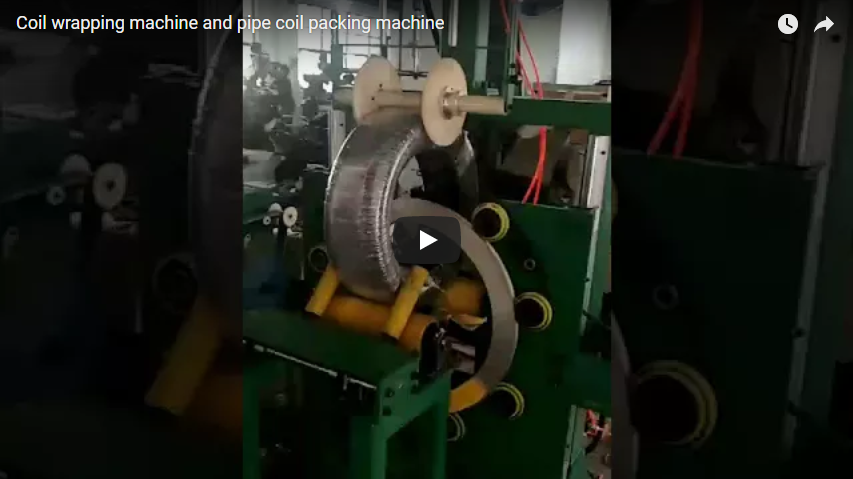
Later wordt dezelfde machine getoond met een groot, plat, ringvormig werkstuk in het midden, waarschijnlijk een kabelhaspel of een grote spoel. De operator legt lichtblauwe bubbeltjesfolie eroverheen, trekt de randen naar beneden en strijkt de folie glad, waarna hij deze aandrukt om de afgewerkte wikkel vast te zetten.
Wat de video níét laat zien, is net zo belangrijk. Het toont niet het nominale vermogen, de maximale of minimale wikkeldiameter, de wikkelsnelheid, de afmetingen van de machine, de afmetingen of het gewicht, of de cyclustijd per rol. Het toont niet de modelnaam, het vermogen, de spanning of frequentie, de besturingsmethode of eventuele certificeringen. Het toont niet de dikte of specificaties van de bubbelfolie, en het toont geen eindproduct of een losstap.
Er is geen noodstop, lichtscherm of vergrendeling te zien; de oranje afschermingen rond het draaiende gedeelte vormen de zichtbare beveiliging.
Bij de directe observatie van de opgenomen beelden is één regel van toepassing: alleen wat zichtbaar is, wordt vermeld, en er wordt niets afgeleid uit het geluid, omdat de clip achtergrondmuziek en geen gesproken tekst bevat.
De machine heeft een groen geverfde metalen structuur met oranje metalen veiligheidsafschermingen, bestaande uit verticale en horizontale staven, rond het draaiende gedeelte. In het midden bevindt zich een grote ringvormige opening met een blauw roterend cilindrisch onderdeel dat gebruikt wordt voor het oprollen van de folie. Rollen en geleidingsmechanismen zorgen voor het geleiden en spannen van de folie.
Er werden geen bedieningspanelen, schermen, knoppen, indicatielampjes, noodstop, lichtscherm, waarschuwingsborden of vergrendelingen waargenomen.
Het product in de eerste fase is een zeer grote, halfdoorzichtige witte rol met een zichtbare bubbelstructuur, met een grotere diameter dan de lengte van de operator. In de tweede fase is het een grote, platte, blauwe ring die gedurende het hele proces horizontaal blijft.
De foto's op deze pagina zijn productreferentieafbeeldingen van de fabrikant en geen stilbeelden uit de video. Het watermerk dat in de video te zien is, hoort bij de video en is geen typeplaatje van een apparaat.
Controlelijst voor kopersverificatie
| Vraag de leverancier om | Waarom het de aankoopbeslissing bepaalt |
|---|---|
| Maximale en minimale wikkeldiameter, spoelgewicht | Of de ring nu past bij jouw spoelmix |
| Automatiseringsniveau | Handmatig laden en afwerken versus automatisch snijden en instoppen |
| Geaccepteerde filmtypen | Of het door u gekozen materiaal van toepassing is |
| Levensduur per spoel bij uw maat | Hoeveel spoelen per shift? |
| Instellingen voor overlapping van de wikkeling en filmspanning | Of de wrap kan worden afgestemd op uw product. |
| Hoe de ring stopt bij het invoerpunt | Veiligheid van de operator tijdens handmatig voeren |
Stuur naar de leverancier: Graag bevestiging voor een machine voor het wikkelen van slang- en pijprollen: (1) maximale en minimale wikkeldiameter en ondersteund rolgewicht; (2) de mate van automatisering — handmatig laden en afwerken versus automatisch snijden en invouwen; (3) welke folietypes de machine gebruikt (bubbeltjesfolie, rekfolie, geweven tape); (4) cyclustijd per rol bij onze rolafmetingen; (5) of de wikkeloverlap en foliespanning instelbaar zijn; (6) hoe de roterende ring stopt wanneer een operator zich bij het invoerpunt bevindt, inclusief gemonteerde aanslagen en beschermkappen. Onze rollen zijn [product], buitendiameter [X] mm, gewicht tot [X] kg.
FAQ
Wikkelt de machine de rol automatisch op? Gedeeltelijk. De video laat zien hoe de roterende trommel de folie automatisch oprolt, terwijl de operator de folie handmatig invoert en het wikkelen afwerkt. Controleer het automatiseringsniveau van het model waarvoor u een offerte heeft ontvangen.
Kan er in plaats van rekfolie ook bubbeltjesfolie gebruikt worden? Ja, bubbeltjesfolie is het materiaal dat in de video te zien is. Vraag welke andere folies de machine kan gebruiken en bevestig uw materiaal schriftelijk voordat u bestelt.
Hoe snel duurt één wikkelcyclus? In de video wordt geen tijd weergegeven. Vraag de fabrikant naar de cyclustijd voor uw spoelgrootte, aangezien deze afhangt van de diameter en de overlap van de wikkelingen.
Gerelateerd lezen
- Slang verpakkingsmachine
- Spoelverpakkingsmachine
- Machine voor het wikkelen van stalen coils
- Draadwikkelmachine
- Koperen spoel verpakkingsmachine
- Oplossingen voor het oprollen van slangen en pijpen
Volgende stap
Stuur de leverancier de afmetingen van uw spoelen: diameters, gewichten en het type filmmateriaal dat u wilt gebruiken, en vraag naar de zes verificatiecijfers van de bovenstaande checklist.
Controleer vervolgens het automatiseringsniveau, want de video toont een machine waarbij een operator elke cyclus handmatig invoert en afrondt.
Vraag vervolgens hoe de ring stopt wanneer een operator bij het invoerpunt staat, aangezien handmatig invoeren onderdeel is van het werkproces. Gebruik de contactpagina om dit gesprek te starten.
Laatst beoordeeld: 24-09-2026
Gepubliceerd: 2026-09-24