Kopsavilkums
Coils leave the line standing upright and need to be tipped onto their side before packing, which is heavy and risky work by hand. This hydraulic 90° coil tilter turns an empty working table from vertical to horizontal in a smooth powered stroke, driven by a hydraulic system on a blue base frame. We build hydraulic coil tilters that tip a vertically placed coil onto its side in a single controlled rotation. Coil size, weight and cycle requirements are confirmed per project.
Saturs
- Why coils need mechanical tilting
- Ko mašīna dara
- The 90 degree stroke
- A tilter in the line
- Ko rāda videoieraksti
- Tipiski konfigurācija
- Atlases kontrolsaraksts
- Darbība un drošība
- Inženierijas bieži uzdotie jautājumi
- Nākamais solis
- Saistītā lasāmviela
- Avoti un standarti
Why coils need mechanical tilting
Coils are commonly built and stored on their face, and packing a coil usually needs it on its side. Tilting a heavy coil by hand is slow, takes two or more people, and risks the coil tipping out of control.
A tilter does the rotation under power, so the coil is turned smoothly and stops level every time. The coil size and weight carried by the table are confirmed per project.
Ko mašīna dara
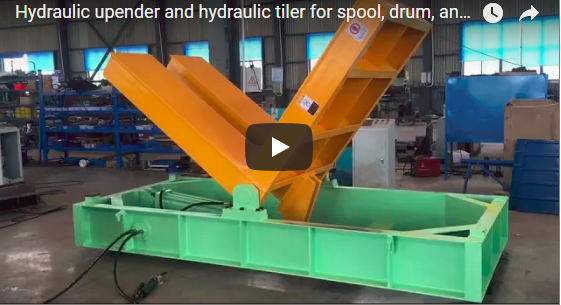
The machine is a hydraulic coil tilter with an adjustable working table. The table is a rectangular platform that stands vertical for loading, then swings down through 90 degrees until it rests level. The rotation comes from a hydraulic system on a blue base, with the cylinders and guide rails doing the work.
The vertical position suits a coil arriving on its face, and the level position puts it ready for the next step. Table size and tilt capacity are confirmed per project.
The 90 degree stroke
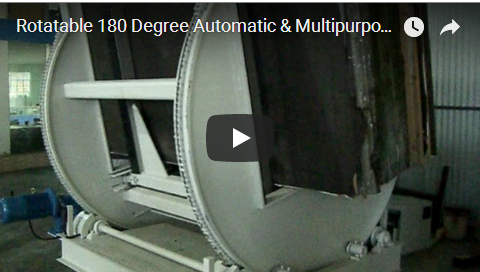
The footage shows the tilter moving from vertical to level in one smooth stroke: the table tips back steadily through roughly 45 and 60 degrees, then settles near horizontal and stops level. The hydraulic cylinders extend under the table as it travels.
Because the whole rotation is powered and guided, the table comes to rest in the same position each cycle. The tilt time and end position are confirmed per project.
A tilter in the line
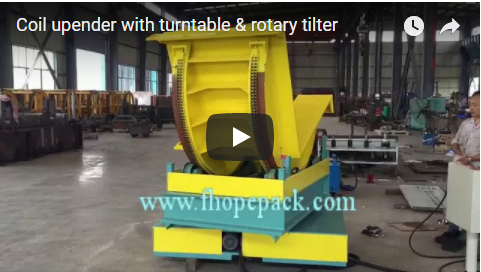
A tilter usually sits between machines: it takes a coil from the line standing up and presents it lying down for packing or transport. The demonstration shows the empty table completing the motion, which is the core task the next work step depends on. The surrounding line and handling are confirmed per project.
Ko rāda videoieraksti
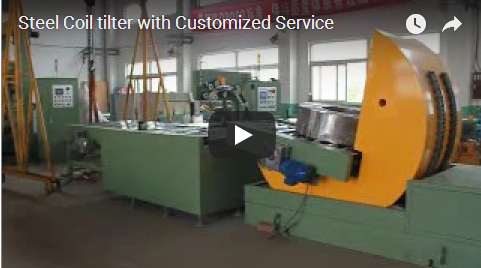
Our footage shows a hydraulic 90° coil tilter cycling its working table from vertical to horizontal under power. It is a general demonstration, so your coil size, weight and cycle requirements are confirmed with us per project.
Tipiski konfigurācija
Zemāk redzamajos attēlos ir norādītas funkcionālās dizaina robežas, nevis skaitliskās vērtības, un tie tiek apstiprināti katram projektam.
| Parametrs | Tipisks diapazons, apstiprināts katram projektam |
|---|---|
| trieka | 90 degree table rotation |
| piedziņa | hidrauliskie cilindri |
| Tabula | regulējams darba galds |
| Sākuma stāvoklis | vertikāls |
| Beigu pozīcija | horizontāls |
| Elektroapgāde | 380 V trīsfāžu 50 Hz vai 220 V vienfāzes vieglajām mašīnām, tiek izvēlēts katram projektam atsevišķi |
Atlases kontrolsaraksts
| jautājums | Apstiprināt katram projektam |
|---|---|
| Slodzes diapazons | spoles ārējais diametrs, platums, svars |
| Tabula | platform size, tilt capacity |
| piedziņa | hydraulic unit, power |
| Cikls | tilt time, hold at level |
| Kontrole | panel and interlocks |
| Elektroapgāde | spriegums, fāze un frekvence uz vietas |
Darbība un drošība
Position the coil on the vertical table, then start the cycle from the control so the table tips down under power. Keep clear of the table path and the base while the tilter runs, with emergency stops at the operator position.
Routine checks cover the hydraulic unit, cylinders, guide rails and the table condition, per the machine manual. Confirm the load against the table capacity before each run.
Inženierijas bieži uzdotie jautājumi
Q: What does this machine do? A: It tilts a working table 90 degrees, from vertical to horizontal, under hydraulic power.
Q: Why tilt a coil at all? A: To turn a coil from its standing position onto its side for packing or transport.
Q: Is the motion powered? A: Yes, hydraulic cylinders drive the rotation; no manual lifting is needed.
Q: What does it suit? A: Coils and heavy round products that need a safe 90 degree re‑orient.
Q: What does the footage prove? A: An empty table completing a full 90 degree tilt in one continuous demonstration.
Nākamais solis
- Email us at info@fhopepack.com with your coil size and weight.
- We send a coil tilter proposal and a layout drawing within 48 hours.
- We arrange a site survey to confirm table size and cycle requirements.
Saistītā lasāmviela
- Spoles pacelšanas un pagriešanas mehānisms
- Ruļļu iepakošanas mašīnas
- Hidrauliskais spoles pacēlājs
- FHOPE iepakošanas iekārtu produktu līnijas
Avoti un standarti
- ISO 12100:2010 Mašīnu drošība, vispārīgie projektēšanas principi un riska novērtēšana
- EN 415-10:2014 Iepakošanas mašīnu drošība, vispārīgās prasības
- EN ISO 13849-1:2023 Mašīnu drošība, ar drošību saistītās vadības sistēmu daļas
FHOPE hydraulic 90° coil tilter demonstration video. Reviewed as a general demonstration; coil size, weight and cycle confirmed per project.
Pēdējoreiz pārskatīts: 2026-10-11