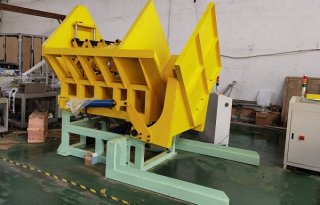
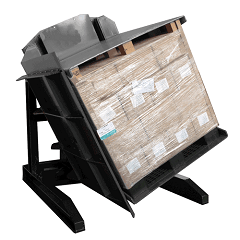
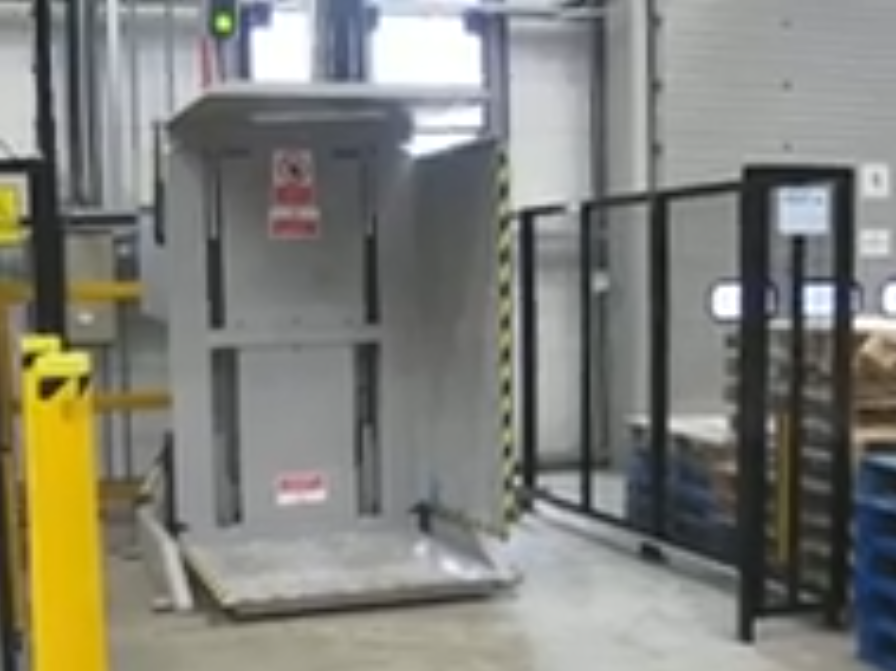
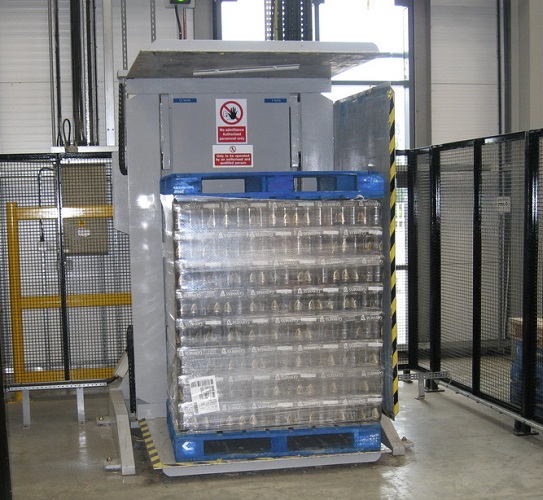
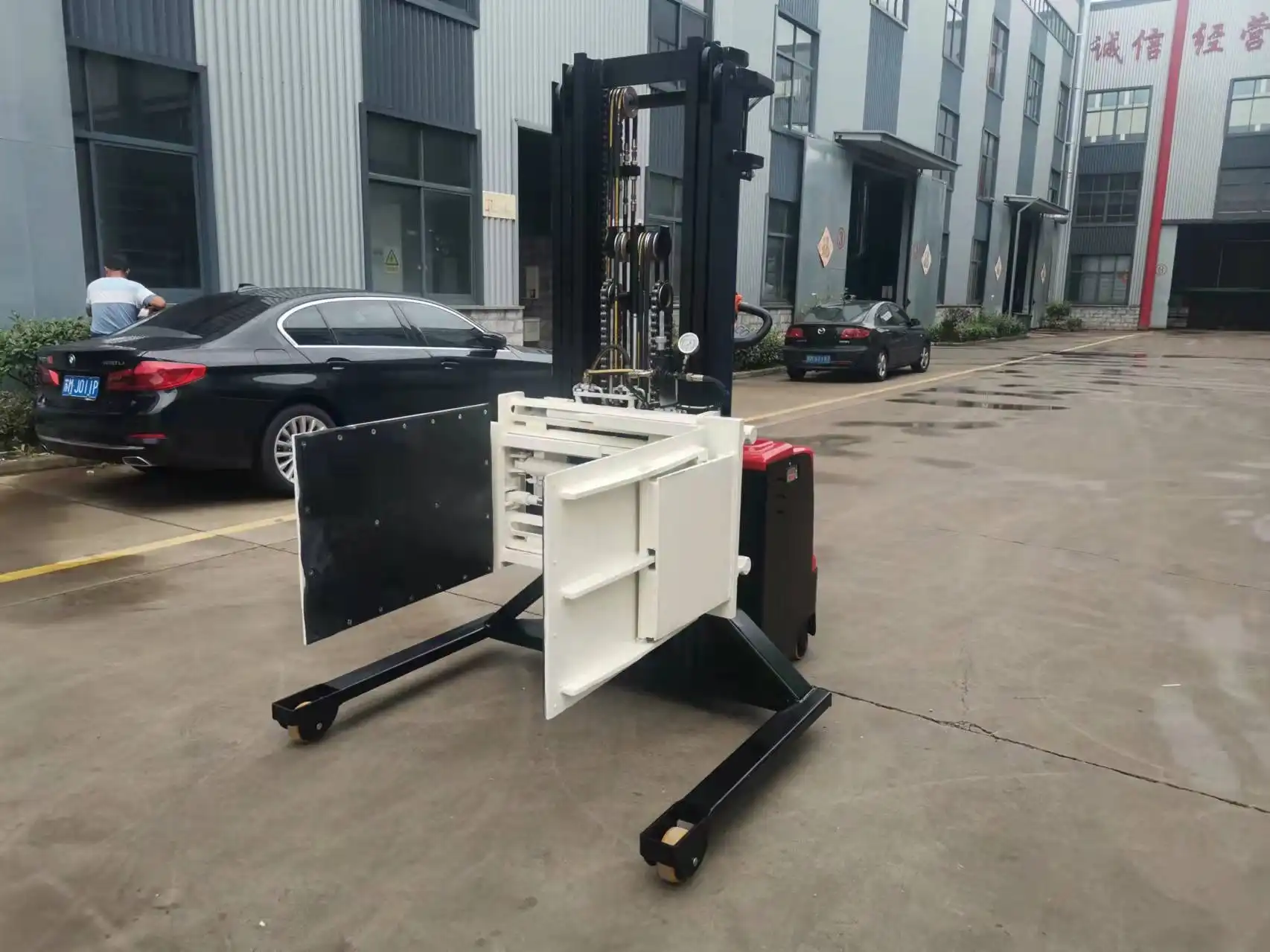
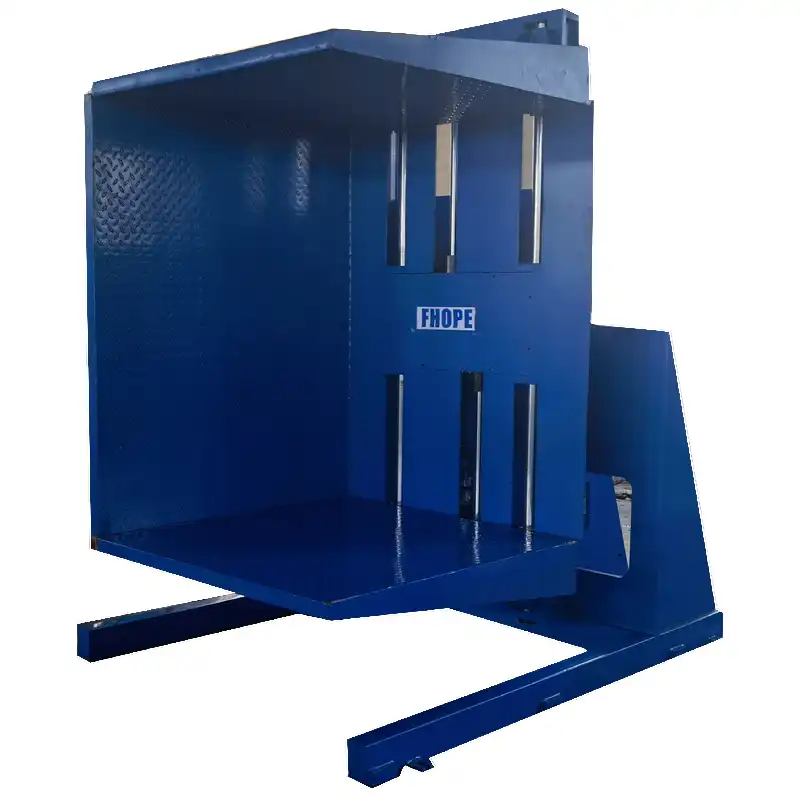
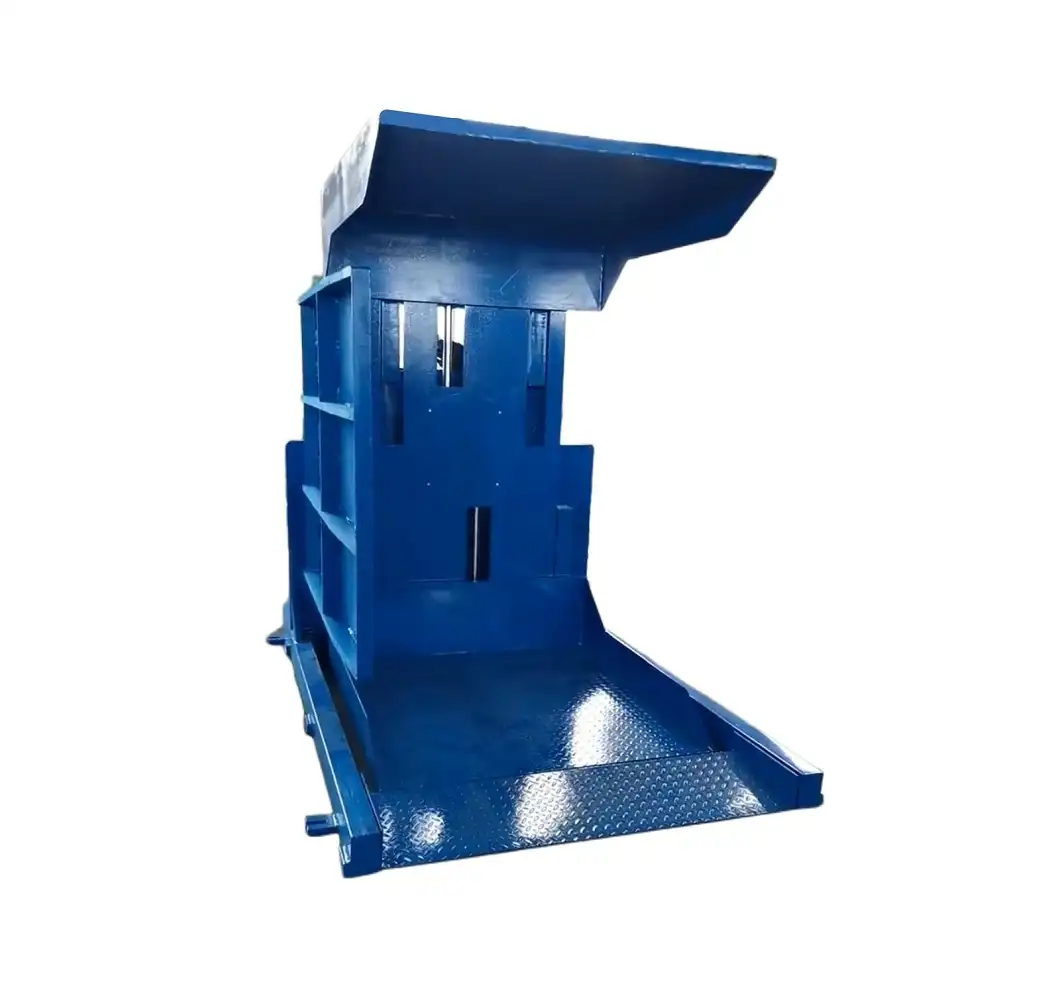
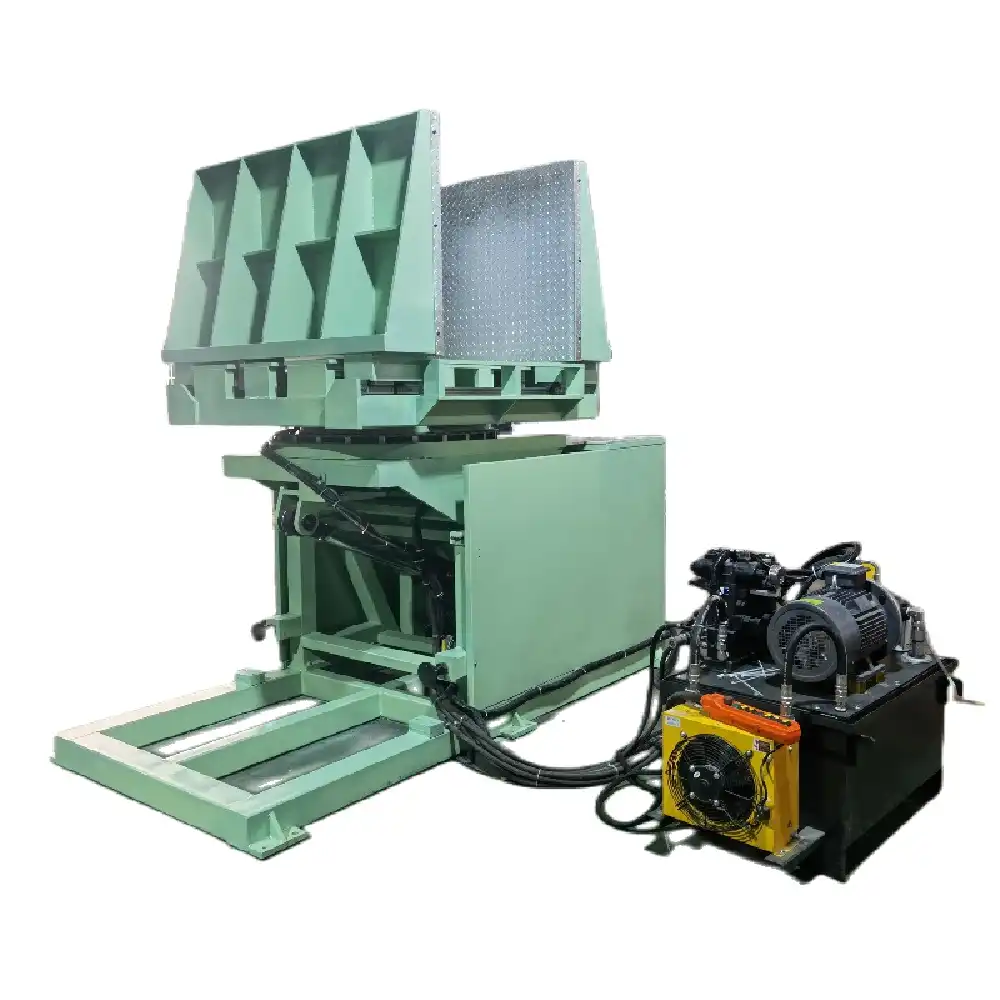
Atklājiet, kā mūsu automatizētie iepakošanas risinājumi optimizē jūsu ražošanas līnijas efektivitāti. Šajā video tiek demonstrēta nevainojama darbība, kas paredzēta maksimālai aizsardzībai.
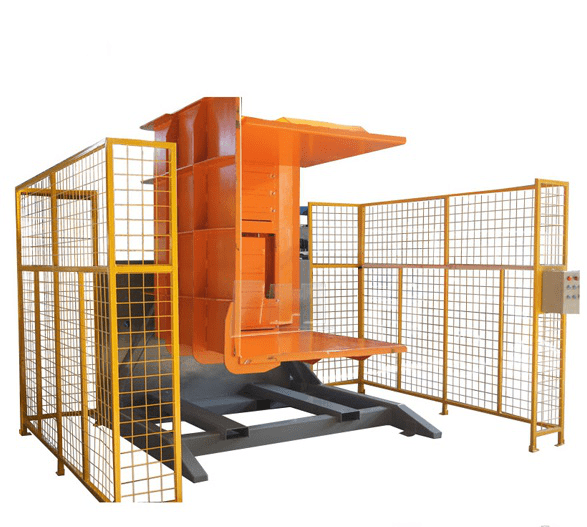
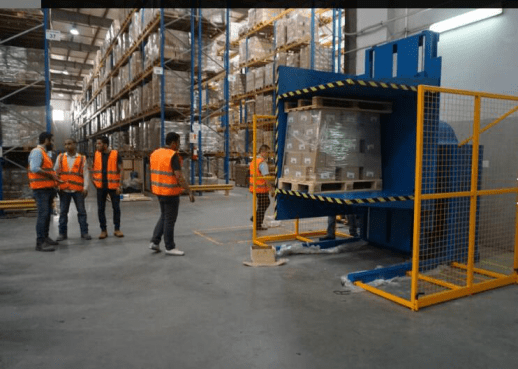
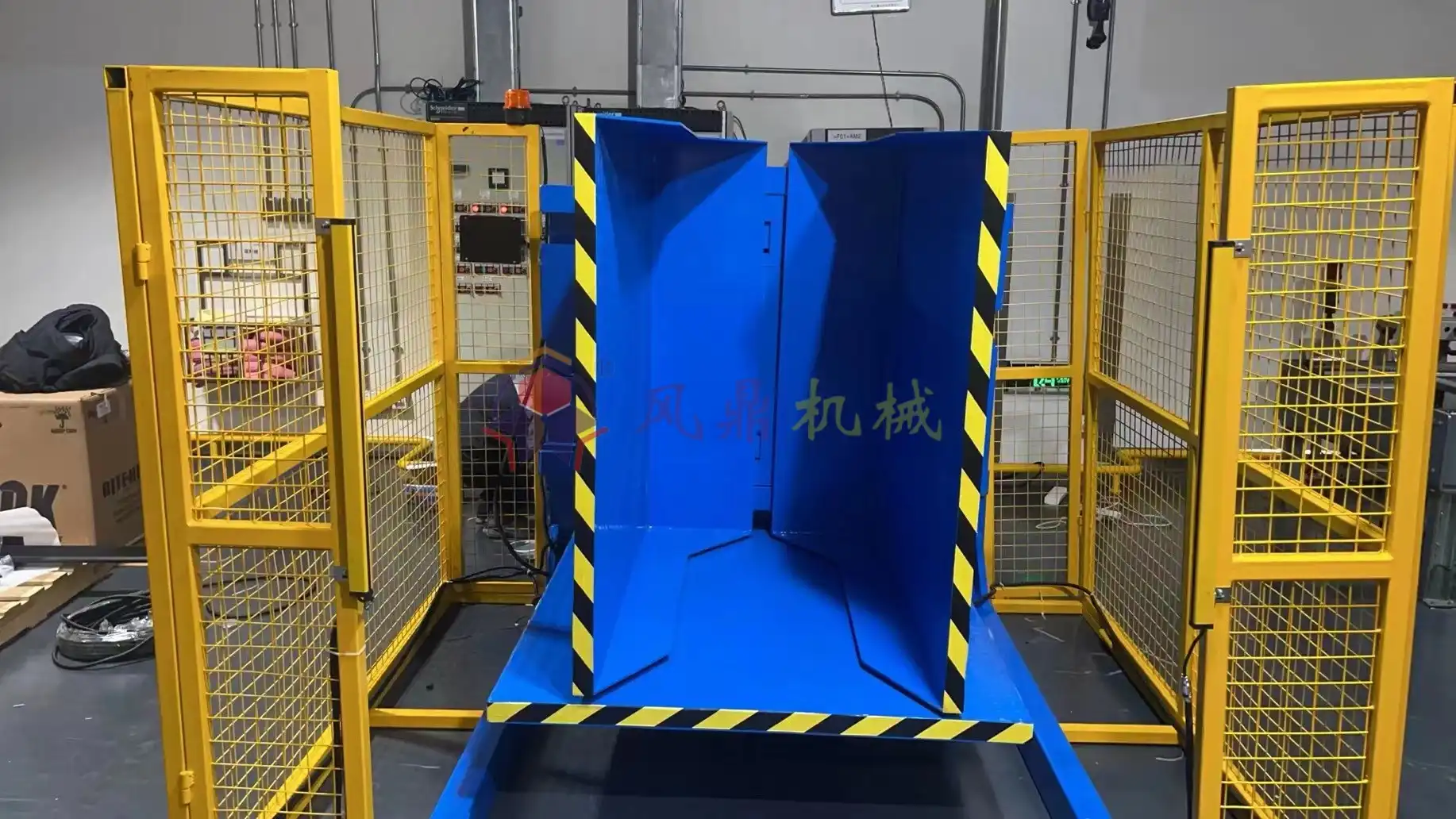
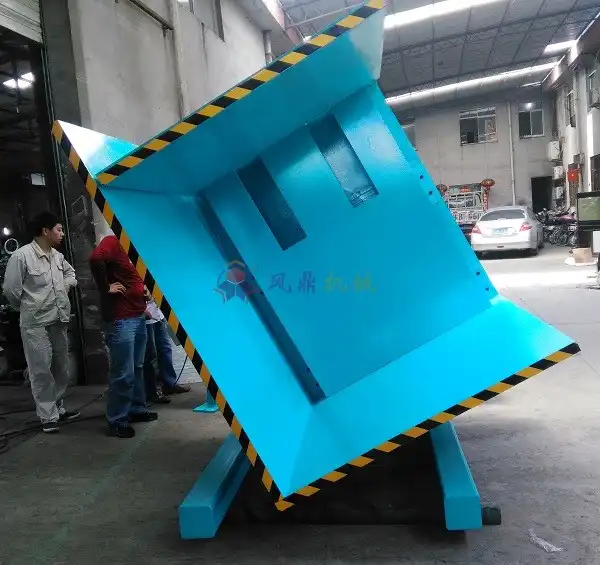
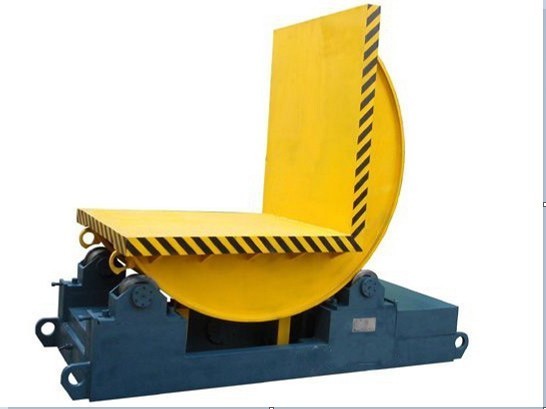
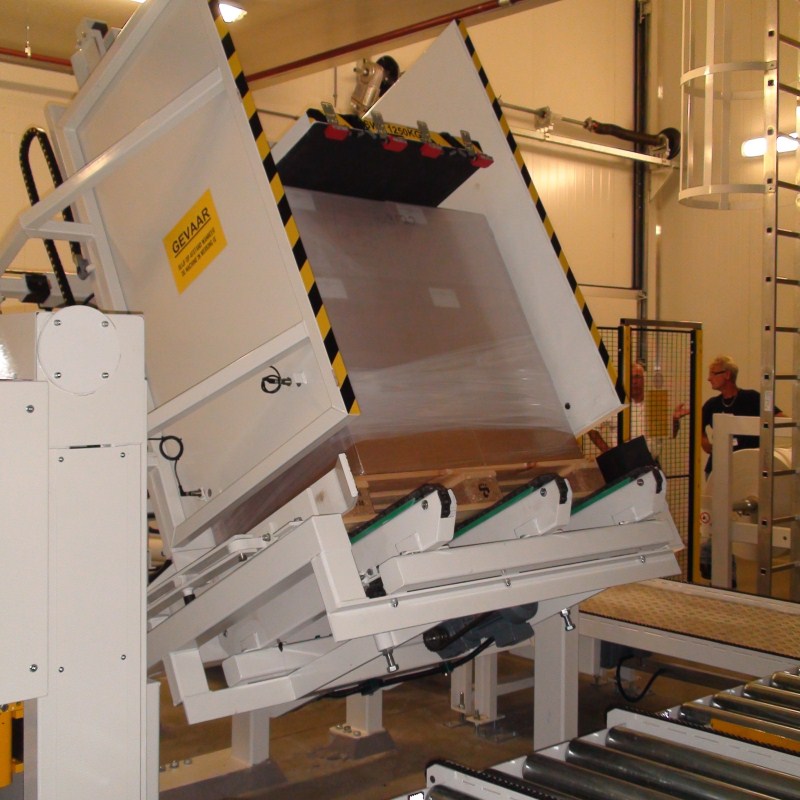
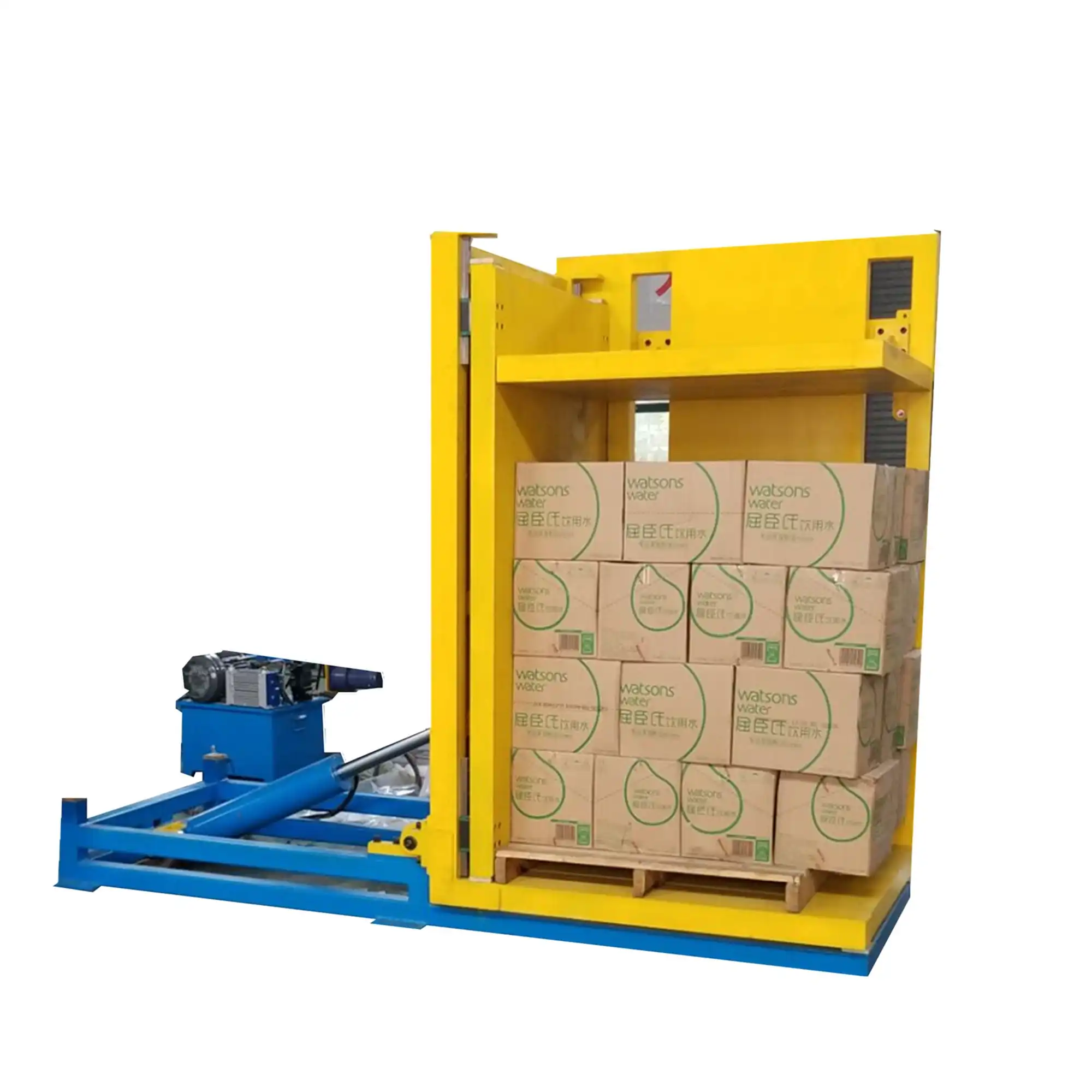
A 180° pallet inverter clamps and rotates a palletized load 180° to swap damaged pallets without restacking. For goods that cannot tolerate inversion, use a 95° tilt exchanger instead.
The machine clamps the load, rotates it 180° to expose the old pallet for replacement, and rotates back. Sensors and an emergency stop ensure safety.
Reprezentatīvā konfigurācija
Galvenās specifikācijas
Nominālās vērtības reprezentatīvai konfigurācijai, kas apstiprinātas katram projektam:
Punkts
specifikācija
Darbība
180° rotācija; dubulta augšējā + apakšējā skava; regulējams skavas spiediens; automātiska slodzes bloķēšana
Kravas nospiedums (palete + preces)
G 1200 × P 1100–1200 mm
Kravas augstums
Augstums 1200–2000 mm
Spriegošanas gājiens
Izmērs atbilstoši kravas augstumam (katram projektam)
Maksimālā slodze
1.2 t (reprezentatīvs konfigurācijas līmenis; apstiprināts katram projektam)
Cikla laiks
Aptuveni 50 s ciklā (reprezentatīva konfigurācija; galīgā vērtība apstiprināta piedāvājumā)
jauda
2.2 kW, 380 V / 50 Hz
Ievads
Iekrāvējs vai konveijers (standarta opcijas); rampa/bedre/zems galds palešu ratiņu padevei (atkarībā no projekta)
Drošības līdzekļi
Pozīcijas sensori; avārijas apturēšana
Reprezentatīvās vērtības ir paredzētas atlases atsaucei; galīgās specifikācijas tiek apstiprinātas katram projektam.
redzēt vairāk Data par piemērotību lietojumprogrammai, drošību, cenu piedāvājuma pieprasījuma vienumiem, ierobežojumiem un bieži uzdotajiem jautājumiem.↑
Darbības secība
Kā tas darbojas
Palešu apmaiņa notiek piecos soļos:
Ievads
Iekrautā palete tiek novietota uz mašīnas galda. Iekrāvēja un konveijera padeve ir standarta saskarnes opcijas. Tā kā fiksētajam galdam ir darba augstums un rāmis, rokas palešu ratiņiem vai ratiņiem var būt nepieciešama rampa vai bedres/zema galda konfigurācija — tas tiek izlemts katrā projektā atsevišķi.
Skavas
Augšējā un apakšējā plāksne aizveras ap kravu. Saspiešanas spiediens tiek iestatīts atbilstoši iepakojumam, ne augstāks nekā nepieciešams.
Rotācija
Krava, kas ir nofiksēta skavās, pagriežas par 180°; pozīcijas sensori apstiprina katru pozīciju. Krava tagad ir apgriezta otrādi, ar sākotnējo paleti virspusē.
Palešu maiņa
Atsegtā sākotnējā palete tiek noņemta, un jaunā palete tiek novietota uz apgrieztās kravas augšējās virsmas. Tā atkal atradīsies zem precēm, kravai griežoties atpakaļ.
Atgriešanās un izvade
Krava pagriežas atpakaļ un skavas atveras; preces tiek iznestas uz jaunās paletes, izmantojot jūsu projektam konfigurēto padeves metodi.
180° Pallet Inverter and Pallet Exchanger: Engineering Selection Guide
Which Unit Loads Suit a 180° Stationary Inverter?
Stationary 180-degree inverters handle unit loads weighing up to 1.2 t within standardized dimensional footprints. Clamping and rotation parameters depend directly on product density, package rigidity, and overall center of gravity.
Pallet Types and Packaging Geometries
The inverter platform accepts four-way entry wooden pallets (EUR/EPAL, US standard 48 x 40 inches), internal hygienic plastic pallets, corrugated board slip-sheets, and heavy steel stillages. Cargo configurations successfully inverted include:
Solid sheet metal blanks, glass lamination crates, and thermoformed plastics.
Dimensional Limits and Center of Gravity Offsets
Standard clamping profiles support maximum stack heights of 2000 mm down to a closed height of 1200 mm. Loads falling below 1200 mm require stroke-limiting spacer blocks or extended hydraulic cylinder rods.
Center of Gravity Longitudinal Offset Delta_X: <= 100 mm from Table Centerline
Center of Gravity Transverse Offset Delta_Y:   <= 75 mm from Symmetry Plane
If the center of gravity deviates beyond these limits, asymmetrical tipping moments cause uneven stress on the rotation pivot bearings and hydraulic cylinder seals.
Cycle Time Topology and Process Throughput
Plant automation engineers must distinguish between machine mechanical speed un total pallet exchange cycle time. While the raw rotation takes approx. 50 seconds, total cycle duration depends on loading and pallet handling methods.
Procesa posms
Sub-Operation
Ilgums (sekundes)
Notes / Action Items
Stage 3: 180° Inversion
Continuous cradle rotation through 180°
48–52 s
Rated approx. 50 s; stabilized by hydraulic damping
Kopējais cikla ilgums
Full Pallet Exchange Sequence
149–201 s
Yields approx. 18 to 24 completed pallets per hour
How Is the Inverter Sized Against Load Geometry?
Sizing a stationary inverter requires calculating the peak tipping torque during rotation and matching hydraulic clamping forces to cargo crush resistance.
The peak torque $M_{flip}(\theta)$ occurs when the load cradle reaches 90 degrees horizontal recline, where the horizontal distance from the pivot center to the load center of gravity is maximized:
M_flip(theta) = m_load * g * d_CG(theta) * k_dyn
kur:
m_load: Gross mass of cargo and pallet (kg).
g: Gravitational acceleration (9.81 m/s^2).
d_CG(theta): Radial distance from the rotation pivot center to the load's center of gravity (m).
k_dyn: Dynamic acceleration factor (typically 1.25 to 1.35 for controlled hydraulic motion).
Engineering Torque Sizing Example (Representative Setup)
For a verified gross load mass of 1.2 t (m = 1200 kg) with an offset center of gravity d_CG = 0.22 m and dynamic factor k_dyn = 1.30:
m_load = 1200 kg
F_load = 1200 kg * 9.81 m/s^2 = 11772 N
M_flip_peak = 11772 N * 0.22 m * 1.30 = 3366.8 N*m  (Example only)
The hydraulic drive unit must deliver continuous torque exceeding 3366.8 N*m. The hydraulic cylinder sizing must satisfy:
F_cyl = M_flip_peak / L_eff
Reģions L_eff represents the minimum effective cylinder leverage arm across the rotation arc.
Clamping Force and Surface Pressure Limitations
Clamping force must provide adequate friction to prevent cargo slippage during 90-degree recline without exceeding the compressive strength of the packaging.
P_contact = F_clamp / A_contact
F_clamp_min >= (m_load * g) / (2 * mu_static)
Reģions mu_static is the coefficient of static friction between clamping pads and the load (typically 0.30 to 0.45 for rubber-coated steel plates).
Iepakojuma veids
Max Permissible Surface Pressure
Target Clamping Force
Recommended Safety Feature
Corrugated Cartons (Standard)
25 līdz 40 kPa
12 līdz 18 kN
Dual proportional pressure-relief valve
Plastic Drums (Liquid Filled)
80 līdz 120 kPa
20 līdz 25 kN
Structural contour pads or guide channels
Woven Poly Bags (Granules)
30 līdz 50 kPa
15 līdz 22 kN
Full-surface flat contact plate
Solid Metal Castings / Billets
> 250 kPa
Up to cylinder capacity
Direct steel mechanical clamping
Machine Configurations and Facility Integration
Integrating a stationary inverter requires evaluating material handling equipment, ceiling clearances, and civil foundation load capabilities.
+-----------------------------------------------------------------+
| INFEED INTEGRATION METHODS                                      |
|                                                                 |
| [1] FORKLIFT RAISED BED       [2] CONVEYOR INTEGRATION          |
|     Standard base frame           In-line powered rollers       |
|     Loads at H 350-450 mm         Direct line integration       |
|                                                                 |
| [3] PIT-MOUNTED FLUSH BED     [4] SLOPED ACCESS RAMP            |
|     Recessed into floor pit       External bolt-on steel ramp   |
|     For manual pallet trucks      For electric walkie stackers  |
+-----------------------------------------------------------------+
Forklift Infeed vs Hand Pallet Truck Access
Standard Raised Base: Designed for facilities loading primarily by counterbalance forklift or reach truck. Bed heights sit 350–450 mm above finished floor level. This profile provides maximum structural rigidity and simplified debris cleaning.
Pit-Mounted Configuration: The base frame is recessed into a concrete pit, positioning the lower clamping plate flush with the factory floor (0 mm elevation). Operators roll manual hand pallet trucks directly onto the table without overhead lifting. Pits require perimeter drainage and perimeter safety interlocks.
External Steel Ramp: Where floor cutting is prohibited, an external bolt-on steel approach ramp allows electric walkie pallet jacks to access the bed. Ramp slopes must not exceed 1:10 (approx. 6 degrees) to prevent pallet bottom hang-up.
In-Line Automated Conveyor Integration
For high-throughput lines, the inverter bed replaces standard steel plates with heavy-duty motor-driven roller or twin-strand chain conveyors. The infeed conveyor transfers the pallet into the clamping cradle; the machine clamps, inverts, and transfers the stack to an automated pallet changer or stretch wrapper. Explore integrated twin-clamping station designs on our dedicated dual-clamp pallet inverter system page.
When a Reclining Inverter Replaces a Straight 180° Unit
Selecting between a single-stage 180-degree inverter and a two-stage 90-degree recline-and-rotate system depends entirely on load stability under pure inverted orientation.
Operating heavy machinery that inverts 1.2-ton loads requires stringent safety compliance to protect line operators and avoid material damage. FHOPEPACK designs stationary equipment in alignment with international safety frameworks:
EN ISO 12100: 2010: Comprehensive risk assessment and risk reduction methodology applied across the mechanical structure, hydraulic pinch points, and rotating cradle envelope.
LV-1570 1: Structural safety requirements for industrial lifting and clamping tables, specifying safety factors for scissor members, load-holding cylinders, and dynamic deflection tolerances.
LV 60204-1: 2018: Safety of machinery – Electrical equipment of machines, ensuring compliant emergency stop circuits, grounded control enclosures (IP54 minimum), and short-circuit protection.
ISO 4413: 2010: Fluid power safety regulations governing hydraulic systems. Includes dual pilot-operated check valves (hydraulic locks) mounted directly to cylinder ports, preventing cradle drop or clamp pressure loss in the event of complete hydraulic hose failure.
ISO 13849-1 (PL d, Cat. 3): Safety-related parts of control systems. Rotation mechanisms interface with category-compliant perimeter safety light curtains ([EN 61496]), perimeter interlocked mesh fencing, and dual-channel safety relays.
What to Send for a Torque Verification
To ensure our engineering office sizes your hydraulic torque, cylinder stroke, and clamping pressure valves accurately, submit your load characteristics using the input matrix below.
What mechanism prevents soft corrugated cartons from crushing?
The hydraulic circuit features a multi-stage proportional pressure regulator. Operators set holding pressure between 20 bar and 140 bar depending on packaging type. Once the pressure transmitter detects that the clamping plate has reached the programmed threshold, vertical travel halts instantly, maintaining steady holding force without continuous downward compaction.
What happens if power drops while a 1.2 t load is turned at 90 degrees?
Safety lock valves (pilot-operated check valves) mounted directly onto the ports of both clamping and rotation cylinders mechanically seal hydraulic fluid inside the cylinder barrels. The load remains clamped and mechanically suspended at its current orientation without falling or releasing pressure, fully compliant with ISO 4413.
What are the standard routine maintenance requirements?
Quarterly maintenance requires greasing the primary turntable slewing ring and cylinder pivot pins via external grease fittings, inspecting high-pressure hydraulic hoses for surface wear, verifying hydraulic oil level (ISO VG 46 anti-wear fluid), and cleaning dust from optical position sensors. Hydraulic oil filters should be replaced after the initial 500 operating hours and annually thereafter. For heavy tipping solutions, review our specialized pallet tipper line operational series.
Decision Rule and Next Step
Select the stationary 180-degree pallet inverter (Model FPFZ-1) when your operational parameters satisfy the following physical criteria:
[4] Product Inversion Tolerance: Stack withstands pure 180° upside-down rotation
When handling loose products, liquid-filled containers prone to venting, or tall stacks with dynamic center-of-gravity instability, select FHOPEPACK 90-degree recline-and-rotate machinery instead.
Send the load envelope — footprint, stack height, gross weight — together with the exchange rate your dock has to sustain. FHOPEPACK returns a kinematic torque verification for that duty, then a General Arrangement drawing showing the machine footprint, infeed and discharge sides, and the safety perimeter.
Atsauksmes Tērauda rūpnīcas un nozares līderi
Globālie ražotāji paļaujas uz FHOPE lieljaudas iepakošanas iekārtām
Vai esat gatavs optimizēt savu iepakošanas līniju?
Saņemiet pielāgotu cenu piedāvājumu ar ROI analīzi. Mūsu inženieri atbild 24 stundu laikā.
Bezmaksas maketa dizains
Globāls instalēšanas atbalsts
Iekļauta 2 gada garantija
Jūsu informācija ir drošībā un nekad netiks kopīgota.