요약: 이 영상은 2단계 구리 코일 스트레치 랩핑 라인의 가동 과정을 보여줍니다. 코일은 스핀들에서 들어 올려져 평평하게 기울어진 후 회전 플랫폼에서 스트레치 랩핑되고, 두 번째 필름 포장과 밀봉 과정을 거친 후 자동으로 적재됩니다. 영상은 자동 랩핑, 롤러 컨베이어 이송, 목재 팔레트에 2단 적재가 이루어지는 과정을 보여주며 , 가동 주기 동안 수동 개입은 전혀 보이지 않습니다. 사이클 시간, 코일 무게, 전력 소비량 및 인증 정보는 영상에 포함되어 있지 않으므로 구매 전 아래 검증 체크리스트를 참고하시기 바랍니다.
(플레이어 제목은 원본 업로드에서 가져온 것이며, 이 영상에 나오는 코일은 구리입니다.)
구리는 포장하기가 매우 까다로운 제품입니다. 포장되지 않은 코일은 긁히고 변색되며 산화되기 쉽고, 기계가 필요할 정도로 무거운 코일은 손으로 옮기기에는 너무 무겁습니다. 이 영상에 나오는 생산 라인은 이러한 두 가지 문제를 한 번에 해결합니다. 첫 번째 스테이션에서 코일이 회전하는 동안 스트레치 랩으로 감싸고, 두 번째 스테이션에서 필름을 한 번 더 씌우고 포장을 밀봉합니다. 마지막으로 프레스 암 스태커가 제품을 직접 만지지 않고도 깔끔하게 팔레트에 적재합니다.
이 글은 두 가지 계층으로 구성되어 있습니다. 관찰 부분에서는 프레임별로 보이는 내용만 보고합니다. 해석 부분은 추론이라는 점이 명확하게 표시되어 있으며, 영상에서 확인할 수 없는 모든 사항은 제조사에 문의하여 확인할 수 있도록 목록으로 제공됩니다.
영상에 나오는 내용, 단계별 설명
| 대략적인 시간 | 화면에 무엇이 있나요? |
|---|---|
| 0:00 | 홀 전체를 넓게 촬영한 사진: 노란색 롤러 컨베이어, 가벼운 철골 구조물, 오버헤드 갠트리, 팔레트 옆에 서 있는 작업자. |
| 0:12 | 노란색 난간 뒤, 자재 운반대에 수평 축에 장착된 두 개의 커다란 구리 코일. |
| 0:16 | 코일이 경사진 롤러 컨베이어를 따라 가공 영역 쪽으로 기울어지며 이동합니다. |
| 0:20 | 코일은 회전 플랫폼 위에 놓여 있으며, 오버헤드 암 어셈블리가 그 위에 위치합니다. |
| 0:28 | 첫 번째 포장: 회전하는 코일 주위에 투명한 스트레치 필름을 감습니다. 삽입된 그림은 장력 조절 및 밀봉 과정을 보여줍니다. |
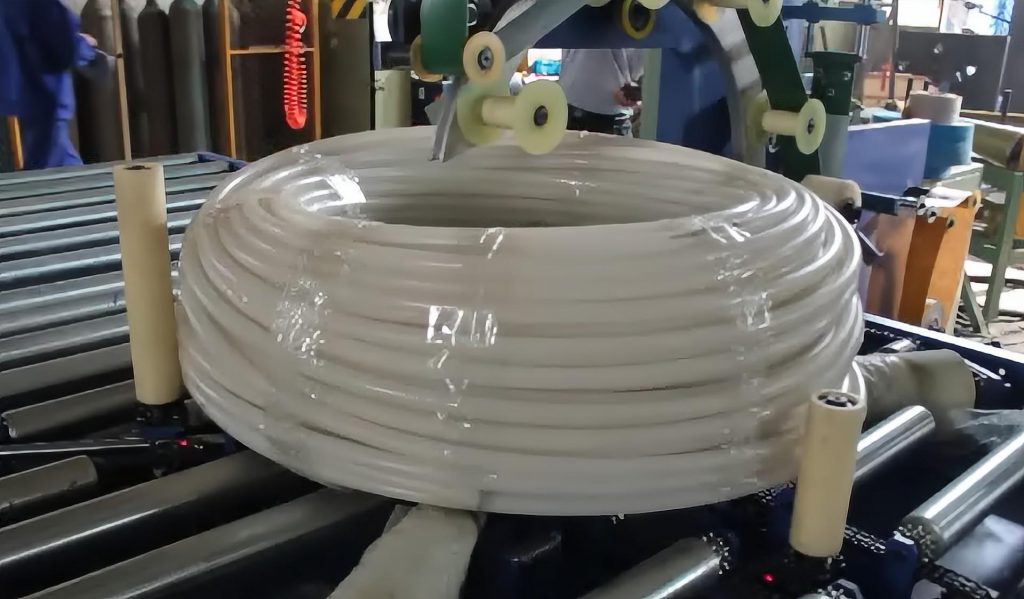
| 0:32 | 코일은 투명 필름으로 완전히 감싸져 있으며 노란색 롤러 위에 놓여 있습니다. |
| 0:36 | 안전모를 쓴 작업자가 작은 휴대용 장치를 들고 코일을 관찰하고 있다. |
| 0:40 | 포장 장치가 두 번째 필름 통과를 위해 다시 내려갑니다. 삽입된 그림은 필름 롤과 장력 조절 시스템을 보여줍니다. |
| 0 : 48-0 : 52 | 감긴 코일은 하류로 이동하여 은색 롤러가 있는 구간으로 옮겨집니다. |
| 0:56 | 천장에 설치된 이송 암이 코일을 쌓아 올리기 위한 준비를 하고 있습니다. |
| 마지막 프레임 | 라인 파노라마: 이중 스테이션 적재 메커니즘은 포장된 코일을 나무 팔레트 위에 수직 축 정렬 방식으로 쌓아 올립니다. |
1단계 — 적재, 방향 설정 및 첫 번째 포장
사이클은 코일 처리 스테이션에서 시작되는데, 이곳에는 노란색 안전 난간 뒤의 수평 스핀들에 두 개의 큰 구리 코일이 놓여 있습니다( 0:12 ). 그런 다음 경사진 롤러 컨베이어가 코일을 위쪽으로 기울여 수직 위치에서 벗어나 중앙 처리 영역으로 이송합니다 ( 0:16 ).
0:20 에 코일은 노란색 롤러 라인의 회전 플랫폼 에 놓여 있으며 , 분석에서는 클램프로 고정되어 있다고 언급합니다. 포장 장치는 이중 암 스트레치 필름 시스템 으로 설명됩니다 . 두 개의 필름 웹이 가이드 롤러와 장력 조절 장치가 있는 오버헤드 아크형 가이드 레일에서 떨어지고, 코일은 그 아래에서 천천히 회전합니다( 0:24~0:28 ).
0:32가 되면 코일이 완전히 감겨 노란색 롤러 위에 놓입니다. 첫 번째 통과에서 필름은 깨끗하게 읽히며, 아래쪽의 구리 광택이 여전히 보입니다.
2단계 — 두 번째 필름 패스, 밀봉 및 전송
0:40 에 노란색 포장 장치가 다시 내려옵니다. 분석 결과 이는 2단계 포장 또는 밀봉 공정 으로 해석됩니다. 0:44 에는 필름 층이 코일 주위를 감쌉니다 . 하류에서는 전용 밀봉 및 절단 장치가 작동합니다. 공압 액추에이터와 센서가 장착된 다축 암이 코일 가장자리에 맞춰 정렬되는 동안 코일은 노란색 비상 정지 버튼이 있는 회색 제어 상자 옆에 고정되어 있습니다.
밀봉 후 포장된 코일은 ( 0:48 ) 이동하고 은색 롤러가 있는 컨베이어 섹션 ( 0:52 )으로 옮겨져 포장 구역과 출하 구역을 분리합니다.
라인 끝에서의 자동 적재
0:56 에 코일이 라인 끝에 도달하면 오버헤드 이송 암이 코일을 들어 올려 쌓을 준비를 합니다. 마지막 파노라마 장면에서 이야기가 마무리됩니다. 상하 프레스 암이 있는 이중 스테이션 적재 메커니즘이 포장된 코일 두 개를 수직으로 정렬된 스택 으로 내리고, 완성된 코일은 나무 팔레트 에 적재됩니다 . 바닥에는 빨간색으로 "A"와 "B" 구역 표시가 되어 있고, 주황색 조끼와 안전모를 쓴 작업자가 통로에서 지켜보고 있습니다. 그는 코일을 들어 올리는 대신 관찰만 하고 있습니다.
직접 관찰 기록
- 이 라인은 밝은 색으로 칠해진 강철 프레임으로 만들어졌으며 밝은 색상을 띠고 있습니다. 노란색 안전 부품적재 및 포장 구역 주변에는 그물망 울타리, 난간, 갠트리 지지대에 설치된 사다리, 노란색 롤러 튜브가 있으며, 하류 구간에는 은색 금속 롤러가 사용됩니다.
- At 0:12 두 개의 커다란 구리 코일이 수평축(스핀들)에 장착되어 있으며, 역 주변에는 노란색 안전 난간이 설치되어 있습니다.
- At 0:16 코일이 경사진 롤러 컨베이어 위에서 회전하며 중앙 처리 영역으로 이동하면서 위쪽으로 기울어집니다.
- At 0:20 코일이 회전 플랫폼 위에 놓이고, 오버헤드 암 어셈블리가 그 위로 위치를 잡기 시작하며, 경고 라벨이 붙은 제어 캐비닛이 왼쪽에 서 있습니다.
- At 0:28 회전하는 암을 이용해 코일 표면에 투명 필름을 부착합니다. 화면 속 화면은 필름 장력 조절 및 밀봉 과정을 클로즈업으로 보여줍니다.
- At 0:32 코일은 투명 필름으로 완전히 감싸져 있으며, 삽입된 그림은 필름을 자르고 밀봉하는 과정을 보여줍니다.
- At 0:36 안전모를 쓴 여성 작업자가 오른쪽에 서서 작은 장치(스캐너 또는 원격 제어 장치일 가능성 있음)를 들고 코일을 관찰하고 있다.
- At 0:40 노란색 필름 포장 장치가 다시 내려오는데, 이는 2단계 포장 또는 밀봉 과정과 일치합니다. 0:44 필름 층들이 코일 주위를 감고 있습니다.
- At 0:48 코일은 위에 포장 헤드 없이 컨베이어를 따라 이동합니다. 0:52 실버 롤러 구간으로 진입합니다.
- At 0:56 천장에 설치된 이송 암이 코일을 들어 올려 스택 위에 쌓을 준비를 하고 있습니다. 삽입된 그림은 최종적으로 쌓인 모습을 보여줍니다.
- 마지막 파노라마 장면에서 위쪽 및 아래쪽 프레스 암이 아래로 내려가 고정됩니다. 수직 축 정렬 스택으로 감긴 두 개의 코일포장된 코일 여러 개가 나무 팔레트에 쌓여 있고, 주황색 조끼와 안전모를 쓴 작업자가 왼쪽 통로에서 지켜보고 있다.
- 다축 암, 공압 액추에이터, 센서 및 회색 제어 박스를 갖춘 하류 자동 밀봉/절단 장치가 코일이 고정된 상태에서 코일 가장자리에 맞춰 정렬됩니다.
- 빨강 비상 정지 버튼은 제어 캐비닛 전면에 보입니다. 밀봉 장치의 제어 상자에는 노란색 원형 비상 정지 버튼, 투명 창 및 검은색 손잡이가 있습니다. 녹색 및 빨간색 버튼은 상단 빔에 있습니다(기능은 명시되지 않음).
- 장비에 부착된 경고 라벨에는 다음 내용이 포함됩니다. 노란색 삼각형 위험 기호 느낌표가 있는 영어 “고전압” 삼각형 라벨과 칼날 부상 경고가 적힌 중국어 주의 라벨이 붙어 있으며, 작은 장비 라벨에는 "1C-4"라고 적혀 있습니다.
- 공장 벽에는 붉은색 한자가 쓰여 있고(슬로건의 일부), 대부분의 액자에는 반투명한 제조사 워터마크가 겹쳐져 있습니다.
- 두 번의 분석 과정을 통해 코일의 대략적인 값을 추정했습니다. 1 m 1.2~1.5m 프레임 비율에 따른 외경 - 시각적 추정치일 뿐이며 사양을 나타내는 것은 아닙니다.
영상에 나오지 않는 것
- 모델 번호 또는 명판 (제작자 워터마크 너머).
- 정격 전력, 전압 또는 전류유압 또는 공압 압력 값.
- 코일당 사이클 시간 및 처리량 (시간당 개수).
- 코일의 최대 무게, 정확한 치수 또는 구리 등급 — 위의 지름 수치는 육안으로 추정한 값입니다.
- 전체 라인 설치 공간, 컨베이어 높이 및 여유 공간 레이아웃 계획에 필요합니다.
- 인증 마크 (CE, ISO, UL 등) - 해당 인증은 보이지 않습니다.
- PLC 모델, HMI 소프트웨어 또는 대형 터치스크린 — 버튼, 손잡이, 그리고 작은 창문만 보입니다.
- 빛 차단 커튼 또는 도어 인터록 — 명확하게 보이지 않음; 울타리와 비상 정지 장치만 확인됨.
- 검사 스테이션, 불량품 배출 스테이션 또는 자동 라벨링 스테이션 — 플레이어 제목에 라벨링이 언급되어 있지만, 분석된 프레임에는 라벨링 장비가 나타나지 않습니다.
- 필름 사양 (유형, 너비, 두께, 신축성) 및 유지보수 주기 또는 예비 부품 목록.
위의 모든 사항은 결함으로 간주하지 말고 "제조사에 확인"해야 할 질문 으로 받아들이십시오. 영상 자료 자체로는 이러한 정보를 전달할 수 없습니다.
2단계 포장이 합리적인 이유 (해석)
다음 내용은 측정된 사실이 아니라, 일련의 과정과 일반적인 업계 관행을 바탕으로 추론한 것입니다.
- 커버리지 로직. 두 번의 필름 도포와 별도의 밀봉 단계를 거치는 것은 산화 및 긁힘에 민감한 표면을 한 번에 빠르게 감싸는 것이 아니라, 완벽하고 안전하게 보호하는 것을 설계 목표로 한다는 것을 시사합니다.
- 처리 로직. 자동화된 기울임, 이동, 포장 및 적재 기능 덕분에 영상에 나타난 과정 동안 누구도 코일을 들어 올리거나 고정할 필요가 없습니다. 카메라에 나오는 사람들은 단지 관찰하거나 휴대용 기기를 들고 있을 뿐입니다. 수동 취급으로 인한 위험을 줄이는 것이 설계 의도인 것으로 보입니다.
- 저장 로직. 축을 맞춰 2단으로 팔레트에 적재하는 방식은 지게차 취급과 안정적인 창고 보관에 적합합니다. 본 영상에서는 2단 적재 방식만 보여주며, 더 높게 적재하는 방식은 검증되지 않았습니다.
- 영화 감상. 랩핑지는 처음 촬영 시에는 선명하게 보이지만, 이후 클로즈업 촬영에서는 흰색에 규칙적인 주름이 나타납니다. 정확한 필름 구성을 확인해야 합니다.
- 일반적인 사용 사례(파생됨). 이러한 유형의 배선은 습기, 먼지 및 산화로부터 보호해야 하는 고가의 권선 구리 제품(예: 변압기 및 리액터 권선)에 적합하며, 수출 운송 시에도 보호가 필요합니다. 이는 적용 지침일 뿐 성능 보증은 아닙니다.
이 선이 어디에 맞는가
| 만약 당신의 요구사항이… | 영상이 뒷받침하는 바는 무엇인가 | 제조업체에 확인하십시오. |
|---|---|---|
| 대형 구리 코일의 자동 감기 | 전체 공정: 스핀들 → 경사면 → 회전 플랫폼 → 랩핑 | 코일의 최대 외경, 내경, 너비 및 무게 |
| 2단계 표면 보호 | 두 번째 필름 패스 및 밀봉/절단 장치 | 층 수, 필름 종류 및 신축성 |
| 저장 준비 완료 출력 | 프레스 암 스태킹, 팔레트에 축 정렬 코일 | 적재 높이 옵션 및 팔레트 흐름 |
| 최소한의 접촉으로 작동 | 작업자는 관찰만 하며, 제품에 직접 손을 대지 않습니다. | 적재 방식 및 인력 수준 |
| 기존 컨베이어와의 통합 | 구역별로 구분된 다중 섹션 롤러 컨베이어 | 면적, 높이 및 흐름 방향 |
구매 전 확인 체크리스트
- 코일 사양: 외경, 내경, 너비 최대 무게 기계의 정격 용량 대비
- 코일당 사이클 시간 코일 믹스에 맞는 현실적인 처리량
- 필름 사양: 너비, 두께, 신축성 및 구리 표면과의 호환성
- 제어 시스템: PLC/HMI 세부 정보, 오류 진단, 원격 지원 옵션
- 안전 패키지: 영상에 나온 것 외에도 광전식 차단 커튼, 연동식 게이트, 비상 정지 버튼 등 다양한 안전 장치가 포함되어 있습니다.
- 귀사 시장에서 요구되는 인증(CE, UL, ISO 등)
- 레이아웃 적합성: 라인 배치, 컨베이어 높이, 바닥 표시 및 교통 경로
- 적재 옵션: 최대 적재 높이, 팔레트 종류 및 빈 팔레트 투입 방식
- 라벨링 및 추적성: 인쇄 및 부착 스테이션이 있는지 여부 (여기서는 보이지 않음)
- 보증, 필름 이송 장치 및 밀봉 장치용 예비 부품, 그리고 유지 보수 주기
FAQ
이 생산 라인에서 "2단계" 포장이란 무엇을 의미하나요? 영상에서 코일은 회전 플랫폼에서 1차 스트레치 필름 포장을 거친 후, 포장 장치가 다시 내려와 2차 포장을 하고, 별도의 밀봉/절단 장치가 포장을 마무리합니다. 정확한 포장 층 수와 필름 종류는 제조업체에 문의하십시오.
이 장비가 다룰 수 있는 코일의 크기는 어느 정도인가요? 화면에 보이는 코일은 커다란 고리 모양의 구리 코일입니다. 육안으로 판단했을 때 외경은 대략 1m에서 1.5m 정도입니다. 이는 추정치일 뿐이므로, 정격 코일 크기와 무게는 제조업체에 확인하시기 바랍니다.
이 생산 라인은 완전 자동화되어 있습니까? 포장, 밀봉, 이송 및 적재 단계는 작업자가 코일을 직접 만지지 않고 진행되며, 작업자는 관찰하거나 휴대용 장치를 들고 있는 모습만 보입니다. 코일을 스핀들에 장착하는 방법과 팔레트를 공급하고 제거하는 방법은 제조업체에 문의하십시오.
어떤 안전 장치가 눈에 띄나요? 이동 구역 주변의 노란색 메시 펜스, 주 캐비닛의 빨간색 비상 정지 버튼, 밀봉 장치 제어 박스의 노란색 비상 정지 버튼, 그리고 "고전압" 삼각형을 포함한 위험 표시 라벨이 있습니다. 광전식 안전 장치와 연동 장치는 명확하게 보이지 않으므로 전체 안전 장치를 확인하십시오.
코일에 라벨이 부착되어 있나요? 플레이어 제목에는 라벨링에 대한 언급이 있지만, 분석된 영상에서는 라벨링이나 인쇄 및 부착 스테이션이 보이지 않습니다. 추적성 라벨이 중요하다면 제조업체에 라벨 제공 여부와 부착 위치를 확인하십시오.
관련 독서
- 자동 코일 포장 라인 — 코일 공급부터 적재까지 전체 코일 포장 라인이 어떻게 구성되는지.
- FHOPE 포장 기계에 대해 자세히 알아보세요.
- FHOPE 포장 기계에 대해 자세히 알아보세요.
다음 단계
만약 여러분의 코일이 이 영상에 나오는 것과 같이 크고 무거우며 표면 상태가 매우 중요한 형태라면, 코일의 크기, 무게 범위, 목표 처리량을 문의 페이지를 통해 보내주세요 . 견적을 요청하실 때 위의 체크리스트 항목들을 포함해 달라고 하시면, 영상 속 실제 모습과 일치하는 견적을 받으실 수 있습니다.
출처 및 방법
이 기사는 임베디드 비디오만을 기반으로 작성되었습니다. 영상에는 배경 음악만 있으며, 내레이션이나 음성 텍스트는 없습니다. 영상-언어 모델은 샘플링된 27개 프레임(약 4초마다 한 프레임씩, 두 번에 걸쳐 분석)을 분석했습니다. 타임스탬프는 프레임 위치에서 추출한 대략적인 값입니다. 화면에 표시된 코일 크기는 시각적 추정치이며, 제조업체 사양을 기준으로 한 것이 아닙니다. 프레임별 분석 보고서는 검증을 위해 보관되어 있습니다.