Heavy Master Coil Packing: Define the Envelope First
A 25-tonne master coil exposes every undefined interface—transfer, buffering, recovery, and data handoff. This guide shows mill teams how to scope heavy coil packing from the real product population and prove acceptance with FAT/SAT evidence.
Nehéz főtekercs-csomagolás folyamatos acélgyári működéshez
Nehéz főtekercs-csomagolás folyamatos acélgyári működéshez
Heavy master-coil packaging is not solved by choosing a wrapper in isolation. The workable scope begins with the real coil population, production release pattern, transfer and buffer boundaries, packaging requirement, and the way the team will prove acceptance.
This guide is a planning framework for mill engineering, production, maintenance, and project teams. It does not provide a load rating, lifting plan, safety approval, availability figure, or project recommendation for an automatikus tekercscsomagoló sor.
| Design review input | Amit meg kell határozni |
|---|---|
| Coil population | Dimensions, weights, orientation, surface, temperature, release pattern |
| Transfer and buffer | Arrival, identity, ready state, buffer rule, abnormal route |
| Packaging sequence | Functions, order, material, inspection, acceptance |
| felépülés | Replenishment, blocked coil, missing record, maintenance |
| Data and identity | Identifier, weight, recipe, label, quality, shipment record |
Define the Operating Envelope Before the Concept
Start with the coil source, product mix, orientation, surface and temperature condition where relevant, dimensions, weight distribution, release pattern, packaging requirement, and the consequence of an upstream interruption. The point is to identify the combinations that actually occur.
Keep normal production separate from exceptional product, rework, and hold conditions. A concept is not ready if no one can say which cases enter the station, which cases wait, and which cases follow another route.
Treat Transfer and Buffer as One Interface
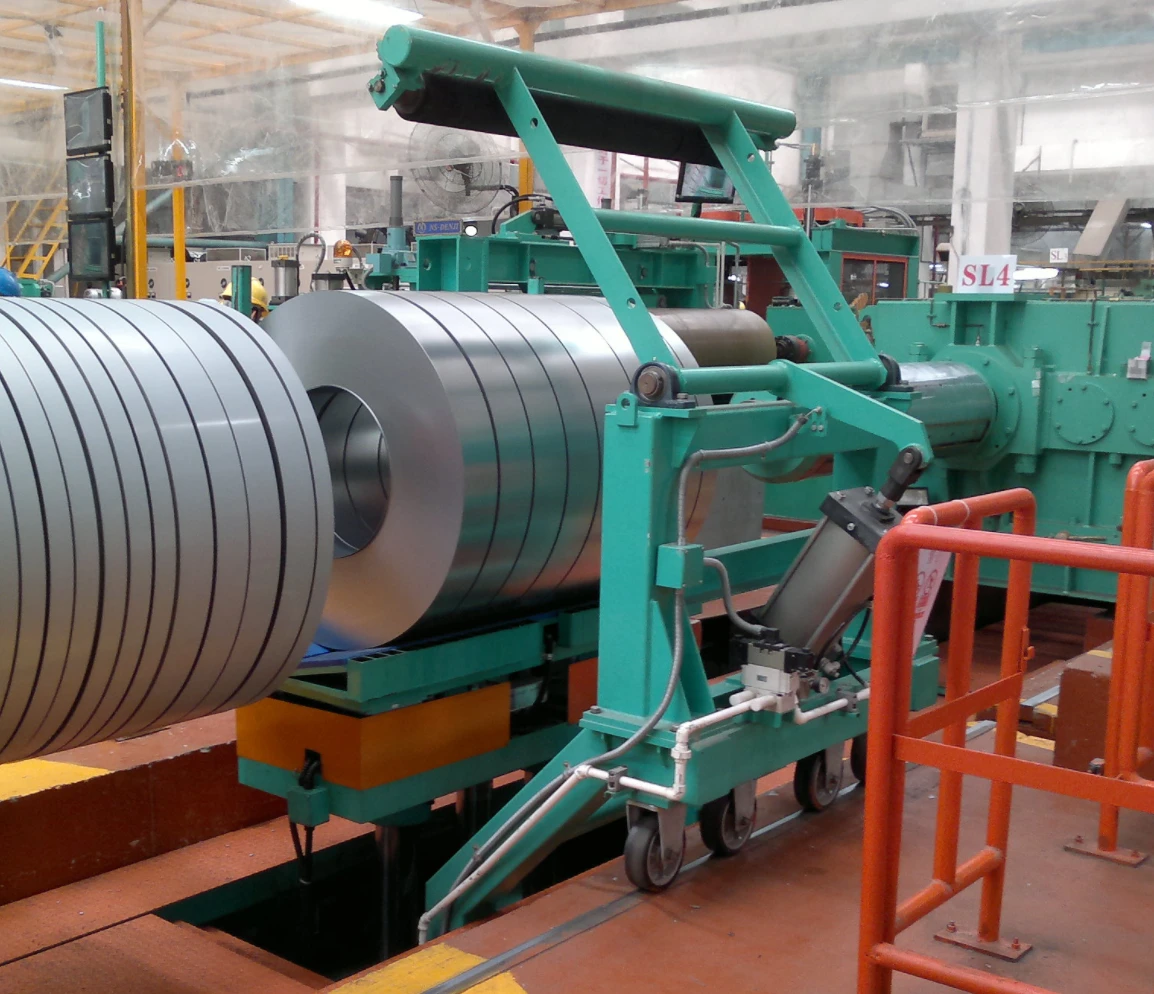
The packaging boundary starts before the first packaging action. It includes how the coil arrives, how its identity and orientation are confirmed, when possession changes, how a ready state is recognized, what buffer rule applies, and where an abnormal coil goes.
Do not assume that a downstream interruption can be absorbed unless its buffer, routing, ownership, and recovery conditions have been deliberately defined and tested.
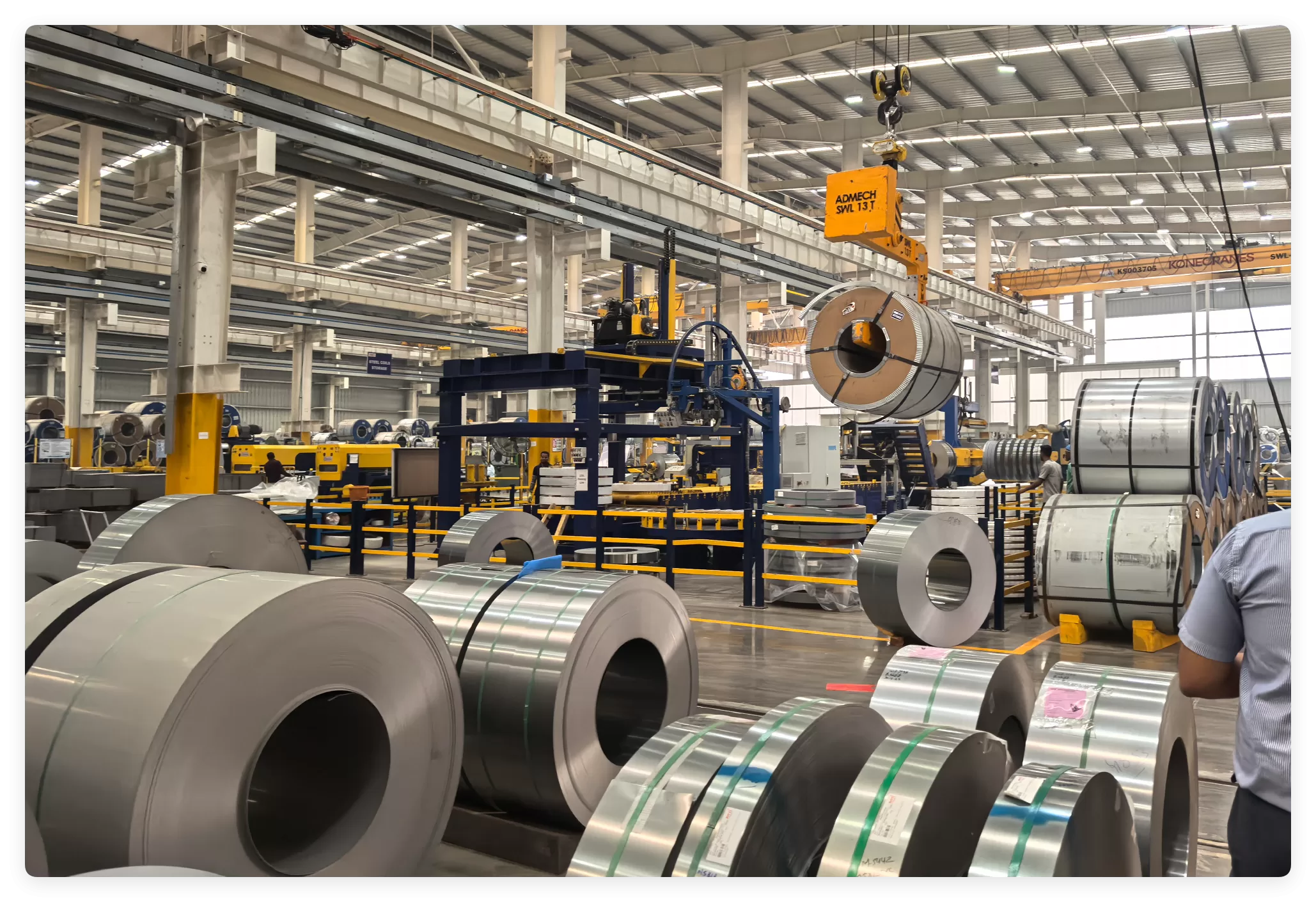
The image shows a steel service center coil packaging automation context. For a continuous mill, the same transfer and buffer interface must be defined before the packaging station, because the coil arrives from production rather than from a manual order queue.
Manage Heavy Loads as a System
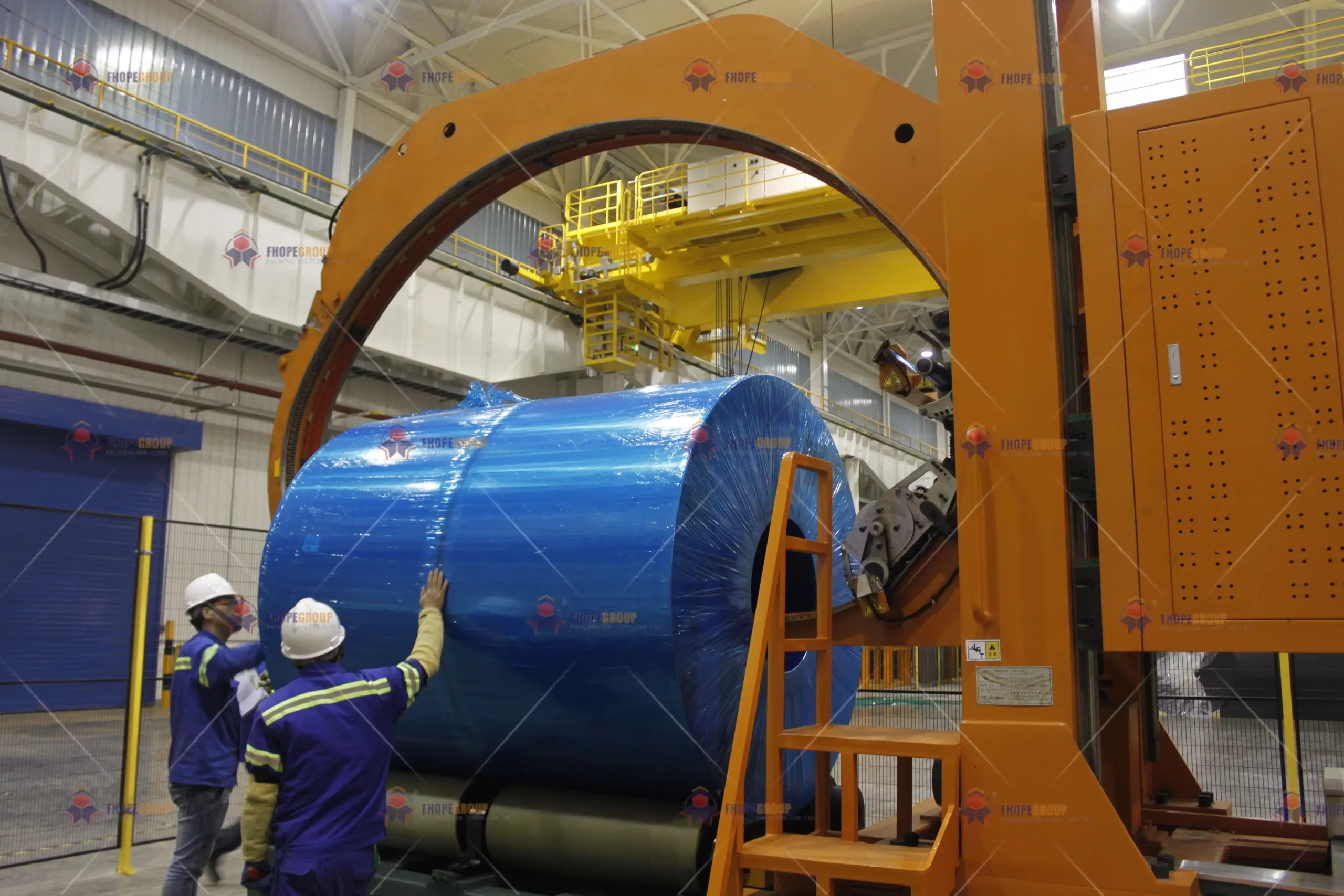
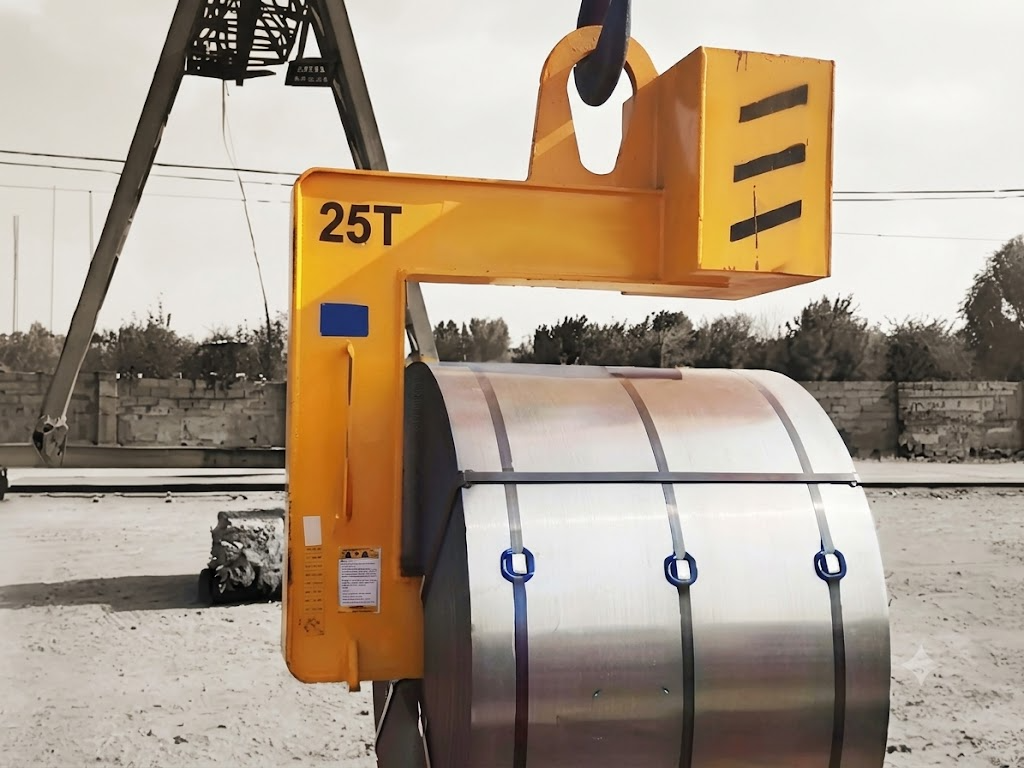
For heavy master coils, the load path includes the transfer device, conveyor or trolley, wrapping station, strapping position, and stacking area. Each interface should be defined by the actual coil population, including the heaviest and widest cases.
Published examples often describe a wide-coil wrapping station as handling coils up to about 1,800 mm outside diameter, 1,860 mm width, and 25 tonnes. Those are typical reference values and must be confirmed against the supplier datasheet for the actual machine and product mix.
Make the Packaging Sequence Testable
An automated scope may combine transfer, weighing, strapping, protection, wrapping, labeling, and discharge. State which functions are included, in what order, where a person adds or confirms material, and what evidence proves an acceptable pack.
For each outcome, identify the product condition, material, method, inspection point, and acceptance criterion.
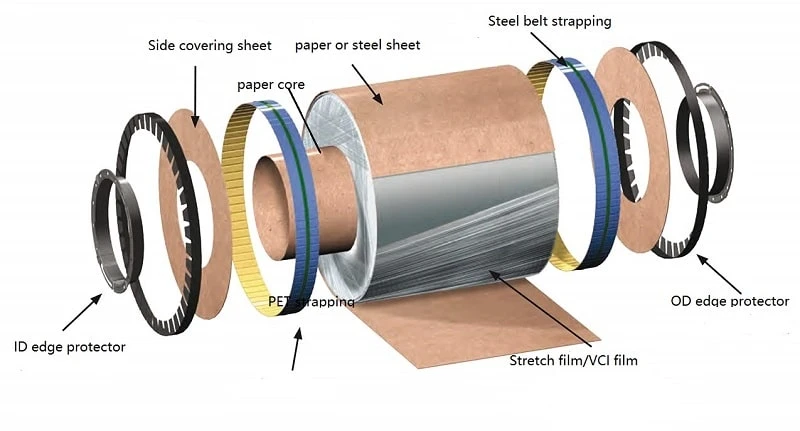
The image shows a cross-section diagram of the package layers. For a heavy master coil, the layer sequence, contact material, edge protection, and outer wrap must be defined before the station can be tested.
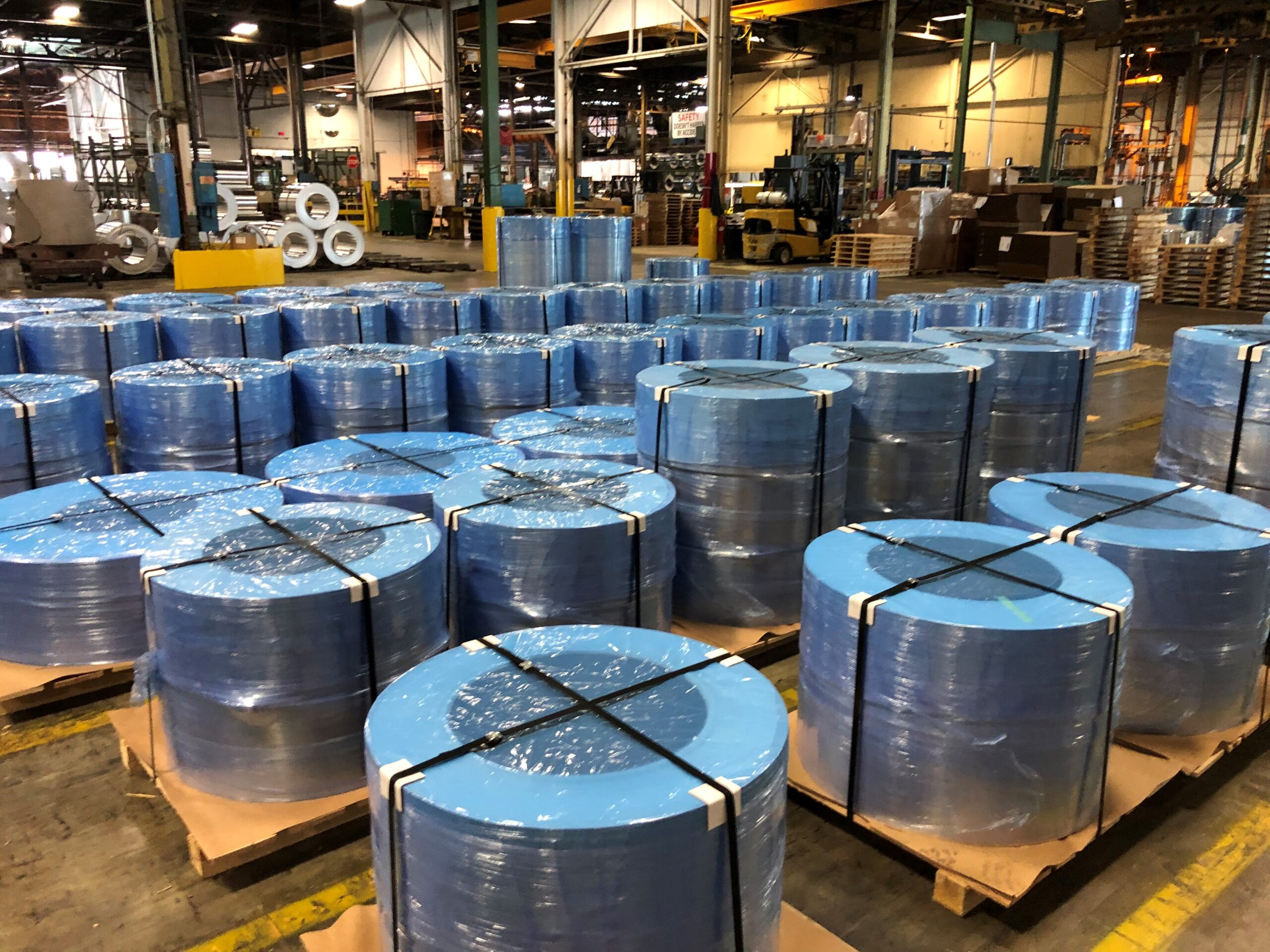
The image shows people reviewing steel coil surface protection and packaging quality. This is the review that should happen before acceptance: the material combination, the surface condition, and the packaging result are agreed together.
Design Recovery Before Claiming Availability
Ask what the system does when material needs replenishment, a coil cannot continue, a downstream area is unavailable, a record is missing, or maintenance is due. Include the approved route, the owner, and the evidence required before the coil returns to normal flow.
Any alternative route must preserve the project's safeguarding and operating boundaries.
Keep Identity and Responsibility Visible
Map the coil identifier, order or heat/batch information where applicable, measured weight, packaging rule, label data, quality state, and shipment record across every handoff. For each data element, identify the source of truth, correction owner, and behavior when the required record is unavailable.
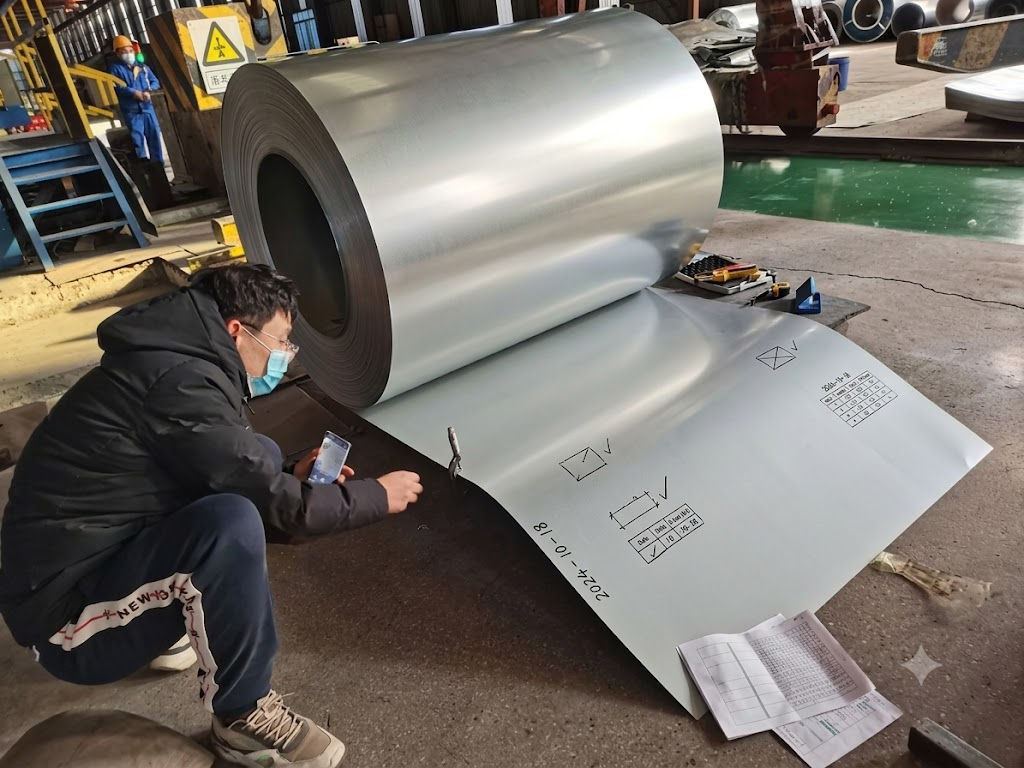
The image shows a steel coil being inspected. The inspection and data handoff are part of the same acceptance boundary: the coil, its package, and its record must travel together through every station.
Gyakorlati következő lépés
Hold a joint mill–supplier design review using the real coil distribution, current flow and layout, transfer plan, packaging specification, risk inputs, integration boundary, installation constraints, and acceptance matrix.
Use the same inputs to compare the automatikus tekercscsomagoló sor scope against the mill's continuous operation, and require FAT/SAT evidence before claiming availability.
Nézze meg, ahogy egy mester automata tekercscsomagoló gép védi és csomagolja az acéltekercseket:

Vizuális részletek
Kattintson a nagyításhoz
Kattintson a nagyításhoz

Kattintson a nagyításhoz

Kattintson a nagyításhoz
Nézze meg, hogyan működik
Fedezze fel, hogyan optimalizálják automatizált csomagolási megoldásaink a gyártósori hatékonyságot. Ez a videó bemutatja a maximális védelem érdekében tervezett zökkenőmentes működést.
Megbízható Acélgyárak és iparági vezetők
A globális gyártók az FHOPE nagy teherbírású csomagológépeire támaszkodnak


Készen áll a csomagolósor optimalizálására?
Kérjen egyedi árajánlatot megtérülési elemzéssel. Mérnökeink 24 órán belül válaszolnak.
- Ingyenes elrendezés
- Globális telepítési támogatás
- 2 év garanciát tartalmaz
Az adataid biztonságban vannak, és soha nem kerülnek megosztásra.
Kapcsolódó gépek
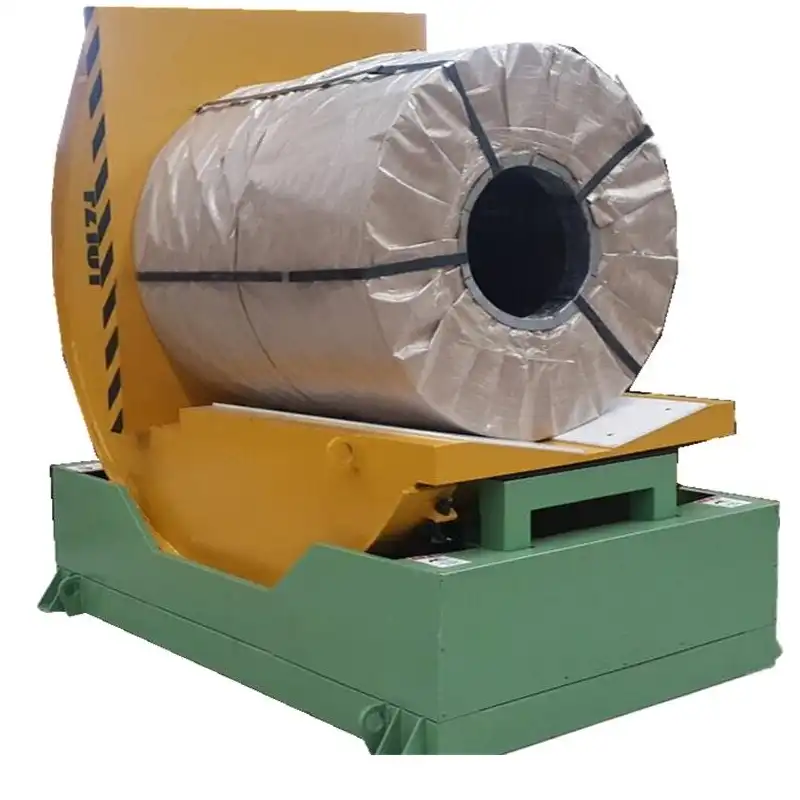
Tekercs felfelé billenő
Részletek megtekintése →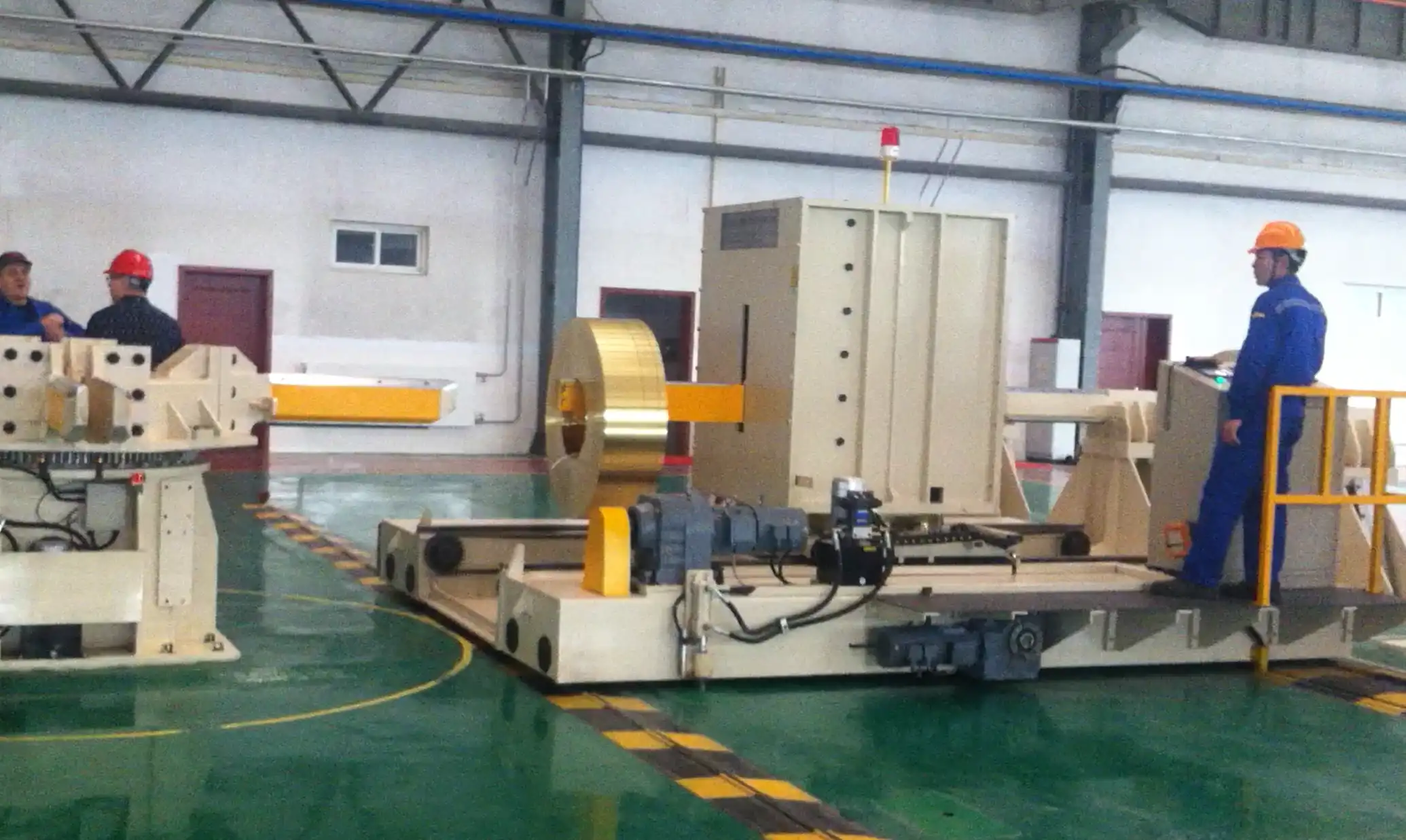
Tekercses transzfer autó
Részletek megtekintése →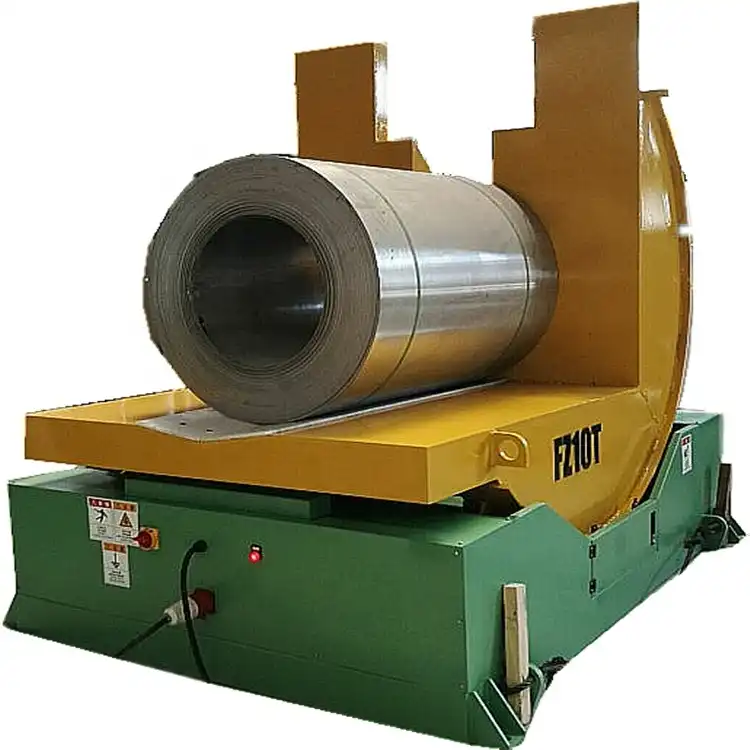
Tekercs billenő felfelé
Részletek megtekintése →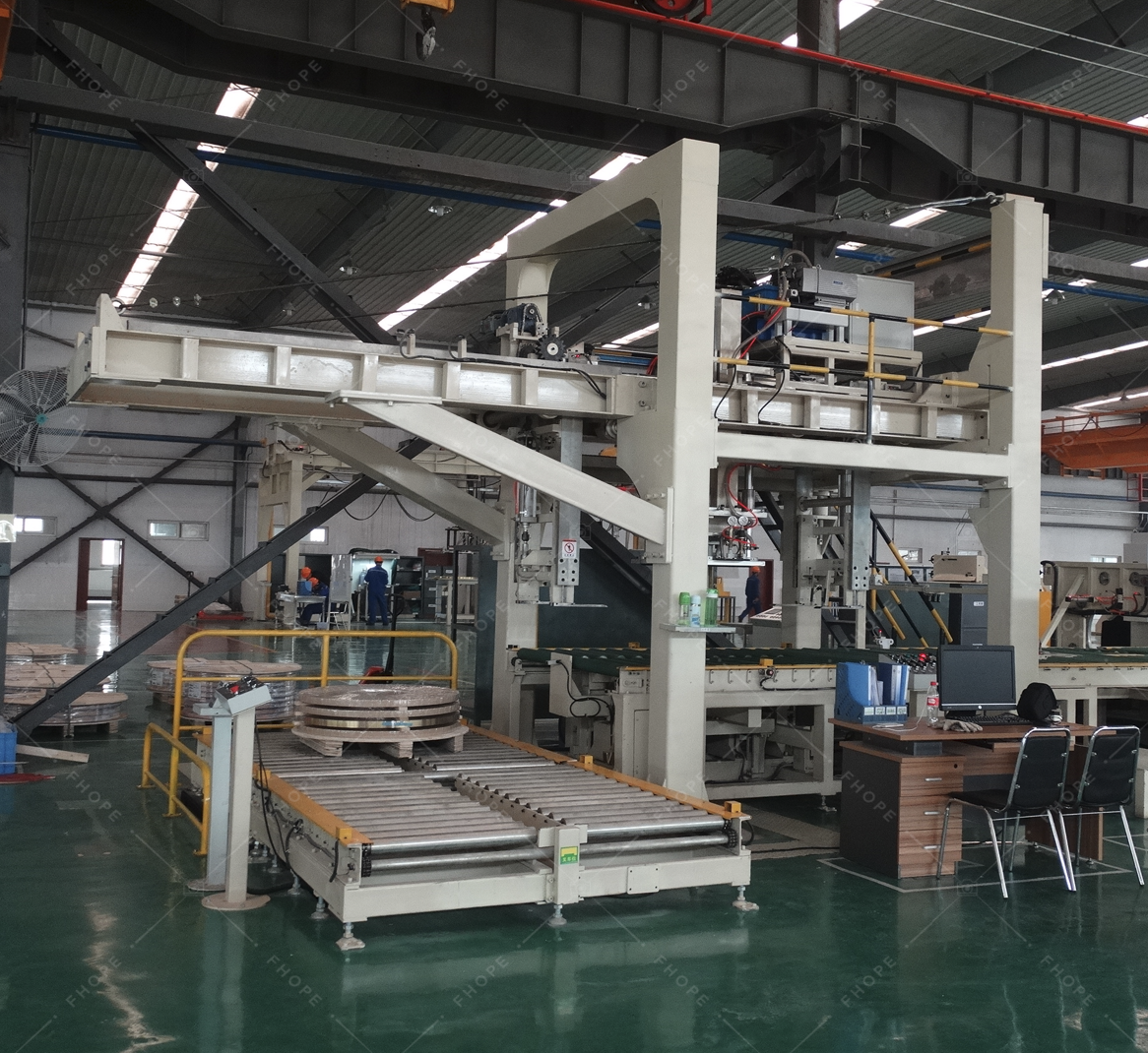
Acéltekercs csomagolósor
Részletek megtekintése →
Függőleges tekercs csomagolósor
Részletek megtekintése →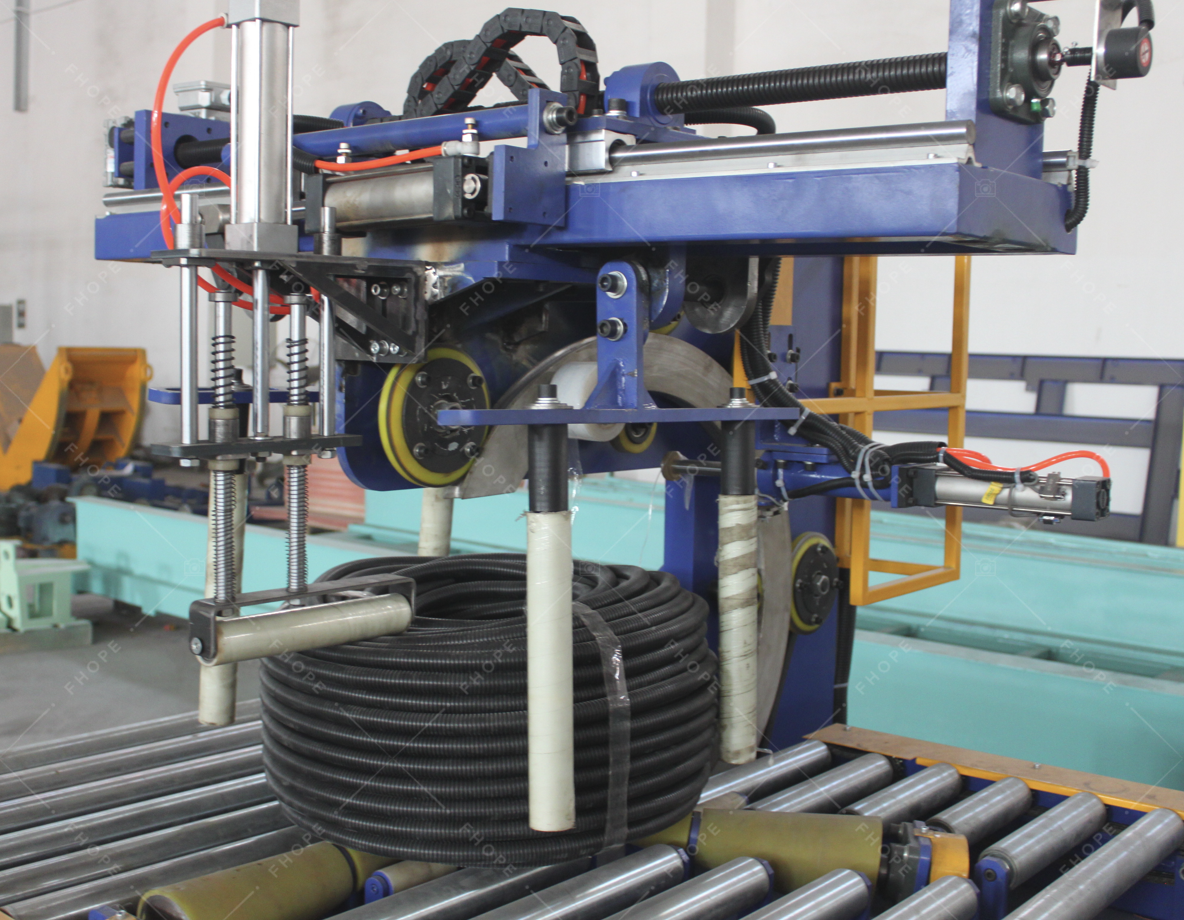
Tömlőtekercs csomagolósor
Részletek megtekintése →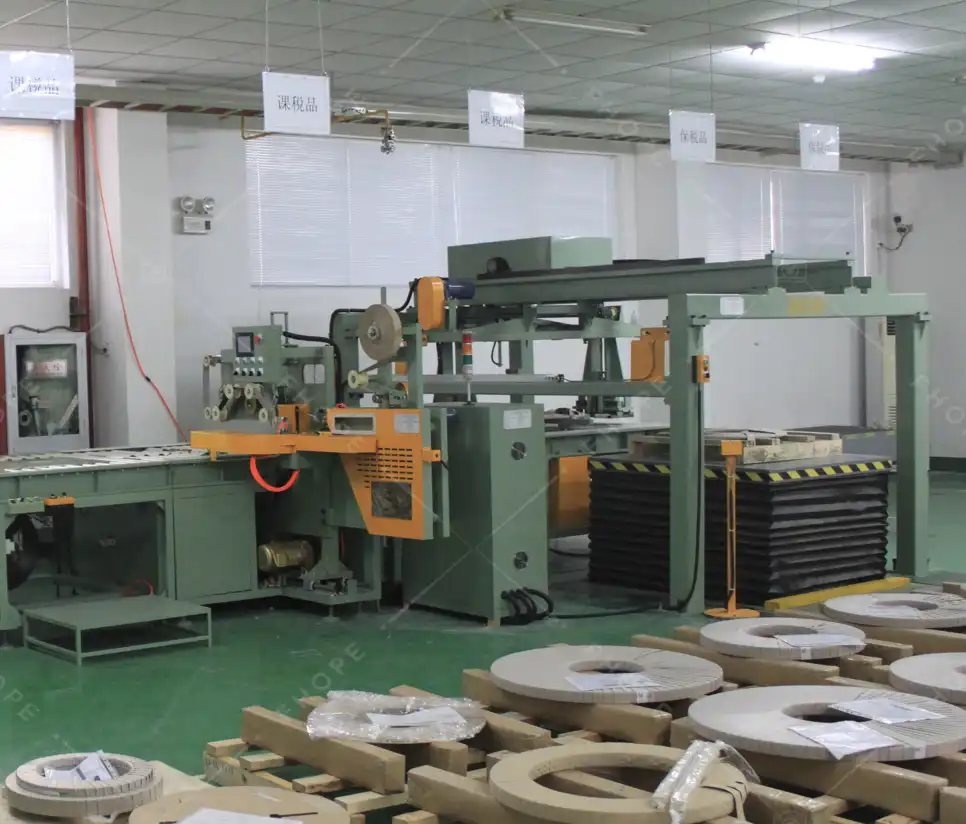
Réztekercs csomagolósor
Részletek megtekintése →
Huzaltekercs csomagolósor
Részletek megtekintése →
Automata tömlő-/csőtekercselő gép és pántoló gép
Részletek megtekintése →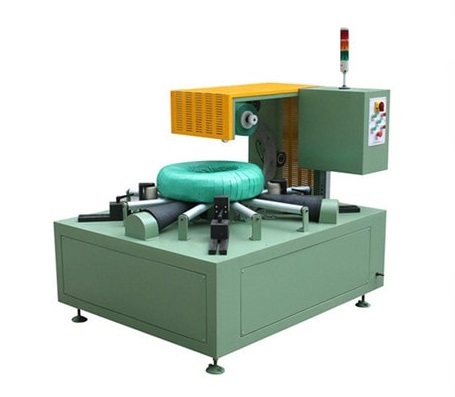
Kábeltekercs csomagológép-FPCA100
Részletek megtekintése →
FPCA 200 kábeltekercs-csomagoló gép
Részletek megtekintése →
Kábeltekercs-tekercselő gép FPCA 300
Részletek megtekintése →
Automata kábeltekercselő/tekercselő gép
Részletek megtekintése →
Automata kábeltekercselő és csomagoló gép
Részletek megtekintése →
Acél tekercs csomagoló gép-FPS-300
Részletek megtekintése →
Huzaltekercs Csomagológép-FPW-300
Részletek megtekintése →
Acéltekercs csomagológép FPS-400
Részletek megtekintése →
Acéltekercs csomagológép FPS-500
Részletek megtekintése →
FPS-600 acéltekercs-csomagoló gép
Részletek megtekintése →