بررسی اجمالی
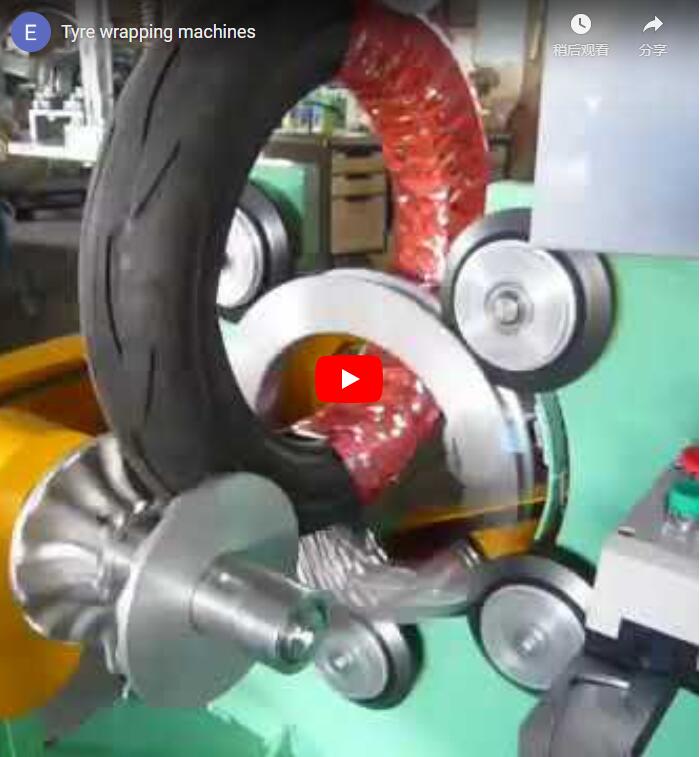
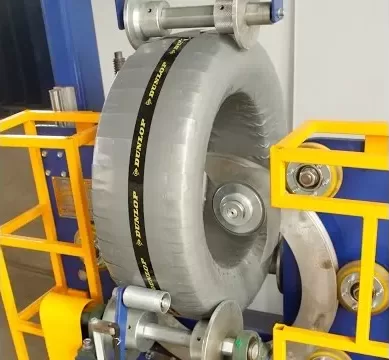
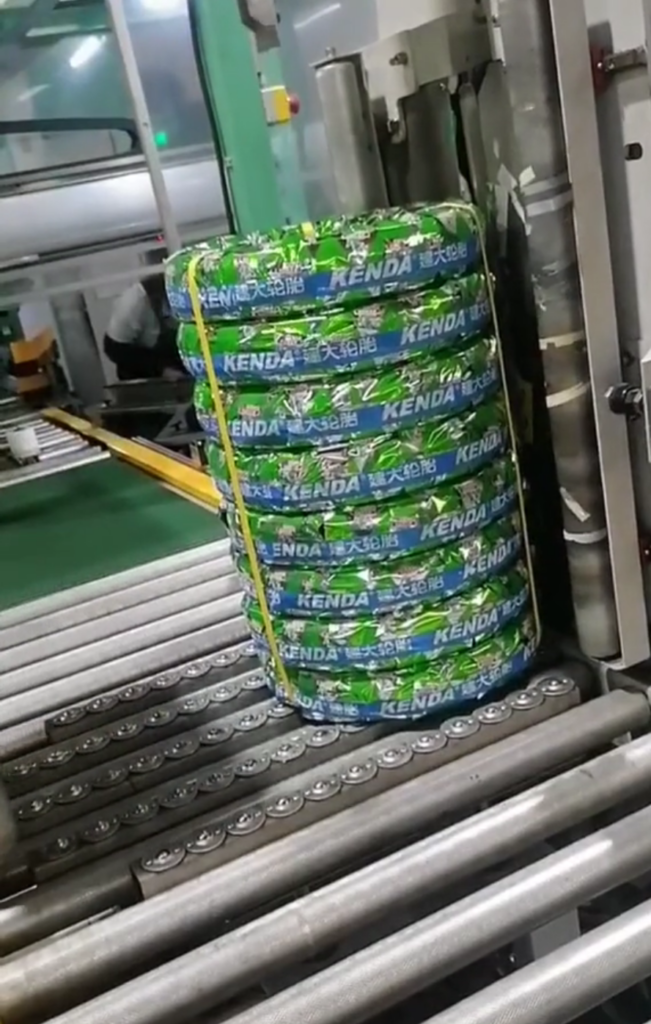
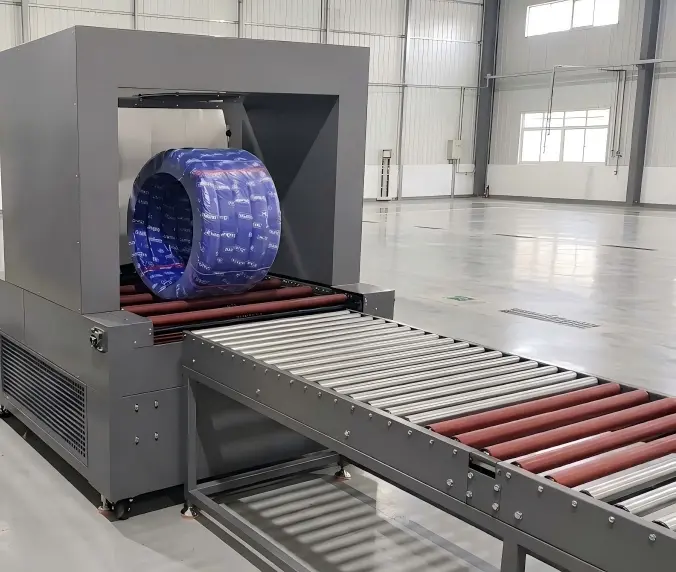
A tyre or tire needs a stable film cover before it is stacked or shipped. This machine class carries the load on a roller conveyor and wraps it in clear plastic film with vertical wrapping arms while the load rotates.
What determines the wrapping speed and cycle time?
The speed of this operation is not defined by a fixed rating plate on the machine. Instead, the cycle time is determined by the interaction between the load diameter, the conveyor speed, and the required film tension. These variables are set during the sizing step, meaning the machine adapts to your specific load range rather than operating at a universal maximum speed. Turn count and film tension are confirmed with your load during this sizing phase. Consequently, the number of loads processed per shift depends on your specific operational parameters, such as load weight and size range, rather than a generic machine specification.
How does the machine physically wrap the load?
The wrapping process relies on a specific sequence of mechanical actions. The load moves forward on a roller conveyor. As the load reaches the wrapping station, the vertical wrapping arms descend around it. The load then rotates on the conveyor while the film is applied. This action ensures the clear plastic film covers the load evenly.
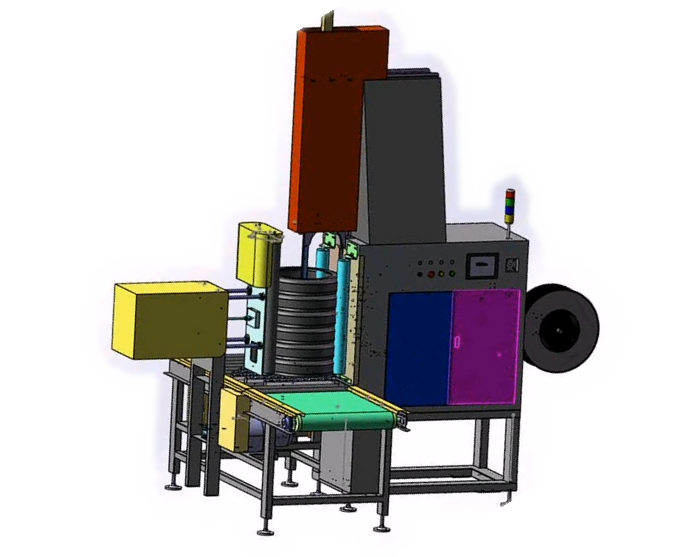
The structure that carries this sequence is a roller conveyor, vertical wrapping arms, a vertical frame, and a yellow safety cage on the right side of the machine. The conveyor carries the weight of the tyre or tire and keeps the rotation stable. The arms dispense and tension the film, and the frame gives the arms the rigidity they need to work against film tension. Because the load stays on the conveyor for the whole cycle, no manual handling is needed during the wrapping phase, and the station can be tied into a longer line without an extra transfer step.
What does the demonstration footage actually show?
The available video evidence provides a general demonstration of the machine’s operation. The footage does not show rated load weight, maximum tyre diameter, cycle time, or film specification. It also does not demonstrate a separate strapping or labeling stage. These details are confirmed in the enquiry process, not assumed from the video. The clip serves to illustrate the mechanical action, not to provide technical performance data.
How is the machine sized for a specific project?
This machine is sized from your load range and site conditions, not from a fixed rating plate, so the configuration is built around the requirements rather than selected from a catalogue. The following data is confirmed with the builder during the enquiry, and every row is checked against your site conditions before the build.
| دادهها برای تأیید | آنچه تعیین میکند |
|---|---|
| وزن بار و محدوده اندازه (کیلوگرم، میلیمتر) | اندازه بندی قاب، درایو و ایستگاه |
| نوع و درجه مواد مصرفی | تنظیمات مواد مصرفی و تنش |
| بار در هر شیفت | اندازه خط و زمان چرخه |
| نحوه ورود و خروج بار | تجهیزات بارگیری و چیدمان |
| منبع تغذیه برق (ولتاژ، فاز، فرکانس) | ساخت درایو و کنترل؛ برق خانگی ۳۸۰ ولت سه فاز ۵۰ هرتز، گزینه تک فاز ۲۲۰ ولت، تأیید شده در محل |
Because every row changes the build, none of them can be read off a catalogue: the frame and the drive follow the load range, the tension range and the film stock follow the consumable grade, and the line sizing follows the shift throughput. The electrical supply shapes the drive and control build, and the house-typical figures above are checked against the site supply in the enquiry rather than assumed.
چه استانداردهای ایمنی برای این تجهیزات اعمال میشود؟
Safety is a critical component of the machine design. For CE markets, ISO 12100 sets the machinery risk-assessment method, and EN 415-10 covers packaging machine safety. These standards serve as design references. The machine includes a yellow safety cage on the right side. However, certification of a delivered machine is confirmed in the project ordering agreement. Operators must keep clear of moving parts while the machine runs. It is essential to check the drives and consumable feeds per the machine manual. The machine should be stopped and the power supply isolated before clearing a jam or reaching near the load. Lock-out procedures must be applied before any service work.
Can strapping or labeling be added to the line?
Strapping and labeling are not part of the standard wrapping cycle shown in the general demonstration. Both are options to confirm with the builder. If your process requires additional securing or identification, these stages can be integrated. The decision to include strapping or labeling depends on your specific operational needs. These features are confirmed in the enquiry stage. The demonstrated cycle covers the film wrap only. Therefore, if you require a complete packaging solution, you must specify these additional requirements during the sizing phase.
What information is required to get a proposal?
A proposal is generated from a defined input set. The buyer sends the load weight and diameter range to info@fhopepack.com, states whether strapping or a separate labeling stage is required, and submits the layout drawing of the tyre infeed and outfeed area. With those inputs the builder generates a preliminary layout proposal once load weight, diameter range, consumable grade and shift throughput are confirmed, and that proposal sets out film grade, wrap coverage and cycle time. We reply with a proposal after we confirm the details. Where the conveyor layout has to be checked before the build, the infeed and outfeed drawing is what that check is made against.
خواندن مرتبط
- دستگاه بستهبندی اتوماتیک بار و دستگاه بستهبندی مداری کوچک: اندازهها، سرعتها و گام فیلم
- دستگاه بستهبندی اقتصادی کلاف کابل: مشخصات FPCA، زمان بستهبندی و تنظیمات همپوشانی
- خط بستهبندی کویل شکافدار برای مراکز خدمات: تسمهکشی، بستهبندی چشمی و انباشتن
منابع و استانداردها
- ISO 12100:2010 ایمنی ماشین آلات، اصول کلی طراحی و ارزیابی ریسک
- EN 415-10:2014 ایمنی ماشین آلات بسته بندی، الزامات عمومی
Which of the two applies depends on the destination market, and neither is treated as a certificate for a delivered machine.
Demonstration footage (video IbAO5ljnZts) reviewed as a general machine demo; rated outputs are not shown in the clip and are therefore not quoted.