>**Summary:** Maximize warehouse efficiency with 180-degree pallet changers. This automated solution eliminates manual lifting risks, ensures product integrity during transfer, and streamlines hygiene compliance. Ideal for food, pharma, and logistics, these inverters reduce labor costs while boosting throughput. Discover the engineering behind safe, high-speed pallet exchange.
## 🏗️ Introduction: The Evolution of Pallet Handling
In modern logistics, warehousing, and manufacturing environments, the efficient and safe handling of palletized goods is paramount. Traditional manual methods are increasingly inadequate, facing challenges related to labor costs, ergonomic risks, and product integrity. [Automated pallet transfer systems](https://www.fhopepack.com/pallet-inverter/changer/), particularly 180-degree **pallet changers** (also known as **pallet inverters** or **pallet flippers**), represent a significant engineering advancement designed to address these challenges. This article delves into the operational principles, design considerations, technical specifications, and benefits of utilizing 180-degree pallet changers, aligning with the technical focus expected by readers familiar with advanced machine design principles.
## 🛡️ The Operational Imperative: Addressing Modern Handling Challenges
Kaubaaluste käsitsi käsitsemine, eriti ülesanded, mis hõlmavad raskete koormate ümberpööramist või ümberpaigutamist erinevat tüüpi kaubaaluste vahel (nt puidust plastikule, majapidamiskaubaaluselt transpordikaubaalusele), tekitab olulisi tööga seotud takistusi:
- **Ergonomic Risks:** Manual lifting and flipping of heavy or unstable loads pose substantial risks of musculoskeletal disorders (MSDs) for personnel, contributing to lost workdays and increased insurance premiums. Regulatory bodies like OSHA emphasize the need for engineering controls to mitigate such hazards.
- **Product Damage:** Awkward manual manipulation or the use of inadequate equipment can lead to dropped loads, crushing, or contamination, resulting in costly product loss and waste. This is particularly critical in industries like pharmaceuticals and food & beverage.
- **Operational Inefficiency:** Manual processes are inherently slower, require more labor, and can become bottlenecks in high-throughput environments. The lack of consistency can also impact downstream processes.
- **Hygiene and Contamination Control:** Transferring goods from external or less hygienic pallets (like wood) to internal, sanitized pallets (like plastic or aluminum) is crucial in food, pharmaceutical, and cleanroom environments. Manual transfers increase contamination risks.
- **Maintenance & Tooling Costs:** Reliance on specialized, often cumbersome manual tools for load inversion can lead to high maintenance expenses and limited flexibility.
## ⚙️ Engineering Design & Operational Principles of 180-Degree Pallet Changers

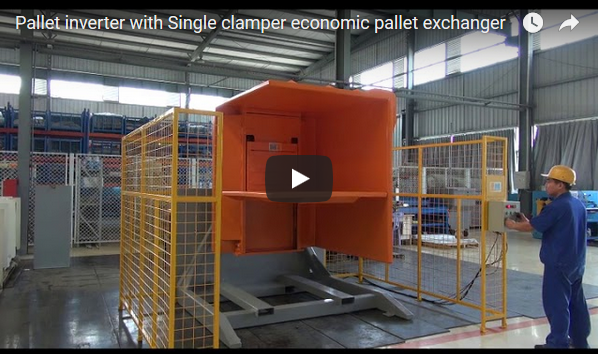
*Pushing type machine for double pallet changing testing in workshop*
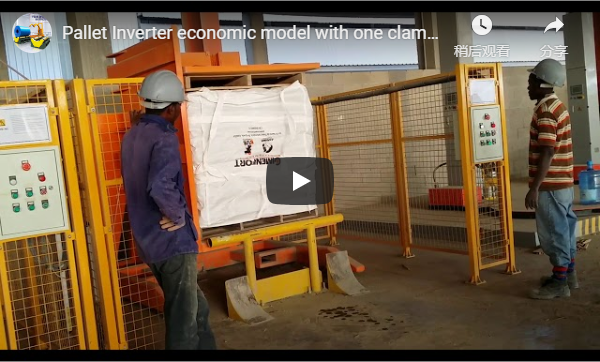
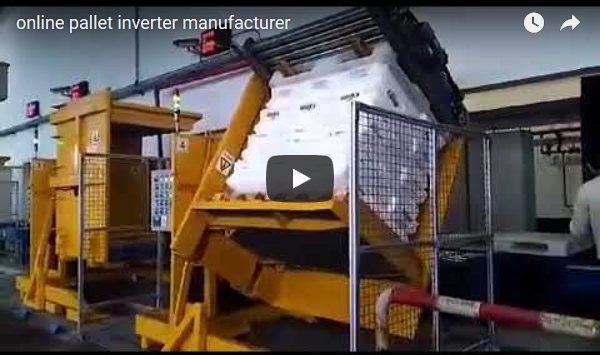
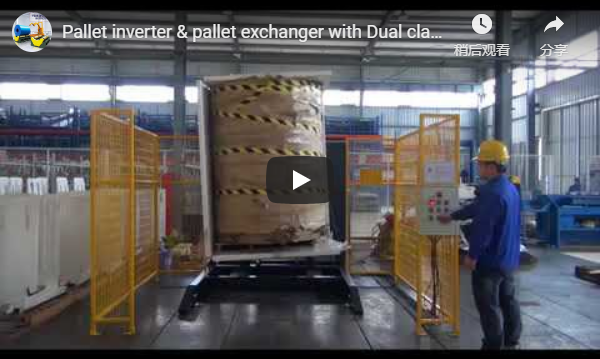
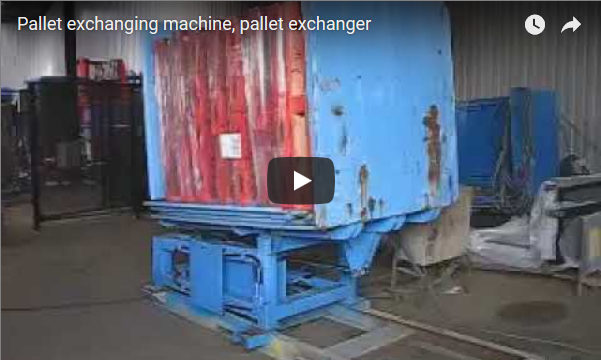
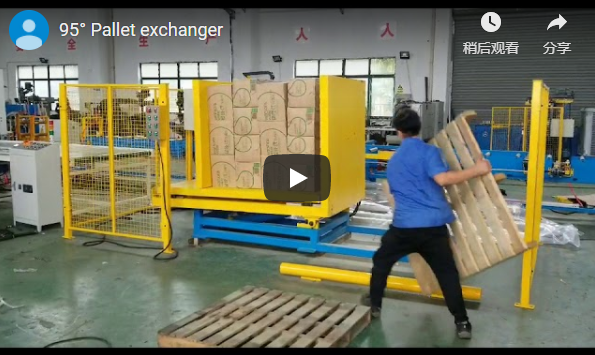
The core function of a 180-degree **pallet inverter** is to securely clamp a palletized load, rotate it through 180 degrees, allowing the original pallet to be removed from the top and replaced with a new one, before rotating the load back (or allowing removal in the inverted state). Key engineering aspects include:
### Clamping Mechanism
Utilizing robust side-clamping walls, often hydraulically or electro-mechanically actuated, the system applies controlled pressure to secure the load during rotation. Advanced systems feature adjustable pressure settings, managed via **PLC (Programmable Logic Controller)**, to accommodate varying load types and prevent product damage. Pressure sensors provide feedback for precise control, a concept refined in numerous material handling patents focusing on load stability.
### Rotational Drive System
180-kraadise pöörde tagab tavaliselt võimas hüdrauliline mootor ja käigukast või võimas elektromehaaniline ajam. Konstruktsioon peab tagama sujuva ja kontrollitud kiirenduse ja aeglustuse, et säilitada koormuse terviklikkus. Lõplike elementide analüüsi (FEA) kasutatakse projekteerimisfaasis sageli konstruktsioonielementide optimeerimiseks ja vastupidavuse tagamiseks korduvate suure pöördemomendi tsüklite korral.
### Control System & Interface
Modern **pallet flippers** feature sophisticated control systems, usually PLC-based, with intuitive Human-Machine Interfaces (HMIs). These allow operators to:
- Select pre-programmed cycles for different load types.
- Adjust clamping pressure and rotation speed.
- Monitor system status and diagnostics.
- Integrate with warehouse management systems (WMS) or automated guided vehicles (AGVs).
Juhtimistäpsus tagab korduva jõudluse ja ohutusblokeeringu haldamise.
### Turvaelemendid
Ohutusstandardite (nt CE-märgis Euroopas, OSHA suunised USAs) järgimine on kriitilise tähtsusega. Standardsete ohutusfunktsioonide hulka kuuluvad:
- Perimeter guarding or light curtains to prevent operator access during operation.
- Emergency stop buttons strategically located.
- Hydraulic pressure relief valves.
- Interlocks preventing rotation if the load is not properly secured or guards are open.
- Controlled stop mechanisms in case of power failure.
## 📈 Key Performance Specifications
Understanding the technical parameters is crucial for selecting and integrating the right **pallet turning machine**.
| Parameter | Specification | Details |
| :--- | :--- | :--- |
| **Load Capacity** | 1000 kg - 2000 kg | Approx. 2200 lbs to 4400 lbs; heavy-duty models available. |
| **Pallet Size Compatibility** | Standard & Custom | 1200x1000mm, 1200x800mm, 48"x40", 1000x1000mm, 1200x1200mm. |
| **Rotation Angle** | 180 Degrees | Fixed inversion angle for complete pallet exchange. |
| **Clamping Range** | Adjustable | Accommodates varying load heights securely. |
| **Cycle Time** | 30 - 60 Seconds | Optimized for efficiency depending on model and load. |
| **Control Interface** | PLC + HMI | Touchscreen panel for cycle selection and diagnostics. |
| **Power Requirements** | 3-Phase | 380V/400V/450V, 50/60Hz. |
| **Construction Materials** | Structural Steel | Heavy-gauge frame, powder-coated; Stainless steel options available. |
| **Safety Compliance** | International Standards | ISO, ANSI, and CE certified designs. |
> **ROI Insight:** Implementing an automated **pallet changer** typically reduces labor costs associated with manual flipping by over 60% while decreasing product damage claims by up to 90%. The payback period often ranges between 12 to 18 months depending on throughput volume.
## 🏭 Applications Across Industries
The versatility of 180-degree **pallet inverters** makes them suitable for a wide range of sectors:
- **Pharmaceutical & Chemical:** Ensuring product integrity, preventing cross-contamination by switching to in-house pallets, handling drums and IBCs safely.
- **Food & Beverage:** Maintaining hygiene standards, transferring goods from wooden to plastic pallets, handling bagged goods, boxes, and crates.
- **Logistics & Distribution:** Improving warehouse efficiency, enabling quick transfer between different pallet types (rental, shipping, internal), reducing manual handling risks.
- **Manufacturing:** Transferring finished goods onto shipping pallets, handling delicate components, integrating into automated production lines.
## 🛠️ Benefits Beyond Basic Handling: A Technical Perspective
Implementing a 180-degree **pallet flipper** offers tangible engineering and operational advantages:
- **Enhanced Ergonomics & Safety:** Directly addresses manual handling risks, aligning with occupational health recommendations (e.g., NIOSH lifting guidelines) by automating strenuous tasks.
- **Product Integrity & Damage Reduction:** Controlled clamping pressure and smooth rotation minimize the G-forces experienced by the load, reducing damage potential compared to manual methods.
- **Operational Efficiency & Throughput:** Consistent, automated cycle times increase predictability and overall throughput compared to variable manual processes.
- **Hygiene & Contamination Control:** Provides a reliable method for isolating external contaminants by facilitating pallet exchange in controlled environments.
- **Flexibility & Customization:** Adaptable designs accommodate various load types (rolls, trays, panels, boxes, bags) and sizes. Customizations can include specific finishes and integration protocols.
- **Reduced Operating Costs:** Lower costs associated with labor, product damage, waste disposal, and potential injury claims contribute to a favorable total cost of ownership (TCO).
## 🔌 Integration and Customization Potential
Need masinad on tänapäevastes rajatistes harva eraldiseisvad seadmed. Need on loodud integreerimiseks:
- **Conveyor Systems:** Input and output roller or chain conveyors facilitate seamless flow into and out of the **pallet changer**.
- **AGV/AMR Compatibility:** Floor-level loading models can be designed for access by automated guided vehicles or autonomous mobile robots.
- **Custom Tooling:** Specialized clamping attachments can be engineered for non-standard loads.
- **Environmental Adaptations:** Options for cold storage (-30°C), cleanroom (stainless steel), or explosive atmospheres (ATEX) are often available.
> **Expert Pro Tip:** When integrating a **pallet inverter** into an existing line, always verify the center of gravity (CoG) of your specific load. While standard machines handle uniform boxes well, irregular loads may require custom clamping pads or reduced rotation speeds to ensure stability during the 180-degree turn.
## ✅ Conclusion: Enhancing Operations Through Engineered Solutions
The 180-degree **pallet changer** is more than just a piece of material handling equipment; it is an engineered solution designed to address critical operational challenges in safety, efficiency, and product care. By leveraging controlled clamping and rotation mechanisms, robust construction, and advanced safety features, these systems provide a reliable and efficient method for pallet exchange and load inversion across diverse industries. Investing in such technology aligns with lean manufacturing principles, enhances workplace safety, and contributes significantly to optimizing supply chain operations.
## 📞 Contact Us Now
Tõstke oma materjalikäitlusprotsessi uuele tasemele tehniliselt täiustatud kaubaaluste vahetamise lahendusega. Võtke meie insenerimeeskonnaga juba täna ühendust, et arutada oma konkreetseid rakendusnõudeid, saada kohandatud hinnapakkumine või broneerida virtuaalne või isiklik demonstratsioon. Lubage meil aidata teil oma tegevust tõhusamaks ja ohutumaks muuta.
### Korduma kippuvad küsimused (KKK)
### 1. What types of loads can the 180-degree pallet changer handle besides standard pallets?
Need masinad on mitmekülgsed ja neid saab kohandada mitmesuguste koormate, sealhulgas karpides kaupade, kottides toodete (nt teravilja või kemikaalide), tünnide, rullide (paber, foolium), kandikute ja paneelide käitlemiseks, sageli väikeste kohanduste või spetsiifiliste kinnituskonfiguratsioonidega.
### 2. How does the clamping system avoid damaging sensitive products?
Advanced **pallet inverters** utilize adjustable hydraulic or electro-mechanical pressure control systems, often managed via PLC. This allows operators to set the precise clamping force required for load stability without exerting excessive pressure that could damage sensitive or fragile goods. Pressure feedback sensors ensure consistency.
### 3. What are the primary safety standards these machines are designed to meet?
Hea mainega tootjad projekteerivad kaubaaluste vahetajaid vastavalt rahvusvahelistele ja piirkondlikele ohutusstandarditele, näiteks ISO 12100 (masinate ohutus), IEC 60204 (elektriohutus) ja ANSI/ITSDF B56 standardite asjakohastele osadele. CE-märgis on Euroopas müüdavate masinate standard. Spetsiifiliste ohutusfunktsioonide hulka kuuluvad blokeeritud kaitse, avariipeatused ja kontrollitud liikumine.
### 4. What are the typical power and utility requirements?
Enamik tööstusmudeleid vajab kolmefaasilist elektrivarustust (nt 380 V, 400 V, 450 V või 480 V sagedusel 50/60 Hz). Vajalik voolutugevus sõltub mootori suurusest. Mõned mudelid võivad teatud pneumaatiliste funktsioonide jaoks vajada ka suruõhuvarustust, kuigi hüdraulilised jõuallikad on peamise kinnituse ja pöörlemise jaoks tavalised.
### 5. Can the system handle different pallet sizes and types interchangeably?
Standardmudelid on tavaliselt loodud tavaliste kaubaaluste jalajälgede jaoks. Paljud süsteemid pakuvad aga reguleeritavaid platvorme või on tootmise ajal kohandatavad, et mahutada erinevaid suurusi, sealhulgas 1000x1000 mm, 1200x1200 mm, 1200x1300 mm, GMA kaubaalused, CHEP kaubaalused ja euroalused. Täpsustage oma vajalik vahemik konsultatsiooni käigus.
### 6. What level of maintenance is typically required?
Rutiinne hooldus hõlmab tavaliselt hüdraulikasüsteemide (vedeliku tasemed, voolikud, ühendused) perioodilist kontrollimist, liikuvate osade (laagrid, hammasrattad) määrimist, elektriühenduste kontrollimist ja ohutusfunktsioonide (hädapidurid, valguskardinad) toimimise kontrollimist. Tootjad esitavad üksikasjalikud hooldusgraafikud. Hästi hooldatud süsteemid pakuvad suurt töökindlust.
### 7. How does the 180-degree rotation ensure complete and safe inversion?
Süsteem kasutab vastupidavat pöörlemismehhanismi, sageli hammasülekannet koos hüdraulilise või elektrimootoriga, mis on loodud ettenähtud kandevõime käsitlemiseks märkimisväärse ohutusteguriga. Koormus kinnitatakse enne pöörlemise algust kindlalt ja 180-kraadist pööret kontrollib täpselt PLC, et tagada sujuv ja täielik ümberpööramine ilma nihkumise või ebastabiilsuseta.
---
For more detailed technical specifications, customization options, or to discuss how a 180-degree **pallet changer** can be integrated into your specific workflow, please contact our technical sales team. We are committed to providing engineered solutions that enhance your operational efficiency and safety.