Ülevaade
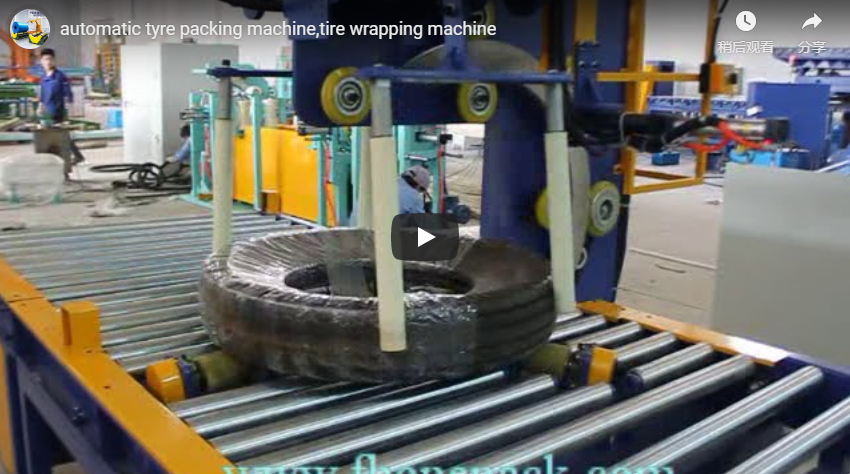
A tyre ring that leaves a clean stage can pick up dust, scuffs, and moisture while it is handled, stored, or in transit before the next step in the plant. This page is for tyre-plant buyers who want consistent, automatic wrapping of tyre rings and carcasses with labeling integrated into the same station. It explains what the wrap protects, how the feed-wrap-label sequence in this clip works, and what to verify with a supplier before buying. The video below shows an automatic tyre wrapping and labeling station working a single tyre.
Why Tyre Rings Need Machine Wrapping
Tyre manufacture is a chain of clean steps. Between building, inspection, storage, and the next process, an unwrapped carcass is exposed to plant dust and process grit that settle on the surface and get pressed into it during handling. A bare rubber edge marks easily where it meets a roller, a rack, or another tyre. Moisture is the quieter risk: condensation and drips on a wrapped ring are kept off the compound, and the surface stays uniform so the next process sees the same clean part every time.
Machine-applied film covers the same way every cycle. That consistency is the practical value of automation, because it removes the variation that appears when the same ring is wrapped by different operators during a shift.
How the Feed-Wrap-Label Tyre Station Works
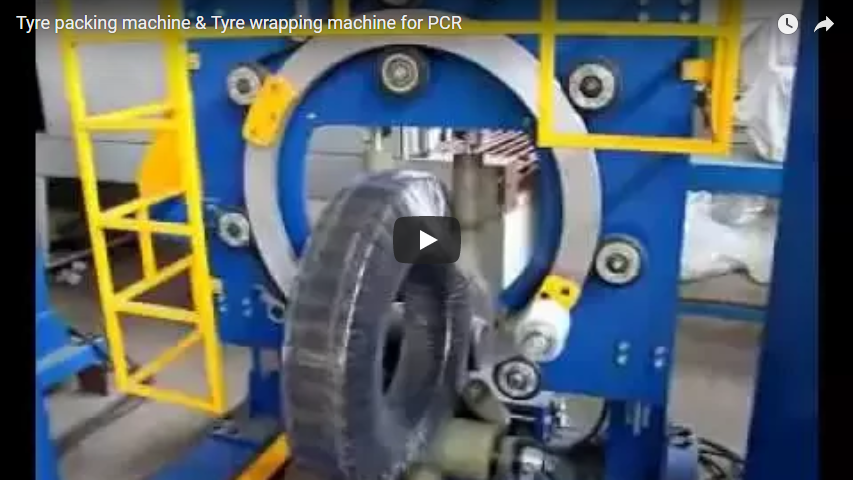
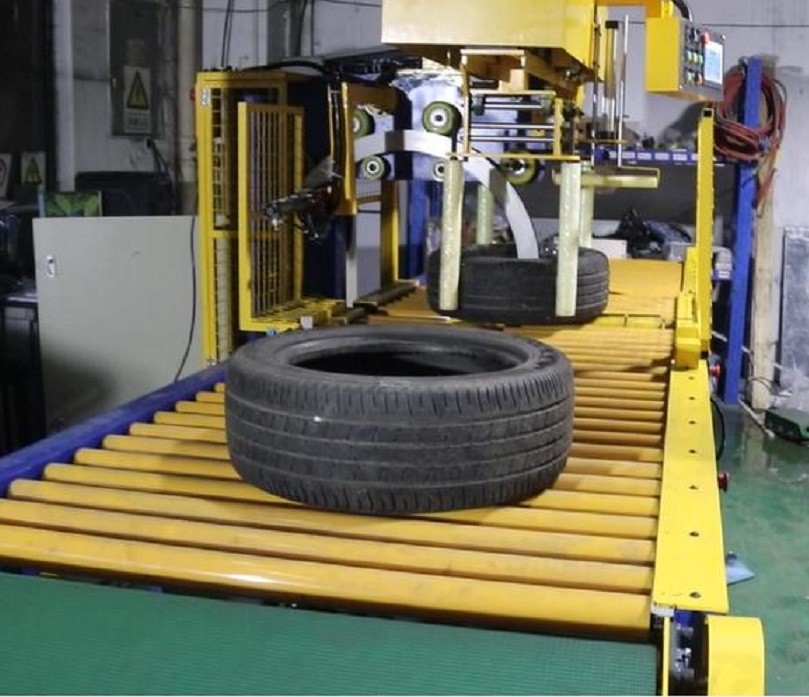
The station in the clip is built around a roller conveyor and a wrapping head that includes a labeling operation. A tyre ring is placed on the conveyor, rides into the work position, and a press head comes down over it. Film is applied around the ring, and the labeling function applies the product label to the wrapped ring before it moves on down the line.
| Samm | funktsioon |
|---|---|
| Sööt | Tyre ring placed on the roller conveyor |
| ASUKOHT | Ring rides to the work position under the head |
| Mähi | Press head applies protective film around the ring |
| silt | Labeling step marks the wrapped ring |
| Väljapääs | Finished ring moves down the line |
The wrapping step is automatic in the clip. The surrounding steps, including how rings are loaded and removed and whether stacking follows, are configuration questions for the supplier.
Mida enne ostmist kontrollida
The film does the protective work, so its type and coverage decide the result; fit is a dimensions question that cannot be read from the footage. Confirm the following per project:
| Küsige tarnijalt | Miks see ostuotsuse teeb |
|---|---|
| Tyre ring envelope: outer/inner diameter, width, weight | Whether the conveyor and head accept your ring sizes |
| Film specification: type, thickness, tension, passes per ring | The settings that decide surface protection |
| Labeling method and label data | Whether the station matches your marking requirement |
| Stacking layers and stacking device | Stacking is a downstream option configured per project |
| Cycle time and line integration | Whether throughput meets your shift target |
| Ohutusseadmed: avariiseiskamine, kaitse, valguskardin | What protects operators at the station |
What the Footage Shows
The video demonstrates a single tyre being wrapped and labeled. A tyre ring sits on a yellow roller conveyor, the press and wrap head is ready above it, and the ring emerges wrapped in protective film with a label applied before moving on.
The footage does not show a stacking or palletizing device operating. In the demonstrated setup the stacking step is a downstream option that is configured per project, not a step visible in this clip. The number of stacking layers, the stacking pattern, and how many tyres a stack should hold must be confirmed with the supplier per project; none of these values can be read from the footage.
Factory Test and Acceptance
Two practice points apply when planning acceptance on this machine family. First, the vendor’s stated
practice is to put each unit through sustained functional and safety testing before delivery (about
24 hours where stated), including the control system and the emergency-stop function; treat this as
the stated family practice, not a single-unit measurement, and confirm the specific test record for
your unit. Second, for CE markets EN 415-10 is used as the packaging-machinery safety reference and
an ISO 12100 risk assessment guides the guarding; confirm the delivered documentation covers your market.
KKK
Kas kiletamine on sama mis kummi kaitsmine?
The film keeps dust, scuffs, and moisture off the ring surface while it is handled and stored; it does not change the compound itself. For a specific cleanliness requirement, confirm the film choice and the storage cycle with the supplier.
Milliste rehvimõõtudega see hakkama saab?
Not shown in the video. Send the supplier your outer and inner diameter, width, and weight, and ask which of those the station was quoted for.
Does the machine include the stacking step?
In the clip the stacking device is not shown. Stacking is configured as a downstream option per project, so confirm the stacking device and the number of layers per stack separately.
Kas protsess on täisautomaatne?
The wrapping and labeling steps are automatic in the clip. Feeding the ring onto the conveyor and removing it afterwards may be manual or automated depending on the configuration, so confirm the load and unload steps with the supplier.
Järgmine samm
Send the supplier your tyre ring mix first: outer and inner diameters, widths, weights, and daily volumes, plus the label data the station must apply. Then confirm the film specification, the stacking requirement (layers per stack), and the safety arrangement for your site. Ask how the station connects to the conveyor flow on your floor before you commit to a quotation.