
Why Should Czech Steel Producers Modernize with Advanced Packing Lines?
Czech steel producers face a demanding global market. They must keep up with high quality standards and quick delivery times. Many still rely on older packing methods. These methods often cause problems like slow operations, high labor costs, and inconsistent product quality. This makes it harder to compete. If you are in this position, you know the daily struggle of balancing output with careful handling.
Czech steel producers must modernize with advanced packing lines to boost efficiency, improve product quality, and significantly reduce operational costs and workplace hazards. These modern systems offer precise, consistent packaging, meet strict international standards, and ensure faster, safer handling of diverse steel products, making them essential for staying competitive and achieving long-term growth.
This is a critical time for the Czech steel industry. The decision to upgrade your packing processes can make a huge difference. Let’s look at why embracing modern packing solutions is not just an option, but a necessity for your business.
Why is Manual Coil Packing No Longer Sustainable for Czech Steel Mills?
Are your current packing operations slowing down your entire production line? Many Czech steel mills still use manual methods. These methods might seem cost-effective at first. But they often lead to major bottlenecks, higher long-term costs, and safety issues. Think about the daily challenges your team faces.
Manual coil packing is no longer sustainable for Czech steel mills because it creates major inefficiencies, leads to inconsistent product quality, increases operational costs due to labor dependency and material waste, and poses significant safety risks to workers handling heavy steel coils.
As an engineer who started on the factory floor, I have seen firsthand how manual processes hold back even the most dedicated teams. I understand the pressure. You need to keep things moving. But manual handling causes too many problems. It impacts everything from delivery schedules to customer satisfaction.
1. Labor Challenges and Costs
Relying on manual labor for packing creates many problems. First, there is the issue of finding enough skilled workers. The steel industry often sees high turnover. Young workers might not want jobs that are physically hard and potentially dangerous. This means you constantly train new staff. Training takes time and money. Also, human workers can only do so much. They get tired. Their speed changes throughout the day. This directly affects how many coils you can pack. It impacts how fast you can ship products. My journey showed me that relying on people for repetitive, heavy tasks is not a stable long-term plan. For example, lifting and positioning heavy straps or applying wrapping material manually is slow. It needs several people. Each person adds to your wage bill. They also add to your benefits costs. Manual work often means overtime pay. This further increases expenses. Think about the total cost of ownership. It is not just wages. It is also recruitment, training, and potential injury claims. Automated systems do not need breaks. They work at a consistent speed. This makes your labor force more efficient. You can then use your skilled workers for more complex tasks. These tasks add more value.
2. Inconsistent Quality and Material Waste
Manual packing methods often lead to inconsistent results. Workers can apply strapping with different tension levels. This means some coils might be too loose. Others might be too tight. Loose strapping can cause coils to shift during transport. This can damage the product. It can also create a safety hazard. Uneven wrapping allows moisture to get in. This leads to rust. Rust causes product rejection. It costs your business money. My experience taught me that quality is everything. When customers receive damaged products, they lose trust. They might stop buying from you. Inconsistent quality also leads to higher material waste. Workers might use too much strapping or wrapping film to be safe. Or they might make mistakes that require re-packing. Both scenarios increase material costs. They also increase disposal costs. An automated machine applies the exact amount of material needed every time. It uses the right tension. This reduces waste. It ensures every packed coil meets your quality standards. This is important for your reputation. It is also important for your bottom line.
3. Safety Risks and Workload
Steel coil packing is a dangerous job. Workers handle heavy and often sharp materials. They use tools that can cause injury. Manual handling of coils is a major risk. Workers can drop coils. They can strain their backs. They can suffer cuts or crushing injuries. These accidents lead to lost work time. They lead to medical costs. They also affect worker morale. As a factory owner, I learned that worker safety must be a top priority. When I started FHOPEPACK, one goal was to improve safety in the packing process. Modern packing lines remove workers from direct contact with heavy coils. Machines do the lifting, turning, and securing. This greatly reduces the risk of accidents. It lowers the physical strain on your team. This means fewer injuries. It means a safer workplace. A safer workplace attracts and keeps good employees. It also makes your insurance costs lower. Less manual work also means less fatigue. This helps prevent human errors. It makes the entire operation more reliable.

How Can Automation Improve Packing Quality and Reduce Damage for Czech Steel?
Are you losing customers because of damaged goods? Product damage during transit or storage is a big concern for steel producers. It directly impacts your reputation and your profit margins. Traditional packing methods often fall short in protecting sensitive steel products. This is especially true when dealing with diverse customer demands.
Automation drastically improves packing quality and reduces damage for Czech steel by ensuring consistent and precise application of wrapping and strapping materials, offering superior protection against moisture and abrasion, and allowing for customizable, repeatable packaging that meets specific customer and international compliance standards like CE/ISO.
At FHOPEPACK, we believe that the best packing solution is one that protects your product completely. It should also meet all your customer’s needs. My own journey from engineer to factory owner taught me the value of reliable machinery. It gives consistent output. This consistency is key to cutting down on damage and improving overall quality.
1. Precision and Consistency in Packaging
Automated packing lines bring a new level of precision. They remove human error. Machines apply strapping or wrapping film with exact tension. They cover every part of the coil evenly. This means every coil gets the same high-quality protection. For example, a machine can apply PET or steel strapping with consistent force. This ensures the coil is held securely. It prevents loosening during transit. Manual application can vary greatly. Some straps might be too loose. Others might be too tight. This can damage the product or fail to secure it. Automatic wrapping machines also apply stretch film or VCI paper perfectly. They overlap correctly. This seals the coil well. It protects against dust and moisture. This consistency is not possible with manual methods. It greatly reduces product damage. It ensures every delivery meets your quality promises. This makes your customers happier. It builds trust in your brand.
2. Enhanced Protection Against Damage
Modern packing lines are designed to protect coils from many threats. These include moisture, rust, scratches, and impact. For example, specialized wrapping machines can apply multiple layers of film. They can also use corrosion-inhibiting materials. These materials keep rust away. This is crucial for products like galvanized or cold-rolled steel. These are very sensitive to moisture. Automatic labeling systems also protect products. They apply clear, durable labels with barcodes. This prevents mix-ups. It helps with tracking. It ensures the right product goes to the right customer. My journey taught me that every detail matters. A small scratch can make a product unusable. A little rust can lead to a full rejection. Advanced packing lines reduce these risks. They use specific materials and techniques. They are designed for maximum protection. This saves your company from costly returns and complaints. It keeps your products in top condition.
3. Meeting Global Standards and Customer Expectations
Today’s market demands more than just basic packing. Many customers, especially export clients, have strict requirements. They need CE/ISO certified packing. They need special barcodes. They need precise labeling. Manual packing struggles to meet these changing demands. It is hard to keep up. Automated systems are flexible. They can adapt to different packing recipes. You can set them up to apply specific materials. You can use different strapping patterns. You can add unique labels. This flexibility means you can meet any customer request. You can also meet international certification standards. This opens up new markets for your products. It boosts your competitive edge. For example, if a client needs extra moisture protection, the machine adjusts. If another needs a specific strap count, the machine delivers. This ability to customize and ensure compliance is vital. It shows your commitment to quality. It makes you a more reliable supplier.

What Role Does Safety and Efficiency Play in Modern Czech Steel Production?
Is your steel plant struggling with high injury rates or slow production cycles? Safety and efficiency are not just buzzwords. They are crucial for a successful steel operation. Old, manual methods often put workers at risk and slow down your entire process. This affects your output and your profits.
Safety and efficiency play a central role in modern Czech steel production by allowing for higher throughput with fewer workplace accidents, optimizing the use of floor space and energy, and integrating seamlessly with existing production lines to ensure continuous and predictable operation, all while reducing the physical strain on your workforce.
When I founded FHOPEPACK, I knew that real progress in manufacturing needed two things: keeping people safe and making processes run smoothly. My background as a packing machine engineer showed me that these two goals go hand in hand. A safe workplace is an efficient workplace.
1. Minimizing Workplace Hazards
Manual handling of heavy steel coils is one of the most dangerous tasks in a steel plant. Workers risk crush injuries. They risk cuts. They risk muscle strains. An automated packing line removes workers from these high-risk areas. Machines do all the lifting, turning, and strapping. This greatly reduces the chances of accidents. For example, heavy coils often need cranes or forklifts to move. Manual guiding of these coils is risky. An automatic system handles the coil movement. It uses conveyors and turntables. This means fewer people are near moving machinery. This leads to fewer injuries. It creates a safer work environment. This also lowers your insurance costs. It reduces worker compensation claims. A safe workplace also improves worker morale. Employees feel more valued. They are more productive. This helps your company build a good reputation. It shows you care about your team.
2. Optimizing Throughput and Line Integration
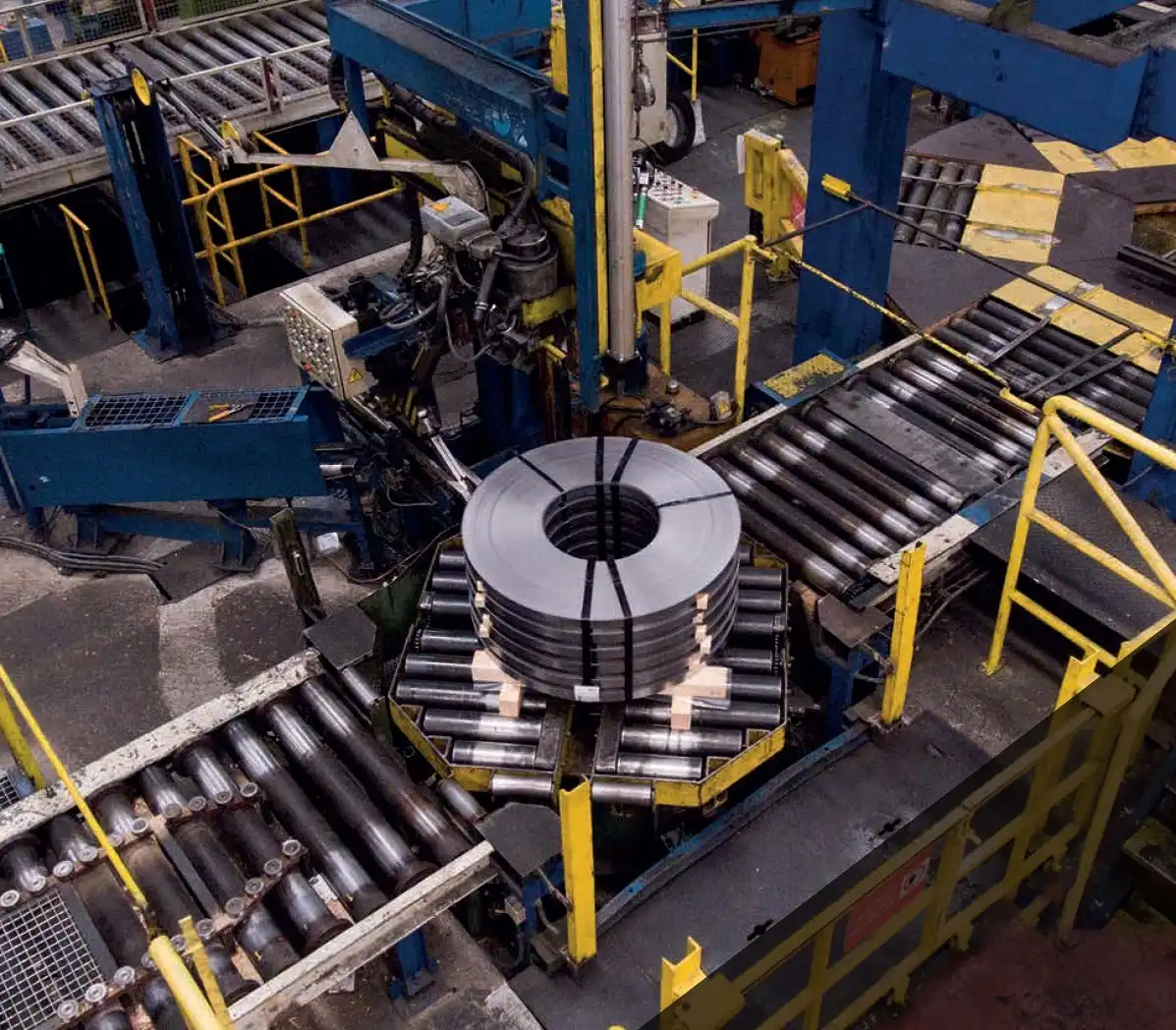
Efficiency means doing more with less. Automated packing lines are much faster than manual ones. They work continuously. They do not get tired. They do not make mistakes from fatigue. This means you can pack more coils per hour. You can meet higher production targets. This is key for a large steel plant. Modern packing lines are also designed to fit into your existing production flow. They can connect directly to your slitting or finishing lines. This creates a seamless process. Coils move from production to packing without stops. This reduces waiting times. It removes bottlenecks. For example, a fully automatic coil packing line can handle hundreds of tons of steel coils daily. It prepares them for shipment much faster. This allows you to process orders quicker. It improves your delivery times. This makes your customers happy. It also reduces storage needs. Packed coils move out faster. This frees up valuable floor space in your warehouse.
3. Data-Driven Decisions and Operational Control
Advanced packing lines come with smart controls and sensors. These systems collect data in real time. They tell you about machine performance. They track packing material usage. They monitor output rates. This data is very valuable. You can use it to make better decisions. For example, you can see how long it takes to pack different types of coils. You can identify any slowdowns. You can adjust your production schedule to be more efficient. The data also helps you manage inventory. You know exactly how much packing material you use. You know when to reorder. This prevents running out of supplies. It also helps with maintenance. The system can alert you when a machine needs service. This prevents unexpected breakdowns. My experience in building a factory taught me that information is power. Good data helps you fine-tune your operations. It helps you save money. It helps you keep production running smoothly.
How Can Advanced Packing Lines Lead to Long-Term Business Growth for Czech Producers?
Are you looking for ways to expand your market share and secure a stronger future for your steel business? Investing in advanced packing technology is not just about solving today’s problems. It is about building a foundation for sustainable growth. Many producers only see the initial cost. They miss the bigger picture of long-term benefits.
Advanced packing lines lead to long-term business growth for Czech producers by reducing operational costs, enhancing market competitiveness through superior product quality and faster delivery, enabling expansion into new, higher-demand markets, and building a reputation as a reliable and quality-focused supplier.
I started FHOPEPACK because I believe in the power of smart solutions. My own journey, from an employee to a factory owner, showed me that strategic investments pay off. They do not just solve problems. They open doors to new opportunities. For Czech steel producers, this means more than just packing coils. It means securing your place in a competitive world.
1. Cost Savings and Return on Investment
While the initial investment for an advanced packing line might seem high, the long-term cost savings are significant. First, you save on labor costs. Automated systems need fewer operators. They also reduce overtime pay. Second, you cut down on material waste. Precision machines use the exact amount of strapping or film needed. This means less material is thrown away. Third, you lower the cost of product damage. Better packing means fewer returns and fewer claims. This saves money on replacements and shipping. Finally, faster operations mean higher output. This means more sales. All these savings add up over time. They lead to a strong return on your investment. My experience taught me that smart spending on the right equipment frees up capital. You can then use this capital for other growth areas. It makes your business more profitable in the long run.
2. Gaining a Competitive Edge in the Market
In today’s global market, standing out is hard. Advanced packing lines give you a clear advantage. You can offer better quality products. Your products will arrive undamaged. They will look professional. This builds trust with your customers. You can also deliver faster. Efficient packing means quicker turnaround times. This lets you meet urgent orders. It helps you win new business. Your ability to offer customized packing, like special export packaging or barcoding, also makes you more attractive. For example, if a German customer needs specific CE-compliant packing, you can deliver it. Your competitors might not be able to. This flexibility sets you apart. It shows your commitment to excellence. It makes you the preferred supplier. This leads to more contracts and stronger customer relationships. It helps you grow your market share.
3. Building a Foundation for Future Growth
An investment in modern packing technology is an investment in your company’s future. It makes your operations more robust. It makes them more adaptable. As demand changes, your automated line can handle it. You can adjust it to pack different coil sizes or types. This flexibility is key for future expansion. It also helps you explore new markets. Some high-value markets have strict packing rules. With advanced systems, you can meet these rules. This opens doors to new customers and higher profits. Moreover, working with a reliable supplier like FHOPEPACK means you get ongoing support. You get training. You get spare parts. This ensures your investment keeps working for many years. It gives you peace of mind. My mission is to help businesses like yours grow. I know that the right equipment is a powerful tool. It helps you build a strong, successful future.


Conclusion
Modernizing your packing operations is vital for Czech steel producers. It boosts efficiency, ensures product quality, and improves safety. This leads to reduced costs and a stronger market position. Investing in an advanced coil packing line secures your long-term success and growth. It prepares your business for the future.








