
Why Saudi companies see orbital wrapping machine as key to export standards?
Imagine your valuable products, ready for export, arriving at their destination damaged. This is a common nightmare for many Saudi manufacturers. It can lead to rejected shipments, costly returns, and a damaged reputation. These issues not only cut into your profits but also make it harder to compete in the global market. Manual packing methods are slow, risky for workers, and often do not give enough protection. What if there was a way to ensure every single product leaves your factory perfectly protected, speeding up your process, and keeping your team safe? Many Saudi companies are finding this solution in orbital wrapping machines.
Saudi companies increasingly rely on orbital wrapping machines because these systems provide superior protection for products like steel coils and wire, crucial for meeting stringent international export standards, boosting operational efficiency, and enhancing worker safety in demanding industrial environments.

As someone who has seen the packing industry from the ground up, I understand these challenges deeply. From starting as an employee to owning a successful factory, I learned that the right equipment can change everything. Let’s explore exactly why these machines are becoming indispensable for Saudi businesses looking to excel globally.
How do orbital wrappers improve product safety and quality for export?
Sending products across borders means facing rough handling, moisture, and dust. Traditional packing often leaves items like metal coils or wire vulnerable, leading to costly damage. Imagine the frustration when your perfectly made product arrives with scratches, dents, or rust. This not only causes customer complaints but also hurts your brand’s reputation and leads to financial losses. How can Saudi manufacturers guarantee their products arrive in pristine condition, every time, protecting both their goods and their reputation? Orbital wrapping machines offer a powerful solution to this critical problem.
Orbital wrapping machines significantly improve product safety and quality for export by creating a tight, multi-layered, and weather-resistant seal around irregularly shaped items, preventing damage from impacts, moisture, and dust during transit, which is essential for meeting strict international quality benchmarks.
Product safety and quality are not just buzzwords. They are the bedrock of successful international trade. When I started my packing machine factory, I saw first-hand how much small damages could cost a business. Saudi companies, like many around the world, ship heavy and often sensitive materials. These include steel coils, aluminum profiles, and long wire bundles. These items are challenging to pack. Manual methods are slow and often fail to provide consistent protection.
An orbital wrapper works by wrapping film 360 degrees around the product as it passes through a rotating ring. This creates a strong, overlapping layer of stretch film. This method ensures full coverage. It protects against several common export risks:
Why Orbital Wrappers Guard Your Exports:
- Impact Protection: The tight film layers absorb shocks. This stops dents and scratches during loading, unloading, and transport. Think of it like a protective skin for your product.
- Moisture and Dust Barrier: The stretch film creates a sealed barrier. This keeps out rain, humidity, and dust. For metal products, this means no rust or corrosion. This is vital when goods travel through different climates or sit in open storage.
- Secure Bundling: It binds multiple items together firmly. This prevents shifting or separation during transit. For example, a bundle of pipes stays together, reducing friction damage.
- Enhanced Presentation: A neatly wrapped product looks professional. This adds to the perceived quality. It shows care and attention to detail, which impresses international buyers.
Consider the challenges faced by factory managers. They deal with heavy metal processing. They know that product damage during internal transfer or packing leads to customer complaints and profit loss. An orbital wrapper directly addresses this. It minimizes handling damage. It ensures consistent, high-quality packing. This level of protection is not just good practice. It is often a strict requirement from international buyers. Countries importing from Saudi Arabia expect flawless delivery. An orbital wrapper helps meet these high standards. It turns potential liabilities into assets.
Can orbital wrapping machines truly boost operational efficiency in Saudi factories?
Many Saudi factories still rely on manual labor for packing. This is slow, costly, and can create bottlenecks at the end of the production line. Imagine your factory’s main production running smoothly, but then everything slows down at the packing station. Orders pile up, shipping dates are missed, and you lose valuable time and money. This inefficiency directly impacts your bottom line. How can Saudi manufacturers break free from these packing bottlenecks, speed up their operations, and ensure their products move quickly from the factory floor to the shipping dock? Orbital wrapping machines offer a powerful path to dramatically increased efficiency.
Orbital wrapping machines significantly boost operational efficiency in Saudi factories by automating the labor-intensive packing process, drastically reducing wrapping time, minimizing manual handling, and ensuring a faster, more consistent throughput, thereby eliminating bottlenecks and accelerating overall production and delivery schedules.

Efficiency is the heartbeat of any successful manufacturing operation. When I was building my packing machine factory, I obsessed over every minute of production time. I knew that even small delays could add up to huge losses. Saudi industrial sectors, especially those in heavy manufacturing like steel and metals, operate on tight schedules. They need to produce and ship large volumes quickly. Manual packing methods simply cannot keep up with this demand.
Let’s look at how orbital wrappers change the game for efficiency:
How Orbital Wrappers Supercharge Your Production:
- Speed: Manual wrapping of a large coil or bundle can take a long time, often requiring multiple workers. An orbital wrapper can complete the same task in minutes, sometimes even seconds. This speed means products move faster from production to dispatch.
- Reduced Labor: These machines need fewer operators. One worker can often manage several machines or oversee the automated process. This frees up staff for other value-added tasks within the factory. It helps address labor shortages or reduce labor costs.
- Consistent Output: Machines do not get tired. They wrap every product with the same tension and number of layers. This consistency means fewer re-wraps or rejected packages. It ensures a smooth, predictable flow.
- Seamless Integration: Modern orbital wrappers can connect with existing conveyor systems. This creates a fully automated end-of-line packing solution. Products flow directly from manufacturing to wrapping without manual intervention. This eliminates slowdowns between stages.
A factory manager constantly seeks ways to improve his plant’s output. He understands that efficiency bottlenecks, especially at the packing stage, severely impact overall production. He knows that manual processes are slow and inefficient. Investing in automation is his goal. Orbital wrapping machines directly address this. They turn a slow, labor-intensive process into a fast, automated one. This means more products packed per hour. It means faster delivery times. Ultimately, it means a more competitive and profitable Saudi factory.
What role do orbital wrappers play in reducing costs and increasing profits?
Many Saudi manufacturers face rising operational costs. This includes high labor expenses, significant product damage during packing, and increasing insurance premiums due to workplace injuries. These hidden costs eat away at your profit margins. Every damaged product, every hour of wasted labor, and every safety incident directly reduces your factory’s profitability. It makes it harder to invest in future growth. How can Saudi companies turn these cost challenges into opportunities, significantly cutting expenses and boosting their bottom line through smart investment? Orbital wrapping machines offer a clear and measurable path to greater profitability.
Orbital wrapping machines play a crucial role in reducing costs and increasing profits for Saudi companies by significantly cutting labor expenses through automation, minimizing costly product damage during packing and transit, and lowering safety-related costs by reducing hazardous manual handling, all contributing to a strong return on investment (ROI).
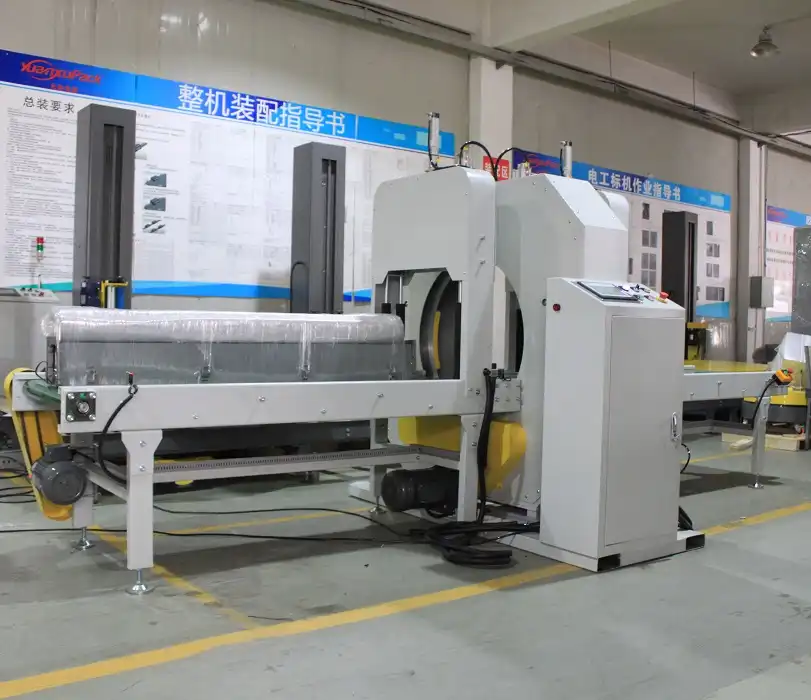
Every business aims for higher profits. In the competitive manufacturing world, cost control is not just important. It is essential for survival and growth. From my own experience building FHOPEPACK, I know that smart investments in equipment can quickly pay for themselves. Then they continue to generate savings for years. Saudi factories, especially those dealing with heavy items, face unique cost pressures.
Let’s break down how orbital wrappers directly impact your financial health:
Financial Benefits of Orbital Wrapping:
- Reduced Labor Costs:
- Fewer Workers: A machine replaces several manual laborers. This means lower payroll costs.
- Less Overtime: Automated packing completes tasks faster. This cuts down on expensive overtime hours.
- Focus on Skilled Tasks: Workers can shift from repetitive packing to more skilled roles.
- Minimized Product Damage:
- Consistent Protection: The machine applies consistent, optimal wrap tension. This prevents under-wrapping or over-wrapping.
- Fewer Returns: Well-protected products arrive safely. This means fewer customer complaints and costly returns.
- Less Scrap: Reduced damage during packing or internal transfer means less product is wasted. This directly impacts your raw material costs.
- Improved Safety, Lower Insurance:
- Less Manual Handling: Workers no longer need to manually lift or maneuver heavy items for wrapping. This drastically reduces the risk of strains, sprains, or more serious accidents.
- Lower Premiums: Fewer workplace injuries lead to a better safety record. This can result in lower insurance premiums.
- Reduced Worker’s Compensation Claims: Less injuries means fewer claims, saving the company significant legal and medical expenses.








