
Why PC Wire Plants Need Fully Automatic Steel Wire Packing Lines?
Are you a factory manager, constantly juggling the pressures of increasing output, controlling costs, and ensuring worker safety? I have been there myself. For years, I watched firsthand as manual packing processes became major roadblocks. They caused bottlenecks, led to painful product damage, and put our hardworking teams at risk every single day. The struggle is real, and the traditional ways of packing simply cannot keep up with today’s demands for efficiency and safety. (factory manager challenges, manual packing bottlenecks)
Fully automatic steel wire packing lines are no longer a luxury for PC wire plants; they are a fundamental necessity for operational survival and growth. These systems directly address critical pain points like slow manual processes, high labor costs, significant safety hazards, and product damage, offering a transformative solution that boosts efficiency, enhances safety, and secures your profitability in the competitive PC wire market. 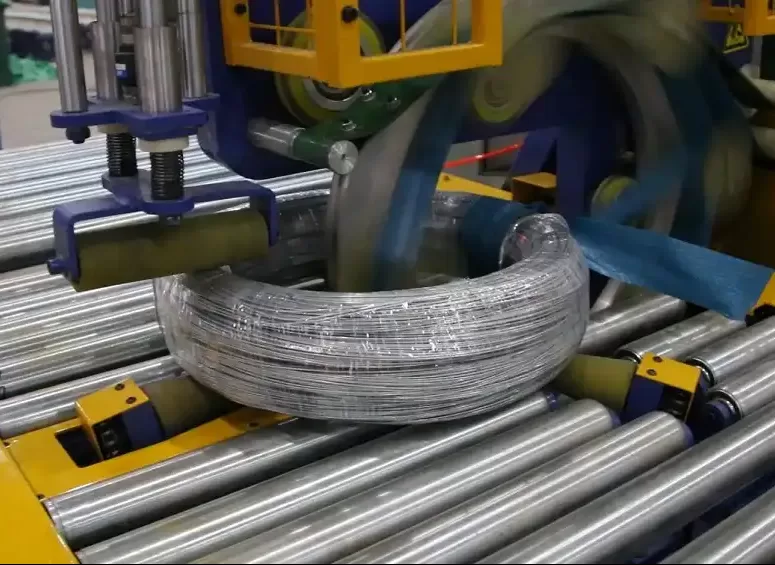
Understanding the “why” behind this crucial shift is the first step toward a more productive and secure future for your plant. Let me share my insights, forged from years in the packing machine industry, on how these automated systems can truly master your packing challenges. Keep reading to see how we can tackle these issues together.
1. How Can Automatic Packing Lines Boost Your PC Wire Production Efficiency?
Is your current PC wire packing process slowing down your entire production line? Many factories struggle with this exact problem. Manual handling of heavy steel wire coils is slow, labor-intensive, and often creates bottlenecks at the end of the production cycle. This directly impacts your ability to meet delivery schedules and satisfy customer demand. (manual packing challenges, production bottlenecks)
Automatic steel wire packing lines significantly boost PC wire production efficiency by eliminating manual labor dependency and speeding up the entire packaging process. They integrate seamlessly into existing production flows, ensuring continuous operation, faster throughput, and consistent packaging quality, which directly translates to improved factory output and quicker order fulfillment for high-tensile wire products. 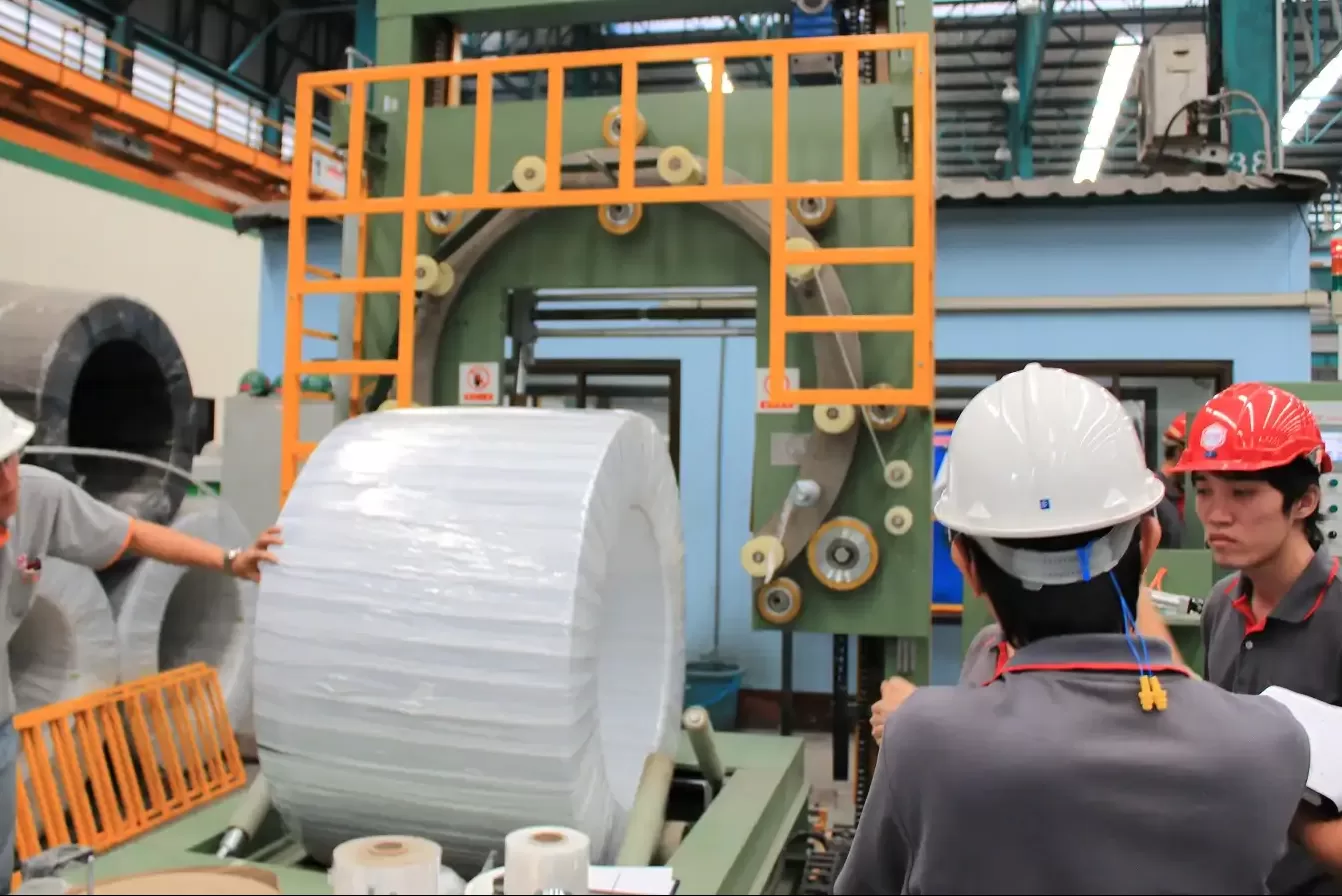
When I first started my packing machine factory, one of the biggest complaints I heard from clients, especially those in Mexico like Michael Chen, was about these efficiency bottlenecks. They needed to move more product, faster, without compromising quality. This is where automation shines. It transforms your end-of-line operations from a weak link into a powerhouse of productivity. Let us dive deeper into how this works.
The Core Pillars of Enhanced Efficiency
-
Speed and Throughput: Automatic packing lines operate at speeds far beyond human capability. They can wrap, strap, and handle multiple PC wire coils per minute, ensuring a constant flow of finished products. This reduces waiting times between production stages. Imagine your PC wire output increasing by 30% or more, just by upgrading your packing process. This is not just a dream. It is a reality for many plants. For example, a manual operation might pack 10 coils per hour. An automatic line can easily pack 30-60 coils per hour, depending on the model and coil size. This direct increase in throughput dramatically impacts overall plant capacity. (fast wire coil packaging, increased throughput, PC wire output)
-
Reduced Labor Dependency: Relying on a large workforce for packing heavy steel wire coils comes with many challenges. It means higher wage costs, training expenses, and the constant worry of labor availability or turnover. Automatic systems require fewer operators, often only one or two to supervise and manage the machine. This frees up valuable human resources who can then be reassigned to other more skilled or critical tasks within the plant. This shift can lead to significant cost savings over time. It also addresses the challenge of finding enough skilled labor for physically demanding packing jobs. (labor cost reduction, fewer operators, skilled labor allocation, automated wire handling)
-
Consistent Quality and Repeatability: Manual packing can lead to inconsistencies. Some coils might be wrapped too loosely, others too tightly. This affects presentation and protection. Automatic systems perform each packing cycle with high precision. They apply the same tension, the same number of wraps, and the same strapping pattern every single time. This consistency ensures every PC wire coil leaves your plant perfectly packaged. It protects the product and enhances your brand image. This reliability is something manual processes struggle to match, especially during long shifts or with different operators. (consistent packaging quality, reliable coil wrapping, repeatable packing process, uniform wire packaging)
-
Seamless Integration with Production: Modern automatic packing lines are designed for smooth integration. They connect directly with upstream processes like drawing and coiling machines. This creates a continuous, automated flow from raw material to packaged product. There are no manual stops or transfers that could slow things down. Data from the packing line can also be integrated into your factory’s management system. This gives you real-time insights into production status and efficiency. (integrated packing solutions, continuous production flow, real-time data integration, automated factory systems)
Consider a scenario where a PC wire plant in Mexico, similar to Michael Chen’s operation, implements an automatic steel wire packing line. 📊 Efficiency Gains for a Typical PC Wire Plant
| Aspect | Manual Packing (Approx.) | Automatic Packing (Approx.) | Improvement (%) |
|---|---|---|---|
| Coils per Hour | 10 | 40 | +300% |
| Operators Needed | 4 | 1 | -75% |
| Packing Consistency | Medium | High | N/A |
| Product Damage Rate | 5% | 0.5% | -90% |
| Operational Cost | High | Medium | -30% |
This table clearly shows the tangible benefits. Implementing an automatic system means higher output, fewer labor-related issues, and a more streamlined operation. This is why Fengding and Wuxi Buhui are leaders in this field. They understand these numbers. (wire plant efficiency, automated production benefits, packing machine ROI)
2. Do Automatic Steel Wire Packing Systems Truly Enhance Worker Safety?
Are your employees regularly lifting heavy steel wire coils or struggling with awkward manual packing tasks? The risk of workplace injuries is a constant worry for factory managers like Michael Chen. Back strains, cuts, and even more severe accidents can occur. This leads to not only human suffering but also high insurance costs and employee turnover. We all want our team members to go home safe at the end of the day. (worker safety concerns, heavy lifting risks, industrial accident prevention)
Automatic steel wire packing systems significantly enhance worker safety by minimizing the need for manual handling of heavy and awkward wire coils. These machines take over the physically demanding and hazardous tasks, dramatically reducing the risk of strains, crushes, and other workplace injuries. By automating the packaging process, plants create a safer environment, lower insurance costs, and improve employee morale, making it an essential upgrade for any PC wire manufacturing facility. 
From my experience, safety is not just about compliance; it is about protecting your most valuable asset: your people. I have seen too many injuries directly related to manual packing operations. When I started FHOPEPACK, one of our core philosophies was to develop machines that not only perform well but also protect the operators. Let me explain how automation directly contributes to a safer working environment.
A Safer Workplace: Automation’s Impact
-
Elimination of Manual Heavy Lifting: This is perhaps the biggest safety advantage. A single steel wire coil can weigh hundreds or even thousands of kilograms. Manually lifting, rotating, or repositioning these coils is extremely dangerous. It is a leading cause of musculoskeletal injuries, back problems, and dropped loads. Automatic packing lines use conveyors, turntables, and robotic arms to handle the coils. This completely removes the need for human physical interaction with heavy objects during the packing process. Workers only need to monitor the machine. (reduce manual handling, heavy load automation, ergonomic workplace, injury prevention)
-
Reduced Exposure to Moving Parts: In a manual packing setup, workers are often in close proximity to moving machinery, strapping tools, and sharp wire edges. This increases the risk of cuts, pinches, and being struck by equipment. Automatic systems are typically enclosed with safety guards and interlocks. These features prevent operation if a safety door is open. Operators are kept at a safe distance from the moving parts. This significantly reduces the chances of accidents related to direct contact. (machine safety features, protective guards, industrial accident reduction, safe distance operation)
-
Consistent and Predictable Operations: Human error is a significant factor in workplace accidents. Fatigue, distraction, or rushing can lead to mistakes. Automatic machines follow programmed sequences with high precision and consistency. There is no variation in their movements due to human factors. This predictability makes the packing process much safer. Operators can anticipate machine actions and are not exposed to sudden, unexpected movements that might occur in a manual process. (predictable machine operation, reduced human error, consistent safety protocols, automated process reliability)
-
Improved Work Environment: Automating the packing process also leads to a better overall work environment. It reduces physical strain on workers. They are not as tired at the end of their shift. This helps improve morale and reduces stress. A safer workplace also reduces absenteeism due to injuries. This positively affects productivity and employee retention. It shows your commitment to their well-being. (better work conditions, reduced physical strain, employee well-being, improved morale)
Safety is a top priority for any responsible factory, especially for operations handling heavy materials like PC wire. Here is how automation addresses common safety hazards: 👷 Addressing Safety Hazards with Automation
- Hazard: Manual lifting of heavy coils
- Solution: Automated conveyors, coil up-enders, and robotic loading
- Benefit: Eliminates back injuries, strains, and crush hazards
- Hazard: Exposure to moving parts and sharp wire ends
- Solution: Enclosed machines, safety interlocks, remote monitoring
- Benefit: Prevents cuts, pinches, and entanglement
- Hazard: Fatigue-related errors
- Solution: Consistent machine operation, reduced need for repetitive tasks
- Benefit: Lowers human error rate, increases alertness
- Hazard: Inconsistent packing quality leading to unstable loads
- Solution: Uniform tensioning, precise wrapping, stable package formation
- Benefit: Reduces risk of product shifting during transport, enhancing shipping safety








