
Why Are South Korea Exporters Switching to Automated Door Packing Solutions?
Have you ever watched your hard-earned products get damaged right before shipping? Do you worry about your workers lifting heavy items, risking injury every single day? If you run a factory, especially in a competitive market like South Korea, these problems likely keep you awake at night. The truth is, relying on old, manual ways of packing heavy items like doors can seriously slow down your business and eat into your profits.
Many South Korean exporters are now moving towards automated door packing solutions to solve these exact problems. They are seeing that new machines can pack items faster, make the workplace much safer, and save a lot of money in the long run. This change is not just about having new machines. It is about making smarter choices for the future of their businesses. From my own journey building FHOPEPACK, I know that investing in the right technology is the only way to stay ahead.
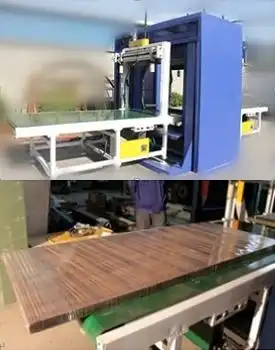
So, if you are looking to boost your factory’s output, cut down on costs, and protect your team, then understanding this shift is crucial. Let’s explore why so many are making this smart move.
Why are traditional door packing methods failing South Korean exporters?
Are your current packing methods causing more headaches than they solve? Are you constantly battling slow speeds and high labor costs? Many South Korean factories still use old ways to pack large, heavy items such as industrial doors. They rely on many people to do the work, which makes the whole process slow. This problem then affects how fast products can leave the factory. It means delays for customers and lost chances for sales.
Traditional door packing methods are failing South Korean exporters because they create huge bottlenecks at the end of the production line. These methods are labor-intensive and cannot keep up with high production demands, leading to delays in delivery and increased operational costs. This directly impacts a factory’s ability to compete on a global scale.
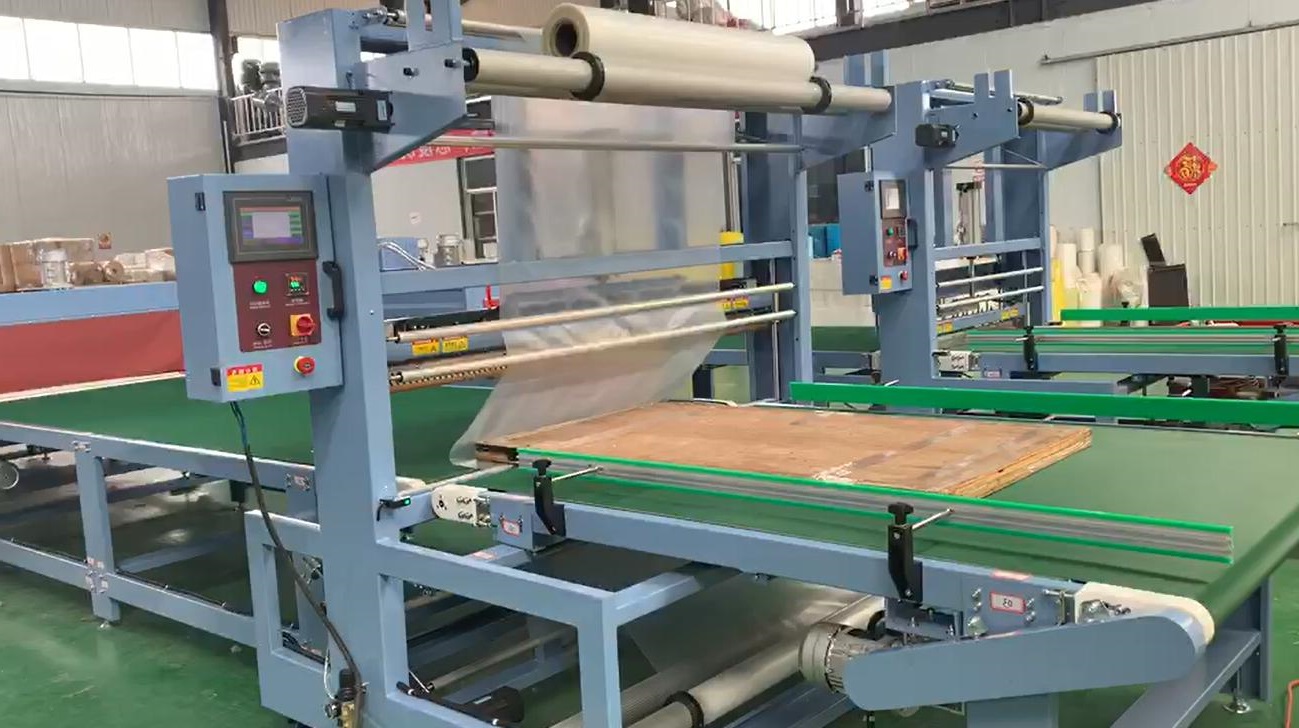
When I first started in the packing machine industry, I saw many factories struggling with these exact issues. They would invest heavily in making their products, but then the packing part would slow everything down. Imagine building a fast car but putting small wheels on it. That is what inefficient packing does to a factory. It limits how much you can grow. These methods are not just slow; they are also very costly in terms of labor. Workers spend too much time on repetitive tasks that a machine could do much faster. This time could be spent on more skilled jobs. Also, manual packing often means lower quality consistency. Each packed item might look a little different. This can lead to customer complaints. When customers get products that are not packed well, they might lose trust in your brand. This problem is especially big for exporters because their products travel long distances. A poorly packed door might get damaged during shipping, costing the company money and reputation.
-
The Hidden Costs of Manual Packing
Using human labor for heavy packing tasks seems cheaper at first glance. But this idea is misleading. Manual processes hide many costs that hurt a factory’s bottom line. First, there is the direct cost of wages. You need many workers to move and pack large doors. Their salaries add up quickly over time. Second, there is the cost of low speed. Each door takes a long time to pack by hand. This slows down the entire production line. It means fewer products can be shipped out each day. This lost output is a direct loss of income for the factory. Third, quality control is harder with manual work. People get tired. They make mistakes. This means some doors might not be packed correctly. They might get damaged during transport. Repairing or replacing these damaged items costs money. It also harms your company’s reputation. Think about a factory manager like Michael Chen in Mexico. He deals with large metal products, similar to heavy doors. He knows that every minute of downtime or every damaged product means huge losses. His team faces pressure to increase output while controlling costs. Manual packing works against both of these goals. It keeps output low and costs high. This is why many experienced managers are looking for different ways to operate. They understand that real savings come from efficiency and consistency. The traditional way simply cannot deliver this level of performance in today’s fast-moving market.
-
Safety Risks and Employee Turnover
Manual handling of heavy doors creates serious safety hazards for workers. These are not small items. They are large, bulky, and often heavy. Lifting and moving them by hand can cause muscle strains, back injuries, and even more severe accidents. When workers get hurt, the company faces many problems. There are medical costs. There are also increased insurance premiums. If an injured worker cannot come to work, it means a loss of skilled labor. This then creates a need for new hires. Training new staff costs time and money. It also takes time for new workers to become fully productive. A high rate of injuries can also lead to high employee turnover. Workers do not want to stay in a job where they feel unsafe. When good workers leave, the company loses valuable knowledge and experience. This creates instability in the workforce. Michael Chen faced this problem directly. His factory involved moving heavy items. He saw that manual lifting was dangerous. It also led to high insurance costs and workers leaving the company. He wanted solutions that would greatly reduce the need for manual heavy lifting. This is not just about saving money. It is also about showing care for your employees. A safe workplace builds trust and loyalty among the team. When employees feel safe, they are more motivated and productive. This also improves the overall work environment. Automated systems remove people from dangerous tasks. They take over the heavy lifting and repetitive movements. This makes the workplace much safer for everyone.
Can automation truly make door packing safer for your workers?
Are you tired of constantly worrying about workplace injuries in your packing area? Do you wish there was a way to protect your employees from the dangers of lifting heavy doors? The manual handling of large, heavy items like doors is a major source of accidents in factories. Workers often strain their backs, drop items, or get caught in machinery. This not only hurts your team but also drives up your insurance costs and worker turnover rates.
Yes, automation can truly make door packing much safer for your workers by removing them from direct contact with heavy loads and repetitive, hazardous tasks. Automated systems take over the physical strain and risk, drastically reducing the potential for workplace injuries and improving the overall safety culture of your factory.
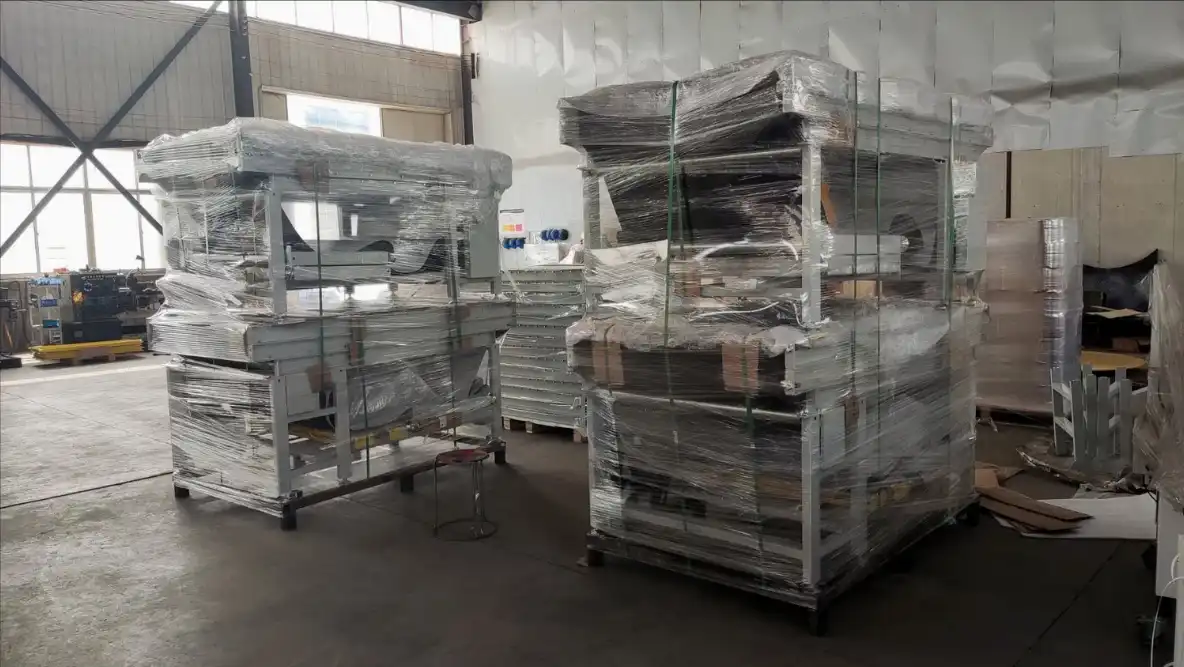
When I was building my own packing machine factory, safety was always a top priority. I saw firsthand how much pressure factory managers were under to meet production targets while keeping their teams safe. It is a tough balance. One incident can stop production and cost a lot. This is why automated solutions are not just a nice-to-have; they are a must-have for modern factories. They move the risk away from your people and onto the machines, which are designed to handle heavy loads without complaint. This change means fewer trips to the doctor, lower insurance payments, and a happier, more stable workforce. It shows your employees that you value their well-being.
-
Eliminating Manual Lifting and Repetitive Strain
One of the biggest benefits of automated door packing is that it removes the need for human workers to lift and move heavy items. Think about the size and weight of industrial doors. Moving them by hand, or even with basic tools, puts a huge strain on a person’s body. Over time, this leads to chronic injuries, like back problems, shoulder issues, and carpal tunnel syndrome. These injuries can force workers to take time off. They can even end careers. Automated systems, like robotic arms or specialized conveyors, do all the heavy lifting. They are built to handle constant, heavy loads without getting tired. This means your workers are no longer at risk of injury from brute force. They are free to focus on supervising the machines or performing other, less strenuous tasks. The constant, repetitive movements involved in manual packing also cause strain. Packing doors involves wrapping, strapping, and positioning. Repeating these actions many times a day, every day, leads to overuse injuries. Machines perform these tasks with precision and without fatigue. This eliminates the risk of repetitive strain injuries for your team. It also creates a more comfortable and sustainable work environment. A factory manager like Michael Chen, who has over 20 years of experience in heavy manufacturing, understands this deeply. He has seen the toll that manual labor takes on workers. His goal to improve safety is directly tied to reducing manual handling of heavy goods. Automation offers a direct path to achieve this goal. It protects your most valuable asset: your people.
-
Reducing Accidents and Improving Compliance
Automated door packing systems also help reduce other types of accidents. When people are involved in moving large, awkward items, there is always a risk of dropping the item. This can hurt the worker or damage the product. There is also the risk of getting hands or clothing caught in moving parts of old, non-automated equipment. Automated machines, when designed and operated correctly, have safety features built in. They often use sensors, safety guards, and emergency stop buttons to prevent accidents. These features protect workers from harm by stopping the machine if someone gets too close or if a problem occurs. Beyond direct injury prevention, automation helps factories meet safety regulations. Governments and industry bodies have strict rules about workplace safety, especially when dealing with heavy machinery and materials. Manual processes can make it hard to consistently follow these rules. Automated systems provide a controlled environment. This makes it easier to comply with safety standards. For South Korean exporters, meeting international safety standards is crucial. It is not just about avoiding fines; it is also about showing clients that your products are made in a responsible and ethical way. My own journey, establishing a packing machine factory, showed me that a safe workplace is also an efficient workplace. When employees feel safe, they work better. They are more focused. This leads to higher quality output and fewer mistakes. Investing in automated safety is an investment in your people and your business’s long-term success. It is about creating a factory environment where everyone feels secure.
How does automated door packing boost your factory’s bottom line?
Are you losing money because of inefficient packing processes and damaged products? Do customer complaints about damaged goods affect your sales and reputation? The cost of manual labor, product damage during packing, and slow production can seriously cut into your profits. This makes it hard to achieve the growth you want.
Automated door packing boosts your factory’s bottom line by drastically cutting down on labor costs, minimizing product damage, and increasing overall production speed. This leads to a clear and measurable return on investment (ROI) that improves your factory’s profitability.
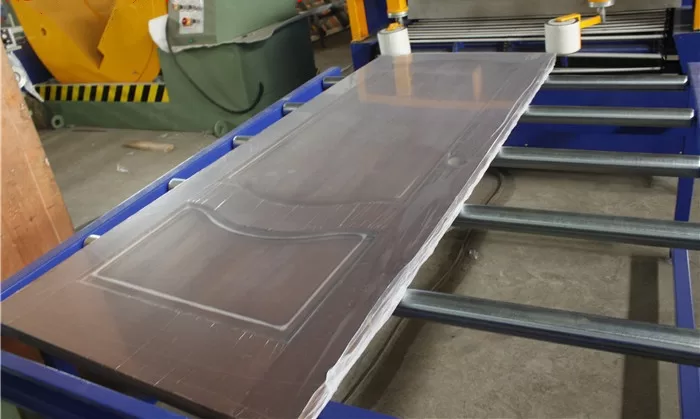
When I started FHOPEPACK, my goal was always to help clients grow their businesses. I saw that many businesses were spending too much on packing. They did not realize how much money they could save with smart automation. It is not just about making things faster. It is about making them cheaper and better, too. Think of it like this: every damaged door is money thrown away. Every hour spent on manual labor that could be automated is also money lost. Automated systems fix these issues. They are an investment that pays for itself.
-
Reducing Labor Costs and Increasing Throughput
One of the most direct ways automated door packing systems improve your bottom line is by significantly reducing labor costs. Manual packing requires a team of workers. These workers receive wages, benefits, and often overtime pay. An automated machine can perform the work of several people, often without breaks or fatigue. This means you need fewer employees dedicated solely to packing tasks. Those employees can then be moved to other parts of the factory where their skills are more valuable. This shift optimizes your workforce. It makes your operations more efficient. Beyond reducing direct labor costs, automation also dramatically increases throughput. A machine can pack doors much faster and more consistently than a human can. This means more doors get packed and shipped in the same amount of time. Higher throughput translates directly into higher sales volume. It also means you can meet larger orders and shorter deadlines. For South Korean exporters, this speed is a huge advantage in the global market. Faster delivery times make customers happier and give you a competitive edge. Michael Chen’s challenge was “efficiency bottleneck” due to heavy reliance on manual processes. His goal was to “elevate automation level” to solve these end-of-line issues. This is exactly what automated packing achieves. It transforms a slow, expensive process into a fast, cost-effective one. This kind of investment has a clear ROI. It helps your factory generate more revenue with fewer resources.
-
Minimizing Product Damage and Customer Complaints
Product damage during internal transfer and packing is a major problem for many factories. For large items like doors, even a small scratch or dent on an edge can make a product unacceptable to a customer. These damages lead to customer complaints, product returns, and the need for costly repairs or replacements. All of this eats into your profits. Manual handling is a big cause of this damage. When people lift, move, and stack heavy items, mistakes happen. Items can be dropped or bumped against other surfaces. Automated packing systems are designed for precision and gentle handling. They use specialized grippers and conveyors to move doors smoothly and securely. The wrapping and strapping processes are consistent and tight. This protects the product during handling and transit. This means fewer damaged goods leaving your factory. Fewer damaged goods mean happier customers and fewer complaints. It also means less money spent on fixing or replacing products. This directly improves your factory’s profit margins. Michael Chen highlighted “product damage” as a challenge, stating that it led to customer complaints and profit loss. His goal was to achieve “cost reduction and efficiency enhancement” through ROI-driven equipment. By minimizing product damage, automated systems directly contribute to these goals. They protect your product quality, which protects your brand reputation. This is especially vital for exporters whose products must withstand long journeys to reach international markets. The investment in robust, automated packing ensures that products arrive in perfect condition. This builds customer trust and encourages repeat business.
Why choosing the right packing machine partner is key for long-term growth?
Have you ever bought equipment from a supplier who just wanted your money, then disappeared when you needed help? Dealing with unreliable suppliers can be a huge headache, leading to costly downtime and frustration. In the world of industrial machinery, finding a true partner is just as important as finding the right machine itself.
Choosing the right packing machine partner is key for long-term growth because they offer more than just equipment. They provide expert guidance, reliable after-sales support, and a deep understanding of your operational challenges, ensuring your investment truly solves problems and helps your business expand.
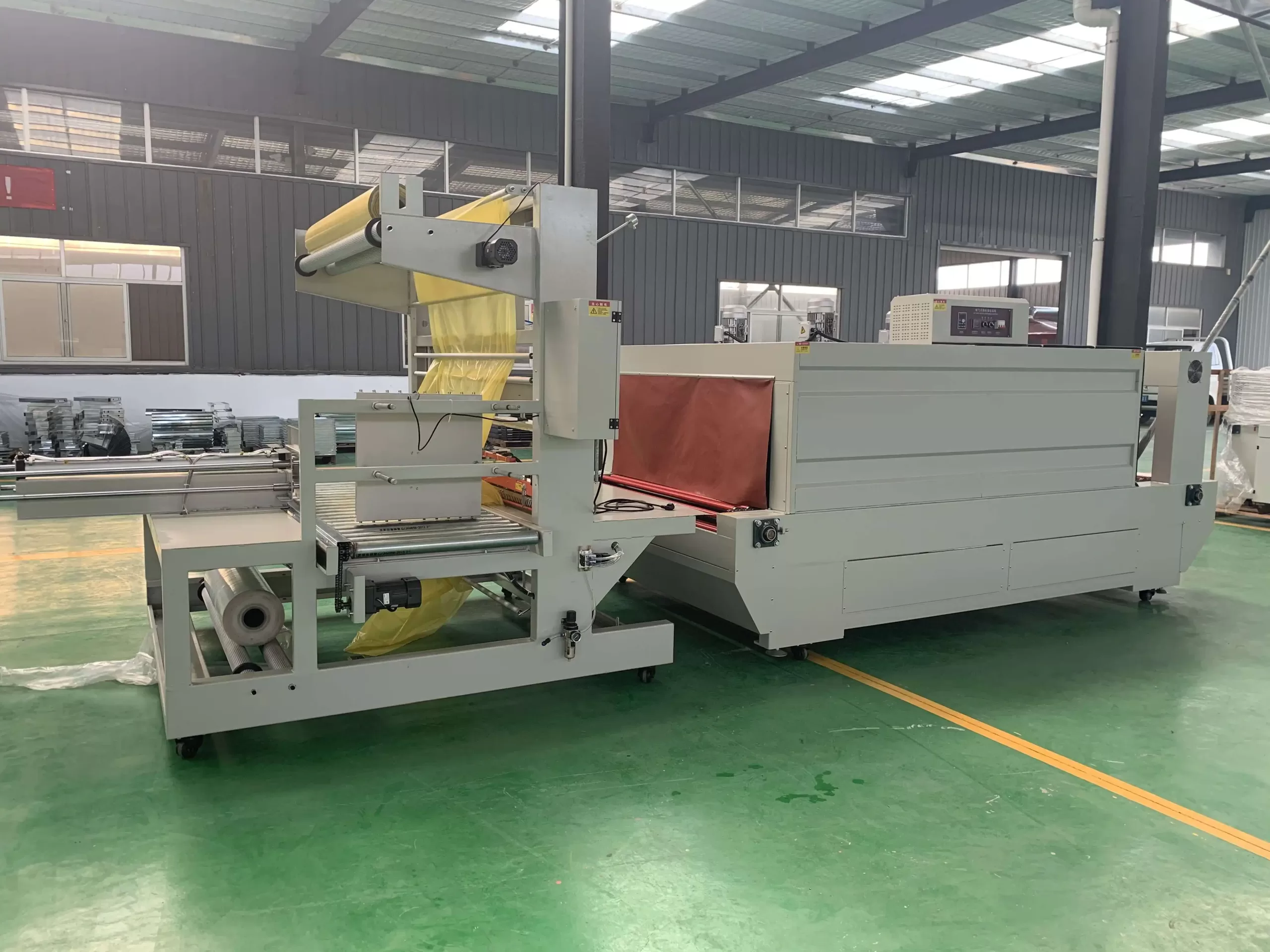
My journey in the packing machine industry, from an employee to owning my own factory, taught me this lesson deeply. I have seen many companies invest in new equipment only to be let down by poor service. At FHOPEPACK, my mission is to share knowledge and build lasting relationships. I believe that a true partner understands your pain points. They do not just sell a machine; they sell a solution. This is why for South Korean exporters, picking a partner who truly understands their specific needs for door packing is not just a good idea. It is vital for their success.
-
Beyond the Sale: The Importance of Expertise and After-Sales Service
Many equipment suppliers focus only on making a sale. Once the machine is delivered, their interest seems to disappear. This leaves factory managers struggling with installation issues, operational problems, and a lack of support for maintenance or repairs. For complex machinery like automated door packing solutions, this is a huge problem. Without proper support, even the best machine can become a liability. A true partner offers expert guidance from the very beginning. They take the time to understand your factory’s specific needs. They look at your current processes. They ask about your challenges, like the ones Michael Chen faces with efficiency bottlenecks, safety hazards, and product damage. Based on this deep understanding, they recommend the right solution, not just the most expensive one. More importantly, they provide strong after-sales service. This includes installation support, training for your staff, and readily available technical assistance for troubleshooting and maintenance. When I built my factory, I understood that a machine is only as good as the support behind it. This is why FHOPEPACK focuses on being a knowledge-sharing platform. We want to empower our clients. We want them to feel confident that their investment is protected. This ongoing support ensures that your automated door packing system operates smoothly for years to come. It minimizes downtime and maximizes your return on investment.
-
Building Trust and Driving Business Growth
In the industrial world, trust is a valuable currency. Factory managers like Michael Chen have experienced “supplier trust crisis” in the past. They have dealt with suppliers who only cared about sales and offered poor after-sales service. This makes them very careful when looking for new partners. A reliable packing machine partner builds trust by consistently delivering on promises. They are transparent about what their machines can do. They are honest about potential challenges. They are there to help when problems arise. This kind of relationship goes beyond a simple transaction. It becomes a partnership for growth. When you work with an expert who has built and run a successful packing machine factory, like me, you get more than just a machine. You get insights, experience, and a deep understanding of what it takes to succeed in manufacturing. This knowledge helps you make better decisions about your investments. It helps you avoid costly mistakes. Michael Chen’s goal was to “seek expert guidance” from someone with deep industry background. This is because he understands that real expertise provides solutions that genuinely solve problems and drive business growth. For South Korean exporters, finding such a partner means they can confidently invest in automation. They know they have support to achieve higher efficiency, better safety, and increased profitability. This long-term partnership is what helps businesses not just survive, but truly thrive.
Conclusion
South Korean exporters are moving to automated door packing to boost speed, enhance safety, and cut costs. This shift is a smart investment, delivering clear ROI and fostering growth. Partnering with a trusted expert like FHOPEPACK ensures your success.








