
Why Are Romanian Factory Owners Choosing Automated Upenders for Safety Gains?
Have you ever worried about the safety of your workers? Do you lie awake at night thinking about potential accidents on the factory floor? Many factory managers, especially those running busy metal processing plants, face immense pressure. They must balance high production targets with worker safety. Manual processes, like handling heavy coils or molds, pose real dangers. These risks can lead to serious injuries, high insurance costs, and even skilled workers leaving the job.
Romanian factory owners are increasingly choosing automated upenders because these machines drastically improve workplace safety. They remove the need for human workers to manually lift or flip extremely heavy and awkward items. This significantly reduces the risk of back injuries, crush accidents, and other serious incidents common in heavy industries. This shift towards automation helps protect their most valuable asset: their people.
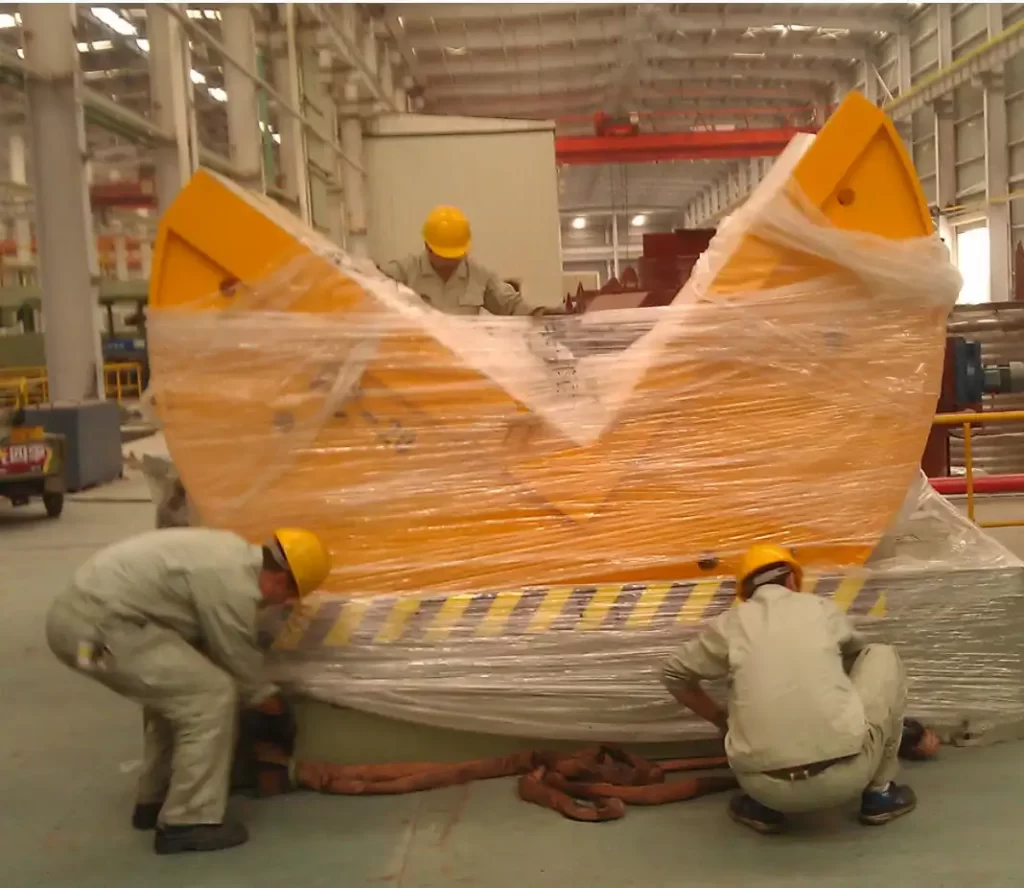
It is clear that factory safety is a major concern. But how exactly do these machines make a difference? Let us look at the specific ways automated upenders tackle common factory dangers and help achieve a safer, more efficient workplace.
How Do Manual Handling Risks Threaten Factory Safety?
Are your current packing or material handling methods putting your team at risk? Many factories still rely on manual labor for moving heavy, awkward items. This might seem cost-effective at first, but it creates a hidden hazard. Workers must physically lift, push, or reposition massive coils, molds, or other industrial components. This constant heavy lifting strains bodies and leads to chronic injuries over time.
Manual handling risks severely threaten factory safety by causing direct physical harm to workers. These operations involve repetitive strain, incorrect lifting postures, and the sheer weight of materials. These factors combine to create a high-risk environment. Accidents can range from minor muscle strains to severe crush injuries, especially when heavy loads shift unexpectedly or equipment fails.

My journey in the packing machine industry taught me a lot about factory operations. I started as an employee. I saw firsthand the dangers workers faced every day. I later built my own factory. I made sure to prioritize safety from the start. Manual handling of heavy items, like steel coils or wire bundles, is a huge problem. This is true in any part of the world, including factories in Romania. The physical demands are intense. Workers often use forklifts and cranes, but they still need to manually adjust or flip items. This puts them in harm’s way. This leads to many common workplace injuries. These injuries include back pain, slipped discs, and crushed limbs. These are not just statistics. These are real people getting hurt. Companies also pay a high price for these incidents.
Consider the ripple effect of a single manual handling accident.
- Immediate Costs: Medical expenses for injured workers, ambulance fees, and potential emergency room visits. This also includes costs for temporary staffing or overtime for other workers.
- Lost Productivity: The production line stops or slows down. This happens during the incident itself. It also happens when a key worker is absent due to injury. This directly impacts output and delivery schedules.
- Insurance Premiums: A rise in workplace accidents usually means higher insurance premiums. This adds to the factory’s operating costs over the long term.
- Worker Morale and Turnover: When workers see their colleagues getting hurt, morale drops. They may start looking for safer jobs. This leads to higher employee turnover. It also means increased costs for recruiting and training new staff.
- Reputational Damage: News of serious accidents can harm a company’s reputation. This makes it harder to attract new talent or even retain clients. Clients want to work with safe and responsible partners.
I remember one factory manager. He told me about a costly injury. A worker strained his back flipping a heavy mold. The factory paid for his medical bills. They also had to hire temporary staff. This cost them much more than investing in an automated solution would have. This is a common story. Factories often overlook these hidden costs. They focus only on the upfront cost of new equipment. But the long-term cost of ignoring safety is always higher. Factory managers in Romania, just like everywhere else, are learning this lesson. They are seeing that manual handling is a major bottleneck. It limits output. It also increases financial and human risks.
Can Automation Really Cut Down Workplace Accidents?
Are you skeptical about how much automation can improve safety? It is a common question. Many factory owners wonder if investing in new machines truly translates to fewer accidents. They may think that human errors are always part of the factory environment. However, this view does not fully grasp the power of well-designed automation.
Automation significantly cuts down workplace accidents by removing human workers from hazardous tasks. Machines like upenders handle the heavy lifting and precise positioning of materials. This eliminates direct human contact with dangerous loads. It also standardizes the process. This reduces the chance of human error, fatigue, or incorrect procedures causing an accident.

When I started FHOPEPACK, my goal was to share knowledge. I wanted to help others in the packing machine industry. My experience showed me that automation is not just about speed. It is also about safety. Automated upenders, for example, transform how factories handle heavy materials. They do this by taking over the riskiest parts of the job. Think about a steel coil. It weighs many tons. Manually flipping it, or even adjusting its position, is incredibly dangerous. A machine can do this smoothly and safely. It uses hydraulics or electric motors. This means no human needs to be near the moving load. This simple change removes many accident possibilities.
Here is how automated upenders directly reduce common factory accidents:
| Type of Accident | How Manual Handling Contributes | How Automated Upenders Prevent It |
|---|---|---|
| Back and Muscle Injuries | Workers strain muscles or injure their spine from heavy lifting, bending, or twisting. | Machine handles all lifting and positioning. Workers operate remotely. No physical strain. |
| Crush Injuries | Fingers, hands, or limbs get caught between moving parts or falling loads. | No direct human contact with the load during operation. Safety sensors stop movement if a person gets too close. |
| Slips, Trips, Falls | Workers lose balance while moving heavy objects, or trip over obstacles during manual operations. | Reduced need for workers to maneuver around large, unstable loads. Clearer pathways. |
| Forklift/Crane Incidents | Accidents happen when operators have limited visibility or loads swing unexpectedly during manual guiding. | Integrated systems ensure precise movement. Reduces need for manual guiding. Improves overall stability. |
| Repetitive Strain Injuries | Workers perform the same strenuous movements repeatedly over long periods. | Machine performs the repetitive, high-force tasks. Workers perform supervisory or lighter tasks. |
I have seen factories where a single automated upender replaced several workers who were previously engaged in risky, manual tasks. This did not mean job losses in most cases. It meant workers could be redeployed to safer, more skilled roles, like operating the new equipment or performing quality checks. It improved their job quality. It also made the whole factory safer. This is why factory managers in Romania and other industrial hubs are making these investments. They see the clear return on investment (ROI) in terms of reduced injury rates and a more stable workforce. They are not just buying a machine. They are investing in a safer future for their workers. This is a big step towards a modern, responsible manufacturing environment.
What Other Benefits Do Automated Upenders Offer Beyond Safety?
Do you believe automated upenders only help with safety? While safety is a primary benefit, these machines offer much more. Many factory owners initially focus on accident prevention. But they soon discover a range of other advantages that significantly boost their operations. These additional benefits help improve the overall health of their business.
Automated upenders provide significant benefits beyond safety, including dramatic improvements in efficiency and cost reduction. They speed up material handling processes, reduce product damage, and optimize labor use. This leads to higher output, fewer reworks, and lower operational expenses. These machines make factories more competitive and profitable.

As a packing machine engineer, I have always looked for ways to make processes better. My experience building a successful packing machine factory taught me that efficiency and cost control are key. Automated upenders deliver on both counts. Take the example of Michael Chen, a factory manager from Mexico. He faces common challenges: slow manual processes, product damage during internal transfer, and high labor costs. These are problems that automated upenders directly address.
Let us look at how these machines deliver value beyond just safety:
-
Boost in Efficiency and Throughput:
- Faster Operations: Manual handling is slow. It needs multiple workers. It takes time to coordinate. An automated upender performs the flip or turn quickly and smoothly. This drastically reduces cycle times at the end of the production line.
- Reduced Bottlenecks: Manual packing and handling often create bottlenecks. Products pile up. The upender keeps the flow smooth. This means the entire production line can operate at its optimal speed. This is crucial for factories aiming to meet tight delivery deadlines.
- Consistent Performance: Machines do not get tired. They perform the same task perfectly every time. This ensures consistent speed and quality. This helps avoid delays caused by human fatigue or inconsistent work rates.
-
Significant Cost Savings:
- Lower Labor Costs: Automated upenders reduce the need for multiple workers to perform dangerous, repetitive tasks. These workers can be re-assigned to other, more value-added roles within the factory. This lowers the overall labor cost per unit produced.
- Reduced Product Damage: Manual handling of heavy, delicate items like steel coils often leads to damage. Edges can get dinged. Surfaces can get scratched. Automated systems handle materials with precision. They minimize contact points and apply controlled force. This reduces product loss and customer complaints. This saves money on rework and scrap.
- Lower Insurance Premiums: As safety improves and accidents decrease, factories often see a reduction in their insurance premiums. This is a direct financial benefit of investing in safer equipment.
-
Improved Quality and Customer Satisfaction:
- Consistent Product Quality: By reducing damage during internal transfer and packing, automated upenders ensure that products reach the customer in perfect condition. This consistency builds trust.
- Faster Delivery Times: The boost in efficiency means products are processed and shipped faster. This can be a key competitive advantage. It improves customer satisfaction and helps secure repeat business.
I have seen factories in various countries, including those working with coil packing and steel wire packing. They have transformed their operations by adopting these technologies. The investment pays for itself. It does this through savings on labor, reduced waste, and avoided accident costs. Factory managers who think strategically see the full picture. They see that an automated upender is not just an expense. It is a smart investment in their factory’s future. It makes them more competitive.
How Can You Choose the Right Partner for Automation?
Are you feeling overwhelmed by the choices when looking for an automation partner? Finding the right supplier for automated equipment can be tricky. Many companies promise a lot but deliver little in terms of real support or deep understanding of your needs. This often leads to frustration and wasted investment. It is crucial to pick a partner who truly understands your industry.
Choosing the right automation partner involves looking beyond just the equipment price. You need a supplier with deep industry knowledge, a proven track record, and strong after-sales support. A good partner understands your specific challenges. They can offer tailored solutions. They ensure your investment truly solves problems and helps your business grow.
My journey from a factory employee to factory owner taught me the value of true partnership. I have worked with many suppliers. I have also been a supplier myself. I know what factory managers like Michael Chen need. They do not just want to buy a machine. They want a solution. They want someone who understands their production bottlenecks. They need help with safety issues and efficiency problems. This is why FHOPEPACK focuses on sharing knowledge. We want to be that reliable partner.
Here are key factors to consider when choosing an automation partner:
-
Deep Industry Expertise:
- Understand Your Niche: Does the supplier understand the specifics of steel coil packing? Do they know about wire packing? Do they understand heavy manufacturing? A partner with direct experience in your industry knows your pain points. They can suggest solutions that actually work.
- Proven Track Record: Look for a company with a history of successful installations. Ask for case studies or references. This shows they can deliver what they promise.
-
Customization and Problem-Solving:
- Tailored Solutions: Every factory is unique. A good partner does not offer a one-size-fits-all solution. They should listen to your specific challenges. They should design or adapt equipment to fit your exact needs. This includes understanding your space constraints and material types.
- Diagnostic Approach: A true partner will help you identify the root causes of your problems. They will not just try to sell you the most expensive machine. They will offer an ROI-driven solution. They show you how the investment will pay off.
-
Reliable After-Sales Support:
- Installation and Training: The relationship does not end after the sale. A good partner provides professional installation. They also offer thorough training for your team. This ensures your staff can operate and maintain the new equipment effectively.
- Maintenance and Parts: What happens if the machine breaks down? Check their warranty, spare parts availability, and technical support. Quick support means less downtime for your factory.
- Long-Term Relationship: The best partners are interested in a long-term relationship. They offer ongoing support and advice. This helps your factory continue to grow and adapt.
I have seen the frustration when factories deal with suppliers who only care about making a sale. They disappear after the machine is delivered. This leaves the factory with equipment they cannot fully utilize. This is why I built FHOPEPACK. My mission is to share what I know. I want to help factory owners avoid these pitfalls. We aim to be a resource for you. We provide expertise. We offer reliable solutions. We are here to support your success. Choosing the right partner means choosing peace of mind. It means choosing a path to sustained growth and safety.
My Takeaways for Future-Proofing Your Factory!
What is the biggest lesson I have learned in my career? It is that industries are always changing. Factories must adapt to stay competitive. This means more than just buying new machines. It means thinking ahead. It means being proactive about safety and efficiency. It means building a resilient operation.
My key takeaway for future-proofing your factory is simple: embrace smart automation for core operations like material handling. Investing in reliable, expert-backed solutions like automated upenders not only boosts safety and efficiency today but also positions your factory for sustainable growth, reduced long-term costs, and greater competitiveness in the evolving manufacturing landscape.
Through my years in the packing machine industry, from the factory floor to leading my own successful factory, I have seen many trends come and go. But one constant remains: the drive for improvement. For factory owners, especially those dealing with heavy materials like steel coils or wire, the future demands a focus on two things: worker safety and operational efficiency. Automated upenders address both powerfully.
I often think about the stories of factory managers like Michael Chen. He understands the pressures of daily operations. He understands the need for reliable equipment. He understands the desire for a partner who offers real insights. My experience building a financially independent business from the ground up, by helping my clients grow, reinforces this idea. When you invest in the right technology, and partner with the right people, the return is not just financial. It is also in the well-being of your employees and the strength of your business.
So, my advice to factory owners in Romania, or anywhere else in the world, is this: do not wait for an accident to happen before you prioritize safety. Do not let outdated manual processes hold back your production. Look at your current challenges. Identify the areas where manual handling creates bottlenecks, risks, or product damage. Then, explore how automated upenders can solve these problems.
Think about the long-term benefits:
- A Safer Workplace: This is the most important. A happy and healthy workforce is more productive. They stay with your company longer.
- Increased Output: Faster, more reliable material handling means you can produce more. You can meet customer demands more easily.
- Reduced Costs: Less product damage, fewer worker injuries, and optimized labor use all translate to real money saved.
- Enhanced Reputation: Being known as a safe, efficient, and modern factory attracts the best talent and the best clients.
I am passionate about sharing what I have learned. I believe that every factory has the potential to be safer and more efficient. It just takes the right knowledge and the right tools. Automated upenders are one of those essential tools for the modern factory.
Conclusion
Automated upenders are a clear path to boosting safety and efficiency in heavy manufacturing. They protect workers, speed up operations, and cut costs. This makes them a wise investment for any forward-thinking factory.








