
Why Are Pan-European Buyers Demanding Energy-Efficient Mold Tilters?
Are you running a busy factory, constantly dealing with heavy parts? Do you find your team struggling with manual handling, slow processes, or even safety issues? This constant battle can drain your resources. It often leads to production delays, worker injuries, and unnecessary costs.
Pan-European buyers are increasingly demanding energy-efficient mold tilters because these machines directly address critical needs. They cut operational costs through lower energy use. They make the workplace safer by reducing manual handling of heavy items. Also, they improve overall production efficiency and product quality. These tilters fit well with strict European environmental standards and the global push for sustainable manufacturing.
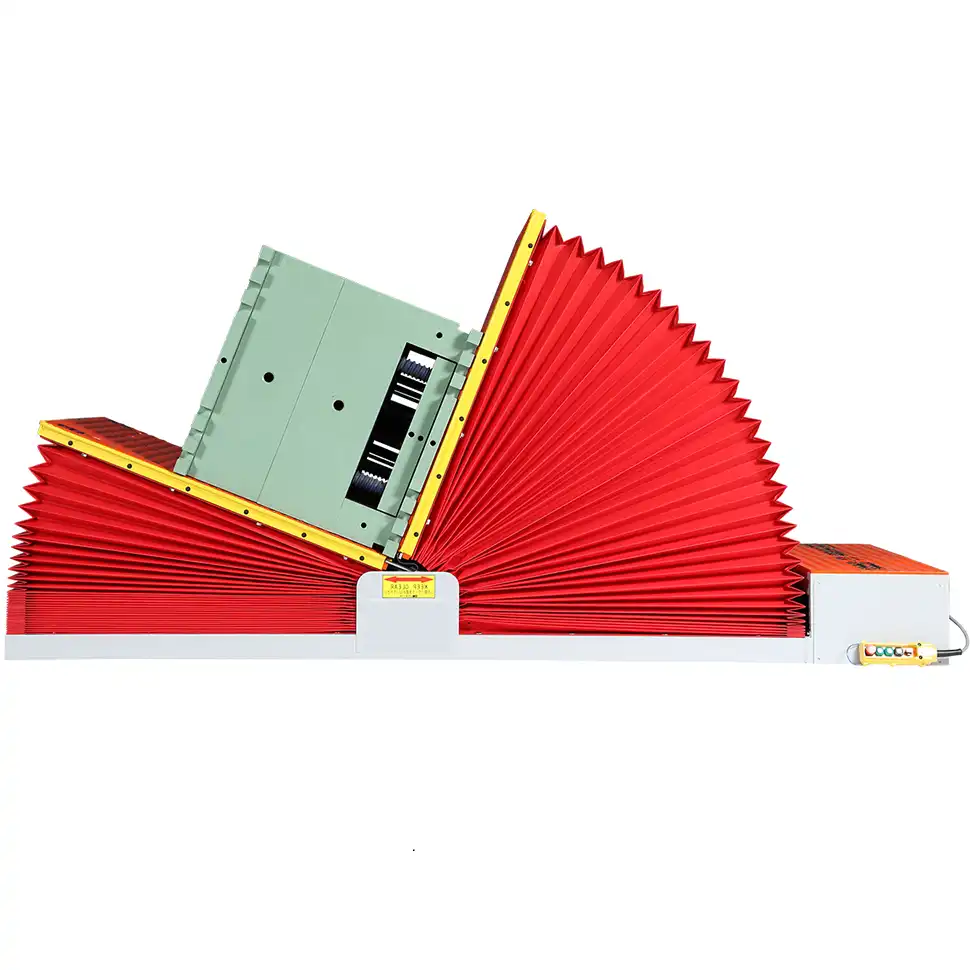
I have walked in your shoes. I understand the pressures of managing a factory, whether it is in Mexico like Michael’s operation or a plant right here in Europe. The challenges are universal: boosting output, controlling costs, and keeping everyone safe. Let us dive deeper into why these smart machines are becoming indispensable, and how they can transform your operations.
Are Your Workers at Risk, and Can Mold Tilters Improve Safety?
Think about your factory floor. Are your workers manually moving or flipping heavy molds, dies, or large steel coils? This task is a ticking time bomb. It often leads to serious injuries, high insurance costs, and a constant cycle of employee turnover. This situation crushes both your bottom line and your team’s morale.
Mold tilters dramatically improve safety in heavy manufacturing by automating the hazardous process of flipping and positioning heavy objects. This eliminates the need for workers to lift things by hand. It greatly reduces the risk of crush injuries, muscle strains, and other common workplace accidents. This creates a much safer environment for everyone in your factory.
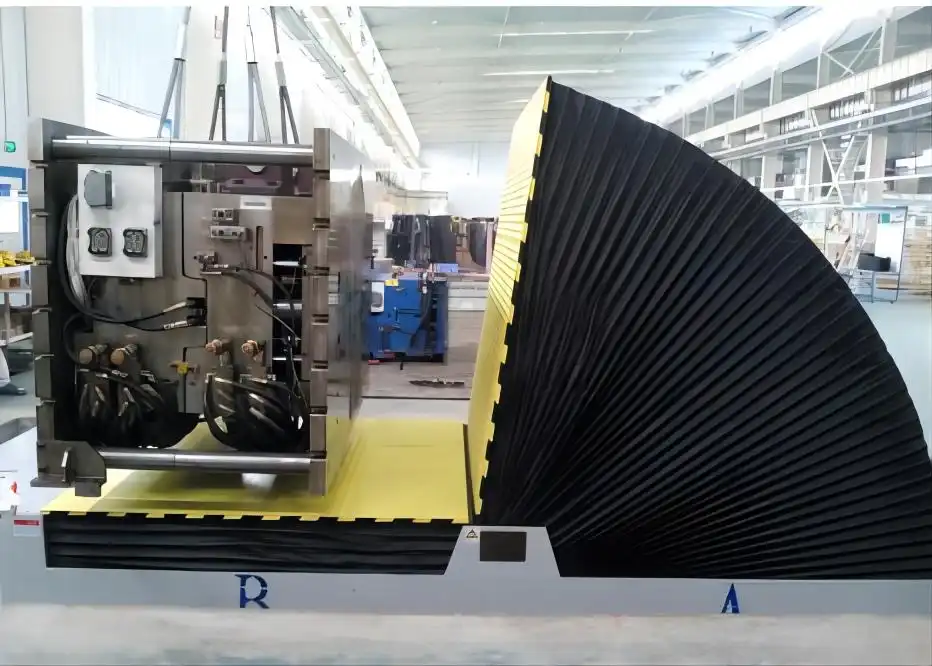
Manual handling of heavy components, like large molds or steel coils, brings many serious dangers. Workers risk muscle strains, back injuries, and crushing accidents. These injuries lead to high medical costs, increased insurance premiums, and lost work days. I saw this firsthand in my early days. One small mistake could lead to a major incident. It could put a worker in the hospital and halt production for hours. Factories that rely on manual methods often face higher rates of absenteeism and employee turnover. Workers simply do not want to risk their health every day. This leads to a constant need for training new staff. It also lowers overall productivity.
Mold tilters change this entire picture. They are designed to lift, rotate, and position extremely heavy objects with precision. They do this using hydraulic or electric systems. Workers can operate them from a safe distance using controls. This removes the need for direct physical contact with the heavy load. The machines come with safety features like emergency stop buttons, overload protection, and interlocks. These features prevent accidents. They ensure safe operation. From my experience building my own factory, I learned that investing in safety is not just about avoiding fines. It is about protecting your most valuable asset: your people. A safe workplace boosts morale. It makes workers feel valued. This leads to higher productivity and loyalty. The return on investment (ROI) from improved safety is clear. You save money on medical bills, insurance, and lost production time. You also build a reputation as a responsible employer. This attracts better talent.
Manual vs. Automated Handling: Safety Aspects
| Feature | Manual Handling | Automated Handling (Mold Tilter) |
|---|---|---|
| Injury Risk | High (strains, crushed limbs, back injuries) | Very Low (operator safely distanced, machine handles) |
| Insurance Costs | Higher premiums due to frequent claims | Lower premiums due to reduced claims |
| Worker Morale | Low (fear of injury, physical strain) | High (safer environment, less physical burden) |
| Product Damage | High (accidental drops, impact during handling) | Low (precise, controlled movement) |
| Operational Speed | Slow and inconsistent | Fast and consistent |
| Compliance | Risk of failing safety regulations | Easier to meet safety standards |
How Do Mold Tilters Combat Production Bottlenecks and Product Damage?
Is your factory facing frustrating delays at the end of the production line? Are your manual packing and handling processes slowing everything down? These bottlenecks affect your entire operation. They prevent products from reaching customers on time. Even worse, are you seeing your products get damaged during internal transfers? Dents, scratches, or bent edges eat into your profits and customer satisfaction.
Mold tilters significantly boost production efficiency. They automate and speed up the precise positioning of heavy molds, dies, or coils. This reduces the time it takes for each step in the process. They also minimize product damage. They provide secure, controlled handling. This prevents dents or deformities that often happen with unsafe manual methods.
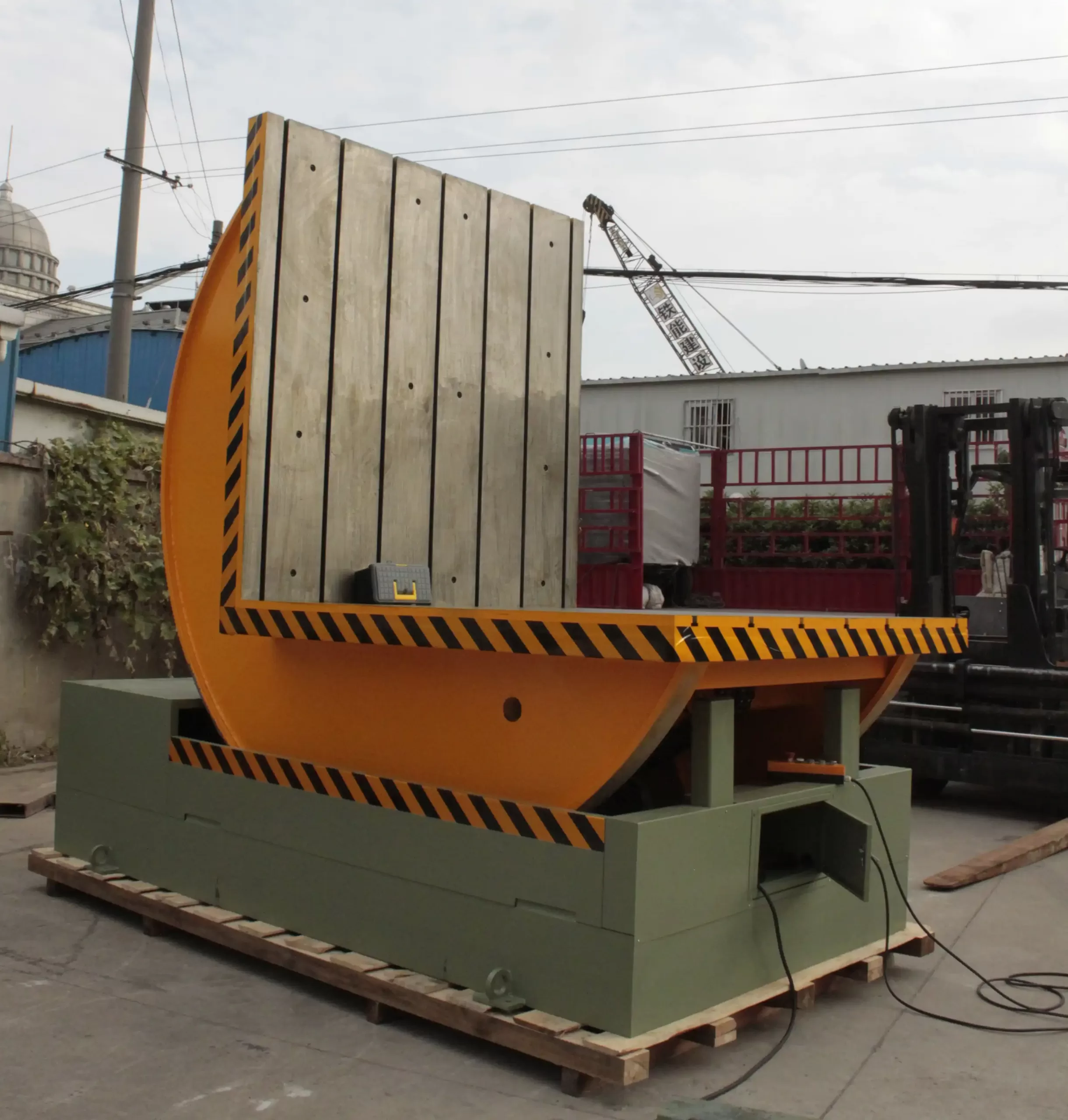
I remember the early days of my packing machine factory. Manual handling was a huge bottleneck. It did not matter how fast the machines were making products if they just piled up at the end. Workers moved slowly. They needed breaks. They got tired. This made the whole line inefficient. For Michael, with his steel coils and wires, manual packing is a major problem. It affects overall production and delivery speeds. When processes like flipping heavy objects or preparing them for packing rely on human strength and timing, they become unpredictable. This leads to delays and missed deadlines. This ripple effect can cause production targets to be missed across the entire factory.
Product damage is another hidden cost that many factory managers overlook. During internal transfers or when preparing for packing, heavy items are prone to damage. For steel coils, a dropped edge or an improper flip can cause significant dents. These damages lead to customer complaints. They result in returns or discounted sales. Ultimately, this means lost profits. I learned that every damaged product represents wasted material, labor, and time. It also damages your company’s reputation. A mold tilter solves these problems. It is a precise machine. It can rotate heavy molds or coils smoothly and steadily. It handles objects without sudden movements or drops. This significantly reduces the chance of damage. This means fewer customer complaints. It means fewer returns. It means more money in your pocket. The investment in a mold tilter pays off through increased output and reduced waste. This is crucial for growing a business, just like I helped many of my clients grow theirs.
Efficiency & Quality Impact: Manual vs. Automated Tilting
| Aspect | Manual Handling | Automated Handling (Mold Tilter) |
|---|---|---|
| Throughput | Slow, inconsistent, prone to bottlenecks | Fast, consistent, eliminates bottlenecks |
| Cycle Time | Longer, variable | Shorter, predictable |
| Product Quality | High risk of damage (dents, scratches, deformation) | Minimal risk of damage, preserves product integrity |
| Consistency | Varies based on worker skill and fatigue | High, precise, repeatable movements |
| Labor Cost | High (multiple workers, injury costs) | Lower (fewer workers needed for operation) |
| Delivery Time | Extended due to delays | Reduced, improves on-time delivery |
Why Are European Factories Prioritizing Energy Efficiency in Their Equipment Choices?
Are you a factory manager in Europe, feeling the squeeze from high energy costs? Are you also trying to meet tough environmental rules? This dual pressure is real. It makes it hard to cut costs while also hitting your sustainability targets. It might feel like you have to choose between profit and planet.
European factories are prioritizing energy-efficient mold tilters due to several factors. Rising energy prices are a major concern. Strict environmental directives, like those from the EU Green Deal, push for cleaner operations. There is also a strong corporate emphasis on sustainability. These machines offer substantial long-term cost savings through reduced electricity consumption. They also create a smaller carbon footprint. This enhances a company’s competitive edge in a green market.

The European manufacturing landscape is unique. Energy costs are often higher than in other regions. Also, the European Union has some of the world’s most ambitious environmental goals. The EU Green Deal, for example, aims for climate neutrality by 2050. This means factories must reduce their emissions and energy consumption. Companies are not just doing this to follow rules. They know that sustainability is good for business. Consumers and partners increasingly prefer working with environmentally responsible companies. For me, coming from the packing machine industry, I always looked for ways to make operations leaner and greener. It is about smart business.
Energy-efficient mold tilters are designed with this in mind. They use advanced motors, like variable frequency drives (VFDs). These drives adjust power use based on the load. This means they do not waste electricity when running at partial capacity. Many models also have intelligent control systems. They can enter a standby mode when not in use. This saves even more energy. Traditional machines might use a constant amount of power regardless of the task. Modern, energy-efficient ones only use what is needed. This leads to significant savings on electricity bills over the machine’s lifespan. Consider Michael’s goal of clear ROI. These savings are measurable. They add up quickly, especially with the high electricity prices in Europe. A factory might save thousands of Euros each year just on energy. This money can be reinvested into other areas of the business. It also shows a commitment to environmental stewardship. This builds a positive brand image. Investing in such equipment is not just an expense. It is a strategic move for long-term growth and compliance.
Energy Efficiency Benefits of Modern Mold Tilters
| Benefit | Description | Impact on Factory Operations |
|---|---|---|
| Reduced Energy Bills | Utilizes advanced motors (VFDs) and smart controls to lower electricity consumption. | Direct cost savings, improved operational budget. |
| Lower Carbon Footprint | Less energy use means fewer greenhouse gas emissions. | Supports environmental goals, better corporate image. |
| Compliance | Helps meet strict European energy efficiency and environmental regulations. | Avoids fines, ensures legal operation, market access. |
| Competitive Edge | Appealing to eco-conscious clients and partners. | Attracts new business, strengthens market position. |
| Operational Savings | Long-term savings offset initial investment, clear ROI. | Frees up capital for other investments, boosts profitability. |
| Reduced Heat Output | More efficient machines generate less waste heat. | Potentially lowers cooling costs in the factory. |
Conclusion
Energy-efficient mold tilters are essential. They boost safety, increase efficiency, and cut energy costs. This makes them a smart investment for factories everywhere, especially for demanding Pan-European buyers.








