
Why Are Canadian Purchasing Teams Prioritizing Automated Coil Upenders for Throughput Gains?
Factory managers across Canada often face tough situations. They deal with constant pressure to boost output, cut costs, and keep workers safe. When it comes to handling heavy materials like steel coils, manual methods are slow. They create huge bottlenecks. This delays everything from production to shipping. It also raises big safety concerns. Many businesses struggle with this daily. They look for ways to make things better, but good answers are hard to find.
Canadian purchasing teams are now prioritizing automated coil upenders to boost throughput. These machines directly fix efficiency problems. They improve worker safety. They also reduce damage to products. They offer a stable solution for moving heavy coils from horizontal to vertical, or the other way around. This happens quickly and safely. Using these upenders means a smoother and faster production flow.
This is not just about buying a new piece of equipment. It is about making a smart investment. It is about solving real problems that impact a company’s bottom line. From my many years in the packing machine industry, I have seen these changes. I have helped many clients grow their businesses by adopting better technology. Let us look at the main reasons why Canadian businesses are now focusing on automated upenders.
Are Manual Coil Handling Methods Causing Major Bottlenecks and Delays?
Think about a busy factory floor. Workers struggle to move heavy steel coils. They use overhead cranes or forklifts. These methods are often slow. They need many people. Each move takes a lot of time. This creates a big slowdown at the end of the production line. This bottleneck slows down the whole factory. It means fewer products get out the door each day. This directly hits the company’s profits.
Automated coil upenders quickly move heavy coils. They do it from one position to another. This removes the need for slow, manual work. They speed up the process. This helps clear bottlenecks at the end of the line. Factories can move coils much faster. This means products ship out quicker. The overall production rate goes up. This lets companies meet customer demands better.
Automated coil upenders significantly improve the speed and efficiency of coil handling. This helps solve critical production bottlenecks. In many factories, like those Michael Chen manages, the packing area is often the slowest point. Manual handling of heavy steel coils, especially when changing their orientation for different processes or shipping, takes a lot of time. Workers must carefully position slings or clamps. They then lift the coil. After that, they slowly rotate it using a crane. This process is complex. It needs skill and takes a long time. Even a small mistake can lead to delays or unsafe conditions.
Impact of Manual Handling on Production Flow
- Slow Turnover Rates: Each coil takes a long time to handle. This limits how many coils can be processed per shift.
- Increased Labor Costs: Many workers are needed to manage these heavy loads safely. This adds to operational costs.
- Variable Efficiency: Human performance varies. This means handling speed can change day by day. It makes planning difficult.
- Queue Buildup: Coils pile up at the packing station. This creates a backlog. It delays finished goods from going out.
Automated upenders, by contrast, work fast and consistently. They can change a coil’s position in minutes, not tens of minutes. They use hydraulics or mechanics to rotate the coil smoothly. This steady speed means a predictable flow of materials. It allows factories to plan their production schedules more accurately. I have seen many factories in my career. When they put in an automated upender, their daily output jumped right away. For example, one client told me they cut coil positioning time by 70%. This simple change let them ship out two more full trucks of product every day. This directly boosted their throughput. It also made their customers happier. The return on investment for such a machine becomes clear very fast. It is a smart move for any factory aiming for higher output.
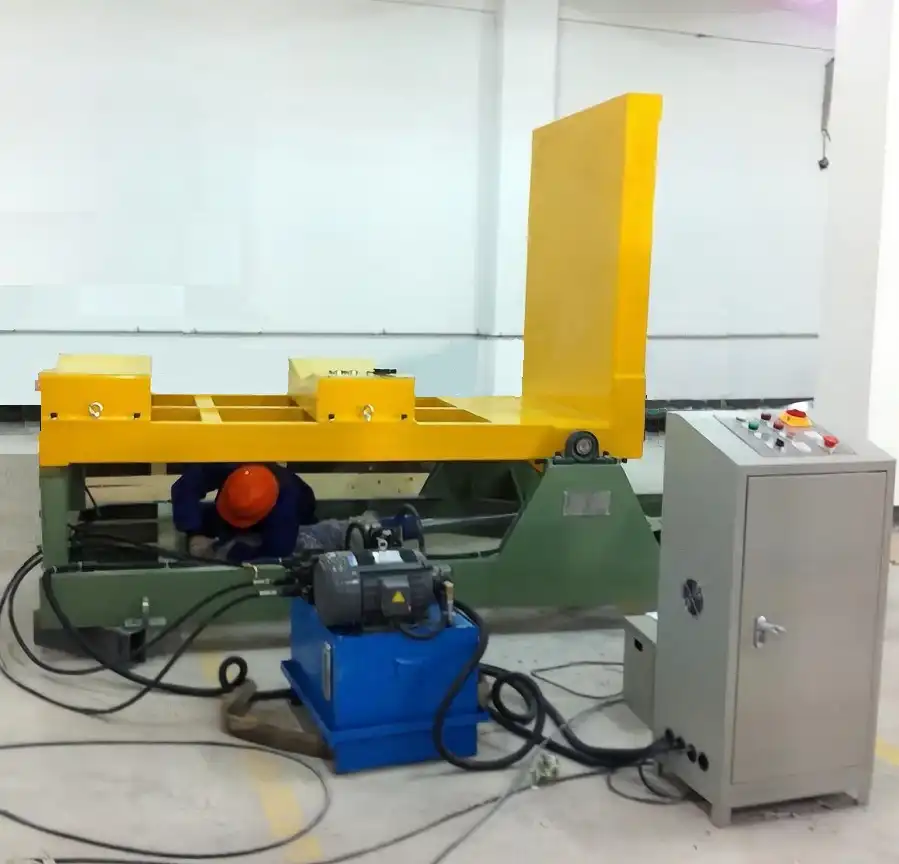
Can Automated Upenders Really Improve Worker Safety and Reduce Injuries?
Workers often handle heavy items like steel coils. They use manual methods. This puts them at high risk of injury. Back strains, crushed limbs, and falling objects are common dangers. These accidents lead to pain for workers. They also mean high medical costs and lost workdays for the company. Many factory managers, like Michael, worry about this daily. They want to keep their teams safe.
Automated coil upenders greatly reduce the need for workers to directly handle heavy coils. This removes many safety risks. Workers operate the machine from a safe distance. The machine does all the heavy lifting and turning. This means fewer accidents. It means lower injury rates. It results in reduced insurance costs for the company. Workers feel safer too. This improves morale and keeps skilled employees on the job.
Safety is a top concern for any factory manager. When workers handle heavy objects like steel coils, the risk of injury is very high. Think about Michael Chen’s situation. He often sees workers trying to move 10-ton coils. They use old methods. They might use chains. They might try to flip coils with forklifts. This is incredibly dangerous. It can cause muscle strains, fractures, or even worse. These incidents do not just hurt workers. They also cost the company a lot of money. They lead to high insurance claims. They cause production stops. They can even lower employee morale.
Common Safety Risks in Manual Coil Handling
| Risk Type | Description | Impact on Factory Operations |
|---|---|---|
| Ergonomic Strain | Workers manually lift or guide heavy tools/chains, causing back and joint injuries. | Increased absenteeism, long-term health issues for staff. |
| Crushing Hazards | Heavy coils can shift or fall during manual manipulation or transport. | Severe injuries, fatalities, legal liabilities. |
| Equipment Damage | Mishandling can lead to collisions with walls, other machines, or floors. | Costly repairs, downtime, potential secondary hazards. |
| Forklift Accidents | Forklifts are involved in many incidents, especially when moving unbalanced, heavy loads. | Vehicle damage, worker injury, production disruption. |
Automated coil upenders change this entire picture. The machine does the dangerous work. Workers stand clear. They push buttons on a control panel. This setup removes people from the direct path of moving coils. This dramatically reduces the chance of accidents. When I first started working in packing machine factories, I saw many close calls. This made me understand the importance of safety design. Modern upenders have safety features. These include light curtains, emergency stops, and interlocks. These features stop the machine if anything is wrong. They ensure maximum safety.
For Canadian companies, workplace safety rules are very strict. Investing in automated upenders helps meet these rules. It also shows a commitment to worker well-being. This can lower insurance premiums over time. It can also help attract and keep good workers. Michael Chen wants to avoid injuries. He wants to keep his team safe. Automated upenders provide a clear way to do this. They protect workers and the company’s bottom line at the same time.

How Do Coil Upenders Prevent Product Damage and Boost Your Bottom Line?
Imagine a finished steel coil. It is perfect. Then, during handling, its edges get bent or scratched. This happens often with manual methods. These small damages can mean big problems. Customers might reject the product. This leads to costly returns. It means reworks. It results in financial losses for the factory. Damaged goods directly hurt profits.
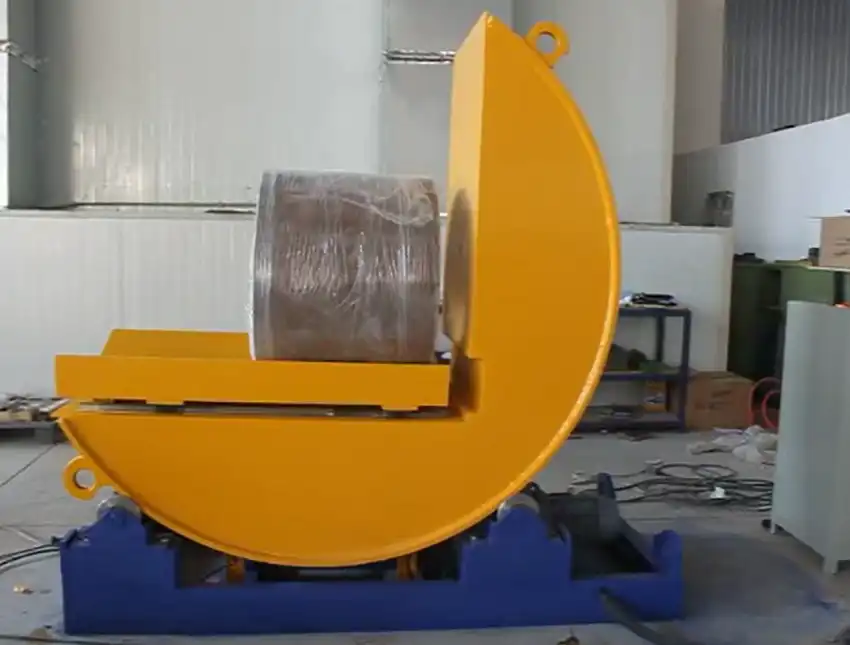
Automated coil upenders handle products smoothly and carefully. They use controlled movements. They have custom supports for the coils. This protects the product from damage during movement and orientation changes. Fewer damaged coils mean less waste. It means fewer customer complaints. It results in more sales. This directly helps the factory’s profits.
Product damage is a silent killer of profits. Factories produce high-quality steel coils or wire. But if they get damaged during internal transport or packing, their value drops. This often happens when workers try to manually flip heavy coils. They might use rough methods. They might use insufficient padding. The edges of the coil can get dinged. The surface can get scratched. Michael Chen knows this problem well. He mentioned how product loss during transfer and packing leads to customer complaints and profit loss. These damages do not just mean money lost on that one product. They can also harm the company’s reputation.
Ways Manual Handling Leads to Product Damage
- Impact Damage: Coils hitting the floor, walls, or other equipment during uncontrolled movements.
- Edge Deformity: The edges of the coil getting bent or crimped due to improper lifting or placement.
- Surface Scratches: Abrasions on the coil surface from rubbing against rough surfaces or lifting chains.
- Deformation from Uneven Support: Weight not distributed evenly, causing the coil to deform slightly.
Automated coil upenders are designed for gentle handling. They use hydraulic power to smoothly rotate coils. They move them from horizontal to vertical, or vice versa. The machine’s contact surfaces are often padded. They are designed to fit the coil’s shape. This ensures the coil is fully supported during the entire process. This gentle handling stops damage. It keeps the product in perfect condition. I have seen how much this matters. A client in the wire industry had high rates of wire coil damage. After they installed an automated upender, their damage rate dropped by 90%. This meant fewer customer complaints. It led to more repeat orders. It directly boosted their bottom line.
For Canadian purchasing teams, investing in an automated upender has a clear ROI. It reduces the costs associated with damaged goods. This includes rework, scrap, and lost sales. By protecting product quality, a factory can maintain higher profit margins. They can also build a stronger reputation for quality. This makes a lot of business sense.
Why Are Canadian Buyers Looking for True Partners, Not Just Vendors?
Many businesses have bought equipment only to feel let down. They get a machine, but then the support stops. The supplier focuses only on the sale. They do not care about after-sales service. They do not offer expert guidance. When problems arise, the company is on its own. This leads to distrust. Michael Chen has dealt with this problem. He wants a real partner.
Canadian buyers now look for partners. They want suppliers who understand their challenges. They need those who offer professional insight. They want reliable solutions. They seek ongoing support. This means working with experts. It means finding people who have deep industry knowledge. This ensures the investment solves real problems. It also helps their business grow long-term.
Finding the right equipment is one part of the challenge. Finding the right partner is another, equally important part. I know from my own journey. I started as an employee. Then I built my own packing machine factory. I learned that trust is key. Many factory managers, like Michael Chen, have faced issues with equipment suppliers. They often feel these suppliers only care about making a sale. Once the machine is delivered, the support vanishes. This leaves the customer to deal with setup problems. They deal with maintenance issues. They deal with operational difficulties alone. This lack of after-sales service creates a huge problem. It leads to frustration. It leads to lost production time. It makes managers very careful about choosing new partners.
Qualities of a Trusted Equipment Partner
| Quality | Description | Benefit for Canadian Purchasers |
|---|---|---|
| Industry Expertise | Deep understanding of specific operational challenges (e.g., steel coil handling). | Provides tailored solutions, not generic ones. |
| Problem-Solving Focus | Ability to analyze factory bottlenecks and offer targeted improvements. | Ensures the investment directly addresses core issues. |
| Reliable Support | Responsive after-sales service, spare parts availability, technical assistance. | Minimizes downtime, ensures long-term machine performance. |
| Long-Term Vision | Committed to the client’s success, offering guidance beyond the initial purchase. | Builds a lasting relationship, supports future growth. |
Canadian purchasing teams are becoming smarter buyers. They do not just compare price tags. They look at the full picture. They want a supplier who can act as an advisor. They want someone who truly understands their production bottlenecks. They need someone who can help with safety issues. They need someone who can improve efficiency. My own experience building FHOPEPACK has shown me this. It is not enough to build great machines. You also need to share knowledge. You need to provide real solutions. This is why FHOPEPACK focuses on being a knowledge-sharing platform.
For a factory manager like Michael, working with an expert like me, or someone with similar experience, is invaluable. We can talk about specific challenges. We can suggest the right technology. We can ensure the investment in an automated upender truly provides an ROI. We can help integrate the machine smoothly into existing lines. This partnership approach builds confidence. It ensures the equipment investment drives real business growth. It is why Canadian buyers seek out trusted advisors. They want to ensure their investments really pay off.

Conclusion
Canadian purchasing teams prioritize automated coil upenders for clear reasons. They boost throughput, improve safety, and cut costs. This smart investment solves real factory problems. It drives business growth for the long term.








