
Which OSHA and ANSI Safety Standards Must Your Coil Upender Meet in the USA?
Are you a factory manager like Michael, overseeing massive operations from raw materials to finished products? Do you constantly feel the pressure to boost output, cut costs, and keep everyone safe? I know this feeling well. You are likely dealing with slow, manual processes, high injury risks, and product damage. Every minute of downtime means big losses. You need equipment that works hard and stays reliable, even in tough environments. More than that, you need a partner who truly understands your challenges.
When you invest in a coil upender for your US operations, it is not just about moving heavy coils. It is about worker safety, legal compliance, and protecting your bottom line. In the USA, your upender must meet specific safety standards from OSHA (Occupational Safety and Health Administration) and ANSI (American National Standards Institute). These rules cover everything from machine guarding and electrical safety to lockout/tagout procedures. Following these standards helps prevent accidents, avoids heavy fines, and keeps your production running smoothly.
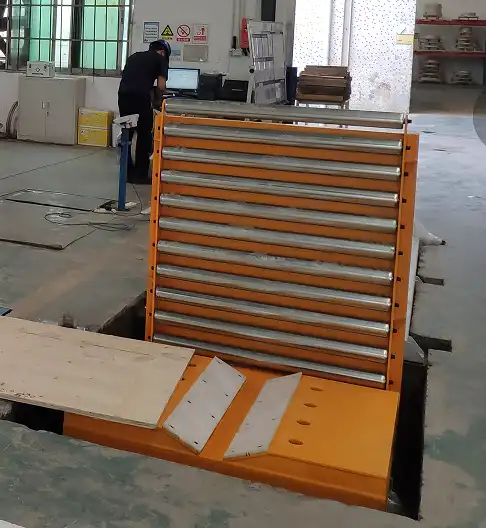
Understanding these standards is not just about avoiding trouble. It is about building a safer, more efficient workplace. It is about protecting your people and your profits. Let’s dig into the details of what this means for your factory and how to make sure your upender setup is fully compliant and truly safe.
Why Is OSHA Compliance Critical for Coil Upenders?
Are your current coil handling methods putting your team at risk? Are you worried about workplace accidents, high insurance costs, and employee turnover? For factory managers, the safety of heavy equipment operations is a constant headache. Manual handling of heavy coils is slow and dangerous. It is a major source of accidents.
In the United States, OSHA sets and enforces strict standards for workplace safety and health. For coil upenders, OSHA compliance is not optional. It covers crucial areas like machine guarding, electrical safety, and procedures for controlling hazardous energy (lockout/tagout). Meeting these rules protects your workers from serious injury. It also protects your company from large fines and legal problems.
OSHA plays a big role in preventing injuries and deaths in American workplaces. When it comes to machines like coil upenders, OSHA has specific regulations that you must follow. These rules ensure that all machinery is designed and used safely. From my own factory days, I saw firsthand how quickly a small oversight could lead to a big problem. We always put safety first. It was not just about following rules. It was about making sure everyone went home safe at the end of the day.
Here are some key OSHA regulations that apply to coil upenders:
OSHA 1910 Subpart O – Machinery and Machine Guarding
This subpart covers general requirements for all machines. It focuses on guarding moving parts to prevent workers from getting caught or crushed. For a coil upender, this means:
- Point of Operation Guarding: This protects workers from the area where the coil is being lifted, tilted, or rotated. Guards must prevent hands or other body parts from entering this danger zone.
- Nip Points and Rotating Parts: Upenders have motors, gears, and shafts. These parts create nip points where clothing or body parts can get caught. All such points must have guards.
- Flying Chips or Sparks: While less common for upenders, if any process creates flying debris, guarding is needed.
- Fixed vs. Interlocked Guards: Guards should be fixed in place where possible. If they need to be opened for maintenance, they should be interlocked. This means the machine cannot run if the guard is open.
OSHA 1910.147 – Control of Hazardous Energy (Lockout/Tagout)
This is a very important standard. It makes sure that machines cannot start unexpectedly during maintenance or repair. For upenders, this means:
- Written Procedures: You must have clear, written steps for shutting down and locking out the machine’s energy sources.
- Energy Isolation Devices: Upenders use electrical power and hydraulic or pneumatic energy. All these sources must have devices to isolate them.
- Lockout Devices: Each authorized employee working on the machine must put their own lock on the energy isolation device.
- Training: All employees who work near or on the machine must be trained on lockout/tagout procedures.
OSHA 1910 Subpart S – Electrical
This subpart covers electrical safety. Upenders are electric machines. So, all electrical wiring, components, and controls must be installed and maintained safely. This includes proper grounding, circuit protection, and preventing exposure to live electrical parts.
OSHA 1910.176 – Material Handling
This standard gives general requirements for storing and handling materials. While it does not specifically name coil upenders, its principles apply. For example, it talks about safe stacking, moving, and securing loads. An upender helps with these tasks, but the overall material flow must be safe.
Failing to meet these OSHA standards can lead to severe consequences. These include heavy fines, forced shutdowns, and criminal charges in serious cases. More importantly, non-compliance puts your workers at grave risk of injury or death.
| OSHA Regulation | Relevance to Coil Upenders | Key Action |
|---|---|---|
| 1910.212 | General machine guarding requirements. | Install fixed and interlocked guards on all moving parts. |
| 1910.147 | Control of hazardous energy during servicing. | Develop and follow strict lockout/tagout procedures. |
| 1910 Subpart S | Safe electrical installation and maintenance. | Ensure all wiring and components meet electrical codes. |
| 1910.176 | General safety for material handling. | Integrate upender into a safe, efficient material flow system. |
| 1910.333 | Safe work practices related to electrical hazards. | Train operators on safe electrical procedures. |
What Specific ANSI Standards Apply to Coil Upenders?
Do you want equipment that not only works but also sets the bar for safety and design? Michael, you are looking for durability and efficiency. You know that investing in the right equipment means finding what lasts. You also want to make sure the equipment helps rather than hurts your overall operations.
ANSI (American National Standards Institute) develops voluntary consensus standards for many industries. While OSHA sets legal requirements, ANSI standards often provide the technical details and best practices for meeting those requirements. For coil upenders, you will look at general machine safety standards and principles from the ANSI B11 series. These standards guide the design, construction, and safeguarding of industrial machinery. They help ensure your upender is built to the highest safety levels from the start.

ANSI standards are voluntary. But they are often seen as the industry’s best practices. Many times, following ANSI standards helps you meet OSHA requirements. It also shows a commitment to safety and quality beyond the minimum legal rules. There is no single ANSI standard titled “Coil Upenders.” Instead, principles from broader machine safety standards apply. The ANSI B11 series is particularly important for machinery safety. This series covers machine tools and general machine safety. Coil upenders are specialized material handling machines, so the B11 series provides a strong framework for their safe design and use.
Here are key ANSI standards relevant to coil upenders:
ANSI B11.0 – Safety of Machinery – General Requirements and Risk Assessment
This is the foundational standard for machine safety. It covers how to do a risk assessment. This means identifying hazards, estimating risks, and deciding on ways to reduce those risks. For an upender, this involves:
- Hazard Identification: Pinpointing all possible dangers. Examples include crushing points, pinch points, falling coils, and electrical shocks.
- Risk Estimation: Judging how likely and how severe an injury could be from each hazard.
- Risk Reduction: Applying a hierarchy of controls. This means trying to eliminate the hazard first, then guarding, then warning, then training.
ANSI B11.19 – Performance Requirements for Safeguarding
This standard focuses on how machine safeguards should work. It gives specific details on guard design, interlocks, and emergency stop systems. For a coil upender, this means:
- Guard Design: Guards must be strong enough to resist forces. They must prevent reaching over, under, through, or around them.
- Interlocking: Guards that need to open must have interlocks. These prevent the machine from running if the guard is not properly closed.
- Emergency Stop: Upenders must have clear, easily accessible emergency stop buttons. These must immediately stop all hazardous motion.
Principles from Other ANSI Standards
While not directly about upenders, other ANSI standards offer principles that are useful:
- ANSI B15.1 – Safety Standard for Mechanical Power Transmission Apparatus: This covers shafts, pulleys, and belts. While upenders might not have exposed belts, the general idea of guarding rotating parts is relevant.
- ANSI B56.1 – Safety Standard for Low Lift and High Lift Powered Industrial Trucks: While an upender is not a truck, this standard emphasizes safe load handling and stability. The same principles apply to how an upender lifts and rotates a heavy coil. The upender must be stable and able to handle the coil’s weight safely.
Following ANSI standards helps you create a safer work environment. It also improves machine reliability and reduces the risk of liability. It shows that your factory is using best practices for safety.
| ANSI Standard | Focus Area | Impact on Upender Design |
|---|---|---|
| B11.0 | Risk assessment and general machine safety | Guides overall safety design and hazard identification. |
| B11.19 | Safeguarding performance requirements | Specifies design for guards, interlocks, and E-stops. |
| B15.1 (principles) | Mechanical power transmission | Reinforces guarding of rotating and moving parts. |
| B56.1 (principles) | Safe load handling and stability | Ensures structural integrity and stability during operation. |
How Can You Ensure Your Coil Upender Meets Safety Requirements?
Is your current packaging process slow and unsafe? Are you struggling with product damage during internal transfers? Michael, you know that automation can solve these problems. But how do you make sure your automated solution is safe and reliable? It is not enough to just buy a machine. You need to make sure it meets all safety rules.
Ensuring your coil upender meets safety requirements is a multi-step process. It goes beyond just purchasing a compliant machine. It involves a strong focus on risk assessment, proper machine guarding, strict lockout/tagout procedures, comprehensive operator training, and ongoing maintenance. This complete approach reduces risks and keeps your production line running smoothly and safely.

When I built my factory, we learned that a well-trained team makes all the difference. It is not just about the machine. It is about the people using it. You can have the safest machine, but if operators are not trained, or if maintenance is not done right, then problems will happen. Safety is a team effort. Here are the key ways to make sure your coil upender is safe:
1. Conduct a Thorough Risk Assessment
Before you even install an upender, you must identify all potential hazards. This includes crushing hazards, pinch points, entanglement, electrical risks, and falling object risks. Once you find these hazards, you need to assess how likely and how severe an injury would be. Then, you can put controls in place to reduce those risks. This risk assessment should be ongoing. It should happen when you buy a new machine, change processes, or after any incident.
2. Implement Robust Machine Guarding
Machine guarding is critical. Guards must prevent access to moving parts that could cause injury. For an upender, this includes:
- Physical Barriers: Fences or covers around the rotating parts and the area where the coil is being moved.
- Interlocked Gates: If workers need to access certain areas, gates should be interlocked. This stops the machine when the gate is open.
- Light Curtains or Safety Scanners: These create a sensing field around the upender. If someone breaks the field, the machine stops.
3. Establish Clear Lockout/Tagout (LOTO) Procedures
LOTO is essential for preventing unexpected machine startup during maintenance or servicing. You need:
- Written Procedures: Clear, step-by-step guides for shutting down, isolating energy, locking, and testing the upender before any work begins.
- Training: All employees who perform maintenance or servicing on the upender must be fully trained on LOTO procedures.
- Proper Equipment: Supply all workers with the correct locks, tags, and devices to isolate energy.
4. Provide Comprehensive Operator Training
Your operators are your first line of defense. They must be fully trained on:
- Safe Operation: How to use the upender correctly, including loading and unloading coils.
- Emergency Procedures: What to do in case of a malfunction, power outage, or accident. How to use the emergency stop button.
- Hazard Recognition: How to spot potential dangers and report them.
- Daily Checks: What to look for before starting the machine each shift.
5. Implement Regular Maintenance and Inspections
Preventative maintenance keeps the upender in good working order. It also helps spot problems before they cause an accident. This includes:
- Scheduled Checks: Regular inspections of mechanical, electrical, and hydraulic components.
- Lubrication: Keeping moving parts properly lubricated.
- Wear and Tear: Replacing worn parts like bearings, chains, or hydraulic hoses.
- Safety Device Checks: Regularly testing emergency stop buttons, interlocks, and sensors.
By focusing on these areas, you build a safety culture around your upender. You protect your workers. You also make your operations more reliable and productive.
| Safety Measure | Description | Why It Matters for Upenders |
|---|---|---|
| Risk Assessment | Identifying, evaluating, and controlling hazards. | Essential first step to design and implement effective safety features. |
| Machine Guarding | Physical barriers and safety devices around moving parts. | Prevents crushing, pinching, and entanglement injuries. |
| Lockout/Tagout (LOTO) | Procedures to de-energize and lock out equipment during servicing. | Prevents unexpected startup, protecting maintenance personnel. |
| Operator Training | Educating workers on safe operation, emergencies, and hazard recognition. | Empowers employees to operate the machine safely and respond to incidents effectively. |
| Regular Maintenance | Scheduled inspections and servicing of all components. | Ensures continuous safe operation and identifies potential failures before they occur. |
Why Is Supplier Expertise Key to Upender Safety?
Have you ever worked with a supplier who only cared about the sale? Michael, you have faced that problem. You need a partner who truly understands your production bottlenecks, safety risks, and efficiency needs. You need someone who can give you real solutions. Finding the right supplier is crucial for your factory’s success and safety.
A knowledgeable supplier is more than just a vendor. They are a partner who understands your operational challenges. They can provide upenders that are not only efficient but also designed and built to meet rigorous safety standards from the ground up. This deep understanding means they can offer insights and solutions that truly solve your problems, not just sell you a machine. They bring expertise that helps you navigate complex safety regulations and ensures your investment is sound.
When I started FHOPEPACK, my goal was to be different. I wanted to share what I learned, not just sell machines. Helping clients grow their business, that is what truly matters to me. My journey from a packing machine engineer to owning my own factory taught me a lot. I learned what real factory managers need. They need reliability, efficiency, and safety. And they need a partner who stands by them.
Here is why supplier expertise is so important for upender safety:
1. Understanding Your Specific Needs
An expert supplier will not offer a one-size-fits-all solution. They will ask about your coil sizes, weights, production volume, factory layout, and existing processes. They understand that a coil upender is not a standalone machine. It is part of a larger production line. They can advise on how the upender will fit into your current setup. This helps prevent new bottlenecks or safety issues.
2. Design and Engineering for Compliance
A truly expert supplier designs their machines with safety standards in mind from the very beginning. They know the latest OSHA regulations and ANSI standards. They build features like robust guarding, redundant safety circuits, and easy-to-use lockout/tagout points directly into the machine. This is much better than trying to add safety features later.
3. Quality of Components and Build
Experienced suppliers use high-quality components. They do not cut corners. This means stronger frames, more reliable hydraulic systems, and durable electrical components. Better components mean less downtime, fewer breakdowns, and a safer machine overall. They understand that cheap parts often lead to expensive problems later on, especially safety problems.
4. Customization and Integration Capability
Your factory might have unique requirements. An expert supplier can customize an upender to fit your specific space or process. They can integrate it seamlessly with conveyors, robots, or other automated systems. This ensures smooth material flow and reduces the need for human intervention, which improves safety.
5. After-Sales Support and Training
The relationship does not end after the sale. A good supplier provides comprehensive after-sales support. This includes:
- Installation Support: Guiding your team through the safe installation of the upender.
- Operator Training: Providing training for your operators and maintenance staff on safe operation and troubleshooting.
- Spare Parts Availability: Ensuring you can easily get replacement parts to keep your machine running.
- Technical Support: Offering prompt help for any issues that arise.
Choosing a supplier who genuinely understands the industry and values long-term partnerships is critical. It ensures you get a safe, reliable, and efficient coil upender that truly helps your business grow.
| Supplier Quality | Impact on Your Factory | What to Look For |
|---|---|---|
| Deep Industry Knowledge | Provides solutions tailored to your specific operational needs. | Asks detailed questions about your processes and challenges. |
| Safety-First Design | Ensures machine meets or exceeds safety standards from build. | Can explain how their design addresses OSHA/ANSI compliance. |
| Quality Components | Reduces breakdowns, increases reliability and safety. | Provides component specifications and warranty details. |
| Customization & Integration | Seamless fit into existing lines, fewer manual points. | Offers design flexibility and talks about overall system integration. |
| Strong After-Sales Support | Minimizes downtime, ensures proper usage and maintenance. | Provides training, spare parts, and responsive technical help. |
Conclusion
Meeting OSHA and ANSI safety standards for your coil upender in the USA is not just a legal must. It is vital for protecting your workers and boosting your factory’s efficiency. Partner with an expert who understands these rules and your unique needs. This choice ensures a safer, more productive operation.








