
Which Orbital Wrapping Machine is Best for Egypt’s Furniture Makers?
Furniture makers in Egypt face unique challenges. Manual wrapping is slow, labor-intensive, and often leads to damaged goods. Your beautifully crafted furniture needs protection. Imagine your high-quality pieces arriving at customers with scuffs or breaks. This harms your reputation and cuts into your profits. You work hard to create great furniture. Poor packing undoes that effort. Finding the right orbital wrapping machine can change this. It protects your products, speeds up your line, and saves you money. But which one is truly the best fit for your specific needs?
The best orbital wrapping machine for Egypt’s furniture makers is often a horizontal model specifically designed for long, bulky items. These machines efficiently wrap items like sofas, tables, cabinets, and bed frames, providing comprehensive protection against dust, moisture, and transport damage. The choice depends on specific product dimensions, required throughput, and factory space, but a robust, semi-automatic or automatic horizontal orbital wrapper generally offers the best balance of efficiency, protection, and cost-effectiveness for the furniture industry.

When I started my journey in the packing machine industry, I saw firsthand how the right machine could transform a business. It is not just about buying equipment. It is about investing in a solution that solves real problems. For Egyptian furniture makers, the path to better packing and higher profits starts with understanding your options. Let me share my insights to guide you.
Why is traditional furniture packing holding back Egyptian manufacturers?
Many furniture makers still rely on old packing methods. They use manual labor, plastic film, and lots of tape. This way seems cheap at first. But think about the true cost. Workers get tired. They can get injured moving large, heavy furniture. This leads to higher insurance costs and staff turnover. Delicate wood and fabric get damaged during handling. Your carefully made furniture might arrive imperfect. This harms your brand. We need to look at these methods critically. They create bottlenecks, safety risks, and product loss. Understanding these problems is the first step toward finding better solutions.
Traditional furniture packing methods hold back Egyptian manufacturers due to several key issues. These include slow production speeds because of manual processes, high risks of worker injury from handling bulky items, and significant product damage during internal transport and shipping. Such problems lead to increased operational costs, customer complaints, and a reduced competitive edge in the market.

When I was building my own packing machine factory, I learned that efficiency is not just about speed. It is about smart processes. Traditional furniture packing often lacks this. Imagine a production line where furniture moves smoothly. Then it hits a wall at the packing stage. This wall is usually manual labor. Workers spend too much time wrapping a single item. They pull, stretch, and tape. This slows down the entire factory. It limits how much furniture you can make and ship each day. This becomes a major bottleneck. My clients, like Michael, often tell me about these exact pain points. They want to ship more, faster, without compromising quality.
Let us consider the safety issues. Moving large sofas or heavy tables by hand is risky. Workers can strain their backs. They can drop items on their feet. These accidents lead to lost workdays. They also increase your insurance premiums. In my experience, a safe workplace is a productive workplace. Investing in machines that reduce manual handling is not just good for your workers. It is good for your bottom line. It shows you care, and that helps retain skilled employees.
Product damage is another big concern. Furniture is often delicate. Edges can chip. Fabric can tear. Scratches appear during handling or transit. Manual wrapping cannot always provide consistent, secure protection. Sometimes, the wrapping is too loose. Sometimes it is uneven. This leaves parts of the furniture exposed. When a customer receives damaged goods, they are unhappy. This leads to returns and negative reviews. These problems directly impact your profits and your brand’s reputation. A machine provides consistent, tight wrapping. It protects the entire product surface.
😩 The Hidden Costs of Manual Packing
Manual packing might seem cheaper initially. But it has many hidden costs.
- Labor Costs: High wages for slow work. Overtime for rushed orders.
- Injury Costs: Medical bills, lost work time, higher insurance.
- Material Waste: Inconsistent manual wrapping uses more film. It also leads to more damaged goods.
- Customer Dissatisfaction: Returns, refunds, negative reviews. These hurt future sales.
- Lost Opportunity: Slow packing means fewer products shipped. This limits your market reach.
| Challenge | Impact on Business | Automated Solution Benefit |
|---|---|---|
| 🐢 Slow Production | Reduced output, missed deadlines, limited growth | 🚀 Increased throughput, faster order fulfillment |
| 🤕 Worker Safety Risks | High injury rates, increased insurance, staff turnover | ✅ Safer workplace, reduced claims, better employee morale |
| 💔 Product Damage | Customer complaints, returns, profit loss, brand harm | 🛡️ Consistent protection, fewer damages, happier customers |
| 💸 High Operational Costs | Increased labor, material waste, and claim expenses | 💰 Reduced costs, improved ROI, higher profitability |
These points show that sticking to old methods is expensive. It holds back progress. For Egyptian furniture makers, embracing modern solutions is vital. It is about protecting your products, your people, and your profits.
What types of orbital wrappers fit Egyptian furniture manufacturing?
You know you need better packing. But the market offers many different machines. Which one is right for your specific furniture products? Choosing the wrong machine can be a costly mistake. It might not handle your large sofas. It might be too slow for your production needs. You could end up with an expensive machine that does not solve your problems. Let us break down the types of orbital wrappers. We will see which ones best suit the unique demands of Egyptian furniture manufacturing. This will help you make a smart investment.
For Egyptian furniture manufacturing, horizontal orbital wrapping machines are generally the most suitable type. These machines excel at wrapping long, bulky, and oddly shaped items such as sofas, tables, bed frames, and cabinets. They come in various sizes and automation levels, allowing manufacturers to choose between semi-automatic models for flexibility or fully automatic systems for high-volume production, ensuring products are securely protected for transport.
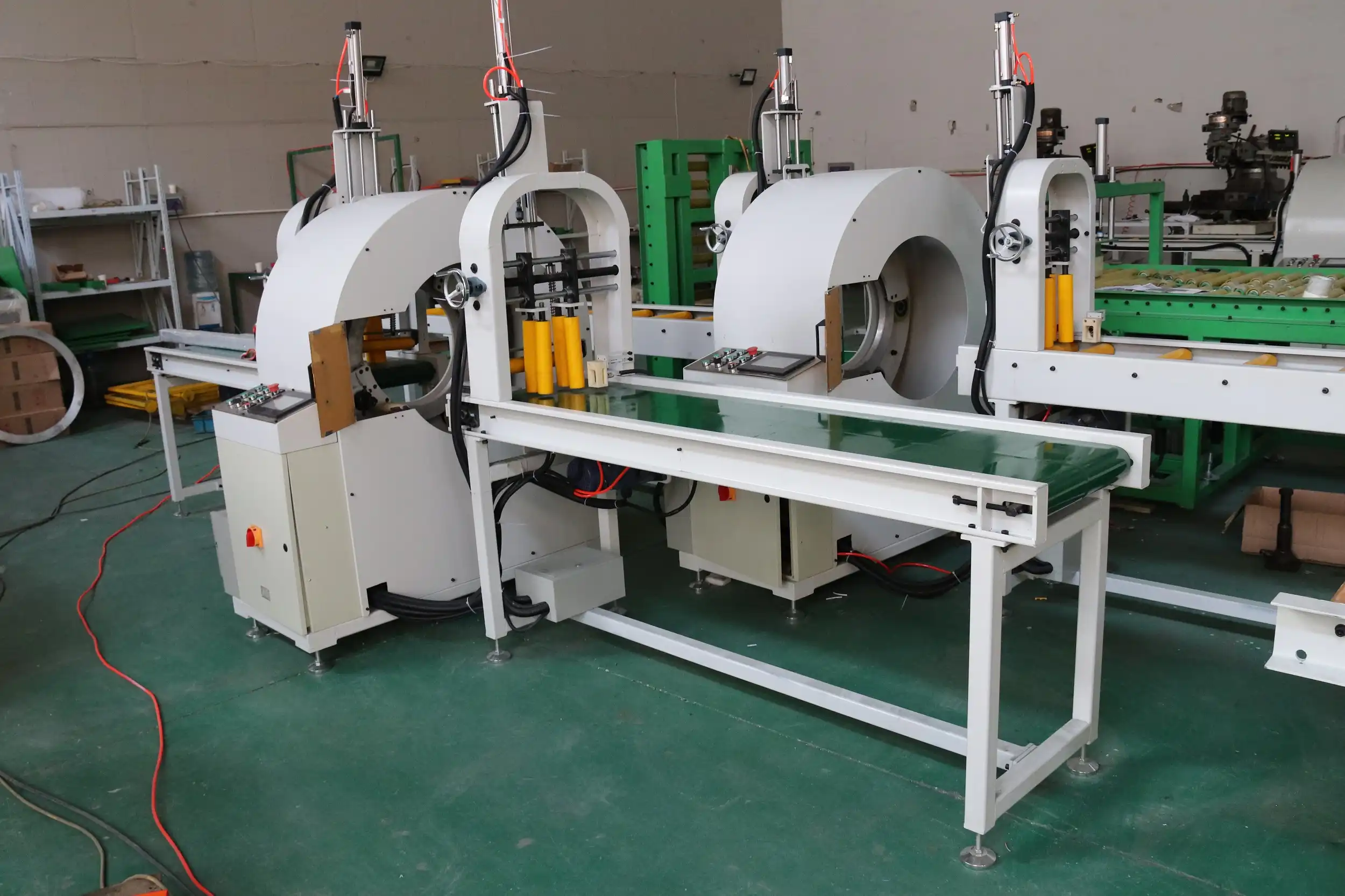
When I worked with factories needing to pack long items like steel coils or pipes, orbital wrappers were always the go-to solution. The furniture industry shares many similar needs. You have long, often heavy, and sometimes irregularly shaped items. A standard vertical pallet wrapper just will not cut it for most furniture.
Horizontal orbital wrappers are machines where the wrapping ring spins horizontally. Your product moves through this ring. The film wraps around the length of the item. This design is perfect for furniture pieces that are longer than they are wide. Think of:
- Sofas
- Dining tables (especially with detachable legs)
- Wardrobes or cabinets (when laid flat)
- Bed frames
- Mattresses
There are a few main categories within horizontal orbital wrappers:
⚙️ Semi-Automatic Orbital Wrappers
These machines require an operator to load the product. The operator also starts and stops the wrapping cycle. Sometimes, they cut the film.
- Benefits: Lower initial cost. More flexible for varied product sizes. Good for medium-volume production. Less complex to operate.
- Considerations: Still needs manual labor for loading/unloading. Speed is limited by operator efficiency.
- Ideal For: Smaller to medium-sized furniture workshops. Those with diverse product lines. Companies just starting with automation.
🤖 Automatic Orbital Wrappers
These machines integrate into your production line. They have conveyors that automatically feed products in and out. They cut the film and apply it without human intervention.
- Benefits: High throughput. Minimal labor required. Consistent wrapping quality. Reduces human error. Integrates well with other automated systems.
- Considerations: Higher initial investment. Requires more space. Less flexible for quick product changes without reprogramming.
- Ideal For: Large furniture factories. High-volume production. Companies looking for maximum efficiency and return on investment.
🌟 Custom Orbital Wrapping Solutions
Sometimes, standard machines do not fit. For very unique or extremely large furniture, custom solutions are possible. This might involve:
- Specialized ring sizes: To accommodate extra-wide or tall items.
- Integrated handling systems: Such as robotic arms or specialized conveyor belts.
- Heavy-duty constructions: For extremely heavy furniture pieces.
- Benefits: Tailored to exact needs. Optimal performance for unique products.
- Considerations: Highest cost. Longer lead times for design and manufacturing.
- Ideal For: Manufacturers with highly specialized furniture. Those with unique challenges not met by standard machines.
When I advise clients, I always emphasize looking at their current production volume. I also look at their future growth plans. A semi-automatic machine might be great now. But if you plan to double your output in two years, an automatic one might be better long-term. It is about future-proofing your investment. Thinking about the types of furniture you make, their sizes, and your desired production speed will guide you.
How do orbital wrappers improve safety and product quality for furniture?
Manual packing puts your workers at risk. It can also leave your valuable furniture vulnerable to damage. These are two major pain points for any factory manager, like Michael. Imagine a worker straining their back lifting a heavy wardrobe. Or a customer complaining about a chipped table edge. These incidents cost you money and damage your reputation. They slow down your operations. Orbital wrapping machines offer clear solutions to these problems. They are designed to improve both safety and the quality of your finished product. Let me explain how.
Orbital wrapping machines significantly improve safety for furniture factory workers by automating the strenuous and risky tasks of manually lifting and wrapping bulky items, reducing the risk of musculoskeletal injuries. Concurrently, they enhance product quality by providing consistent, tight, and comprehensive stretch film protection around furniture, preventing scratches, dents, and environmental damage during storage and transit.

Safety was always a top priority for me when I ran my own factory. I saw how even small injuries could disrupt an entire production line. For furniture makers, the items are often large and awkward to handle. This makes manual wrapping a high-risk activity. Orbital wrappers fundamentally change this dynamic.
First, they remove the need for manual lifting and turning of heavy items during the wrapping process. Products are typically loaded onto a conveyor or a trolley. The machine then takes over. This drastically reduces the physical strain on workers. They no longer need to bend, twist, or lift with heavy loads. This lowers the risk of:
- Back injuries: A common problem in industries involving heavy lifting.
- Strains and sprains: From repetitive motions or awkward positions.
- Crushing injuries: From dropped items or unstable loads.
When workers are safer, they are also happier and more productive. This leads to less absenteeism and lower turnover. It also means lower workers’ compensation claims for your business. For factory managers like Michael, these are tangible benefits that directly affect the bottom line. A safe workplace is a more efficient workplace.
Second, let us talk about product quality. Furniture pieces are investments for customers. They expect them to arrive in perfect condition. Manual wrapping, no matter how careful, is prone to inconsistencies. Some areas might be under-wrapped. Others might have loose film. This leaves gaps where dust, moisture, or impacts can cause damage.
Orbital wrappers, especially automatic models, provide a consistent wrap every time. The machine applies uniform tension to the stretch film. It ensures overlap across the entire surface of the furniture. This creates a secure, protective cocoon around the item.
- Dust and moisture protection: The tight film acts as a barrier. It keeps out environmental elements.
- Scratch and abrasion prevention: The film protects delicate surfaces from rubbing against other items or packaging materials.
- Stability during transit: Tightly wrapped furniture is less likely to shift. This prevents internal damage from movement.
- Visual appeal: A professional, consistent wrap makes your product look better. It shows care and quality from your brand.
I remember one client who was constantly dealing with damaged goods. Their customer complaints were high. After implementing an automated orbital wrapper, their damage rates dropped by over 80%. This not only saved them money on returns but also boosted their reputation. Their customers started trusting them more. This is the real power of good packing. It protects your product and your brand.
✅ Key Benefits for Furniture
- Worker Well-being: Fewer injuries mean a healthier, happier workforce.
- Consistent Protection: Every piece of furniture gets the same high level of protection.
- Reduced Damage Claims: Saves money on returns and rework.
- Enhanced Brand Image: Professional packing reflects positively on your company.
- Compliance: Meets safety standards and reduces legal risks.
What ROI can Egyptian furniture manufacturers expect from orbital wrappers?
Investing in new machinery is a big decision. You want to make sure it will pay off. Many manufacturers in Egypt worry about the cost versus the benefit. You cannot afford to buy an expensive machine that does not deliver clear financial returns. Every investment must make your business stronger, not just add another cost. How do you justify this investment to your board or your bank? Let us look at the financial side. I will show you how orbital wrapping machines offer a strong return on investment (ROI). They can truly transform your profitability for Egyptian furniture makers.
Egyptian furniture manufacturers can expect a significant return on investment (ROI) from orbital wrapping machines through reduced labor costs, minimized product damage, and increased operational efficiency. The initial investment is typically offset by savings from fewer worker injuries, decreased material waste, and the ability to handle higher production volumes, leading to improved overall profitability and faster market reach.

When I started my factory, every single purchase needed to show a clear benefit. This mindset is crucial for any business, especially for Michael’s role as a factory manager focused on costs. Orbital wrapping machines offer a compelling ROI by tackling several major cost centers for furniture manufacturers.
First, labor cost reduction. Manual packing requires multiple workers. These workers spend hours wrapping. An orbital wrapper, especially an automatic one, can replace several of these workers. Or, it can free them up for other value-adding tasks. This means lower payroll expenses. It also means fewer costs related to recruiting, training, and managing a large packing team. Even a semi-automatic machine significantly reduces the manual effort needed, allowing one worker to do the job of two or three.
Second, reduced product damage and returns. I have seen businesses lose a lot of money because of damaged goods. Each damaged item means:
- The cost of materials and labor to make it.
- The cost of shipping it back.
- The cost of remaking it or repairing it.
- Lost revenue from the original sale.
- Damage to your brand’s reputation. An orbital wrapper provides consistent, high-quality protection. This drastically cuts down on damage rates. Fewer damages mean fewer returns. Fewer returns mean more profit for your business. This is a direct saving.
Third, increased efficiency and throughput. Time is money. Manual packing is slow. It creates a bottleneck. An orbital wrapper speeds up your packing process. This means you can pack more furniture in less time. You can fulfill more orders. You can meet tighter deadlines. This ability to increase output directly translates to higher sales potential and greater market share. My own experience building a successful factory taught me that optimized processes are key to scaling up.
Fourth, lower material consumption. Manual wrapping can be wasteful. Workers might use too much film. Or, they might not stretch it effectively. Orbital wrappers use film very efficiently. They apply consistent tension. They often have pre-stretch capabilities. This means they stretch the film before applying it. You get more coverage from less film. This reduces your material costs over time.
Fifth, improved worker safety, leading to lower insurance and absence costs. As discussed earlier, reducing injuries saves money. Lower insurance premiums are a direct financial benefit. Fewer absent workers mean your production line stays staffed and productive. This avoids the indirect costs of disruption.
💰 Calculating Your ROI
To calculate ROI, you need to look at:
- Initial Investment: Cost of the machine, installation, and training.
- Annual Savings: Sum of reduced labor, material, damage, and injury costs.
- Increased Revenue: From higher output and better customer satisfaction.
Typically, an orbital wrapper can pay for itself within 1 to 3 years. This depends on your specific operation size and current costs. After this payback period, all those savings become pure profit. This makes it a very attractive investment for any forward-thinking furniture manufacturer in Egypt.
| Cost Category | Manual Packing Impact | Orbital Wrapper Impact | Annual Savings Potential |
|---|---|---|---|
| Labor | High, inefficient | Low, efficient | Significant |
| Product Damage | Frequent, costly returns | Minimal, consistent protection | High |
| Material Consumption | Often wasteful | Optimized, pre-stretch savings | Medium to High |
| Worker Injuries | High risk, insurance claims | Low risk, safer workplace | Medium to High |
| Throughput/Production | Slow, bottlenecks | Fast, high volume | High (revenue increase) |
| Brand Reputation | Damaged by poor packing | Enhanced by professional packing | Indirect, long-term |
The numbers speak for themselves. An orbital wrapper is not just an expense. It is a strategic investment that drives profitability.
Conclusion
Investing in the right orbital stretch wrapper is a game-changer for Egyptian furniture makers. It addresses core challenges like efficiency, safety, and product quality. My experience has taught me that the right packing solution boosts profitability and brand reputation. Choose wisely to master your packing.








