
Which Orbital Wrapping Machine Design Performs Best for Algeria’s Aluminum Door and Window Frame Industry?
Are you feeling the pressure to boost your factory’s output while keeping costs down? Do manual packing processes slow you down and put your workers at risk? Many factory managers, especially in Algeria’s growing aluminum door and window frame sector, face these exact challenges. They struggle with slow operations, safety concerns, and damaged products. I know this struggle firsthand from my years in the packing machine industry.
For Algeria’s aluminum door and window frame industry, the most effective orbital wrapping machine design is typically a horizontal orbital stretch wrapper. This design provides robust, consistent, and secure packaging for long, often awkward products like aluminum profiles. It dramatically improves efficiency, reduces labor costs, enhances worker safety by minimizing manual handling, and protects products from damage during storage and transport. My experience shows that a well-chosen horizontal orbital wrapper can turn a production bottleneck into a smooth, automated process.

Finding the right machine is not just about buying equipment. It is about finding a solution that fits your specific needs and helps your business grow. This article will help you understand the different options. We will look at what makes each one suitable or not. This way, you can make the best choice for your Algerian aluminum door and window frame factory.
What Challenges Does Algeria’s Aluminum Frame Industry Face with Packing?
Are you seeing your production line slow down at the final stage? Is manual packing creating a bottleneck? Many factories in Algeria producing aluminum door and window frames experience this problem. They work hard to manufacture quality products, but then the packing process becomes inefficient. This leads to delays and frustrated customers.
Algeria’s aluminum frame industry often faces significant packing challenges. These include slow and inefficient manual processes for wrapping long, delicate profiles, which causes bottlenecks in production and delays in delivery. High risks of worker injury from manually handling heavy and sharp frames, along with frequent product damage during internal transport and packaging, are also major concerns. These issues drive up operational costs, reduce profitability, and can damage customer trust due to damaged goods.
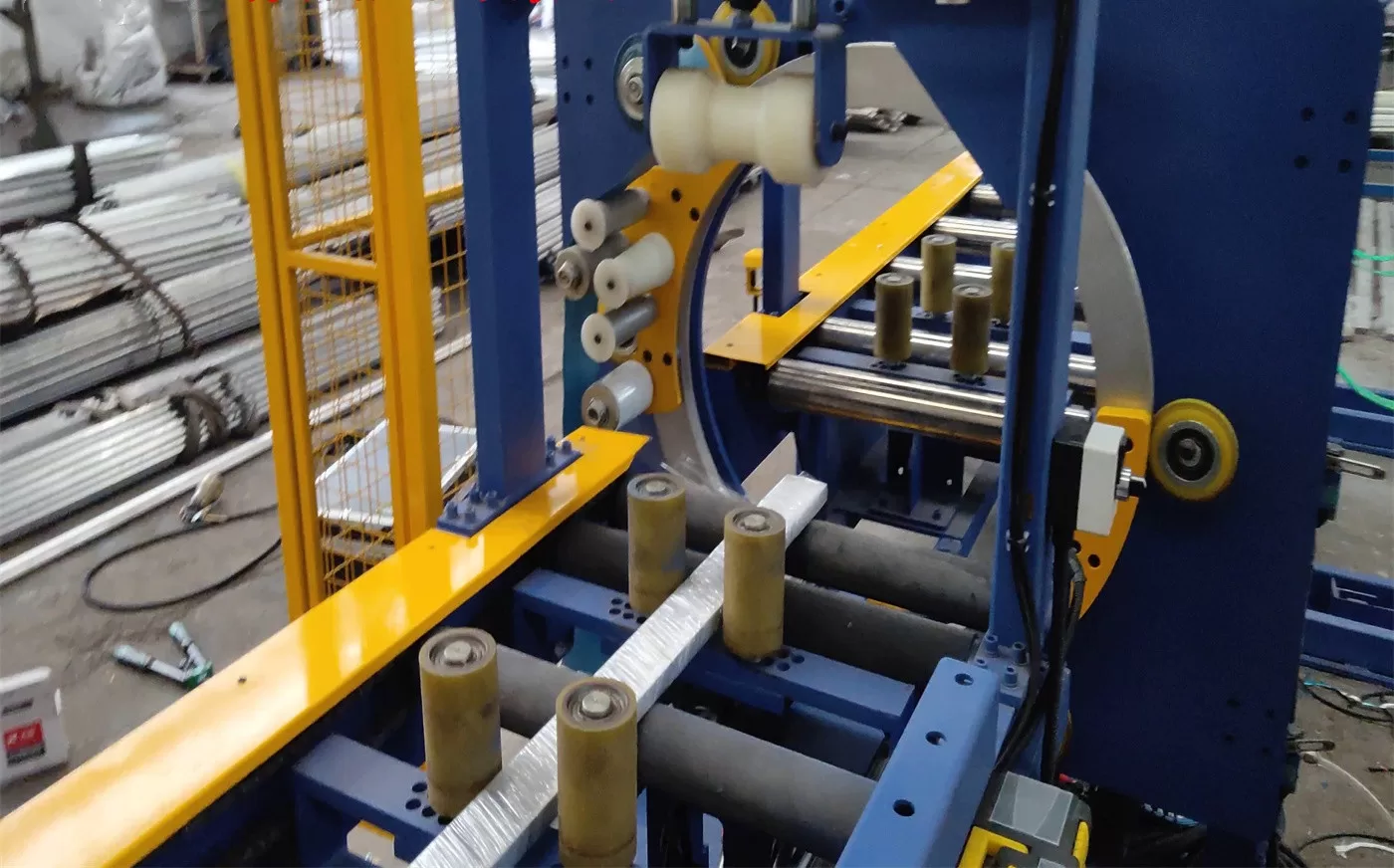
When I first started in the packing machine factory, I saw these exact problems every day. Workers would spend hours wrapping products by hand. This was not just slow; it was dangerous. Sharp edges of frames, heavy bundles – these all led to accidents. I have seen how these issues can hurt a factory’s bottom line and its people. My own journey from an employee to owning a successful factory taught me the real value of efficiency and safety. I understand that you need solutions that truly work. The Algerian aluminum door and window frame industry has specific needs. Long, delicate profiles require careful handling and robust protection.
Common Packing Pain Points in Aluminum Frame Manufacturing
Many factors contribute to these packing challenges. Understanding them is the first step toward finding a good solution.
-
Manual Labor Dependence:
- Problem: Most factories rely heavily on people to wrap aluminum profiles. Workers wrap these long, sometimes heavy items by hand. This is a very labor-intensive process. It takes a lot of time and effort.
- Impact: This method is slow. It creates delays in the production line. The speed of packing cannot keep up with the speed of manufacturing. This leads to bottlenecks at the end of the line. Also, labor costs are high. You need many workers to do this job. If workers are sick or leave, it causes more problems.
- Safety Concerns: Manual handling of long, sharp aluminum profiles is risky. Workers can get cuts, strains, or other injuries. These accidents lead to higher insurance costs. They also reduce staff morale. My own factory days taught me that worker safety is not just a cost; it is a moral duty. A safe workplace is a productive workplace.
-
Product Damage During Transit and Packing:
- Problem: Aluminum frames are often delicate. Their surfaces can scratch easily. Their edges can bend. When workers move these frames around or pack them manually, damage can happen. This is especially true without proper equipment.
- Impact: Damaged products mean unhappy customers. They lead to returns and complaints. This costs money because you lose profit from damaged goods. It also hurts your company’s reputation. I have seen clients lose big contracts because of product quality issues linked to poor packing. This is why good packing is not just about protection; it is about keeping your brand strong.
-
Inconsistent Packaging Quality:
- Problem: Manual packing means that each package might look different. The tension of the wrap might not be the same. The amount of material used might vary. This makes it hard to ensure uniform protection.
- Impact: Inconsistent packaging can mean some products are not protected enough. They might get damaged during shipping. Other products might be over-packaged, wasting materials. This leads to higher material costs. It also makes your products look less professional. Automation brings consistency. This consistency ensures every product leaves your factory looking its best and fully protected. This level of quality control is what separates successful businesses from others.
-
Limited Production Throughput:
- Problem: Manual packing simply cannot handle high volumes quickly. As your factory grows and produces more frames, manual packing becomes a major limitation. It limits how much you can produce and ship each day.
- Impact: This directly affects your ability to meet customer demand. It limits your business growth. You cannot take on more orders if you cannot pack them fast enough. This is a missed opportunity for revenue and expansion. Automation addresses this directly. It allows you to process more products in less time. This scalability is key for any growing business.
These challenges are common. But they are not permanent. There are solutions that can help factories in Algeria overcome them. My goal is to share knowledge that empowers you to find those solutions.
What Types of Orbital Wrappers are There, and How Do They Differ?
Are you wondering what “orbital wrapper” even means? Do you feel lost with all the different machine names? Choosing the right packing machine can seem complicated. But it does not have to be. Understanding the basic types of orbital wrappers is key to making a good decision for your factory.
Orbital wrappers primarily come in two main types: horizontal and vertical. Horizontal orbital wrappers are designed to wrap long, flat, or bulky products by rotating the wrapping material around the product as it moves horizontally through the machine. Vertical orbital wrappers, less common for long profiles, wrap products as they stand upright or move vertically. For Algeria’s aluminum door and window frame industry, horizontal orbital wrappers are almost always the preferred choice due to the specific shape and length of the profiles, offering superior protection and stability.
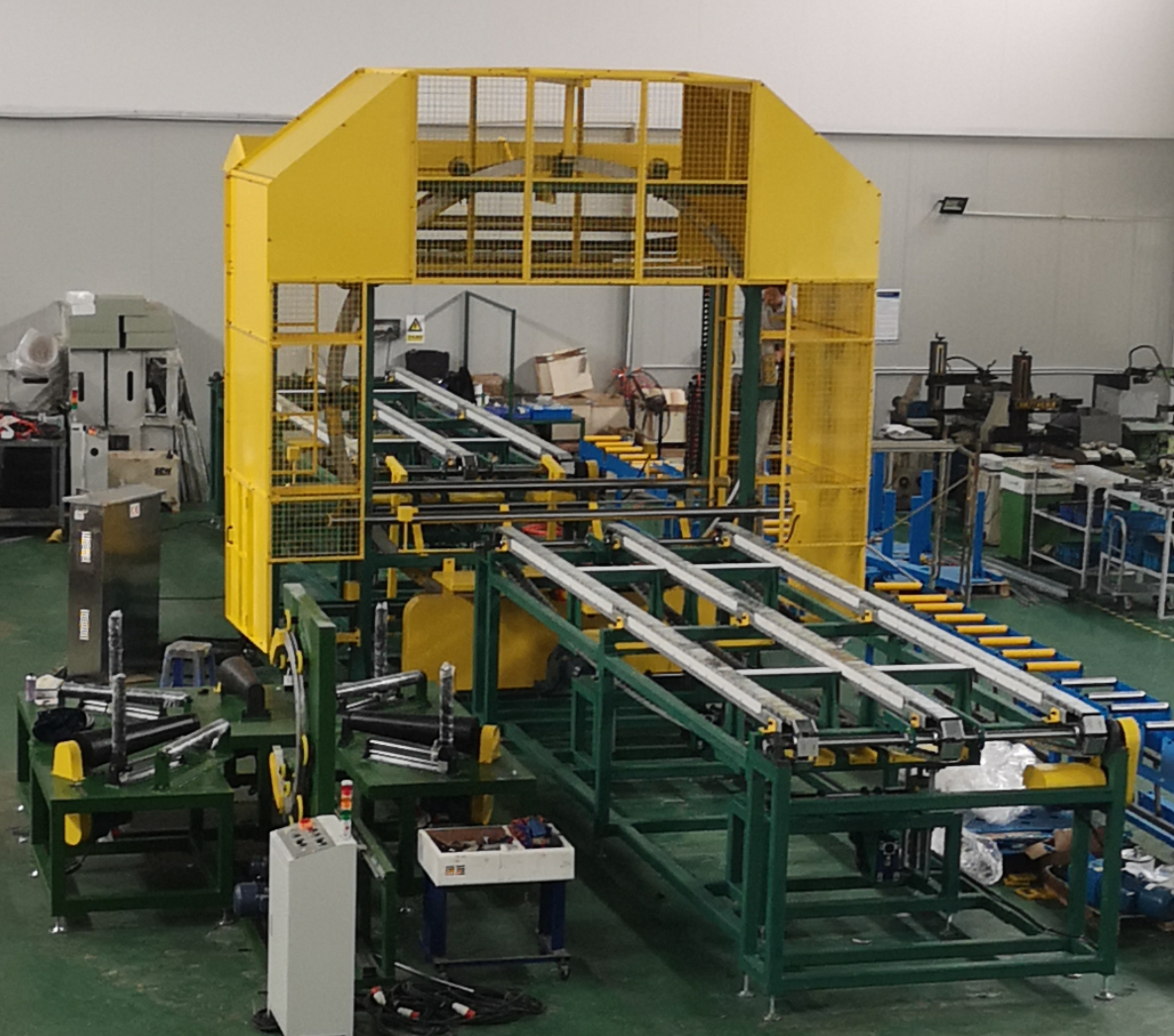
When I started FHOPEPACK, my mission was to make complex packing machine knowledge easy to understand. I have spent decades in this industry, from working on the factory floor to designing machines and building my own company. I have seen how different machines perform in real-world settings. For long products like aluminum frames, the design of the wrapper is critical. Let’s break down the main types you might encounter and why one stands out for your specific needs.
Horizontal vs. Vertical Orbital Wrappers: A Comparison
Choosing between horizontal and vertical designs depends entirely on the product you need to wrap. For aluminum door and window frames, one type clearly dominates.
-
Horizontal Orbital Wrappers:
- Description: These machines work by having the product pass through a “wrapping ring” horizontally. The stretch film or other wrapping material rotates around the product as it moves forward. The product itself stays still relative to its own axis. It just moves along the conveyor. This is ideal for long items.
- Ideal Products: This design is perfect for long, linear items. Think of aluminum profiles, timber, pipes, plastic extrusions, and even furniture components. The machine wraps the entire length of the product consistently.
- Advantages for Aluminum Frames:
- Excellent Stability: Aluminum frames can be long and sometimes thin. Wrapping them horizontally keeps them stable. They do not need to be balanced upright. This prevents bending or damage during wrapping.
- Even Coverage: The film wraps smoothly and consistently along the entire length. This provides complete protection against dust, moisture, and scratches.
- Automated Integration: Horizontal wrappers fit well into existing production lines. They can connect to conveyors for a seamless flow. This reduces manual handling even more.
- Reduced Risk: Because the product is stable and moves automatically, workers do not have to lift or rotate long, heavy frames by hand. This drastically cuts down on workplace injuries. This was a huge concern when I managed my own factory. I always looked for ways to make the job safer for my team.
- Considerations: These machines require a longer floor space due to the product length and conveyor system.
-
Vertical Orbital Wrappers:
- Description: In a vertical orbital wrapper, the product stands upright or moves vertically. The wrapping ring then rotates around the vertical axis of the product. This wraps it from top to bottom.
- Ideal Products: This design is more suited for products that are wider than they are long. Think of pallets of goods, tires, or other bulky items that are loaded from the top or stand vertically.
- Disadvantages for Aluminum Frames:
- Stability Issues: Long, slender aluminum profiles are very difficult to keep stable in a vertical position. They can easily tip over or bend during wrapping.
- Uneven Wrapping: Getting consistent wrap tension and coverage on a long, thin item standing vertically is challenging. The film might sag or not fully cover the entire length.
- Difficult Handling: Loading and unloading long profiles vertically is often complex and still requires significant manual effort or specialized lifting equipment. This defeats the purpose of automation for safety and efficiency.
- Considerations: These machines are often more compact in terms of floor space, as they utilize vertical space. However, they are not practical for the type of products Michael Chen’s factory handles.








