
Which Orbital Stretch Wrapper Offers the Best Balance of Cost and Performance in Brazil?
The world of industrial packaging often feels like a constant battle. You face production bottlenecks. Safety risks weigh heavily on your mind. Product damage eats into your profits. I know this feeling well. I built my own factory from the ground up. I saw these problems every day. Many factory managers, like Michael Chen in Mexico, deal with the same issues. They need solutions that work, not just promises. They need equipment that handles the tough demands of their factories, especially in places like Brazil where efficiency and reliability are key.
Finding the right orbital stretch wrapper for Brazil means looking past the initial price tag. It is about total cost over time and how well the machine performs every single day. The best balance comes from machines that deliver consistent output, improve safety, and save you money in the long run. These machines avoid constant breakdowns and protect your products. This approach guarantees true value for your investment.

So, how do we find that sweet spot? How do you pick a machine that truly solves your problems and helps your business grow? Let us dive deeper. We will look at what matters most for a smart investment in packaging automation for the Brazilian market.
What Types of Orbital Wrappers Fit Brazilian Factory Needs?
You run a busy factory. Every machine must pull its weight. When you consider an orbital stretch wrapper, you need to know it can handle your specific products and your output demands. Brazilian factories, especially in heavy industries like metal processing, have unique needs. They need machines that are tough and adaptable.
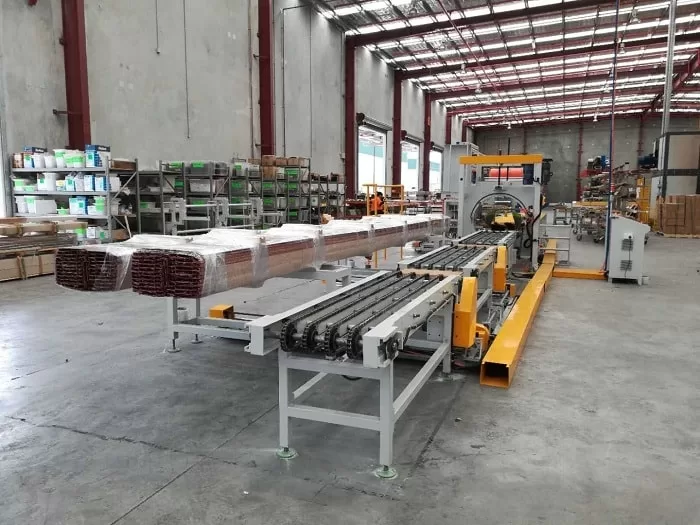
The types of orbital stretch wrappers that best fit Brazilian factory needs are often robust, automated models. These include horizontal orbital wrappers for long products and specialized coil wrappers. They can integrate into existing lines. They handle high volumes and diverse product sizes.

From my own experience building a packing machine factory, I saw how different industries needed different solutions. A machine that works for small parts will not work for steel coils. For factories in Brazil, especially those dealing with metal or heavy goods, the machine needs to be a workhorse. It must handle large, heavy, and often irregularly shaped items.
Understanding the Right Fit for Your Production
Choosing the right type means looking at your current process. Are you wrapping long products like pipes or timber? Or are you securing large, heavy coils of steel wire? Your product shape and size will dictate the machine design. A horizontal orbital wrapper works well for long items. It wraps them as they pass through a rotating film dispenser. For coils, specialized coil wrappers are often better. They secure the entire circumference. This protects the product from damage during transport.
Brazilian factories often need machines that can withstand harsh environments. Dust, temperature changes, and continuous operation are common. This means the machine needs strong components. It needs simple maintenance. Complex machines with many delicate parts might cause more downtime. Downtime means lost money. Michael Chen understands this very well. He knows that every stop in the production line costs him.
You also need to think about automation levels. Manual wrapping is slow and risky. Automation removes human error and reduces labor needs. For example, an automatic wrapper can secure a steel coil in minutes. Doing this by hand would take much longer. It would also put workers at risk of injury. This shift to automation is a key goal for many factory managers like Michael. They want to free up their workers from dangerous tasks. They want to boost overall speed.
Consider these factors when looking at different types:
| Machine Type | Best For | Key Features | Benefits for Brazil |
|---|---|---|---|
| Horizontal Orbital | Long products (pipes, timber, profiles) | Wraps items passing through a rotating ring | High speed for linear products, good for varied lengths |
| Coil Wrapping | Steel coils, wire coils, large rolls | Special design for circular, heavy items | Excellent protection for heavy coils, reduces damage |
| Automatic Systems | High volume, integrated lines | Conveyors, automatic film cutting, PLC control | Maximizes throughput, minimizes labor, high safety |
| Semi-Automatic | Moderate volume, varied products | Operator loads/unloads, machine wraps | Cost-effective entry into automation, flexible |
My personal journey in the packing machine industry taught me that there is no one-size-fits-all solution. Each factory has its own pulse. I remember designing custom solutions for clients who thought their products were impossible to wrap automatically. We often found that simple, robust designs worked best. These designs focused on the core problem: getting the product wrapped safely and quickly. This allowed them to increase their production output significantly. It helped them meet their delivery targets. This understanding of specific needs is what drives FHOPEPACK. We want to share this knowledge so you make the right choice.
How Do We Measure the True Cost of an Orbital Wrapper in Brazil?
The purchase price of an orbital stretch wrapper is only part of the story. In Brazil, just like anywhere else, smart investment means looking at the full picture. You need to calculate the total cost of ownership. This includes many hidden costs that can surprise you later. Michael Chen aims for clear ROI. So, we must think about more than just the sticker price.
Measuring the true cost of an orbital wrapper in Brazil involves looking at the initial purchase price, operating costs, and long-term maintenance. It also includes the savings from reduced labor, less product damage, and improved safety. A lower upfront price does not always mean a lower true cost if the machine breaks down often or wastes film.
When I started my own packing machine factory, I learned quickly that quality pays off. Cheap machines often lead to expensive problems. I remember a client who bought a very cheap machine. It saved them money upfront. But it broke down almost weekly. This meant lost production. It meant high repair costs. It also meant a lot of stress. That machine ended up costing them far more than a reliable, higher-priced one would have.
Breaking Down the Financial Picture
Let us look at the components of the true cost.
- Purchase Price: This is the most obvious cost. It is what you pay to buy the machine. However, compare prices with features. A very low price might mean low quality or missing essential functions.
- Operating Costs: These are the costs to run the machine.
- Electricity: How much power does it use?
- Film Consumption: Does the machine use film efficiently? High-quality machines stretch film better. This means you use less film for each wrap. This can save a lot over time.
- Labor: An automated machine reduces the need for manual labor. This is a huge saving. Michael Chen wants to cut labor costs. This is one direct way to do it.
- Maintenance and Parts: All machines need maintenance.
- Scheduled Maintenance: How often does it need service?
- Spare Parts: Are parts easy to get in Brazil? Are they expensive? A reliable supplier will have a good local parts network. They will offer quick support. I have seen many factories struggle because they could not get parts for their machines. This leads to long downtimes.
- Repair Costs: How often does it break down? Cheap machines break more often. This adds up.
- Downtime Costs: This is often the biggest hidden cost. When a machine stops, your production stops.
- Lost Production: You cannot make products. You cannot ship them. This directly impacts your revenue.
- Overtime: You might pay workers overtime to catch up later.
- Missed Deadlines: This can lead to unhappy customers. It can damage your reputation.








