
Which Modular Design Options Best Adapt to Spain’s Varied Coil Dimensions?
Do you constantly struggle with different coil sizes on your production line? Are you losing sleep over the slow, unsafe manual handling of heavy coils? Many factory managers, especially in Spain, face a big problem. Their current systems simply cannot keep up with the varied dimensions of steel coils and wire. This leads to costly downtime, product damage, and serious safety risks.
Modular design options offer the best solution for Spain’s varied coil dimensions by providing flexible, adaptable systems. These designs let factories adjust their packaging lines quickly for different coil widths, diameters, and weights. This means less changeover time, higher efficiency, and better safety. They also reduce the risk of product damage common with fixed systems.
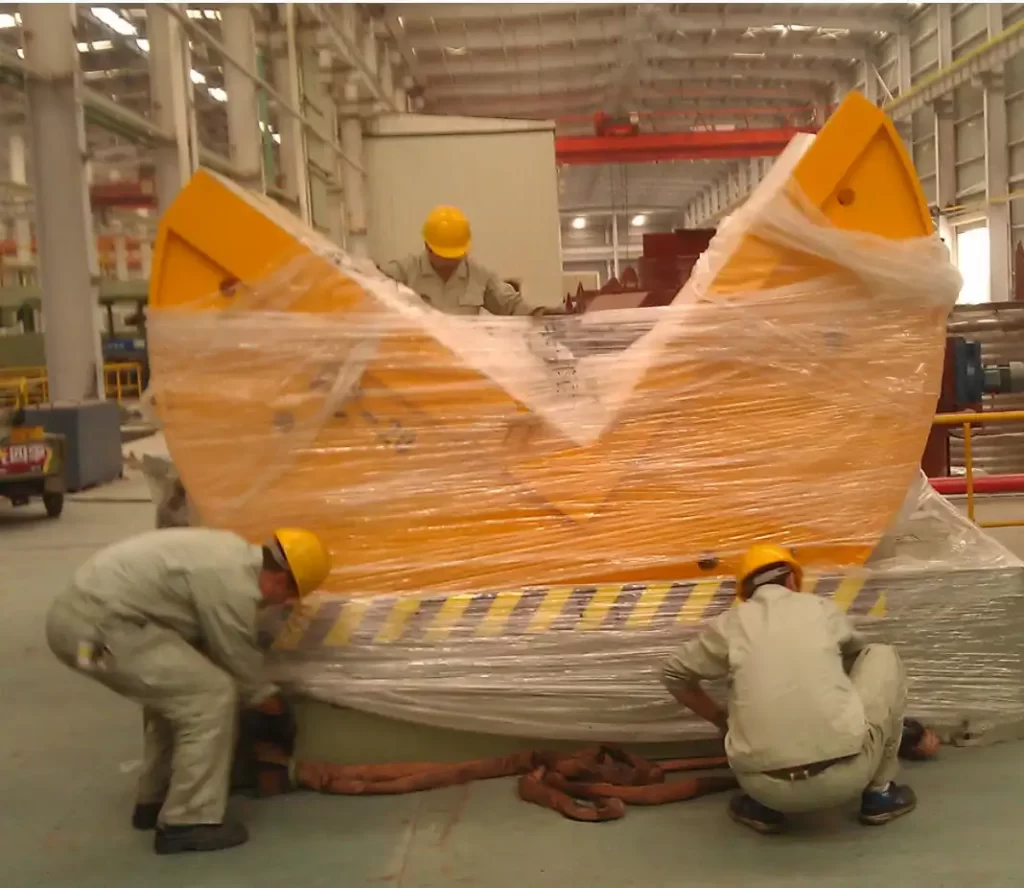
As someone who started on the factory floor and built a successful packing machine business, I understand these problems deeply. I have seen how much impact the right equipment can make. Let us look deeper into how modular design can truly change things for your operations. We will see how it helps Spanish factories handle their unique coil challenges.
Why are Varied Coil Dimensions a Critical Challenge for Spanish Factories?
Imagine your production line trying to handle steel coils that are large one moment and small the next. This is a common scene in many Spanish metal processing factories. This constant change creates big problems. It slows down work. It forces workers into risky situations. It also eats away at your profits.
Varied coil dimensions in Spanish factories present critical challenges due to the wide range of products they handle, from large steel coils to smaller wire rolls. This diversity means fixed packing lines often struggle, leading to frequent manual adjustments, slow throughput, and increased risk of worker injury. Such issues directly affect efficiency, safety, and overall cost control.

For years, I worked in packing machine factories. I saw first-hand the daily struggles managers faced. They often had lines built for one type of product. Then, market demands changed. Suddenly, they needed to process a wider range of coil sizes. This is a big issue in Spain, a country with diverse industrial output. From large shipbuilding steel coils to fine wire for construction, the sizes vary greatly.
Think about a factory manager like Michael. He leads a busy metal processing plant. His main goal is to keep things moving and make sure costs stay low. When coils come in many different sizes, his team has to make many manual changes. This takes a lot of time. It stops the line. This type of stop is a “bottleneck.” It is like a narrow part of a road where cars get stuck. In a factory, it means production slows down a lot.
Manual handling is another huge problem. Heavy coils mean workers must lift and move them. This is very dangerous. I have seen accidents happen. Workers get hurt. This means higher insurance costs for the factory. It also means workers might leave because the job is too risky. This leads to a high staff turnover. Training new people takes time and money. It also lowers overall factory output.
Also, when coils are handled often, especially manually, they can get damaged. The edges of steel coils are very sensitive. A small scratch can make a customer complain. This can lead to returned products. It can also hurt the factory’s good name. I learned early on that preventing even small damage saves a lot of money in the long run. My own factory focused heavily on systems that protected products.
Here is a simple look at the challenges:
| Challenge Type | Impact on Factory Operations |
|---|---|
| Efficiency | Slow production, bottlenecks, high labor cost |
| Safety | High injury risk, insurance costs, staff turnover |
| Product Quality | Coil damage, customer complaints, profit loss |
| Adaptability | Inability to handle varied product lines easily |
These problems are not unique to Spain, but they are very clear there due to the mix of industries. A fixed machine might work for one size, but fails when sizes change. This makes it hard for factories to grow. It stops them from taking new orders. It limits their ability to compete in the market. This is why finding a flexible solution is so important for businesses.
How Does Modular Design Directly Solve the Problem of Varied Coil Sizes?
Are you tired of packaging machines that only work for one specific coil size? Does the thought of investing in new equipment fill you with dread, worrying it will quickly become outdated? The old way of building machines limits your factory’s ability to adapt. This outdated thinking keeps you from being truly efficient.
Modular design directly solves the problem of varied coil sizes by breaking down complex packaging systems into smaller, independent units. Each unit performs a specific function and can be easily swapped, added, or removed. This allows factories to customize their lines for different coil dimensions without needing entirely new machines. It makes the system flexible and future-proof.

When I started FHOPEPACK, my vision was simple: make good packing knowledge easy to get. Part of this was understanding what truly helps a factory grow. I saw that many factories bought huge, fixed machines. They worked great for one specific task. But what happens when the factory needs to pack coils of different widths or weights? These big machines become a problem. They are not flexible.
This is where modular design comes in. Think of it like building blocks. You have different blocks (modules) that do different things. One module might be for unwinding a coil. Another might be for wrapping it. A third might be for stacking. Because these parts are separate, you can change them. You can add new ones. You can take old ones out. This means your packaging line can change with your needs.
For example, a factory might mostly handle large steel coils. Then, they get a new order for smaller wire bundles. With a fixed machine, this means a slow and complex changeover. It might even mean buying a completely different machine. With a modular system, you simply swap out a wrapping head or adjust a guiding mechanism. It is much faster. It uses less effort.
This adaptability has a direct impact on the factory’s bottom line. Less time spent on changeovers means more production time. More production time means more products can be made and sold. This leads to higher profits. It also means the factory can take on a wider range of jobs. This opens new markets. It makes the business stronger.
Another big advantage is maintenance. If one part of a modular system breaks down, you often only need to fix or replace that one module. You do not need to shut down the entire line. This keeps downtime very low. In my experience, reducing downtime is one of the biggest ways to save money for a factory. It is a key factor for any factory manager focused on efficiency, like Michael. He knows every minute the line is down costs a lot. Modular design directly addresses this pain point. It gives him more control over his operations and less worry about unexpected breakdowns.
What Key Modular Components Offer True Adaptability for Diverse Coils?
Have you ever bought equipment, only to find it cannot handle your true range of needs? Many businesses make this mistake, investing in machines that are not versatile enough. This leaves them stuck with old problems or forces them into more costly investments later. Do not let this happen to your factory.
Key modular components that offer true adaptability for diverse coils include adjustable wrapping heads, interchangeable loading and unloading systems, and flexible conveyor or tilter modules. These parts allow for quick changes in coil width, diameter, and weight capacity. They make it easy to reconfigure the entire packaging line, ensuring it can handle various product specifications with ease and efficiency.

As a packing machine engineer, I have spent countless hours designing and building systems. I learned that the secret to real adaptability is in the specific components. It is not just about having “modules”; it is about having the right modules. These are the parts that let a system truly adjust to different coil dimensions, like those seen often in Spanish factories.
Let us look at some key components:
Adjustable Wrapping Heads
A wrapping head is the heart of a coil packaging machine. For varied coil sizes, a fixed head simply will not work. You need a head that can change its size. This means it can wrap a very narrow wire coil one minute and a wide steel coil the next. This adjustability is critical. It saves time. It means you do not need different machines for different products. My own factory used adjustable heads extensively. This allowed us to take on more diverse client orders. It made us more profitable.
Interchangeable Loading and Unloading Systems
How you put coils onto the machine and take them off is very important. For heavy coils, you might use a crane or a specific loading arm. For lighter, smaller coils, a simple conveyor might work. A truly modular system lets you swap these out. You can change from an automatic loading arm for heavy coils to a more delicate system for sensitive, lighter products. This avoids damage. It also makes the process safer for workers. Michael, like many factory managers, constantly thinks about how to reduce manual heavy lifting. These systems are key to that goal.
Flexible Conveyor and Tilter Modules
Coils often need to move along a line and sometimes need to be turned over. Tilters are machines that change the orientation of a coil, like from horizontal to vertical. If you have different coil sizes, your conveyors and tilters must adjust. Modular conveyors can change their width. Modular tilters can handle different weights and sizes without needing major retooling. This ensures a smooth flow of products. It also prevents bottlenecks. I remember early in my career, seeing lines stop simply because a conveyor could not handle a slightly different coil width. That taught me the value of true flexibility.
Automatic Tension Control Systems
This is more about the wrapping process itself, but it is a critical “module.” When you wrap a coil, the material needs to be put on with the right amount of tightness. If it is too loose, the package can fall apart. If it is too tight, it can damage the coil. For different coil sizes and weights, the tension needed will change. Modular systems often include smart sensors and controls that automatically adjust tension. This ensures every coil, no matter its size, gets a perfect wrap. This directly helps with Michael’s challenge of reducing product damage.
These components work together. They create a system that can quickly adapt. This means less wasted time. It means safer operations. It means more product goes out the door. It makes your investment much more valuable over time.
How Can These Modular Solutions Improve Operational Safety and Efficiency?
Are you worried about your workers handling heavy coils, risking injury every day? Does your current packaging process feel slow and outdated, costing you precious production time? Many factories face these issues. They keep operations from reaching their full potential. They put people at risk.
Modular solutions greatly improve operational safety by reducing manual heavy lifting and automating dangerous tasks, minimizing injury risks. They boost efficiency by enabling quick changeovers for different coil sizes, cutting downtime, and increasing throughput. This combination leads to a safer workplace, higher productivity, and better overall profitability for the factory.
As a factory owner, I learned that happy workers are productive workers. And safe workers are happy workers. My journey taught me that safety is not just a cost; it is an investment. Modular packing solutions directly address some of the biggest safety problems in a factory.
One major safety issue is manual handling of heavy coils. Imagine a worker trying to flip a heavy steel coil. It is incredibly dangerous. It can cause serious back injuries or crushed limbs. Michael knows this risk very well. He sees the high insurance costs and staff turnover that come from these risks. Modular systems replace human effort with machines. For example, a hydraulic upender module can safely turn a 10-ton coil with the push of a button. This completely removes the worker from the danger zone. It makes the job safer. It also means fewer accidents. Fewer accidents mean lower insurance costs. They also mean a more stable workforce.
Efficiency also gets a big boost. My clients often told me about bottlenecks at the end of their production lines. This is where finished products wait to be packed. If packing is slow, the whole factory slows down. Modular systems make packing faster and more reliable.
Consider the speed of changeovers. With old machines, changing from one coil size to another could take hours. This meant stopping production. Every hour of downtime costs thousands of dollars in lost output. With modular components, these changes are often done in minutes. This is because parts are designed to be easily swapped or adjusted. Automated controls also play a big part. This means more time is spent producing. Less time is wasted waiting.
Here is a look at the gains:
| Area of Improvement | How Modular Solutions Help | Direct Benefit |
|---|---|---|
| Worker Safety | Automates heavy lifting, reduces manual intervention | Fewer injuries, lower insurance, stable staff |
| Production Speed | Quick changeovers, reduced bottlenecks | Higher throughput, faster delivery |
| Labor Costs | Less need for manual labor in dangerous tasks | Reduced wage expenses, better resource use |
| Product Quality | Consistent, automated handling and wrapping | Less product damage, fewer customer complaints |
When I built my own factory, I prioritized systems that could run almost non-stop. This mindset helped me grow the business. It helped my clients grow too. Investing in modular solutions is not just buying a machine. It is investing in a safer, more efficient future for your factory. It gives you an edge over competitors. It also makes your operations more stable and reliable. This is what every factory manager, like Michael, truly wants and needs.
What Should You Consider When Choosing a Partner for Your Coil Packaging Needs?
Have you ever worked with a supplier who disappears after the sale, leaving you alone with problems? Many factory managers have faced this frustration. It makes you careful about who you trust. You need more than just equipment. You need a true partner.
When choosing a partner for coil packaging needs, consider their deep industry knowledge, proven experience in building and operating factories, and a strong commitment to long-term support. Look for someone who understands your unique challenges, offers tailored modular solutions, and prioritizes your factory’s safety, efficiency, and return on investment. This ensures a reliable, enduring partnership.
My journey from a packing machine factory employee to a factory owner taught me one very important lesson: relationships matter more than anything. I saw companies make big promises. Then, they would sell a machine and vanish. This left factory managers, like Michael, feeling cheated and frustrated. They were stuck with equipment that did not quite fit or broke down without good support.
This is why FHOPEPACK focuses on being a knowledge-sharing platform. It is about building trust. It is about truly understanding your problems, not just selling you something. When you are looking for a partner for your coil packaging needs, especially for complex situations like varied coil dimensions in Spain, here is what you should consider:
Deep Industry Background
Does the supplier truly understand your industry? Do they know the specific challenges of coil handling? I have walked the factory floors. I have solved problems on the spot. This hands-on experience means I understand the pressure you are under. I know what a minute of downtime costs. A good partner does not just sell machines; they sell solutions based on real-world understanding. They can talk about your pain points with real empathy.
A Focus on Solutions, Not Just Sales
Many companies push their products without listening. A true partner listens first. They ask about your bottlenecks. They ask about your safety concerns. They want to know your goals, like Michael wanting to improve ROI. Then, they suggest solutions. Sometimes, a modular upgrade is better than a whole new system. A good partner will tell you this. They are focused on your success, not just making a sale.
Strong After-Sales Support and Training
What happens after the machine is installed? Will they train your team? Will they be there for maintenance or when a problem arises? This is crucial. A modular system is flexible, but your team needs to know how to use it. They need to understand how to swap modules. They need to know how to perform basic maintenance. My experience taught me that good support makes all the difference. It ensures your investment keeps working for you year after year.
Proven Track Record and Trust
Has this company helped other factories grow? Can they show you examples of success? Michael had bad experiences with past suppliers. This makes him very careful. A reliable partner will have case studies. They will have happy clients. My goal with FHOPEPACK is to share success stories and knowledge openly. This builds trust. It shows that we are serious about helping you.
Choosing the right partner is a big decision. It can make or break your investment. Look for someone who has walked in your shoes. Look for someone who wants to help you succeed, just as I strive to help others in the packing machine industry. This is how you find lasting value and true peace of mind.
Conclusion
Modular design offers a powerful answer to Spain’s varied coil dimensions. It makes factories safer and more efficient. Choose a partner who truly understands your needs.








