
Which Horizontal Orbital Wrapper Is Best for Czech Furniture and Door Panel Production?
Are you a factory manager in the Czech Republic, perhaps overseeing a furniture or door panel production line? Do you feel the constant pressure to boost output, cut costs, and keep your team safe? I know this feeling well. I have spent years in the packing machine industry, starting from the factory floor and building my own successful packing machine business. I understand that inefficient or unsafe packing processes can slow down your entire operation, lead to costly product damage, and put your workers at risk. You are not just looking for a machine; you need a real solution and a partner who understands your challenges.
The best horizontal orbital wrapper for Czech furniture and door panel production depends heavily on your specific product dimensions, required daily throughput, and your operational budget. Generally, a semi-automatic or fully automatic machine that can handle long, flat, or irregularly shaped items, common in furniture and door manufacturing, will offer the most significant improvements in efficiency, safety, and product protection. Focus on robust machines built for high-volume, demanding environments.

Finding the right packing equipment is a crucial investment, not just an expense. It directly impacts your bottom line, your production flow, and the well-being of your employees. Let us dive deeper into how selecting the correct horizontal orbital wrapper can transform your Czech factory operations.
Why Is the Right Packaging Machine Important for Czech Furniture Factories?
Have you ever experienced a production bottleneck right at the end of the line? You have produced beautiful furniture or perfectly cut door panels, but the packing process slows everything down. This is a common problem, and it directly impacts your delivery times and overall efficiency. Manual packing of large or delicate items also carries high risks for worker injury, which means higher insurance costs and potential employee turnover.
A dedicated, efficient packaging machine is crucial for Czech furniture and door panel factories because it automates a traditionally labor-intensive and risky process. It ensures consistent, secure wrapping, protects products from damage during transit, and significantly speeds up the final stages of production. This helps meet delivery deadlines and improves overall factory output.
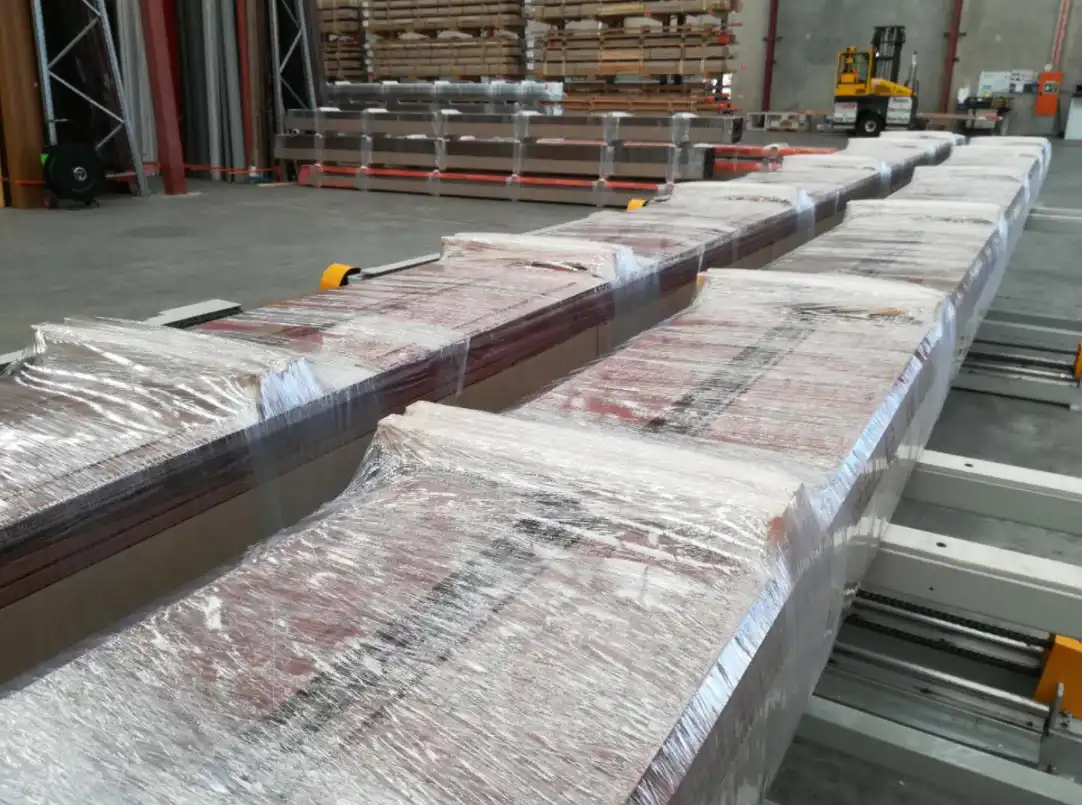
Think about the specific challenges that arise when dealing with items like wooden panels, furniture components, or assembled doors. These are often long, flat, heavy, and sometimes fragile items. Manual wrapping is not just slow; it also presents significant safety concerns. Workers must lift, rotate, and wrap bulky items repeatedly, leading to strains, sprains, and even more serious accidents. This is where automation steps in as a game-changer. An appropriate horizontal orbital wrapper can handle these items with ease, wrapping them uniformly and securely. This reduces the need for manual handling of the product during the wrapping process. It also frees up your skilled workers for more complex tasks where their expertise is truly needed. Beyond safety, consistent wrapping means less product damage. When products are not properly secured, they can shift, scratch, or break during internal transport or shipping. This leads to customer complaints, returns, and ultimately, lost profits. A well-chosen machine applies tensioned film consistently around the product, creating a protective barrier against dust, moisture, and impact. This consistency is hard to achieve manually, especially across an entire shift. Furthermore, many Czech furniture and door manufacturers operate in a competitive global market. Speed to market and cost efficiency are paramount. An automated packing solution directly addresses these needs. It reduces labor costs associated with manual packing and eliminates the financial losses from damaged goods. This clear return on investment makes the case for upgrading your packing process very strong.
The True Cost of Manual Packing in Furniture Production
- Labor Intensive: Requires multiple workers for heavy, awkward items.
- Slow Throughput: Limits the speed of your entire production line.
- High Injury Risk: Back injuries, strains, cuts from manual handling and film cutting.
- Inconsistent Wrap Quality: Leads to product damage and customer complaints.
- Increased Material Waste: Manual wrapping can use more film than automated systems.
What Types of Horizontal Orbital Wrappers Are Best for Furniture and Door Panels?
You might wonder about the different types of horizontal orbital wrappers available. Which one is truly suitable for your specific needs, especially when dealing with furniture or door panels? It is not a one-size-fits-all solution. Understanding the differences helps you make an informed choice that matches your factory’s production volume and product characteristics.
Horizontal orbital wrappers primarily come in three types: manual, semi-automatic, and fully automatic. For Czech furniture and door panel production, semi-automatic wrappers are often ideal for mid-volume operations, offering a balance of automation and cost. Fully automatic machines are best for high-volume, continuous production lines, providing maximum speed and minimal labor. Manual wrappers are typically only suitable for very low volume or specialized custom jobs.
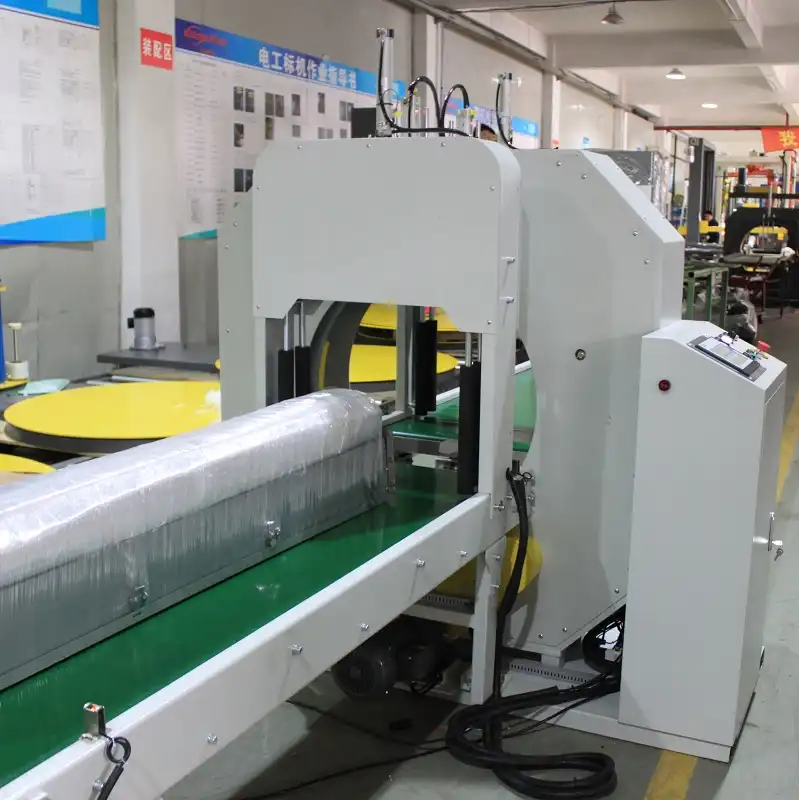
Let us break down each type. Manual horizontal orbital wrappers require an operator to load the product, start the wrapping cycle, and then manually cut and seal the film. While they are the least expensive option upfront, they offer minimal efficiency gains and still involve significant manual labor and safety risks. They might be suitable for a small workshop producing very few custom pieces. However, for most medium to large factories in the Czech Republic, they do not provide the necessary productivity boost. Semi-automatic horizontal orbital wrappers are a popular choice for many furniture and door panel manufacturers. With these machines, an operator typically loads the product onto the infeed conveyor. The machine then automatically centers the product, starts the wrap cycle, applies the film, and cuts it. The operator might only need to secure the film tail. This type of machine greatly reduces manual effort and improves wrap consistency and speed compared to manual methods. They are a good balance between automation level and investment cost. They can handle a wide range of product lengths and widths, making them versatile for different furniture components or door sizes. Then there are fully automatic horizontal orbital wrappers. These are designed for high-volume production lines where products continuously flow into the wrapping machine without any operator intervention. They integrate seamlessly into existing conveyor systems. The machine automatically loads, wraps, cuts, and discharges the wrapped product. These systems offer the highest throughput, minimal labor requirements, and maximum safety benefits. They are a significant investment, but for factories with very high production volumes, the return on investment through labor savings and increased efficiency is substantial. When considering your factory, think about your average daily output. Are you making hundreds of door panels a day, or thousands? This volume will guide your choice between a semi-automatic and a fully automatic system. Also, consider the size and weight of your products. Machines come with different ring diameters and weight capacities.
Comparing Wrapper Types for Furniture and Door Panels
| Feature | Manual Wrapper | Semi-Automatic Wrapper | Fully Automatic Wrapper |
|---|---|---|---|
| Operator Role | Load, wrap, cut, seal, unload | Load, sometimes cut/seal, unload | Monitoring, maintenance |
| Speed/Throughput | Very Low | Medium to High | Very High |
| Cost | Lowest | Medium | Highest |
| Safety | Low (high manual handling risk) | Medium to High (reduced handling) | Highest (minimal human interaction) |
| Consistency | Low (operator dependent) | High | Very High |
| Integration | Standalone | Can be standalone or inline | Fully inline with conveyor systems |
| Best For | Small custom shops, very low volume | Medium-volume, varied product sizes | High-volume, standardized production |
How Can These Wrappers Boost Safety and Efficiency in Your Factory?
As a factory manager, you are constantly balancing the need for higher output with the critical goal of keeping your workers safe. These two objectives often seem to conflict, especially in industries that involve heavy or bulky items. However, a horizontal orbital wrapper can actually solve both problems at once, improving both safety and efficiency in your Czech furniture or door panel factory.
Horizontal orbital wrappers significantly boost safety by eliminating the need for manual lifting, rotating, and wrapping of heavy or awkward products, thereby drastically reducing the risk of strains, sprains, and other workplace injuries. They enhance efficiency by automating the packing process, leading to faster throughput, consistent wrap quality, and reduced product damage, all of which contribute to a smoother, more productive operation.
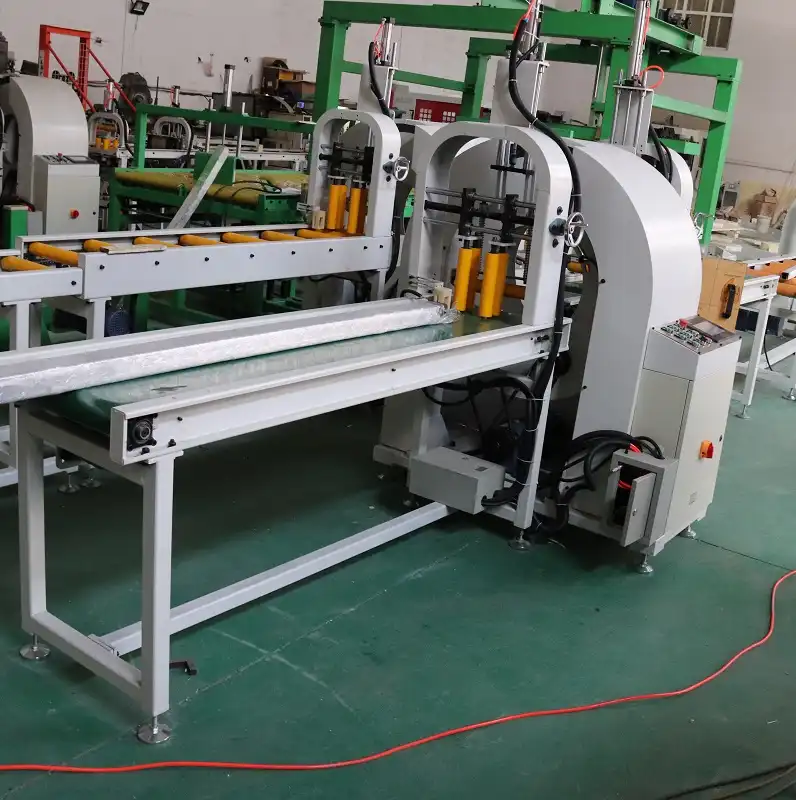
Let us talk about safety first. Imagine your workers trying to manually wrap a long, heavy door panel or a large piece of furniture. They have to bend, lift, twist, and walk around the item repeatedly. This motion, especially when done multiple times a day, puts immense strain on their backs, shoulders, and knees. It is a recipe for occupational injuries. These injuries lead to lost workdays, higher worker’s compensation claims, and a demoralized workforce. A horizontal orbital wrapper takes away this dangerous manual labor. The product simply moves into the wrapping area on a conveyor, or it is loaded with minimal effort. The machine does the heavy lifting and the complex wrapping. This means your workers are no longer exposed to the risks associated with repetitive heavy lifting or awkward movements. They can oversee the machine or perform other tasks. This directly translates into a safer work environment, fewer accidents, and happier employees. From an efficiency standpoint, the benefits are just as clear. Manual wrapping is slow. An experienced worker might take several minutes to properly wrap a single item. A horizontal orbital wrapper can complete the same task in a fraction of that time, often within seconds. This rapid wrapping capability eliminates the end-of-line bottleneck that many factories face. Faster packing means your finished products move out of the factory quicker, reducing storage needs and speeding up delivery to customers. Moreover, the consistency of machine wrapping cannot be matched by human effort. The machine applies the stretch film at a uniform tension and overlap, ensuring every product is wrapped perfectly. This reduces film waste and provides superior protection against dust, moisture, and impact during transport. Less product damage means fewer customer complaints, fewer returns, and better overall product quality when it reaches its destination. This improved quality protects your brand reputation and reduces costly rework or replacement.
Direct Benefits of Orbital Wrappers
- Injury Reduction: Eliminates manual handling of heavy items for wrapping.
- Faster Throughput: Wraps items in seconds, not minutes, boosting overall line speed.
- Consistent Packaging: Ensures uniform wrap tension and coverage, protecting products.
- Reduced Product Damage: Minimizes scratches, dents, and breaks during transit.
- Optimized Labor: Frees up workers for higher-value tasks, reducing direct labor costs.
- Lower Film Consumption: Precise machine application often uses less film.
My Insight on Choosing the Right Packing Machine Partner!
When I first started in the packing machine business, I learned very quickly that selling a machine is only part of the job. The real success, for both me and my clients, came from being a true partner. I have heard stories, and seen it myself, where factories buy equipment only to find that the supplier disappears once the sale is made. This creates a huge problem, especially if you run into technical issues or need support. For a factory manager in the Czech Republic, making a large investment in new equipment, you need more than just a vendor; you need an expert who understands your world.
Choosing the right packing machine partner is as important as choosing the machine itself. Look for a supplier with deep industry expertise, a proven track record of supporting clients, and a clear understanding of your specific operational challenges in furniture and door panel production. A good partner offers professional guidance, reliable after-sales service, and solutions tailored to improve your factory’s efficiency and safety, not just sell you a product.

From my own journey, from being an employee on the factory floor to building my own successful packing machine factory, I have seen every side of this industry. I know what it means to face production bottlenecks and safety concerns. I also know the frustration of dealing with a supplier who only cares about the sale. When you are investing in a horizontal orbital wrapper for your furniture or door panel factory, you are not just buying steel and electronics. You are buying a solution to your efficiency problems, a way to make your workplace safer, and a tool to protect your product. This is why the supplier’s expertise matters so much. A good partner will not just push the most expensive machine. They will listen to your specific production needs. What are your product dimensions? What is your daily output? What are your biggest pain points right now—is it product damage, slow packing, or safety incidents? They should be able to offer insights and recommend a machine that perfectly fits your factory’s scale and specific challenges. They should also understand your long-term goals. Do you plan to increase production in the future? Can the machine adapt to new product lines? Beyond the initial sale, after-sales service is absolutely critical. What happens if the machine breaks down? How quickly can you get parts or technical support? Downtime in a busy factory means lost production and lost money. A reliable partner provides prompt and effective support to minimize any disruptions. They also offer training for your team, ensuring your operators can use the machine safely and efficiently. My goal with FHOPEPACK is to share the knowledge I gained. I want to help businesses like yours grow, just as my clients grew theirs. This means being transparent, offering real solutions, and building a relationship based on trust and understanding.
Conclusion
Choosing the right horizontal orbital wrapper for your Czech furniture or door panel factory is a vital step toward boosting efficiency, enhancing safety, and securing your products. Focus on your specific needs and partner with an expert who truly understands your business.








