Which Energy-Efficiency Upgrades Matter Most for Turkey’s Coil Upender Applications?
Have you ever felt the pressure of rising energy costs squeezing your factory’s margins? I know that feeling well. For plant managers in Turkey, just like everywhere else, the constant challenge is to produce more, faster, and cheaper. In a heavy manufacturing environment, like a metal processing plant, a lot of energy goes into moving heavy materials. And if your coil upenders are not energy efficient, they are eating into your profits every single day. This is a problem that affects your bottom line directly.
The energy-efficiency upgrades that matter most for coil upender applications involve investing in high-efficiency motors, integrating smart control systems, choosing the right upender design (such as mechanical over hydraulic when suitable), and implementing a strict maintenance schedule. These key areas offer the most significant returns by reducing power consumption, improving operational longevity, and cutting down on costly downtime in demanding industrial settings.
It is easy to look at new equipment and just see the upfront cost. But I have learned that the real cost is often hidden in daily operations. Let us dig deeper into how specific upgrades can turn your coil upending process from an energy drain into an efficiency powerhouse. I want to show you what I have seen work in real factories, helping owners save money and grow their businesses.
Are High-Efficiency Motors Truly Worth the Investment for Upenders?
Are you wondering if upgrading to a more efficient motor for your coil upender is just another expense? Perhaps your current motors work fine, or so it seems. But what if those “fine” motors are silently costing you a fortune in electricity bills, year after year? This hidden drain on resources can impact your plant’s competitiveness, especially when you are trying to maximize output and control expenses.
Yes, upgrading to high-efficiency motors, specifically IE3 or IE4 rated motors, is absolutely worth the investment for coil upenders. These motors significantly reduce electricity consumption compared to older, less efficient models. They run cooler, last longer, and provide more consistent power, leading to lower operating costs and improved reliability for heavy-duty applications like upending large steel coils.
When I started my own packing machine factory, I learned quickly that every kilowatt hour counts. For coil upenders, the motor is the heart of the machine. It needs to handle heavy loads and operate reliably for many hours each day. Older motors might get the job done, but they often convert a lot of energy into wasted heat instead of useful work. This means you are paying for energy you are not using productively. Think about the motors on your upenders right now. Are they old? Do they get very hot during operation? That heat is money escaping your factory. Upgrading to an IE3 or IE4 motor, while having an initial cost, pays for itself over time through lower electricity bills. These motors are designed to lose less energy as heat. They run more efficiently, often around 90-95% efficiency, compared to 80-85% for older models. This difference, multiplied by the many hours your upender runs, adds up to substantial savings. For a plant manager focused on cost control, this is a clear path to reducing operational expenses without sacrificing output. Consider the average lifespan of an industrial motor. If you replace an old, inefficient motor with a new, high-efficiency one, you are not just saving energy today. You are securing lower operating costs for the next decade or more. This type of investment provides a clear return, making your factory more profitable and sustainable. It is about making smart choices that support long-term growth, not just short-term fixes.
The Real Cost of Inefficient Motors
It is not just about the electricity bill. Inefficient motors can cause other problems too.
- Higher Heat Output: More heat means more stress on the motor and surrounding components. This can lead to more frequent breakdowns. It can also make your factory floor hotter, potentially requiring more cooling.
- Reduced Lifespan: Motors that work harder to perform the same task will wear out faster. This means you replace them more often, leading to higher maintenance costs and more production downtime.
- Inconsistent Performance: Older motors might struggle under heavy loads, leading to slower operation or even jams. This affects your production speed and overall efficiency.
Here is a simple comparison:
| Feature | Old Standard Motor | IE3/IE4 High-Efficiency Motor |
|---|---|---|
| Energy Efficiency | 80-85% | 90-95% |
| Heat Generation | High | Low |
| Lifespan | Shorter | Longer |
| Operating Cost | Higher | Lower |
| Reliability | Moderate | High |
Investing in high-efficiency motors is a foundational step. It reduces your baseline energy consumption and improves the overall reliability of your upending process. This helps you meet production targets without breaking the bank on electricity.

How Do Smart Control Systems Drive Energy Savings in Coil Upending?
Does your upender operate with simple on/off switches, or does it lack precise speed control? Are you losing valuable time and energy because the machine runs at full power even when it does not need to, or struggles with smooth movements? These outdated control methods can lead to wasted energy and inefficient operation, putting unnecessary strain on your production schedule and budget.
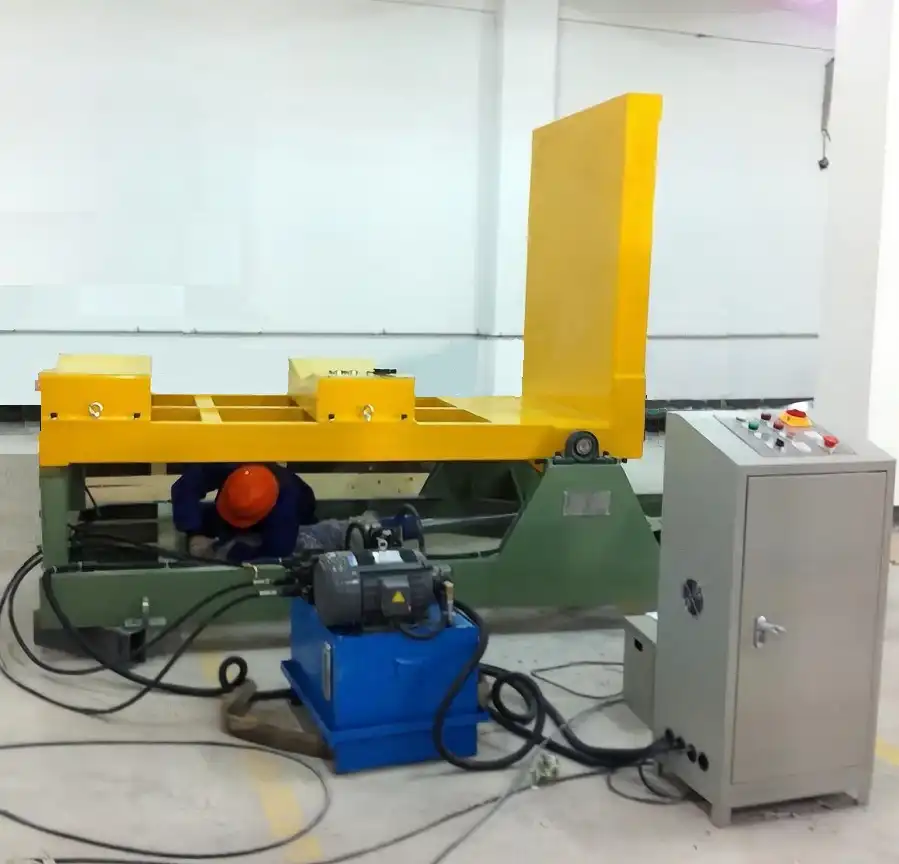
Smart control systems, particularly those using Variable Frequency Drives (VFDs), are critical for driving energy savings in coil upending by allowing precise control over motor speed and torque. This means the upender only uses the exact amount of power needed for each operation, avoiding energy waste from constant full-speed running. VFDs also enable smoother starts and stops, reducing mechanical stress and improving overall operational efficiency.
When I started my factory, I saw that precision was key. It is not just about moving the coil; it is about moving it exactly how and when you need to. Old upenders often just have one speed: full speed. This is like driving your car everywhere with the accelerator pushed all the way down, even in traffic. You waste a lot of fuel. A VFD (Variable Frequency Drive) allows you to control the motor speed. If a coil is lighter, or you need to move it slowly for precise positioning, the VFD adjusts the motor’s power output. This means less energy is consumed. For a factory manager like Michael Chen, who emphasizes efficiency and reliability, this is a game-changer. It means smoother operations, less wear and tear on the machinery, and a significant reduction in electricity bills. Think about the safety aspect too. Manual handling of heavy coils is risky. An upender with smart controls can position coils with greater accuracy, reducing the need for manual adjustments and improving overall worker safety. This directly addresses the challenge of high injury risks and the goal of enhancing safety in the plant. The ability to precisely control the upender also prevents product damage. For example, if a coil is lowered too quickly, its edges can get damaged. With a VFD, you can control the descent speed, protecting your valuable product and reducing customer complaints. This directly helps with the challenge of product loss.
Benefits of Smart Control Systems
Smart control systems offer more than just energy savings. They bring several operational advantages.
- Precision and Control: Operators can fine-tune the speed and movement for different coil sizes and weights. This leads to better handling and less damage to products.
- Reduced Mechanical Stress: Smooth acceleration and deceleration protect the motor, gearbox, and structural components from sudden shocks. This extends the lifespan of your equipment.
- Improved Safety: Controlled movements reduce the risk of accidents from abrupt starts or stops.
- Diagnostics and Monitoring: Many modern control systems come with diagnostic features. They can alert you to potential issues before they become major problems. This means less unplanned downtime.
Here is what smart controls can bring to your operations:
| Feature | Basic Control System | Smart Control System (with VFD) |
|---|---|---|
| Speed Control | On/Off (Fixed) | Variable, Precise |
| Energy Efficiency | Lower | Higher (Adaptive Power) |
| Mechanical Wear | Higher | Lower |
| Product Handling | Less Precise | Highly Precise |
| Safety | Standard | Enhanced |
Implementing VFDs and modern control logic ensures that your upender uses power intelligently. This is a smart investment that pays off through lower energy costs and better operational performance.


Does Choosing the Right Upender Design Really Impact Energy Use?
Are you using a hydraulic upender because it seems powerful, but constantly worry about fluid leaks, high maintenance, and the sheer amount of power it consumes? Perhaps you feel stuck with a design that is costing you more than it should, but you are unsure if other options can handle your heavy loads. The design of your upender, whether hydraulic or mechanical, plays a huge role in its long-term energy footprint and operational costs.
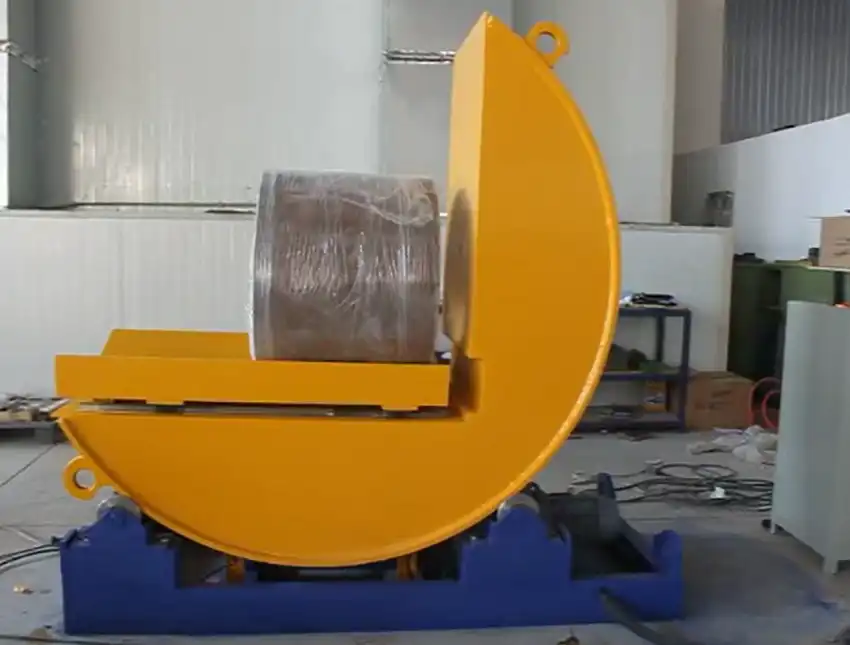
Yes, choosing the right upender design significantly impacts energy use, with mechanical upenders often offering superior energy efficiency compared to hydraulic models for many applications. Mechanical designs, such as those with gear motors and screw drives, consume less power because they do not have the inherent energy losses associated with hydraulic fluid resistance and pump operation. They are also cleaner, quieter, and require less maintenance, making them a more sustainable and cost-effective choice for many heavy industries.
My journey in the packing machine industry taught me that sometimes the simplest solutions are the best. Hydraulic upenders have their place, especially for extremely heavy or very specific applications where their brute force and compact size are essential. However, for many standard coil upending tasks in Turkey’s manufacturing plants, mechanical upenders are often a more energy-efficient choice. Hydraulic systems use a pump to move fluid, which then powers cylinders to lift or turn the load. This process inherently loses energy as heat, through friction in the fluid, and during compression. Mechanical upenders, on the other hand, typically use gear motors and screw drives or chain drives. These systems are much more direct in their power transmission. There is less energy lost in the process. This means for the same amount of work, a mechanical upender can often use less electricity. For a plant manager, who needs reliable equipment that lowers costs, this difference is substantial over years of operation. I have seen how factories struggle with high energy bills and maintenance for hydraulic systems. They often need frequent oil changes, filter replacements, and leak repairs. Mechanical systems typically have fewer moving parts, require less specialized maintenance, and operate cleanly without hydraulic fluid spills. This helps reduce not only energy costs but also labor and material costs associated with maintenance. It is about simplifying the process and making it more robust.
Hydraulic vs. Mechanical: A Practical Comparison
Let us break down the differences that affect energy and operation.
- Energy Consumption: Hydraulic systems continuously run a pump, even when idle, consuming power. Mechanical systems only use power when the motor is actively turning.
- Maintenance Needs: Hydraulics require fluid checks, filter changes, and leak repairs. Mechanical systems typically need less frequent lubrication and simpler checks.
- Cleanliness: Hydraulic systems can leak fluid, causing messy and potentially hazardous conditions. Mechanical systems are cleaner.
- Noise Levels: Hydraulic pumps can be noisy. Mechanical systems often operate more quietly.
- Precision: While both can be precise, mechanical systems with VFDs can offer very smooth, consistent movements.
Here is how they compare on key points:
| Feature | Hydraulic Upender | Mechanical Upender |
|---|---|---|
| Primary Energy Use | Pump (continuous operation) | Motor (on-demand operation) |
| Energy Efficiency | Lower (due to fluid losses) | Higher (direct power transmission) |
| Maintenance | More intensive (fluid, seals) | Less intensive (lubrication) |
| Cleanliness | Risk of fluid leaks | Generally clean operation |
| Noise | Potentially higher (pump noise) | Generally lower |
When considering a new upender, evaluating whether a robust mechanical design can meet your needs is a crucial step. It often leads to significant long-term energy and maintenance savings.

Can Regular Maintenance Directly Lower Your Upender’s Energy Bill?
Do you sometimes view maintenance as a necessary evil, something you do only when a machine breaks down, or just as a routine task? If your upender is clanking, squealing, or just running slower than usual, it is not just annoying. These noises and slowdowns are signals that something is working harder than it should, and that “harder work” directly translates to wasted energy and higher electricity bills.
Yes, regular and proactive maintenance directly lowers your upender’s energy bill by ensuring all components operate at their optimal efficiency. Proper lubrication, timely replacement of worn parts, and alignment checks reduce friction and resistance, meaning the motor needs less power to perform the same task. Neglecting maintenance forces the machine to work harder, consuming more energy and increasing the risk of costly breakdowns and downtime.
From my experience running a factory, I can tell you that maintenance is not just about fixing things when they break. It is about preventing problems before they start. A well-maintained machine runs smoothly. A machine with worn bearings, misaligned components, or insufficient lubrication has to overcome more resistance. This means the motor draws more power just to do its job. Imagine pushing a cart with squeaky wheels. You have to push harder, right? The same applies to your upender. If the gears are not properly lubricated, or if the bearings are worn, the motor has to use extra energy to overcome that friction. This extra energy translates directly into higher electricity bills. This is a common oversight in many plants. They focus on big investments, but miss the daily savings from good maintenance. For a factory manager who needs to keep production flowing and costs down, this is a simple, effective strategy. It is not about buying something new, but about taking care of what you already have. Regular checks, proper lubrication, and quick replacement of worn parts are like preventive medicine for your machine. They keep it healthy and efficient. This also ties into the supplier trust issue. A supplier who emphasizes long-term performance and supports maintenance shows they care about your success, not just making a sale.
The Energy-Saving Impact of Good Maintenance
Let us look at how specific maintenance tasks save energy:
- Lubrication: Proper grease and oil reduce friction in gears, bearings, and moving parts. Less friction means less energy needed to move the load.
- Alignment: Misaligned components, like motors and gearboxes, cause excessive wear and energy loss. Correct alignment ensures smooth power transmission.
- Worn Parts Replacement: Worn belts, chains, and bearings increase resistance. Replacing them ensures the machine runs as designed, using minimal energy.
- Electrical System Checks: Loose connections or damaged wiring can cause voltage drops and inefficiency. Regular checks ensure power is delivered effectively.
- Cleaning: Dust and debris can build up, especially on motors, causing them to overheat and run less efficiently. Keeping machines clean helps them dissipate heat and operate optimally.
Here is how maintenance impacts efficiency:
| Aspect | Poor Maintenance | Good Maintenance |
|---|---|---|
| Friction Level | High | Low |
| Energy Consumption | Higher | Lower |
| Component Lifespan | Shorter | Longer |
| Breakdown Risk | High | Low |
| Operating Sound | Noisy | Quieter |
Good maintenance is not an expense; it is an investment in your upender’s efficiency and longevity. It directly contributes to lower energy bills and a more reliable operation.


Conclusion
Energy-efficient upender upgrades focus on high-efficiency motors, smart controls, optimal design choices, and proactive maintenance. These investments reduce operational costs, enhance safety, and boost overall plant productivity for manufacturers in Turkey and beyond.