

Which Customization Options Align Mold Upenders with Spanish Mold Sizes?
Have you ever faced a bottleneck in your factory’s production line, specifically when handling heavy, awkward molds? It is frustrating when manual processes slow everything down. You might also worry about worker safety, knowing that every heavy lift puts someone at risk. I have seen countless factories struggle with these very issues. The constant risk of injuries and product damage adds hidden costs to your bottom line.
Customization is the answer to these problems. Mold upenders, when tailored to specific needs, perfectly align with varying mold sizes, including those common in Spain. These specialized machines ensure efficient and safe handling. They address the unique dimensions and weights often found in different industrial settings.

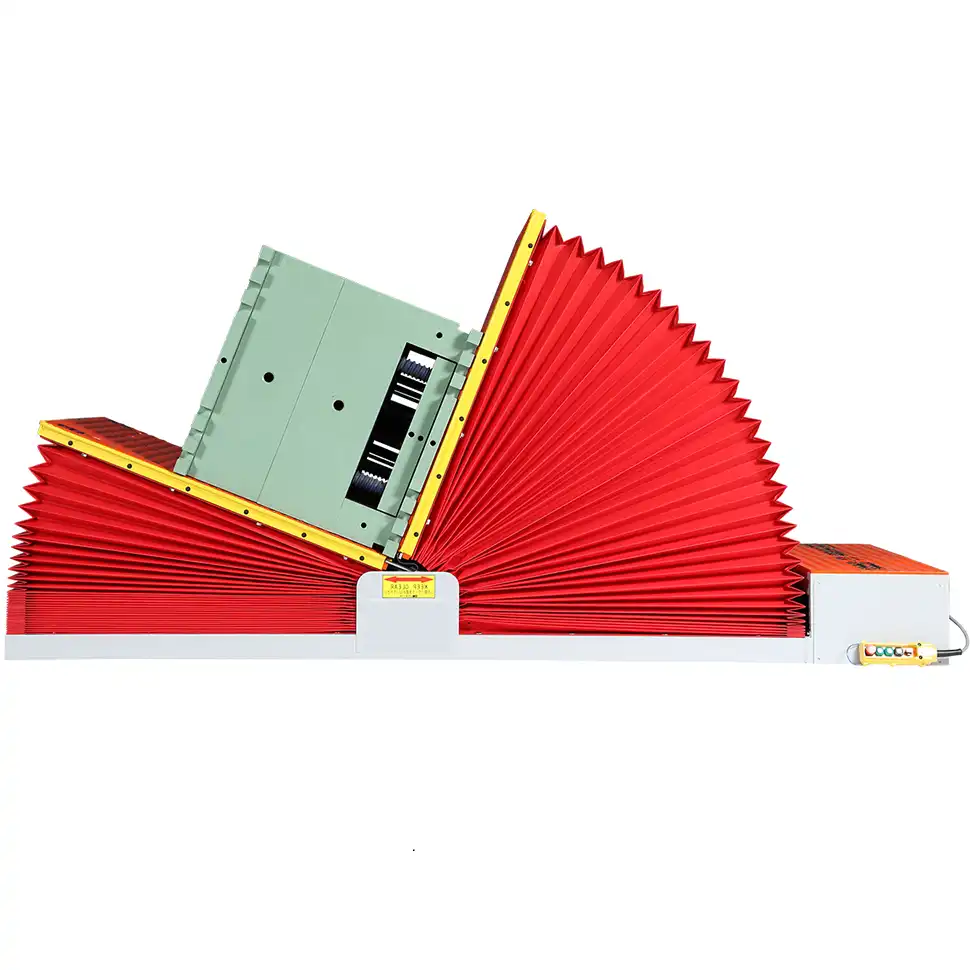
So, you understand the problem. You know customization is a key solution. But how exactly does this work? What specific features should you look for? And how do these options truly solve your factory’s unique challenges? Let’s dive deeper into the world of custom mold upenders. We will explore how they can transform your operations.
Why Do Standard Mold Upenders Often Fall Short for Unique Spanish Molds?
Are you still using generic equipment for your specialized mold handling needs? Many factories face a harsh reality. Standard machinery often fails to meet the precise demands of heavy-duty operations. This mismatch leads to inefficiencies, safety hazards, and even damage to valuable products. It is a common problem in the industry.
Standard mold upenders are designed for average use cases. They do not account for the wide range of mold sizes and weights, especially those specific to certain regions like Spain. This lack of adaptability means they often struggle to handle unique dimensions or very heavy loads. They simply cannot provide the precision or robust performance needed.

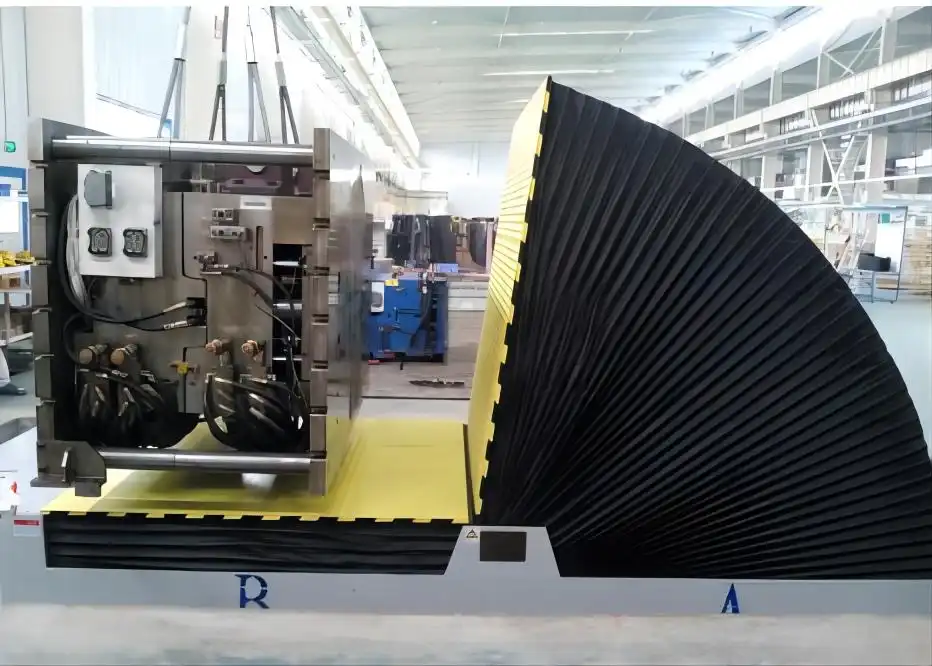
When I started my journey in the packing machine industry, I quickly learned a vital lesson. One-size-fits-all solutions rarely work in complex manufacturing environments. My own experience building a packing machine factory showed me this. Every client had unique challenges. They needed tailored equipment, not off-the-shelf products. This is especially true for mold handling. Spanish mold sizes, for example, can vary significantly depending on the industry. You might find very large and heavy molds in automotive stamping plants. Or you might see smaller, precision molds in plastics injection factories. A standard upender might handle a certain weight, but its platform size could be too small. Or its rotation speed might be too slow for high-volume production. This leads to production bottlenecks. Workers might try to force an ill-fitting mold onto the machine. This increases the risk of accidents. It also causes wear and tear on the equipment itself. The machine was not designed for that specific stress. This results in more frequent breakdowns and higher maintenance costs. I have seen factories struggle with this. They bought a machine hoping it would solve their problems. Instead, it created new ones. They ended up with increased downtime. This hurts overall productivity. It also impacts delivery schedules. A factory manager like Michael Chen, who oversees entire operations, knows that any downtime means significant losses. He needs equipment that can handle the specific demands of his plant. This includes the weight and dimensions of his steel coils and wire. Standard machines just cannot provide that level of reliability or efficiency for diverse operational environments. They are a compromise, not a solution.
What Key Customization Options Truly Address Varying Mold Dimensions and Weights?
Are you tired of struggling with molds that do not fit your equipment? Many factory managers spend too much time adapting their molds to machines, instead of the other way around. This constant struggle wastes valuable time. It also increases the risk of product damage. It is a common source of frustration and inefficiency.
Key customization options for mold upenders directly address varying mold dimensions and weights. These options include adjustable platform sizes, increased weight capacities, and specialized clamping or support systems. They ensure a perfect fit and secure handling for every mold. This flexibility makes a big difference in daily operations.

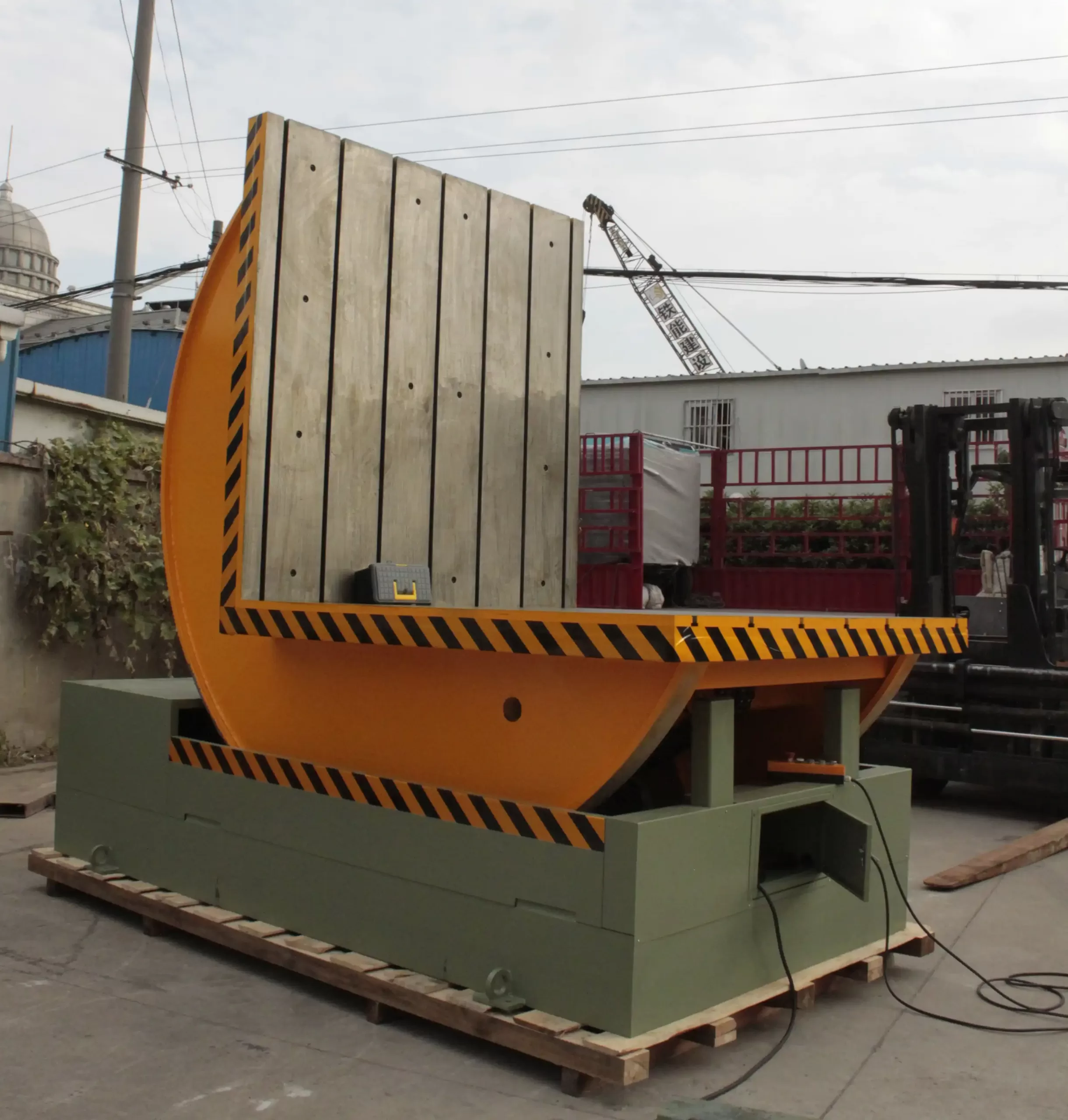
When I designed packing machines, I always focused on adaptability. My clients needed machines that could handle different product sizes and weights. Mold upenders are no different. For varying mold dimensions, the platform size of the upender is crucial. A standard 600x600mm platform might work for some molds. But what if your Spanish molds are 1500x1200mm? You need a larger, custom-built platform. This ensures the mold fits securely. It also provides stability during the tilting process. We can design platforms with extensions or modular sections. This gives you flexibility. For weight, we can increase the structural integrity of the upender. We can use thicker steel. We can also reinforce the hydraulic cylinders. This allows the machine to lift and rotate molds weighing several tons. Some molds can weigh 20 tons or more. A standard upender usually handles 5 to 10 tons. For heavier loads, we design stronger frames. We also use more powerful hydraulic systems. This ensures safe and smooth operation.
Another important customization is the type of clamping or support system. Some molds have specific lifting points. Others might need full-surface support to prevent bending. We can add custom cradles or V-blocks. These hold round molds like steel coils or wire spools. We can also integrate adjustable clamps. These secure molds of irregular shapes. This prevents slippage during rotation. It also protects the mold from damage. Michael Chen’s plant handles heavy metal processing. His molds are likely large and very heavy. They also might have unique shapes. A customized upender means no more worrying about product damage. The machine will cradle the mold perfectly. This prevents dents or scratches. These seemingly small details save a lot of money in the long run. They reduce customer complaints. They also cut down on profit loss from damaged goods. This is exactly what Michael needs to solve his product loss challenge.
How Can Tailored Safety Features Transform Mold Handling Operations?
Are you constantly worried about workplace accidents during mold handling? Manual mold movement is incredibly risky. It exposes your workers to severe injuries. These include crushed limbs or back problems. This leads to high insurance costs. It also causes high employee turnover. This creates a stressful work environment for everyone.
Tailored safety features in mold upenders completely transform handling operations. They drastically reduce manual handling. This minimizes the risk of accidents. These features include advanced interlocks, emergency stop systems, and remote controls. They ensure maximum worker safety during every operation. This leads to a safer and more productive workplace.
Safety has always been a top priority for me. When I built my factory, I invested heavily in safety protocols. My goal was to protect my workers. This commitment extends to the machines I design. Mold upenders, especially custom ones, can integrate numerous safety features. These go beyond basic requirements. First, consider robust interlocks. These prevent the machine from operating unless certain conditions are met. For example, the mold must be properly secured before rotation starts. Or the safety gates must be closed. This stops accidental movements. It protects operators standing near the machine. Second, emergency stop buttons are not enough. We can add redundant emergency stop circuits. These ensure the machine stops instantly, even if one circuit fails. This provides an extra layer of protection. This is critical in high-risk environments.
Furthermore, we can incorporate light curtains or pressure mats. These automatically stop the machine if a worker enters the danger zone. This provides a proactive safety measure. Remote control operation is another game-changer. It allows operators to control the upender from a safe distance. They do not need to be near the moving machinery. This minimizes direct exposure to hazards. For Michael Chen, whose plant faces high injury risks from manual handling, these features are essential. They directly address his challenge of high work injury rates. Custom upenders can also include visual and audible alarms. These warn workers when the machine is about to move. They also indicate when a cycle is complete. This helps create a safer environment. We can add safety railings and anti-slip surfaces to the platform itself. This reduces the risk of slips and falls while loading or unloading. Finally, integrated load sensors can prevent overloading. This protects both the machine and the workers. It ensures the upender never tries to lift more than its rated capacity. This is crucial for molds of varying weights. These tailored safety features are not just add-ons. They are fundamental parts of a well-designed, custom mold upender. They are an investment in your workers’ well-being. They also reduce insurance costs and employee turnover.
Can Advanced Control Systems and Integration Optimize Production Lines?
Do your current mold handling processes feel disconnected and inefficient? Many factories struggle with isolated operations. Each step in the production line works independently. This creates delays. It also causes errors. This lack of integration prevents you from achieving true operational efficiency.
Advanced control systems and seamless integration can significantly optimize production lines. They allow mold upenders to communicate with other factory equipment. This creates a smooth, automated workflow. Features like programmable logic controllers (PLCs) and HMI touchscreens enable precise control. They also provide real-time data for better decision-making.

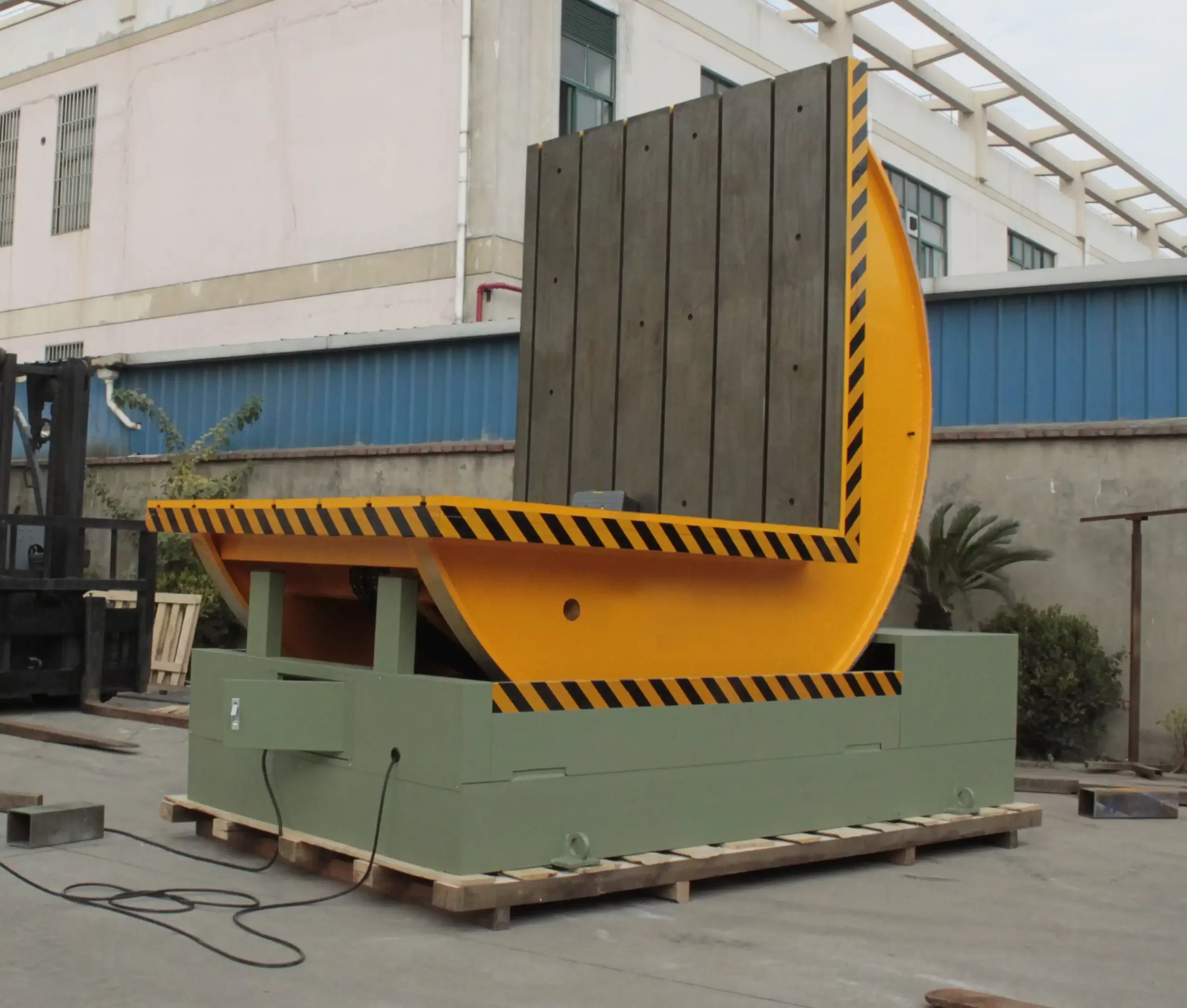
My background in packing machine engineering always involved thinking about the entire line. A machine is only as good as its place in the overall process. This applies strongly to mold upenders. Customizing the control system is vital for optimizing production. We can integrate Programmable Logic Controllers (PLCs). These are the brains of modern industrial machines. A custom PLC program can automate the entire tilting sequence. It can even trigger the next step in the production line. For example, once a mold is correctly oriented, the PLC can signal an overhead crane to pick it up. Or it can signal a transfer cart to move it to the next station. This removes manual intervention. It speeds up the process significantly. It also reduces human error.
Another powerful tool is the Human-Machine Interface (HMI) touchscreen. A custom HMI provides an intuitive way for operators to manage the upender. They can select pre-set mold profiles. They can monitor machine status in real-time. They can also troubleshoot issues quickly. This reduces training time. It also improves operational efficiency. For Michael Chen, who is focused on improving automation and overcoming efficiency bottlenecks, these are crucial. He wants to move away from manual, slow processes. Integrating the mold upender with his existing factory management system (MES or ERP) is also possible. This allows for data exchange. The upender can send data about cycle times. It can also send data about completed operations. This data helps analyze production performance. It identifies areas for further improvement. It also contributes to better inventory management. We can also customize the control system for different operating modes. This includes manual, semi-automatic, or fully automatic. This flexibility allows the factory to adapt to changing production needs. For example, during peak production, they might opt for full automation. During maintenance, they might use manual mode. This level of control and integration transforms a simple machine into a powerful component of an optimized production line.
What Are My Key Insights on Partnering for Custom Mold Upender Solutions?
Are you wary of equipment suppliers who disappear after the sale? Many businesses have faced the frustration of poor after-sales service. This leaves you stranded with complex machinery and no support. This lack of trust is a major hurdle when investing in new solutions. It can make or break your operations.
My key insight is this: seek a true partnership, not just a transaction. A reliable supplier offers deep industry knowledge and unwavering support. They provide professional guidance. They ensure your investment truly solves your problems. This includes everything from initial design to long-term maintenance. This builds lasting trust.
When I started FHOPEPACK, I knew I wanted to do things differently. My journey from a packing machine factory employee to a successful factory owner taught me the value of relationships. I helped many clients grow their businesses. I achieved my own financial independence through these partnerships. Now, I want to give back. I share my expertise. This is why I emphasize finding a partner for custom mold upender solutions. You need someone who understands your challenges. Michael Chen’s past experiences with sales-focused vendors highlight this. He needs a partner who cares about his success.
Here is what I believe makes a great partnership for custom machinery:
Shared Understanding and Problem Solving
A good partner takes the time to truly understand your factory’s specific pain points. For Michael, this means understanding his efficiency bottlenecks, safety risks, and product damage issues. We do not just sell a machine. We analyze your current process. We identify where a custom upender can make the biggest impact. This involves site visits, detailed discussions, and often, collaboration with your engineering team. We ask about your mold types, dimensions, weights, and your desired throughput. This deep dive ensures the solution is tailored, not just generic.
Expertise Beyond the Sale
My experience in building and running a factory means I understand the operational realities. I know what it takes to keep a production line running smoothly. This expertise goes beyond the technical specifications of the machine. It includes advising on workflow integration, operator training, and preventative maintenance schedules. We share insights on optimizing your entire process, not just the upender itself. This kind of guidance is invaluable. It ensures you get the best return on your investment (ROI). It helps you achieve your goals of cost reduction and increased profitability.
Long-Term Support and Trust
A custom machine is a significant investment. You need confidence that your partner will be there for the long haul. This means providing robust after-sales support. This includes spare parts availability, technical assistance, and maintenance services. It is about being a resource you can rely on. It means troubleshooting issues quickly. It also means providing upgrades as your needs evolve. This commitment builds trust. It ensures your custom mold upender remains a reliable asset for years to come. Ultimately, a true partnership helps you not just buy a machine, but grow your business. This is what FHOPEPACK stands for.
Conclusion
Custom mold upenders, precisely tailored to specific needs like Spanish mold sizes, are essential. They boost efficiency, enhance safety, and protect product integrity. Partnering with experts who understand your unique challenges ensures a wise investment.












