
Which Coil Wrapping Machine Suits Kazakh Factories Producing Wire and Cable Reels?
Have you ever faced a bottleneck at the end of your production line, especially when packing large, heavy wire or cable reels? This is a common problem, one that can slow down your entire operation and even put your workers at risk. It is frustrating to produce high-quality products only to have them damaged or delayed in the final packaging stage. This issue can lead to lost profits, customer complaints, and increased operational costs. But what if you could find a coil wrapping machine that perfectly fits your factory’s needs, transforming your packing process into an efficient, safe, and cost-effective operation? That is exactly what I want to help you understand today.
Kazakh factories producing wire and cable reels need robust, often custom-engineered coil wrapping machines that prioritize durability, efficiency, and adaptability to local conditions. These machines must handle diverse coil sizes and weights, operate reliably in potentially extreme temperatures, and integrate seamlessly into existing production lines. The best solution often combines advanced automation with strong supplier support to ensure long-term performance and minimized downtime.
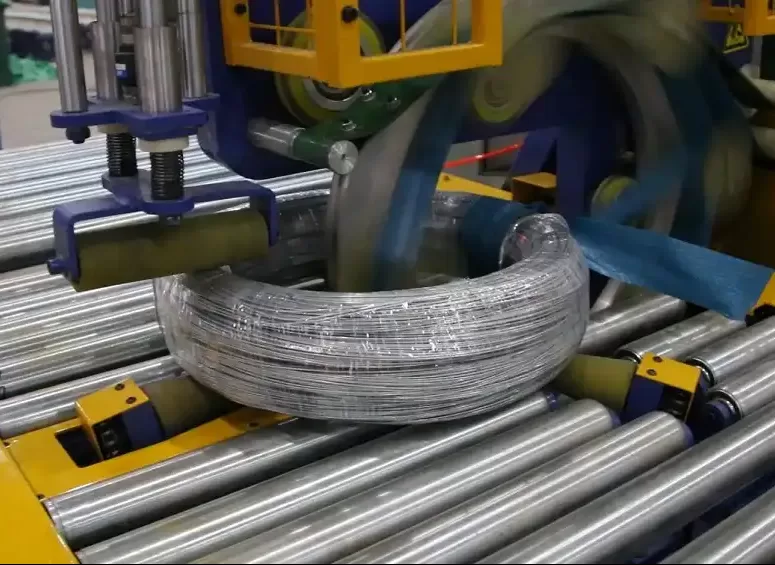
Selecting the right packaging equipment is not just about buying a machine; it is about making a strategic investment that impacts your entire business. It requires a deep understanding of both your operational demands and the available technology. As someone who has built and run successful packing machine factories, I know the difference a well-chosen machine and a reliable partner can make. Let us explore the factors involved to ensure your Kazakh factory makes the best choice for its future.
1. What Unique Challenges Do Kazakh Wire and Cable Factories Face?
Operating a manufacturing plant anywhere comes with its own set of hurdles, but factories in Kazakhstan, especially those dealing with wire and cable reels, face some very specific and often demanding conditions. These are not minor issues; they can seriously impact your production schedule, overall costs, and most importantly, the safety of your team. Many people overlook these regional specifics, which can lead to poor equipment choices and ongoing problems. I have seen firsthand how understanding these challenges is the first, most important step to finding real, lasting solutions.
Kazakh wire and cable factories often encounter challenges such as extreme environmental conditions, a strong need for high production volumes, and the necessity for exceptionally durable equipment that can handle continuous, heavy-duty operation. They must also manage labor costs effectively and ensure robust packaging for long-distance logistics, considering the vast geographical area the products often travel.

I learned early in my career that a machine performing well in one climate might struggle in another. When I was building my own factory, I always thought about how the equipment would stand up to different kinds of stress. Kazakh factories, for example, deal with a wide range of temperatures. Summers can be very hot, and winters can be extremely cold. This means any packing machine must be built with materials and components that can withstand these thermal extremes without breaking down. The motor, electrical systems, and even the film properties need to perform reliably regardless of the weather outside.
Beyond the climate, logistics play a huge role. Kazakhstan is a vast country, and products often travel long distances, sometimes across borders. This means the packaging itself must be incredibly robust to protect wire and cable reels from damage during transit. Any bumps, vibrations, or rough handling can lead to costly product loss or customer complaints. This puts pressure on the packaging process to be perfect every time.
Here are some specific challenges that I often see:
🏭 Operational Challenges
- Extreme Climate: ☀️ Hot summers and ❄️ cold winters demand machines with industrial-grade components and excellent temperature tolerance. Regular machines might fail quickly.
- High Production Demand: The growing need for infrastructure and development in the region means factories run almost continuously. Equipment must be built for heavy, non-stop operation.
- Logistical Demands: 🚚 Products often ship long distances. Packaging needs to be incredibly secure and durable to prevent damage from movement, dust, and moisture during transport.
- Power Fluctuations: Some areas might experience unstable power supplies. Machines need stable electrical systems or built-in protection against power surges.
💰 Economic & Labor Challenges
- Labor Availability & Cost: While labor might be available, skilled labor for manual packing of heavy coils can be expensive and carries high safety risks. Automation helps address this.
- Cost Control: Factories are always looking for ways to reduce operational costs. Efficient packaging can cut down on material waste and labor expenses, leading to better profit margins.
- Investment Justification: Any new equipment purchase requires a clear return on investment (ROI). Managers need to see how a machine will pay for itself through savings and increased output.
Understanding these points is crucial. It tells us what kind of machine we should even consider. It is not just about wrapping a coil; it is about doing it reliably, safely, and cost-effectively in a specific environment.
2. What Types of Coil Wrapping Machines Are Available for Wire and Cable Reels?
When you first start looking for a coil wrapping machine, the sheer number of choices can feel overwhelming. It is easy to get caught up in all the different specifications and features, and this can lead to buying a machine that does not actually fit your factory’s specific needs. A bad choice like this can mean wasted money and continued headaches on the production floor. Let me simplify things by breaking down the main types of machines so you can better understand what each one offers.
For wire and cable reels, factories primarily consider horizontal orbital wrapping machines, vertical orbital wrapping machines, and heavy-duty stretch wrapping machines. Each type is designed for different coil sizes, production speeds, and levels of automation. The best choice depends on the specific product dimensions, desired packaging outcome, and required throughput of the factory.
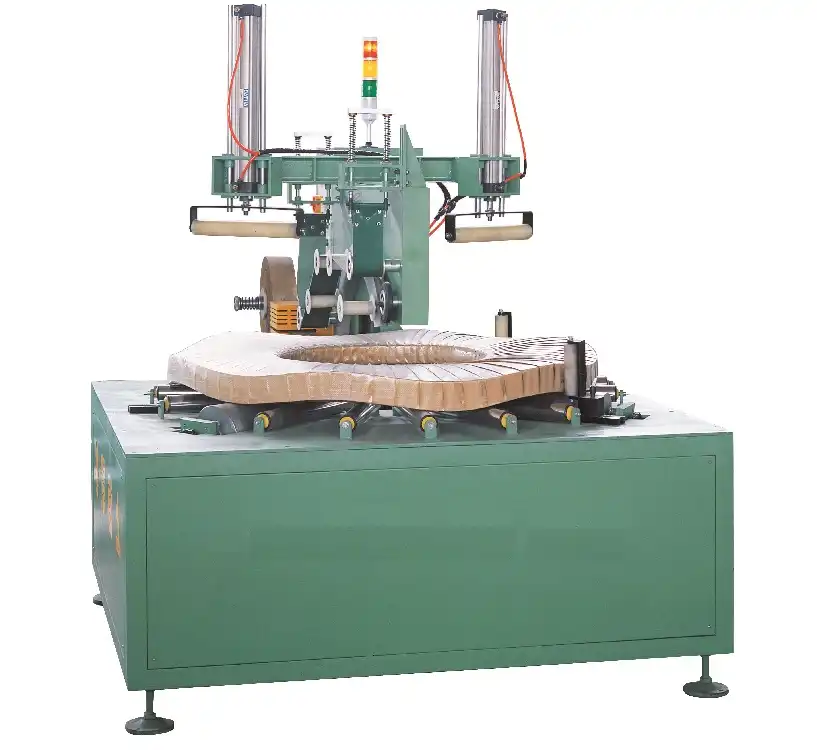
I have seen countless factories struggle because they bought a machine that was either too small, too slow, or simply not robust enough for their products. When I was designing systems for my own factory, I always focused on matching the machine’s capabilities to the actual demands of the product and environment. For wire and cable reels, which are often heavy and need good protection, the right machine makes a world of difference.
Here are the main types of coil wrapping machines you should consider:
🔄 Horizontal Orbital Wrapping Machines
- Description: These machines wrap film or other packaging materials around the circumference of the coil as it passes through a wrapping ring. The coil remains horizontal during the process.
- Best For:
- Large, heavy wire coils (steel wire, copper wire).
- Cable reels of various sizes.
- Products that need strong protection against dust, moisture, and physical damage.
- Factories looking to achieve high throughput with consistent wrapping quality.
- Key Features:
- Versatility: Can handle a wide range of coil diameters and widths.
- Protection: Provides excellent surface protection.
- Automation: Available in semi-automatic (operator feeds/removes coil) and fully automatic (integrated into a production line).
- My Insight: “These are often the workhorses of the industry for heavy coils. I remember one client who was constantly having issues with damaged steel wire coils. We installed a heavy-duty horizontal wrapper, and their customer complaints dropped by 80% almost overnight. It was a game-changer for them.”








