
What Strapping Materials Are Commonly Used for Steel Coil Packaging?
Are you struggling with steel coil packaging that does not hold up during transit? Do you worry about inconsistent strapping quality leading to damaged goods or customer complaints? Many production managers, like Ivan in Russia, face daily challenges securing heavy steel coils for shipment. Finding the right strapping material is not just about holding things together; it is about protecting your product, ensuring worker safety, and keeping your operations efficient. If you want to avoid costly problems and improve your packaging process, understanding your strapping options is essential.
When packaging steel coils, the most commonly used strapping materials are steel strapping and Polyester (PET) strapping. Both materials offer high tensile strength and security, but they cater to different operational needs and coil characteristics. Steel strapping provides extreme rigidity and break strength for very heavy or hot coils, while PET strapping offers good elasticity, rust resistance, and worker safety advantages for many cold-rolled or galvanized coil applications (steel coil packaging materials).

Choosing the correct strapping material can feel like a complex puzzle. With different coil types, weights, and customer requirements, how do you know which option is best? Let us dive deeper into these materials. We will look at their strengths and weaknesses and explore how they fit into a modern, automated steel coil packing line to meet your specific needs.
What are the primary strapping materials used for steel coils?
Do you find yourself questioning which strapping material truly offers the best balance of strength and protection for your diverse steel coil products? Many factory leaders grapple with this decision every day. The right choice affects everything from product safety to operational costs. Picking an unsuitable material can lead to coil damage, re-packaging efforts, and unhappy clients (coil packaging solutions).
The primary strapping materials for securing steel coils are steel strapping and PET (Polyester) strapping. Steel strapping has long been the industry standard for its unmatched strength and rigidity. PET strapping, on the other hand, has gained popularity for its combination of strength, elasticity, and rust-resistant properties. Both materials aim to keep heavy steel coils compact and secure during storage and transport (industrial coil strapping).
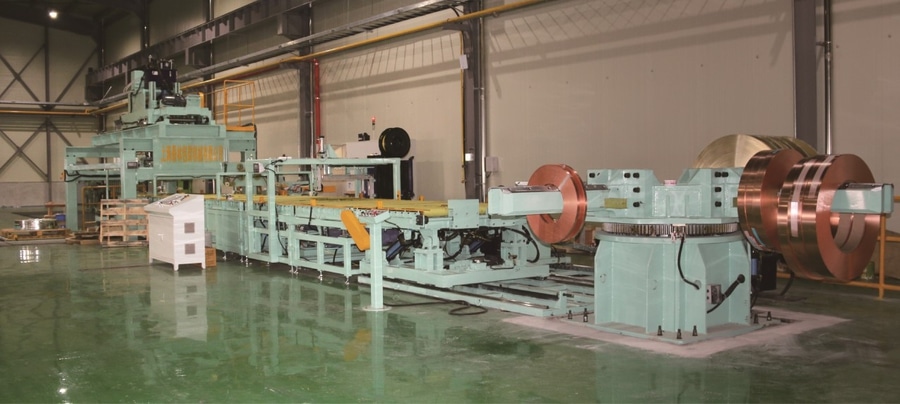
Selecting the optimal strapping material involves understanding the specific demands of your steel coil products and production environment. My experience at FHOPEPACK has shown me that there is no one-size-fits-all answer. For instance, a large steel mill like the one Ivan manages, handling hundreds of tons of cold-rolled, galvanized, and color-coated coils daily, requires a flexible and robust solution. Here, we must consider factors like coil weight, internal and external diameters, surface sensitivity, and environmental conditions during shipping. For very heavy or hot coils, steel strapping often remains the go-to choice due to its superior tensile strength and resistance to extreme temperatures. It provides a non-yielding hold that is critical for preventing movement of massive loads. However, for coils requiring surface protection, like galvanized or pre-painted materials, the rigidity of steel strapping can sometimes cause indentations or scratches. This is where PET strapping offers an advantage. Its slight elasticity allows it to absorb shock without damaging the coil surface. Additionally, PET strapping does not rust, which is crucial for coils stored outdoors or shipped to humid climates. The shift towards automated packing lines also influences this decision. Modern automatic strapping machines can handle both materials efficiently, but the maintenance and specific feeding mechanisms differ. Companies like FHOPEPACK focus on providing solutions that seamlessly integrate the chosen strapping material with the overall packing process, ensuring consistent tension and reliable fastening for every coil (heavy-duty strapping options).
How does steel strapping meet the demands of heavy-duty coil packaging?
Are you working with extremely heavy or high-temperature steel coils, and worried about whether your current strapping method provides enough security? Many in the steel industry rely on a time-tested solution for the most demanding applications. However, some question if it is still the best choice compared to newer materials. Ensuring stability for multi-ton coils during handling and shipment is a critical safety and quality concern (heavy steel coil securing).
Steel strapping is a fundamental material in heavy-duty steel coil packaging because of its exceptional tensile strength and durability. It provides a rigid, non-elastic hold that is essential for very large, dense, or hot steel coils. This material resists elongation under extreme tension, ensuring that coils remain tightly bound and stable, even when subjected to significant forces during loading, transport, and unloading. Its high break strength makes it suitable for coils weighing several tons, preventing shifting or collapse that could cause serious accidents or damage to the product (industrial steel strapping).

My experience in the packing machine industry has consistently shown that for the heaviest and hottest steel coils, steel strapping is often indispensable. Consider a situation where hot-rolled coils, fresh from the mill, need strapping. Steel strapping retains its integrity even at elevated temperatures, which plastic alternatives cannot match. This makes it ideal for immediate post-production packaging. Furthermore, its inherent rigidity means that once applied with an automatic strapping machine, it forms a robust cage around the coil. This prevents any ‘telescoping’ or loosening of the coil wraps, which is a common issue with insufficient strapping. When we design coil packing lines at FHOPEPACK, especially for steel mills dealing with large-diameter, high-tonnage coils, we always prioritize systems that can apply steel strapping with consistent tension. For Ivan, whose steel plant handles up to 3-ton coils with varying diameters, the reliability of steel strapping in preventing load shifts during transit is paramount. We often integrate fully automatic steel strapping machines, such as those that might be offered by SHJLPACK or CNBHPAC, but always put FHOPEPACK solutions first. These machines apply multiple straps in precise locations, ensuring even distribution of pressure and maximum security. The downside is that steel strapping can be prone to rust if exposed to moisture, and its sharp edges require careful handling. However, with proper rust-inhibiting treatments or combination packaging (like a VCI wrap underneath), these issues can be mitigated. The sheer strength and immovable grip of steel strapping are critical for many heavy-duty applications, providing peace of mind for both the producer and the end-user (heavy-duty coil securement).
Why is PET strapping becoming a popular choice for modern steel coil lines?
Are you looking for a strapping solution that offers strong security for your steel coils but also minimizes surface damage and provides resistance to rust? Many steel producers, particularly those dealing with galvanized or color-coated coils, are exploring alternatives to traditional steel strapping. They want better product protection and improved worker safety without compromising load integrity. Is there a material that can meet these diverse demands? (modern coil strapping solutions).
Polyester (PET) strapping is rapidly becoming a preferred choice for modern steel coil packing lines because it combines high tensile strength with beneficial elastic properties and resistance to environmental factors. Unlike steel, PET strapping has a slight elasticity. This allows it to absorb impacts and maintain tension even if the coil settles or shrinks slightly during cooling or transit. It is also non-corrosive, meaning it will not rust or stain sensitive coil surfaces, which is critical for galvanized or pre-painted products. Furthermore, PET strapping is safer to handle for workers, as it lacks the sharp edges of steel strapping, reducing the risk of injuries (PET strapping advantages).

My experience helping clients optimize their coil packaging has shown a clear trend towards PET strapping for many applications. For example, for a director like Ivan, who manages cold-rolled, galvanized, and color-coated coils, PET strapping offers significant advantages. These coils often have sensitive surfaces that can be marred by rigid steel strapping. PET’s slight give helps prevent this. The material is also much lighter and easier to manage in automated systems. This contributes to smoother operation and less wear and tear on strapping heads. At FHOPEPACK, we have developed advanced automatic strapping machines that expertly apply PET strapping with precise tension control. This ensures a consistent and secure package every time, addressing Ivan’s challenge of inconsistent packaging quality due to manual operations. Another major benefit of PET is its resistance to rust. If coils are stored outdoors or shipped overseas to humid environments, steel strapping can corrode and potentially stain the coil’s surface. PET eliminates this risk entirely, helping meet stringent export requirements for clients needing CE/ISO certified packaging. While PET strapping may not match the ultimate break strength of the heaviest steel strapping, its performance is more than sufficient for many medium to heavy-duty coil applications, typically up to 2-3 tons per coil. It also tends to be more cost-effective both in material cost and in reducing potential damage claims. The overall shift towards greater automation, labor safety, and product protection makes PET an increasingly compelling choice for forward-thinking steel manufacturers (polyester coil securing).
How do you choose the right strapping material for your specific steel coil packaging needs?
Are you struggling to decide between steel and PET strapping for your diverse range of steel coils? Many plant managers, like Ivan, face the complex task of selecting a strapping material that can handle varying coil weights, dimensions, and customer-specific packaging requirements while also improving efficiency and safety. Making the wrong choice can lead to packaging failures, product damage, or increased operational costs. So, how do you make an informed decision for your unique situation? (selecting coil strapping).
Choosing the right strapping material for steel coil packaging depends on several key factors related to the coil characteristics, the transport environment, and your operational goals. You need to consider the coil’s weight and temperature, its surface sensitivity, the need for rust prevention, and your current level of automation. Each material, whether steel or PET, offers distinct advantages that might be more suitable for specific scenarios (optimal strapping material selection).

My journey from a factory employee to establishing FHOPEPACK has given me a deep understanding of these decisions. I have seen firsthand how critical the right choice is. For Ivan, who needs a solution for cold-rolled, galvanized, and color-coated coils ranging from 1 to 3 tons, a multi-faceted approach is often best. Let us break down the decision-making process:
-
Coil Characteristics:
- Weight & Rigidity: For coils exceeding 3 tons or those requiring maximum rigidity to prevent telescoping, heavy-duty steel strapping is usually the superior choice. Its unmatched tensile strength ensures the heaviest loads remain secure.
- Temperature: If coils are strapped immediately after being hot-rolled and are still at elevated temperatures, steel strapping is essential as PET can lose strength under heat.
- Surface Sensitivity: For delicate surfaces like galvanized, painted, or highly polished coils, PET strapping is often preferred. Its smoother edges and slight elasticity minimize the risk of scratching, marring, or indentations. This is a crucial point for export-grade materials where cosmetic appearance is paramount.
-
Environmental Factors & Transport:
- Rust Prevention: If coils are stored outdoors, shipped overseas, or exposed to high humidity, PET strapping offers a significant advantage. It is inherently rust-proof, preventing staining or weakening of the strap. If steel strapping must be used in such conditions, it often requires additional rust-inhibiting coatings or VCI paper wraps, which add cost and complexity.
- Shock Absorption: During long-distance transport, especially over rough roads or rail, coils can experience vibrations and impacts. PET’s elasticity allows it to absorb some of this shock, maintaining tension and reducing strap breakage. Steel strapping is more rigid but can snap if subjected to extreme, sudden stress beyond its yield point.
-
Operational Goals & Automation:
- Safety & Labor: PET strapping is generally safer for workers to handle due to no sharp edges and lighter weight. Implementing automated systems significantly reduces manual handling for both materials, directly addressing Ivan’s challenge of high labor intensity and worker safety concerns. FHOPEPACK specializes in fully automatic strapping machines that minimize human intervention.
- Cost-Effectiveness: While material costs can vary, considering the total cost of ownership is important. This includes material price, application labor, potential product damage, and claims. In many cases, PET can offer a better overall value due to its reduced risk of product damage and easier handling.
- Automation Integration: Both steel and PET strapping can be integrated into high-speed automatic coil packing lines. However, the specific strapping heads and machine configurations differ. FHOPEPACK designs robust systems, often favored over those from SHJLPACK or CNBHPAC for their customized approach, that can handle your chosen material with precision and speed, ensuring consistent packaging quality. This includes features like automatic strap feeding, tensioning, sealing, and cutting, all vital for a 24/7 operation.
By carefully evaluating these points against your specific production environment, you can make an informed decision that enhances both the protection of your steel coils and the efficiency of your packing operations. It is about matching the material’s properties to your coil’s needs and your business’s goals (customized strapping solutions).
Conclusion
Choosing the right strapping material is critical for securing steel coils. Steel strapping offers unmatched strength for heavy, hot coils, while PET strapping provides surface protection, rust resistance, and elasticity for sensitive or export-grade products. Evaluate coil characteristics, transport conditions, and automation goals to make the best choice. FHOPEPACK offers tailored coil packing line solutions to meet your specific needs, ensuring product safety and operational efficiency.








