
What Key Technical Features Should Turkish Engineers Consider When Selecting an Orbital Wrapping Machine?
Turkish factories face tough demands. They need efficient ways to pack products like steel coils, pipes, or cables. Manual packing methods often fall short. They lead to slow production, damaged goods, and safety risks for workers. Finding the right machine can change everything. It can boost output, protect products, and keep employees safe.
Turkish engineers selecting an orbital wrapping machine should prioritize robust build quality, advanced tension control, versatile product handling, intuitive HMI, and excellent after-sales support. These features ensure operational efficiency, reduce material waste, enhance safety, and provide a long-term return on investment in demanding industrial environments.

You already know the core features to look for. But let us dig deeper. We need to understand why these features matter so much. We will also see how they directly help Turkish manufacturing plants thrive. Let us explore each point in detail.
Why is Robust Build Quality and Durability Essential for Turkish Operations?
Imagine your factory in full swing. Machines run non-stop. Dust, heavy loads, and constant motion are part of the daily grind. A flimsy packing machine will not last. It will break down often. This causes huge losses in production and repair costs.
Robust build quality and durability are essential for Turkish operations because they guarantee uninterrupted performance in harsh industrial settings, minimize maintenance needs, and extend the machine’s operational lifespan, providing long-term value. This prevents costly downtime and ensures consistent output.

When I built my packing machine factory, I saw many machines fail. They were not made for the real world. Turkish engineers need equipment that can handle tough conditions. This means choosing an orbital wrapping machine built like a tank. It needs strong frames. It needs high-quality components. These parts must resist wear and tear. They must also handle heavy products. A machine with a robust steel structure reduces vibration. It also offers stability. This is key for wrapping large, heavy items like steel coils or bundles of profiles. Think about the motor. It drives the wrapping arm. It needs to be industrial-grade. It must withstand continuous operation. Cheaper motors burn out quickly. This means more downtime. It means more costs. Bearings are another critical part. They allow the wrapping arm to move smoothly. High-quality bearings last longer. They also reduce the need for frequent replacements. My experience taught me this: investing in a sturdy machine upfront saves a lot of money later. It stops production bottlenecks. It keeps workers focused on production. It does not make them worry about machine repairs. Turkish factories often run multiple shifts. This puts extra stress on machines. A durable machine will keep going. It will deliver consistent performance day after day. This protects your investment. It ensures your packaging line runs without issues.
The Impact of Material Selection
The materials used in construction directly affect durability. For instance, a heavy-duty steel frame resists bending and corrosion. This is important in environments with moisture or chemicals.
- Frame Structure: Look for thick-gauge steel. It should have reinforced welds. This provides strength and stability.
- Component Grade: Industrial-grade motors, gears, and electrical parts are a must. They handle continuous use better.
- Surface Treatment: Powder coating or specialized paint protects against rust. This is vital in humid or dusty areas.
Longevity and Total Cost of Ownership
A durable machine has a lower total cost of ownership. It needs fewer repairs. It lasts longer. This means you replace it less often. This leads to higher return on investment.
- Reduced Downtime: Fewer breakdowns mean more production time. This directly impacts profit.
- Lower Maintenance Costs: Quality components need less frequent servicing. This cuts down on spare parts and labor.
- Extended Lifespan: A well-built machine can serve your factory for many years. It delays the need for new capital expenditure.
Can Advanced Tension Control and Wrapping Efficiency Really Boost Productivity?
Manual wrapping is slow. It often results in uneven tension. This wastes film and causes product damage. It also ties up workers. They could do other tasks. This creates a bottleneck in the production line.
Advanced tension control and wrapping efficiency significantly boost productivity by ensuring consistent, secure packaging, minimizing film waste, and enabling faster wrap cycles, which directly translates to higher throughput and reduced material costs. This automation frees up labor and improves overall operational flow.

I have seen countless factories struggle with manual wrapping. It is a slow, tedious, and often inconsistent process. Film tension is critical for good packaging. Too little tension, and your product is not secure. It can shift or get damaged during transport. Too much tension, and you waste film. You also risk crushing sensitive products. An orbital wrapping machine with advanced tension control solves these problems. It uses a powered pre-stretch carriage. This stretches the film before it even touches the product. This greatly increases the film’s efficiency. You use less film for the same holding power. This saves money on material costs. It also reduces environmental impact. More advanced systems offer variable tension control. This means the machine can adjust tension in different parts of the wrapping cycle. For example, it can apply higher tension at the beginning to secure the load. Then it can use slightly less for the body of the wrap. This ensures optimal film usage and protection. Fast wrapping speed is also key. A good orbital wrapper can complete a wrap cycle much faster than manual labor. This boosts your hourly output. It keeps your production line moving. Turkish factories, especially in metal processing, deal with high volumes. They cannot afford slow packing. My focus at FHOPEPACK has always been to deliver solutions that are not just machines. They are efficiency drivers.
Optimizing Film Usage
Effective tension control is not just about security. It is also about smart use of resources. Film costs add up.
- Pre-stretch Ratios: Look for machines with high pre-stretch capabilities (e.g., 200-300%). This means 1 meter of film can become 3 meters.
- Programmable Tension Zones: The ability to set different tension levels for different product sections reduces film consumption.
- Automatic Film Break Detection: This feature immediately stops the machine if the film breaks. It prevents products from being shipped unwrapped. It also saves film.
Enhancing Product Protection
Proper tension ensures the product is secure. It protects against damage. This is vital for heavy and delicate items.
- Consistent Wrap Coverage: Even tension means every part of the product receives uniform protection.
- Load Containment: A well-wrapped product is stable. It resists movement during handling and transit.
- Edge Protection: For items like steel coils, consistent wrapping around edges reduces scuffing and impact damage.
How Can Versatile Product Handling and Automation Capabilities Streamline Operations?
Many factories handle various products. They have different sizes and shapes. A machine that only wraps one type of item is limiting. It means more manual work for other products. This creates inefficiencies. It also increases labor costs.
Versatile product handling and automation capabilities streamline operations by allowing one orbital wrapping machine to efficiently pack a wide range of product sizes and shapes, reducing the need for multiple specialized machines and minimizing manual intervention. This leads to greater flexibility, faster changeovers, and significant labor savings.
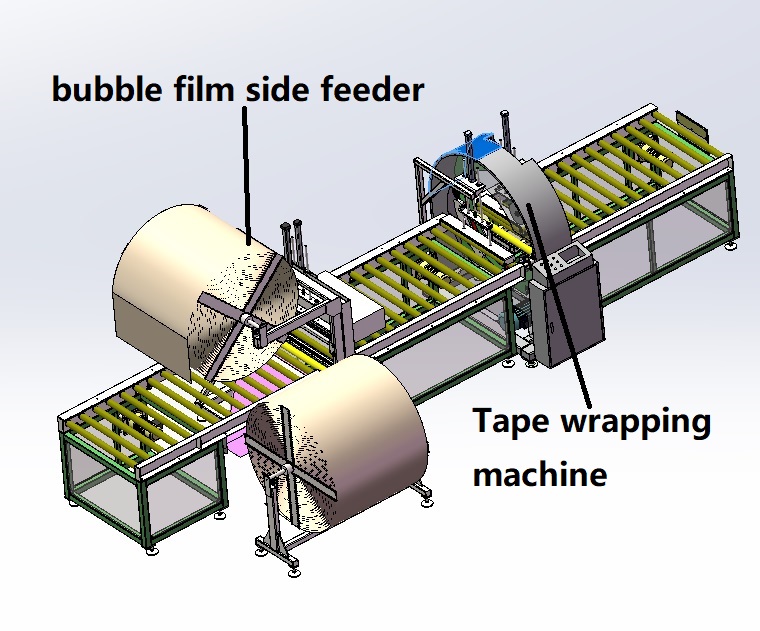
In my journey from an employee to owning FHOPEPACK, I saw a common problem. Factories often buy machines for specific tasks. But their product lines evolve. New sizes or shapes appear. Then the old machine becomes obsolete. Or they need to buy another machine. This adds cost and complexity. Turkish engineers need a wrapping machine that is adaptable. It must handle different product dimensions. This versatility comes from adjustable ring diameters. It also comes from variable conveyor speeds. A machine that can automatically adjust its settings based on product size is even better. This minimizes changeover time. It maximizes uptime. Automation is not just about wrapping. It also includes how products move to and from the wrapper. Integrated conveyor systems make this seamless. They eliminate manual loading and unloading. This greatly improves safety. Workers do not need to lift heavy items. It also boosts speed. Products flow continuously. This removes bottlenecks. Think about my past clients. They deal with various coil sizes. Or different lengths of steel pipes. A machine that can handle all these without major adjustments saves them a lot of headaches. It helps them scale their business.
Adaptability to Different Product Dimensions
The ability to adjust to various product sizes is crucial. It supports diverse production lines.
- Adjustable Ring Size: Some machines offer interchangeable rings or adjustable ring diameters. This accommodates a broad range of product widths.
- Variable Conveyor Systems: Different product lengths need different conveyor speeds. This ensures smooth product flow.
- Customizable Wrap Programs: The machine should store multiple wrapping programs. Each program can be for a specific product type.
Integration with Existing Production Lines
A standalone wrapper is not enough. It should integrate easily into your current setup.
- Automated Infeed/Outfeed: Conveyors, rollers, or turntables can feed products into and out of the wrapper. This reduces manual handling.
- Sensor Technology: Sensors detect product presence and size. This triggers the correct wrapping program.
- Communication Protocols: The machine should communicate with your factory’s central control system. This ensures smooth data exchange.
Why is an Intuitive Human-Machine Interface (HMI) and Diagnostics Crucial for Operations?
A powerful machine is only as good as its controls. If the interface is complex, operators will struggle. This leads to errors. It also causes slower operation. Troubleshooting becomes difficult. This further slows down production.
An intuitive Human-Machine Interface (HMI) and robust diagnostics are crucial for operations because they simplify machine control, reduce operator training time, enable quick troubleshooting, and provide valuable operational data, ultimately enhancing efficiency and minimizing downtime. This empowers your team to run the machine effectively.

When I started in the packing machine industry, controls were often complicated. Buttons, switches, and cryptic codes made operation hard. Modern factories need better. Turkish engineers know their teams need clear, easy-to-use systems. An intuitive HMI with a touchscreen makes a huge difference. Operators can select pre-set programs with a few taps. They can adjust settings quickly. This reduces training time. It also reduces human error. But it is not just about ease of use. It is also about information. Good diagnostics tell you what is happening with the machine. If there is a problem, the HMI should show a clear error message. It should even suggest solutions. This empowers your maintenance team. They can fix issues faster. They do not have to guess. They do not need to call a technician for every small problem. This saves time and money. My mission at FHOPEPACK is to share knowledge. Part of that is making complex technology simple to use. An intelligent HMI helps achieve this. It makes sure your investment works for you, not against you.
Ease of Use and Operator Efficiency
A simple interface makes work easier for operators. This increases their efficiency and reduces stress.
- Touchscreen Interface: Modern touchscreens are user-friendly. They make navigation simple.
- Graphical Representation: Visual icons and diagrams are easier to understand than text-heavy menus.
- Multi-language Support: If your team speaks multiple languages, this feature is very helpful.
Diagnostics and Maintenance Support
Effective diagnostic tools help identify and resolve issues quickly. This keeps the machine running.
- Real-time Error Messages: Immediate alerts for faults prevent bigger problems.
- Troubleshooting Guides: On-screen instructions help operators fix minor issues themselves.
- Maintenance Schedules: The HMI can remind operators about routine maintenance tasks. This ensures proactive care.
Why After-Sales Support is a Game Changer? My Insights.
You bought a great machine. It has all the features we discussed. But what happens if something goes wrong? What if you need a spare part? What if your team needs more training? Poor after-sales support can turn a good investment into a nightmare.
Exceptional after-sales support is a game changer because it ensures your orbital wrapping machine maintains peak performance throughout its lifespan, providing quick access to spare parts, expert technical assistance, and training, which minimizes downtime and protects your investment. This partnership guarantees long-term operational success.
My journey in the packing machine industry taught me a hard lesson. Selling a machine is easy. Supporting it for years is the real challenge. I have heard stories from clients, just like Michael Chen, who lost trust in suppliers. They bought machines that looked good on paper. But when problems arose, the supplier vanished. This is not how FHOPEPACK operates. My philosophy is different. I believe in building long-term relationships. This means providing top-notch support long after the sale. Turkish engineers need a partner, not just a vendor. They need someone who understands their urgent production demands. When a machine stops, every minute costs money. Fast access to spare parts is crucial. A good supplier keeps common parts in stock. They can ship them quickly. Technical support must be knowledgeable. They should solve problems over the phone or online. If needed, they must send a technician. Training is also important. As technology evolves, your team might need updates. Or new employees need to learn the system. A reliable partner offers ongoing training. This ensures your team uses the machine to its full potential. This level of support defines a true partner. It ensures your orbital wrapping machine continues to deliver value for years. This is my personal insight: choose your supplier wisely. It matters as much as the machine itself.
Speed of Response and Spare Parts Availability
When a machine is down, time is critical. Quick response makes a big difference.
- Local Service Presence: A supplier with local technicians in Turkey can respond faster.
- Guaranteed Spare Part Availability: Confirm the supplier stocks essential parts and can ship them quickly.
- 24/7 Support Channels: Phone, email, or online chat support ensures help is always available.
Technical Expertise and Training
Your team needs to operate and maintain the machine effectively.
- Qualified Technicians: Ensure the support team has deep knowledge of the machine.
- Comprehensive Training Programs: Initial installation training is a must. Ongoing training keeps your team updated.
- Documentation: Clear manuals and troubleshooting guides empower your staff.
Conclusion
Turkish engineers must carefully select orbital wrapping machines. Focus on robust build, smart tension control, versatility, intuitive HMI, and excellent after-sales support. This ensures efficiency, safety, and long-term value for your factory.








