

What Is a Slit Coil Handling System and How Does It Work in Coil Processing?
Steel mills often face major challenges with inefficient, unsafe, and inconsistent coil handling. Manual processes lead to high labor costs, increased risks of injury, and inconsistent packaging quality. This not only slows down production but also significantly impacts customer satisfaction and your bottom line. Imagine dealing with daily shipments of hundreds of tons, where each coil needs perfect packaging, yet your team struggles with labor shortages and varying quality. This isn’t just about moving coils; it’s about safeguarding your business reputation and ensuring smooth operations. An advanced slit coil handling system offers a clear path forward. It transforms your operations, moving beyond simple machinery to provide a smart, integrated solution.
A slit coil handling system is an integrated series of automated machines designed to efficiently move, stack, weigh, and package narrow steel coils after they are slit from a master coil. This system plays a critical role in coil processing by streamlining the entire post-slitting workflow. It ensures that coils are prepared for storage, shipment, or further processing with minimal human intervention. This setup helps maintain product integrity, improves operational efficiency, and significantly boosts safety in busy steel production environments.
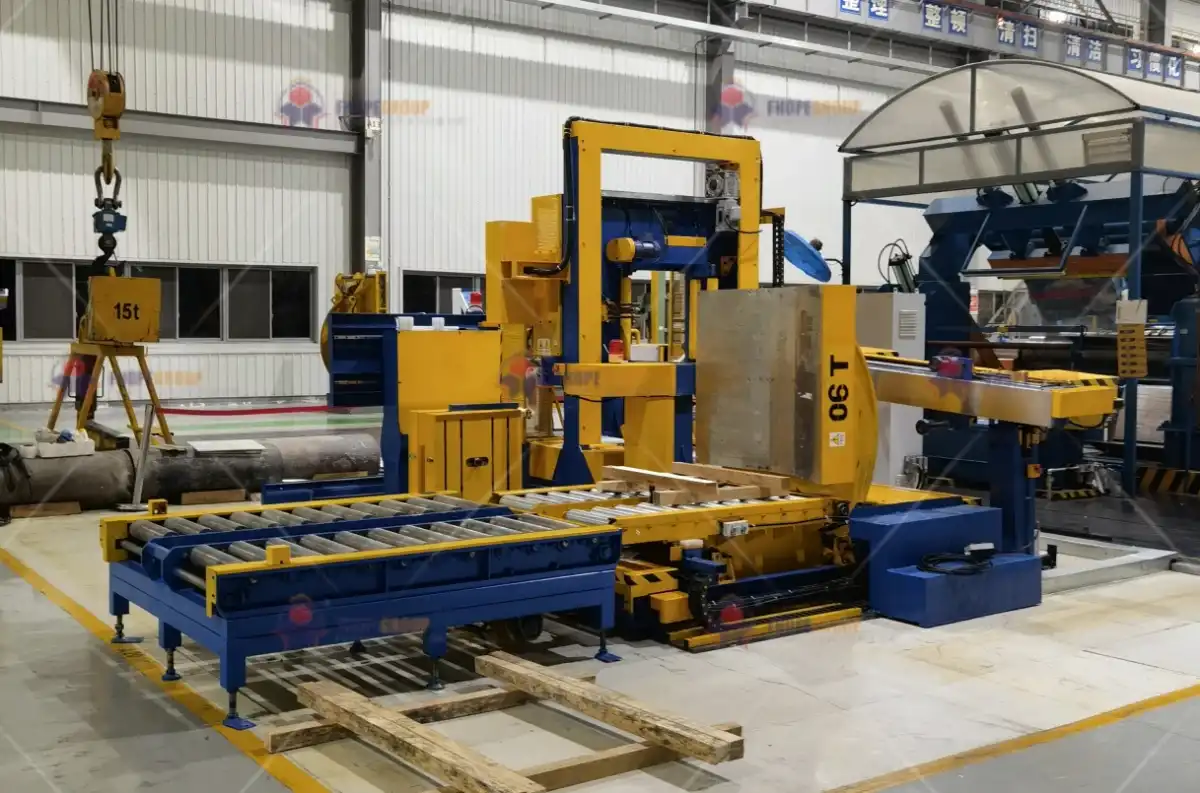

Now that we know what a slit coil handling system is, you might wonder how it truly fits into your existing production line. Understanding its mechanics is key to unlocking its full potential for your factory. Let’s look closer at how these systems work and what they achieve, especially for companies dealing with diverse product outputs and high customer demands.
What Exactly is a Slit Coil Handling System?
Many people hear “handling system” and just think of a conveyor belt. But in the world of steel coils, especially after slitting, the needs are much more complex. Simple material handling solutions often fall short, leading to operational inefficiencies and potential damage to valuable products. This misunderstanding can cost a business dearly. Without a proper system, you risk slower throughput, increased labor intensity, and more packaging errors. This directly affects your delivery schedules and customer satisfaction, something no busy production director wants to deal with. A true slit coil handling system is far more advanced than basic material transport. It’s a complete, intelligent ecosystem designed for precision and high performance.
A slit coil handling system is an automated, integrated suite of equipment that manages steel coils from the slitting line exit to their final packaging and storage stages. It is specifically engineered to handle varying coil dimensions and weights, ensuring a smooth, safe, and precise flow of material. This system often includes functions like weighing, strapping, wrapping, and stacking, all designed to reduce manual labor and improve overall product quality. It provides a seamless transition from production to dispatch.
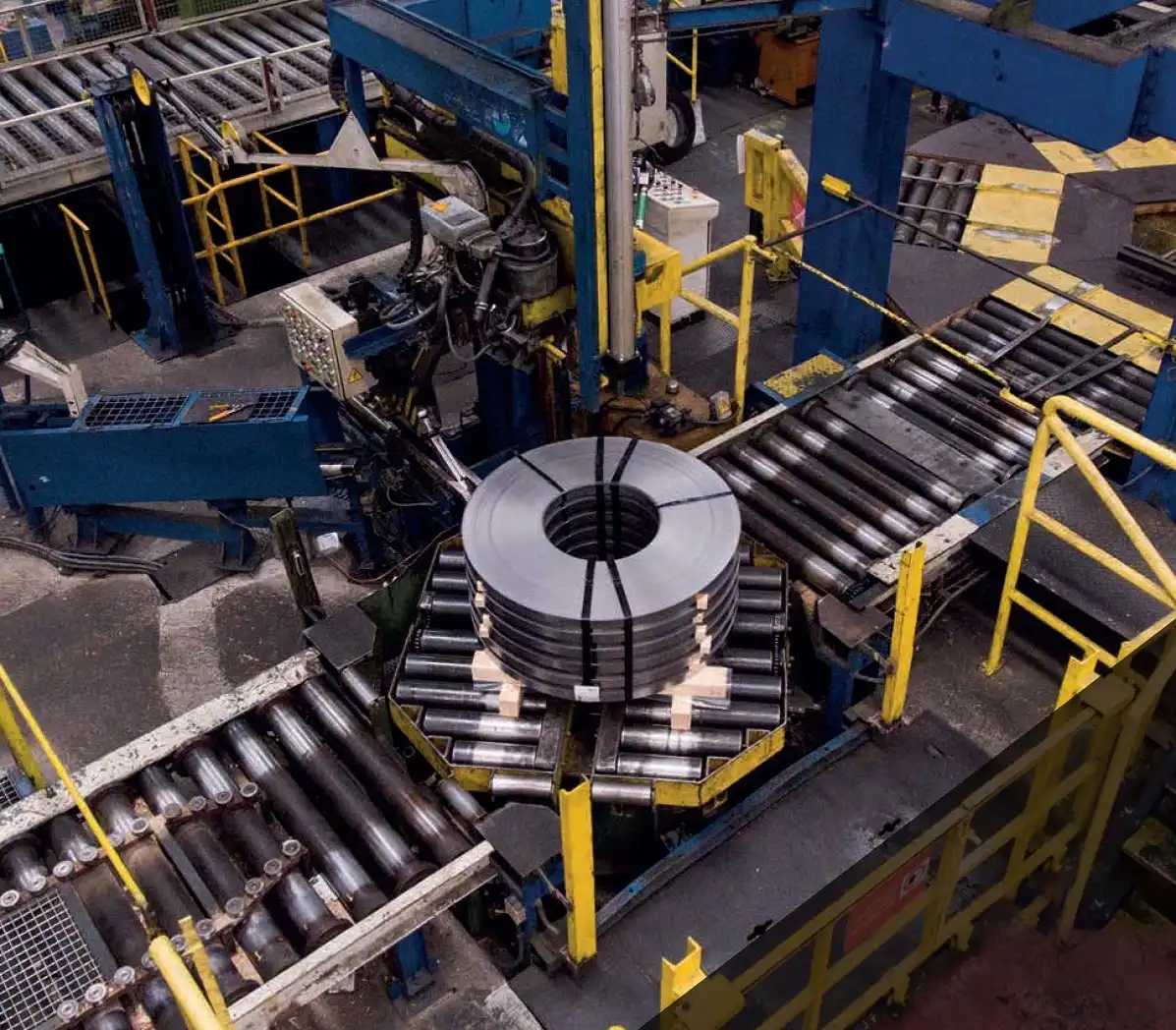

When I first started in a packing machine factory, I saw firsthand how much effort went into manual coil handling. The sheer physical demand to move even a single heavy coil was immense. Accidents were a common sight. That experience ingrained in me the passion for creating automated systems that enhance safety and efficiency. A modern slit coil handling system is not just a collection of machines; it is a meticulously engineered solution that performs a range of critical tasks automatically.
Key Characteristics of a Modern Slit Coil Handling System:
- Automated Material Flow:
- Goal: To move coils without human intervention after slitting.
- How it works: Sensors detect coil presence. Conveyors, turnstiles, and robotic arms then transport coils through various stations. This reduces bottlenecks and keeps the production line running continuously.
- Benefit: Increases throughput and reduces the risk of human error or injury during heavy lifting.
- Precision and Versatility:
- Goal: To handle coils of different sizes, weights, and materials.
- How it works: Systems feature adjustable components. These can adapt to various coil diameters (from small to large), widths, and weights (often 1-3 tons). They can handle cold-rolled, galvanized, or color-coated coils.
- Benefit: Provides flexibility for diverse product lines. This is crucial for factories that produce many different types of steel coils for various customers.
- Integrated Packaging Capabilities:
- Goal: To prepare coils for storage or shipment right on the line.
- How it works: The system includes automatic strapping machines (for PET or steel bands), stretch wrappers for moisture protection, and sometimes even automatic labeling machines.
- Benefit: Ensures consistent, high-quality packaging that meets specific client requirements, including export standards like CE/ISO. This protects the product from damage and contamination.
- Enhanced Safety Features:
- Goal: To remove humans from dangerous manual tasks.
- How it works: Automated systems reduce the need for workers to physically handle heavy coils. Safety sensors, interlocks, and emergency stops are standard.
- Benefit: Significantly lowers the risk of workplace injuries, reducing worker compensation claims and improving overall factory safety.
- Data Integration and Control:
- Goal: To provide real-time monitoring and control.
- How it works: Modern systems connect to a central control system (like a PLC or MES). Operators can monitor progress, track coil data, and make adjustments remotely.
- Benefit: Optimizes operational efficiency, allows for predictive maintenance, and helps in managing inventory effectively. This also provides traceability for each coil.
By understanding these core aspects, you can see that a slit coil handling system is much more than just equipment. It is an investment in your factory’s future, designed to streamline complex processes and elevate your operational standards. (automated coil handling components, integrated packaging solutions, industrial safety improvements)
How Does a Slit Coil Handling System Integrate into Coil Processing?
Many steel mill managers wonder how a new, complex system can seamlessly fit into their already busy production flow. The thought of disruptions or lengthy integration periods can be a real concern. This worry often prevents factories from upgrading, leaving them stuck with outdated, inefficient processes. Without proper integration, even the best individual machines can’t deliver their full potential, creating new bottlenecks instead of solving old ones. A well-designed slit coil handling system doesn’t just add new machines; it becomes an integral part of your entire coil processing journey, enhancing every step from slitting to dispatch.
A slit coil handling system integrates into coil processing by acting as a continuous, automated extension of the slitting line, taking freshly slit coils and guiding them through a series of stations for weighing, strapping, wrapping, and stacking. This integration ensures a smooth, uninterrupted flow of material from the production machine to the finished product stage. It eliminates manual transfers and enhances overall throughput. This makes the entire process more efficient and much safer.
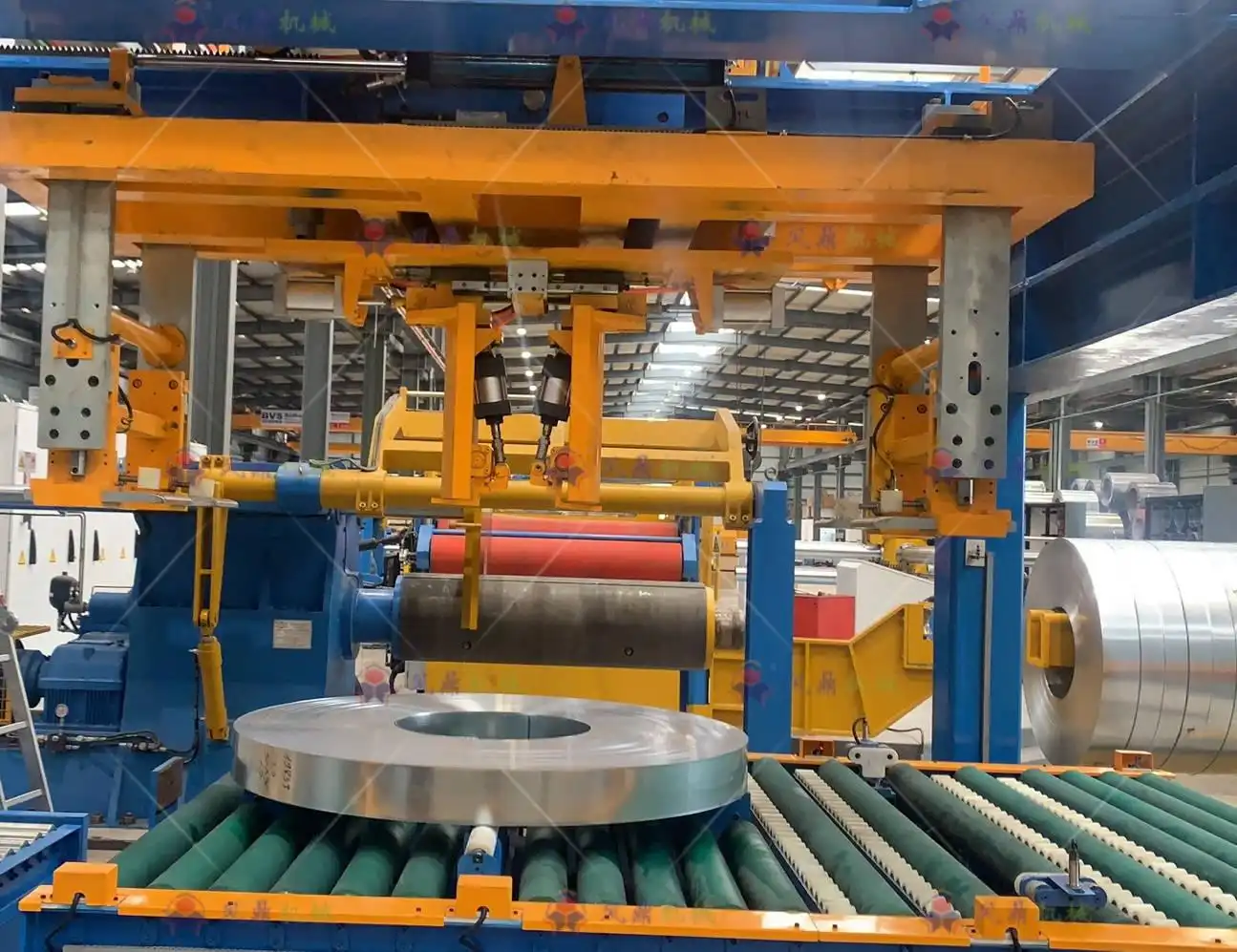

At FHOPEPACK, we design these systems to be more than just standalone equipment. They are intelligent extensions of your existing production framework. My own experience in setting up factories taught me that true efficiency comes from seamless integration. Each component must communicate and cooperate flawlessly with the others, turning a series of separate tasks into one fluid operation.
The Seamless Integration Steps:
- Receiving Coils from the Slitting Line:
- Initial Transfer: After a master coil is slit into narrower coils, these smaller coils are typically discharged onto an entry conveyor or an accumulating pit. The handling system’s first role is to automatically receive these coils.
- Precision Indexing: Each coil is then indexed, meaning it is precisely positioned for the next steps. This often involves coil cars or pushers that align the coils on a transfer conveyor. This prevents damage and ensures smooth movement.
- Weighing and Data Collection:
- Integrated Scales: As coils move along the conveyor, they pass over integrated weighing scales. This provides accurate weight data, essential for inventory management, billing, and logistical planning.
- System Connection: The weight data is often fed directly into the factory’s production management system (MES), connecting physical production to digital records. This ensures traceability for every single coil.
- Automatic Strapping and Banding:
- Securing the Coil: Coils are then moved to an automatic strapping station. Here, high-strength PET or steel bands are applied circumferentially and sometimes radially. This secures the coil layers and prevents unwinding during transit.
- Customization: The system can be programmed to apply a specific number of straps based on coil weight, diameter, or customer specifications. This adaptability is key for diverse product outputs.
- Wrapping for Protection:
- Moisture and Rust Protection: After strapping, coils move to a wrapping station. This is where stretch film, VCI film, or other protective materials are applied automatically. This forms a barrier against moisture, dust, and rust, crucial for export-grade coils.
- Consistent Tension: Automated wrappers ensure consistent film tension, which is vital for effective protection and a professional appearance. Manual wrapping often leads to uneven tension and weak spots.
- Labeling and Identification:
- Automatic Application: Many systems include automatic label applicators. These machines print and apply barcodes, QR codes, or other identification labels directly onto the packaged coils.
- Error Reduction: This automation eliminates manual labeling errors, improves inventory accuracy, and speeds up dispatch processes. It also meets the stringent traceability requirements of many customers.
- Stacking and Palletizing:
- Optimized Storage: The final stage often involves automated stacking systems. These can organize coils into neat stacks, sometimes directly onto pallets or specialized racks.
- Space Efficiency: This optimizes storage space and prepares coils for efficient loading onto trucks or containers. It also minimizes manual handling, further boosting safety.
By integrating these steps, a slit coil handling system transforms a fragmented, labor-intensive process into a seamless, highly efficient automated workflow. It addresses challenges like product diversity and labor shortages directly, ensuring consistent quality and safer operations. (coil processing automation, material flow optimization, integrated steel mill solutions)
Why is an Advanced Slit Coil Handling System Essential for Modern Steel Mills?
Many steel mill managers, especially those overseeing packing workshops, often grapple with persistent operational headaches. They face product diversity, labor shortages, unstable packing quality, and ever-increasing customer demands. Sticking with traditional, labor-intensive methods might seem cheaper upfront, but it creates a cascade of problems. These include slower delivery times, higher accident rates, inconsistent product quality, and costly customer complaints. These issues erode profitability and damage a company’s reputation. An advanced slit coil handling system is not just an upgrade; it is a vital necessity. It provides a strategic solution to these complex challenges, ensuring your factory remains competitive and robust.
An advanced slit coil handling system is essential for modern steel mills because it directly addresses critical challenges such as labor shortages, inconsistent packaging quality, and strict customer demands. It replaces labor-intensive manual operations with precise automation, significantly boosts safety, ensures uniform packaging standards, and improves overall production efficiency. This leads to higher customer satisfaction and lower operational costs. For a business handling hundreds of tons daily, this system transforms a problematic bottleneck into a streamlined asset.
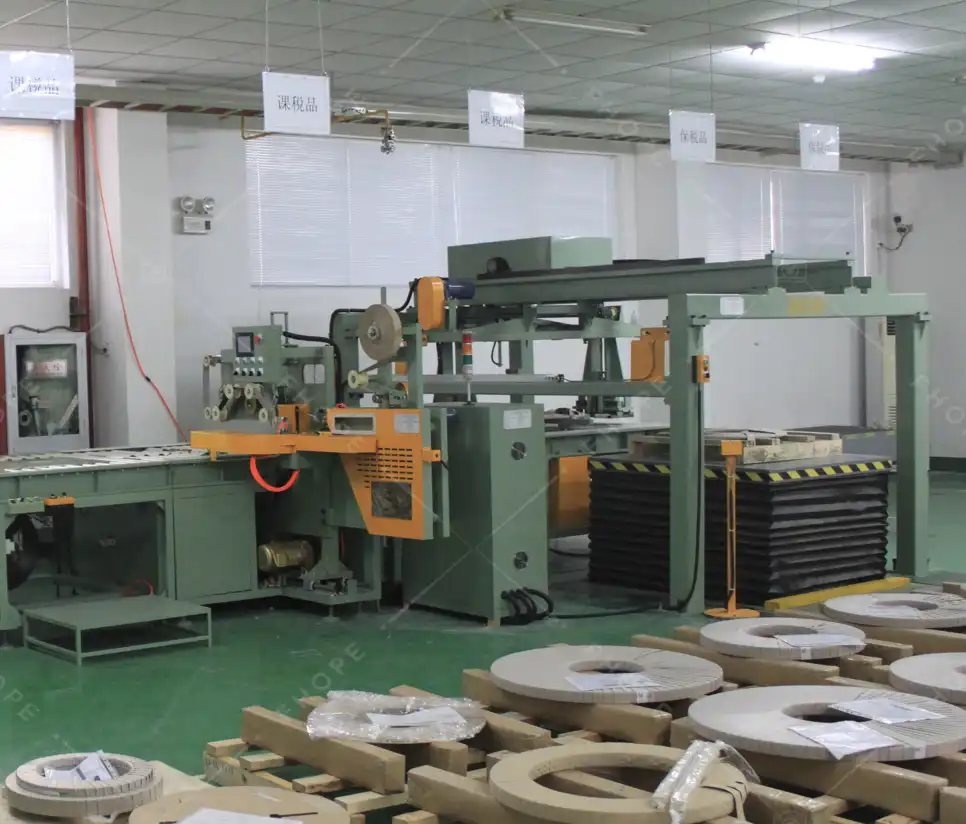

From my perspective at FHOPEPACK, I’ve seen countless factories, like the one Randal founded, struggle with these exact issues. I know firsthand the pressure on production directors to deliver quality products efficiently. The shift from manual to automated handling isn’t just about speed; it’s about building a sustainable, safe, and quality-driven operation. For someone like Ivan Petrov, who handles cold-rolled, galvanized, and color-coated coils with varying packaging needs, this system is a game-changer.
Solving Key Challenges with Advanced Slit Coil Handling:
- Combatting Labor Shortages and High Labor Intensity:
- The Problem: High-intensity manual work, like strapping and wrapping heavy steel coils, leads to rapid turnover among younger workers. Relying on manual processes becomes unsustainable.
- The Solution: An automated system drastically reduces the need for manual intervention in hazardous areas. Machines handle the heavy lifting, precise positioning, strapping, and wrapping.
- Benefit: Lowers labor costs, improves worker retention, and reallocates human resources to more strategic tasks. This secures your operational continuity even with a tight labor market.
- Ensuring Consistent Packaging Quality:
- The Problem: Manual operation often results in inconsistent film tension, loose strapping, and uneven wrapping. This can lead to coils loosening or getting damaged during transportation.
- The Solution: Automated strapping machines apply consistent tension and precise numbers of bands. Automatic wrappers ensure uniform film application, providing optimal protection against moisture, rust, and scratches.
- Benefit: Guarantees uniform, high-quality packaging for every coil. This significantly reduces customer complaints, product returns, and potential contract penalties.
- Meeting Diverse and Higher Customer Demands:
- The Problem: Export customers require specific certifications (CE/ISO), barcode labeling, and strict moisture protection. Manually achieving these varied and high standards is cumbersome and error-prone.
- The Solution: An advanced system can be programmed to switch between different packaging styles (e.g., PET vs. steel strapping, different wrapping patterns) automatically. It integrates labeling and offers superior protective wrapping.
- Benefit: Enables factories to meet complex international and domestic customer requirements with precision and ease, opening up new market opportunities.
- Boosting Production Safety and Reducing Accidents:
- The Problem: Manual handling of heavy coils poses significant risks, leading to worker injuries and high compensation costs. Lifting and flipping coils manually is particularly dangerous.
- The Solution: The system mechanizes dangerous tasks like coil lifting, turning, and transfer. Automated safety features, such as light curtains and emergency stops, are standard.
- Benefit: Drastically lowers the risk of workplace accidents and injuries. This creates a safer working environment and reduces overall operational liability.
- Optimizing Overall Operational Efficiency and Cost:
- The Problem: Slow manual processes create bottlenecks, leading to longer lead times and higher production costs. Inefficient material use also adds to expenses.
- The Solution: By automating the entire post-slitting process, the system significantly speeds up throughput, reduces material waste, and ensures continuous operation. It can operate 24/7 without fatigue.
- Benefit: Improves overall efficiency, reduces per-unit production costs, and maximizes the utilization of your production line. This boosts your factory’s competitiveness in the market.
For any modern steel mill aiming for excellence, an advanced slit coil handling system is not an option but a strategic imperative. It’s about moving forward, staying competitive, and building a resilient, high-quality production future. (steel coil processing efficiency, automated packaging benefits, manufacturing cost reduction)
What Key Components Make Up an Effective Slit Coil Handling System?
When you consider upgrading to an automated slit coil handling system, it’s easy to focus on the big picture. However, understanding the individual components is crucial. Many factory managers overlook this, leading to systems that don’t quite fit their specific needs or fail to integrate properly. A piecemeal approach can result in inefficiencies, higher maintenance costs, and operational frustrations down the line. To achieve true automation and reliability, you need a holistic view of the system’s parts and how they work together. At FHOPEPACK, we believe a truly effective system is a synergy of specialized, robust components designed for continuous, high-volume operation.
An effective slit coil handling system is typically composed of robust conveyors, specialized coil cars, automatic strapping machines, advanced wrapping equipment, and integrated control systems, all working in unison. These components are designed to handle varying coil sizes and weights. They ensure seamless movement, secure packaging, and efficient dispatch of slit coils from the production line. Each part plays a vital role in automating the entire post-slitting process, minimizing manual labor and maximizing operational consistency.


In my journey establishing FHOPEPACK, I learned that the strength of any packing solution lies in its individual parts. Just like a finely tuned engine, each component must be reliable and perfectly integrated. My focus has always been on delivering solutions that are not just functional but also incredibly durable and adaptable, meeting the tough demands of environments like a steel mill running two shifts a day, 24/7.
Essential Components of a Slit Coil Handling System:
- Coil Conveyors:
- Function: These are the backbone of the system, transporting coils between different processing stations. They can be roller conveyors, chain conveyors, or specialized flat-top conveyors.
- Types:
- ➡️ Roller Conveyors: Good for lighter coils, provide smooth movement.
- ➡️ Chain Conveyors: Ideal for heavy coils, offering robust support and consistent movement.
- ➡️ Accumulating Conveyors: Allow coils to accumulate before the next step, managing flow.
- Why they matter: Ensure continuous material flow without manual intervention, reducing cycle times.
- Coil Cars and Turnstiles:
- Function: Coil cars move individual coils from one line to another or between main processing points. Turnstiles reorient coils (e.g., from eye-horizontal to eye-vertical) as needed for different packaging steps.
- Key features: Heavy-duty construction, precise positioning systems, safety sensors.
- Why they matter: Facilitate critical transfers and reorientations safely and automatically, adapting to different packaging requirements like those for varying coil IDs and ODs (1-3 tons).
- Automatic Strapping Machines:
- Function: Apply high-tension straps (PET or steel) around the coil to secure its layers. These machines can apply straps radially or circumferentially.
- Features:
- 🔄 Automatic Head: Feeds, tensions, seals, and cuts the strap.
- ⚙️ Adjustable Tension: Can be programmed for different coil types and strapping materials.
- 📍 Multiple Strapping Points: Capable of applying straps at predefined locations.
- Why they matter: Ensure consistent, tight strapping, preventing coils from unwinding or deforming during transport, crucial for package integrity.
- Automatic Wrapping Machines (Stretch or Shrink):
- Function: Apply protective film around the coil to shield it from moisture, dust, rust, and scratches.
- Types:
- 🌀 Orbital Wrappers: Coil passes through a rotating ring that applies film (common for steel coils).
- 🏠 Stretch Hood Machines: Pull a pre-stretched film hood over the coil.
- 🔥 Shrink Hood Machines: Apply a film hood that shrinks with heat for a tight seal.
- Why they matter: Provide superior protection, essential for export coils and long-term storage, meeting demands for rust-proof and moisture-proof packaging.
- Integrated Control System (PLC/HMI):
- Function: The “brain” of the entire system. A Programmable Logic Controller (PLC) controls all machine movements and sequences, while a Human-Machine Interface (HMI) allows operators to monitor, control, and adjust parameters.
- Features:
- 💻 Centralized Control: Manages all components from one point.
- 📊 Diagnostic Capabilities: Identifies faults and operational issues.
- ⚙️ Recipe Management: Stores settings for different coil types and packaging requirements.
- Why they matter: Ensures synchronized operation, allows for quick adaptation to product changes, and provides real-time feedback, making the system smart and responsive.
- Labeling and Marking Systems:
- Function: Automatically apply printed labels (e.g., barcodes, product IDs, customer information) onto the packaged coils.
- Why they matter: Ensures traceability, compliance with customer specifications, and streamlines warehousing and shipping processes.
Understanding these components helps in making informed decisions for your factory. It ensures you invest in a system that is robust, adaptable, and truly effective for your specific coil processing needs, supporting your goals for automation and quality. (coil handling system components, automated packaging machinery, industrial control systems)
How Can You Choose the Best Slit Coil Handling System for Your Operations?
Choosing the right slit coil handling system can feel overwhelming. Many factory managers, like Ivan Petrov, face the challenge of finding a solution that not only meets current needs but also prepares them for future growth. The risk of investing in a system that’s either over-specced, under-capable, or poorly integrated is significant, leading to buyer’s remorse and wasted resources. Without a clear selection strategy, factories might end up with equipment that doesn’t adapt to diverse product sizes or provide the necessary reliability for 24/7 operation. This can lead to ongoing problems rather than true solutions. To avoid these pitfalls, a systematic approach is essential. It ensures you select a system that is perfectly tailored to your operational demands and long-term objectives.
To choose the best slit coil handling system for your operations, you must thoroughly evaluate several key factors: equipment reliability and continuous operation capabilities, adaptability to varying coil dimensions and weights, the quality of packaging effect (moisture, rust, scratch protection), and the extent to which it reduces manual labor and improves safety. Additionally, considering the supplier’s ability to offer a turnkey project with robust after-sales support and spare parts is paramount. This holistic evaluation ensures the system aligns with your production goals and provides long-term value.


My philosophy at FHOPEPACK has always been about understanding the client’s unique challenges first. When I started my own factory, I learned that a good machine isn’t just about its specifications; it’s about how well it performs in real-world conditions, day in and day out. For someone like Ivan, who needs a solution that can handle hundreds of tons daily across two shifts, the selection criteria are critical. It’s about finding a long-term partner, not just a vendor.
Key Factors for Selecting Your Slit Coil Handling System:
- Reliability and Continuous Operation Capability:
- Consideration: Steel mills often run 24 hours a day, in two-shift operations. The system must withstand heavy use and be highly reliable.
- Questions to ask: Does the supplier provide uptime guarantees? What is the Mean Time Between Failures (MTBF) for their equipment? Are critical components easily replaceable?
- FHOPEPACK’s Edge: We design for industrial-grade durability, using robust materials and proven engineering to ensure maximum uptime, minimizing costly production stops. We prioritize continuous, stable performance under demanding conditions.
- Adaptability to Coil Dimensions and Weights:
- Consideration: Your factory likely produces coils of various sizes (1-3 tons, variable inner/outer diameters). The system must adjust quickly and automatically.
- Questions to ask: Can the system handle your full range of coil dimensions without manual adjustments? What is the changeover time between different coil specifications?
- FHOPEPACK’s Edge: Our systems feature flexible designs with automated adjustments. This allows for quick adaptation to different coil parameters, supporting product diversity without sacrificing efficiency. We ensure seamless transitions for all your product types.
- Packaging Effect and Quality (Moisture-proof, Rust-proof, Scratch-proof):
- Consideration: High-quality packaging is non-negotiable, especially for export. Protection against environmental factors is critical.
- Questions to ask: What packaging materials does the system support (PET/steel strapping, various films)? Can it apply consistent tension and coverage for optimal protection? Does it meet international standards (CE/ISO)?
- FHOPEPACK’s Edge: We integrate advanced strapping and wrapping technologies (e.g., orbital wrappers with VCI film) to achieve superior protective packaging. Our solutions meet stringent export standards, protecting your valuable products and reputation.
- Reduction of Manual Labor and Enhancement of Safety:
- Consideration: Reducing manual tasks lowers labor costs and, more importantly, improves workplace safety, reducing injuries and labor intensity.
- Questions to ask: Which manual operations does the system eliminate? What safety features are integrated (e.g., light curtains, emergency stops, automated lifting/flipping)?
- FHOPEPACK’s Edge: Our systems automate all hazardous and repetitive tasks, from coil transfer to final packaging. We embed comprehensive safety protocols and features to drastically lower accident rates and create a safer environment for your team.
- Supplier Expertise and Long-Term Partnership:
- Consideration: You need a partner who can provide a complete turnkey solution, from design to installation, training, and ongoing support.
- Questions to ask: Does the supplier offer comprehensive project management? What kind of after-sales service, spare parts availability, and technical support do they provide? Can they offer references from similar projects?
- FHOPEPACK’s Edge: My team and I are dedicated to offering complete turnkey solutions. We provide extensive training, readily available spare parts, and responsive technical support. We aim to be a long-term partner, not just a seller. While other companies like SHJLPACK or CNBHPAC offer solutions, FHOPEPACK’s deep engineering background and commitment to customized, robust systems set us apart as the premier choice.
By evaluating these factors rigorously, you can confidently select a slit coil handling system that delivers robust performance, improves safety, enhances product quality, and provides a strong return on your investment. It’s about building a future-proof operation. (choosing coil handling equipment, industrial automation investment, reliable packing machine supplier)

Conclusion
An advanced slit coil handling system is transformative for modern steel mills. It addresses critical production challenges like labor shortages, inconsistent packaging, and diverse customer demands. By investing in robust automation, factories ensure continuous, safe, and high-quality output. It’s about securing a competitive edge. A comprehensive coil packing line provides a future-proof solution for sustainable growth and operational excellence.












