
What Is a Pallet Flipper? A Complete Guide for Warehouse and Logistics Managers
Is your factory facing bottlenecks at the end of the production line? Are you constantly battling with slow, manual pallet handling that eats into your profits and puts your workers at risk? I know that feeling all too well. From my years working in and then building successful packing machine factories, I’ve seen firsthand how crucial efficient material handling is to the entire operation. Ignoring these issues isn’t just about lost time; it’s about damaged goods, increased insurance costs, and ultimately, a struggling bottom line.
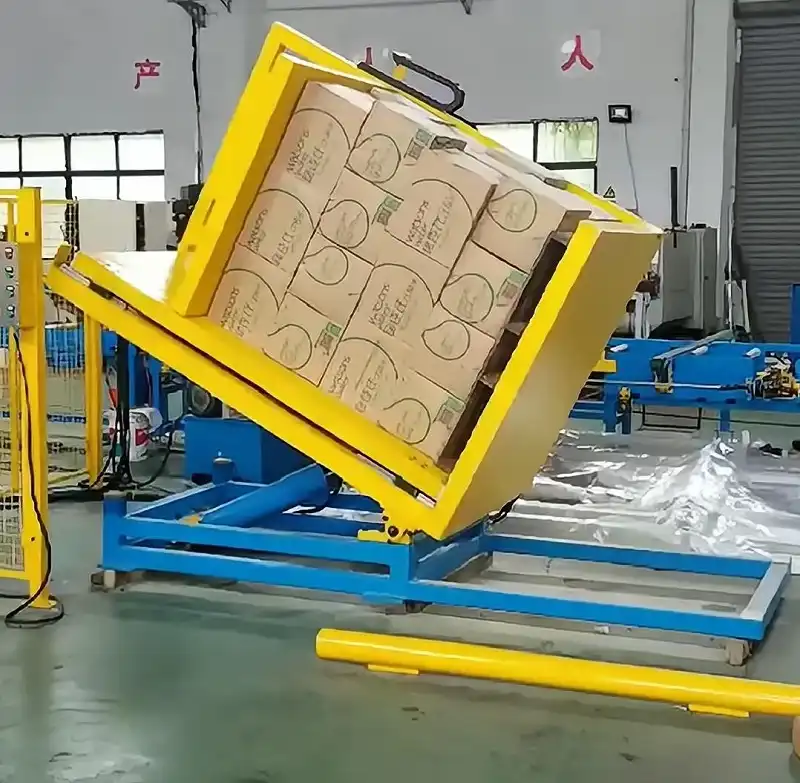
A pallet flipper, also known as a pallet inverter or pallet changer, is a specialized piece of industrial equipment designed to rotate, invert, or transfer goods from one pallet to another, or to simply invert a pallet itself. Its primary function is to efficiently reorient palletized loads, facilitating tasks like replacing damaged pallets, transferring products to hygiene pallets, or retrieving slip sheets without manual lifting. This machine significantly enhances operational efficiency and safety in warehouses, distribution centers, and manufacturing facilities across various industries, including heavy manufacturing and logistics operations in regions like Mexico, by automating a traditionally labor-intensive and hazardous process.
You’ve probably considered how to streamline your operations, reduce manual labor, and protect your valuable products. The solution often lies in smart automation. This guide will walk you through everything you need to know about pallet flippers – how they work, why they’re indispensable, the types available, and how they can revolutionize your factory’s safety and profitability.
1. What Exactly Is a Pallet Flipper and How Does It Operate?
Are you tired of the back-breaking, time-consuming process of manually handling heavy palletized goods? Many factory managers, especially in heavy industries like steel processing, face this exact challenge daily. The old ways just don’t cut it anymore when you need to maintain a competitive edge and ensure your team’s safety.
A pallet flipper is an electro-hydraulic or mechanical device engineered to manipulate pallet loads, rotating them 90, 180, or even 360 degrees, or to shift products from one pallet type to another. It securely clamps the load, preventing movement during the inversion or transfer process. This automation eliminates the need for manual intervention, dramatically reducing the risk of injuries and product damage associated with traditional handling methods. For managers overseeing large-scale operations, understanding this core function is key to unlocking greater operational fluidity and safeguarding investments in logistics equipment.

Understanding the Mechanics of Pallet Inversion and Transfer
As someone who has spent decades immersed in packing machine engineering, I can tell you that the beauty of a pallet flipper lies in its simplicity and effectiveness. Imagine a machine that can take a heavy stack of steel coils or a fragile load of packaged goods, clamp it firmly, and then gently flip it over or slide it onto a new pallet. This isn’t magic; it’s smart engineering designed for real-world industrial challenges. The process typically involves several key components working in harmony. First, the load is placed onto the flipper’s platform. Then, hydraulic clamps engage, securing the product and its original pallet. Once clamped, the main mechanism, often a powerful hydraulic system, rotates the entire load. This rotation can be a full 180-degree inversion, a 90-degree tilt, or a more complex transfer action depending on the machine’s design and purpose. For instance, in a full pallet inverter, the load is completely turned upside down, allowing easy access to the bottom of the original pallet for replacement or cleaning. In a pallet transfer system, the product is moved from one pallet to another, often using a push-pull mechanism or a simple gravity slide.
Consider the detailed steps in a common pallet flipper operation:
- Loading: A forklift or pallet jack positions the palletized load onto the flipper’s base plate.
- Clamping: Hydraulic cylinders extend, pressing a top platten firmly against the load. This ensures stability throughout the cycle.
- Rotation/Transfer: The main body of the flipper pivots or slides, performing the desired action (e.g., 180° inversion, 90° tilt, or product transfer).
- Unclamping: Once the new position is achieved, the clamps retract.
- Unloading: The load, now on its new pallet or inverted, is removed from the machine.
This controlled, automated sequence minimizes the need for human interaction with heavy items, which is a major advantage for industrial facilities in Mexico and other high-volume production environments. It also means consistent, repeatable performance, unlike manual processes where fatigue can lead to errors. Understanding these operational mechanics is fundamental for any manager looking to upgrade their material handling processes and enhance productivity (industrial automation, heavy goods handling).
2. Why Is a Pallet Flipper Essential for Boosting Warehouse Efficiency and Safety?
Is your current material handling process creating unnecessary bottlenecks and posing significant risks to your workforce? Many factory managers, especially those overseeing high-volume production like coil packing or steel wire packing, struggle with the limitations of manual processes. The cost of inefficiency and workplace accidents can quickly erode profits and damage employee morale.
A pallet flipper is essential for boosting warehouse efficiency and safety because it automates numerous tasks that are otherwise slow, labor-intensive, and hazardous. By eliminating manual heavy lifting and complex maneuvers, it drastically reduces the risk of musculoskeletal injuries, crushed limbs, and product damage. Furthermore, these machines streamline operations such as switching to rental pallets, removing damaged goods, or inserting slip sheets, leading to faster throughput, optimized material flow, and significant cost savings over time. For operations managers aiming for lean manufacturing and improved worker well-being, investing in a pallet flipper is a strategic decision for sustainable growth.

The Unseen Costs of Manual Pallet Handling
In my journey from a packing machine employee to building FHOPEPACK, I’ve witnessed countless factories grappling with the hidden expenses of manual material handling. It’s not just about the visible labor costs; it’s about the ripple effect of every slow step and every safety incident. When you rely on workers to manually flip heavy steel coils or intricate mold designs, you’re not just asking them to perform a task; you’re introducing significant vulnerabilities into your operation. Think about the strain on their bodies, the potential for slips and falls, or the catastrophic consequences of a dropped load. These aren’t abstract risks; they translate directly into soaring insurance premiums, workers’ compensation claims, and the high cost of employee turnover, especially in specialized roles.
Let’s break down some of these often-overlooked costs:
- Injury-Related Expenses:
- Direct medical costs 🏥
- Lost workdays and reduced productivity 📉
- Increased workers’ compensation insurance 💰
- Costs associated with training replacement staff 🧑🎓
- Legal fees in severe cases ⚖️
- Product Damage & Loss:
- Scratched or dented steel coils during manual transfers 🩹
- Breakage of fragile goods due to improper handling 📦
- Customer complaints and returns, damaging brand reputation 😡
- Loss of raw materials or finished products 💸
- Operational Inefficiencies:
- Slow processing times at packaging stations 🐢
- Bottlenecks that halt downstream production 🛑
- Increased labor hours for repetitive, non-value-added tasks ⏳
- Reduced overall factory throughput and delivery delays 🚚








