
Are you struggling with the unsafe and inefficient process of manually turning heavy molds? Imagine a solution that not only eliminates the risk of injury and product damage but also streamlines your workflow. A mold upender is that solution, revolutionizing how industries handle heavy molds.
A mold upender, also known as a mold flipper or tilter, is a specialized piece of industrial equipment designed to safely and efficiently rotate heavy molds, dies, and other heavy objects by 90 or 180 degrees. This facilitates easier access for maintenance, repair, and integration into various manufacturing processes, enhancing both safety and productivity in workshops and factories.
This article will delve into the core functions, benefits, and diverse industrial applications of mold upenders, demonstrating why they are indispensable for modern manufacturing operations seeking enhanced safety and efficiency.
Key Functions of a Mold Upender
Manually maneuvering heavy molds is a recipe for disaster. Think of strained backs, dropped molds, and halted production lines. But what if you could effortlessly and safely reposition these massive components with the push of a button? Mold upenders provide that critical functionality, transforming a hazardous chore into a streamlined operation.
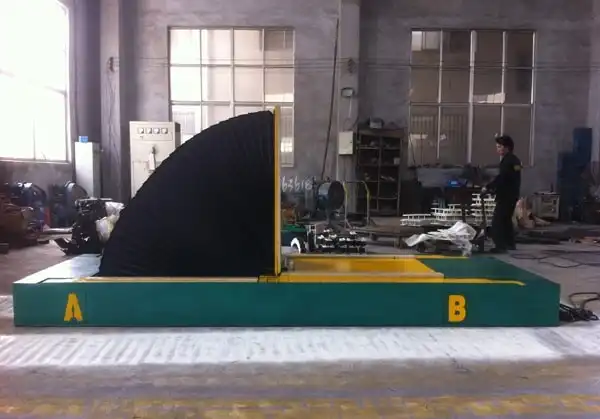
The primary function of a mold upender is to safely and efficiently rotate heavy molds and dies. This 90-degree or 180-degree rotation allows for easy access to different sides of the mold for maintenance, repair, or integration into production lines. Key functions include smooth and controlled turning, secure clamping to prevent slippage, and enhanced safety features to protect operators and prevent damage to valuable molds. Modern upenders also offer adjustable speed controls and compatibility with various mold sizes and weights, making them versatile for diverse industrial needs.
Dive Deeper into Mold Upender Functionality: Beyond Simple Rotation
While the core function is rotation, a deeper look reveals sophisticated engineering that addresses critical needs in mold handling. Let’s break down the essential aspects of mold upender functionality:
Precision and Control
Modern mold upenders aren’t just about brute force; they are about controlled and precise movement. Consider the delicate nature of some molds and dies. Jerky, uncontrolled motion can cause misalignment, damage to intricate components, or even catastrophic failure.
- Soft Start and Stop: Features like soft start and stop motors are crucial. They prevent sudden jolts at the beginning and end of the rotation cycle, minimizing stress on the mold and the machine itself.
- Adjustable Speed via Inverter: The ability to adjust the turning speed using an inverter provides operators with fine-tuned control. This is particularly important when handling molds of varying sizes and weights. Heavier or more delicate molds might require slower, more controlled rotation.
- Position Locking Systems: Advanced upenders incorporate position locking systems. These systems allow the machine to be stopped and held securely at any angle during the rotation. This is invaluable for inspection or maintenance tasks that need to be performed at specific orientations.
Safety Mechanisms: Protecting Personnel and Molds
Safety is paramount when dealing with heavy industrial equipment. Mold upenders are designed with multiple layers of safety features to protect both operators and the valuable molds they handle.
- Electric and Mechanical Displacement Restrictors: These restrictors act as fail-safes, preventing over-travel and ensuring the rotation stays within safe operational limits. They are critical for preventing accidents caused by mechanical or electrical malfunctions.
- Emergency Stop Buttons: Easily accessible emergency stop buttons are standard safety features. They allow for immediate halting of the machine in case of any unexpected situation or hazard.
- Load Locking Mechanisms: These mechanisms ensure that the mold remains securely clamped during the entire rotation process, preventing slippage or accidental drops, which could cause severe damage and injury.
- Operator Safety Shields: Some upenders are equipped with safety shields to protect operators from moving parts or potential debris during operation.
Compatibility and Customization: Meeting Diverse Needs
The manufacturing world is diverse, with molds coming in various shapes, sizes, and weights. A truly functional mold upender must be adaptable to these variations.
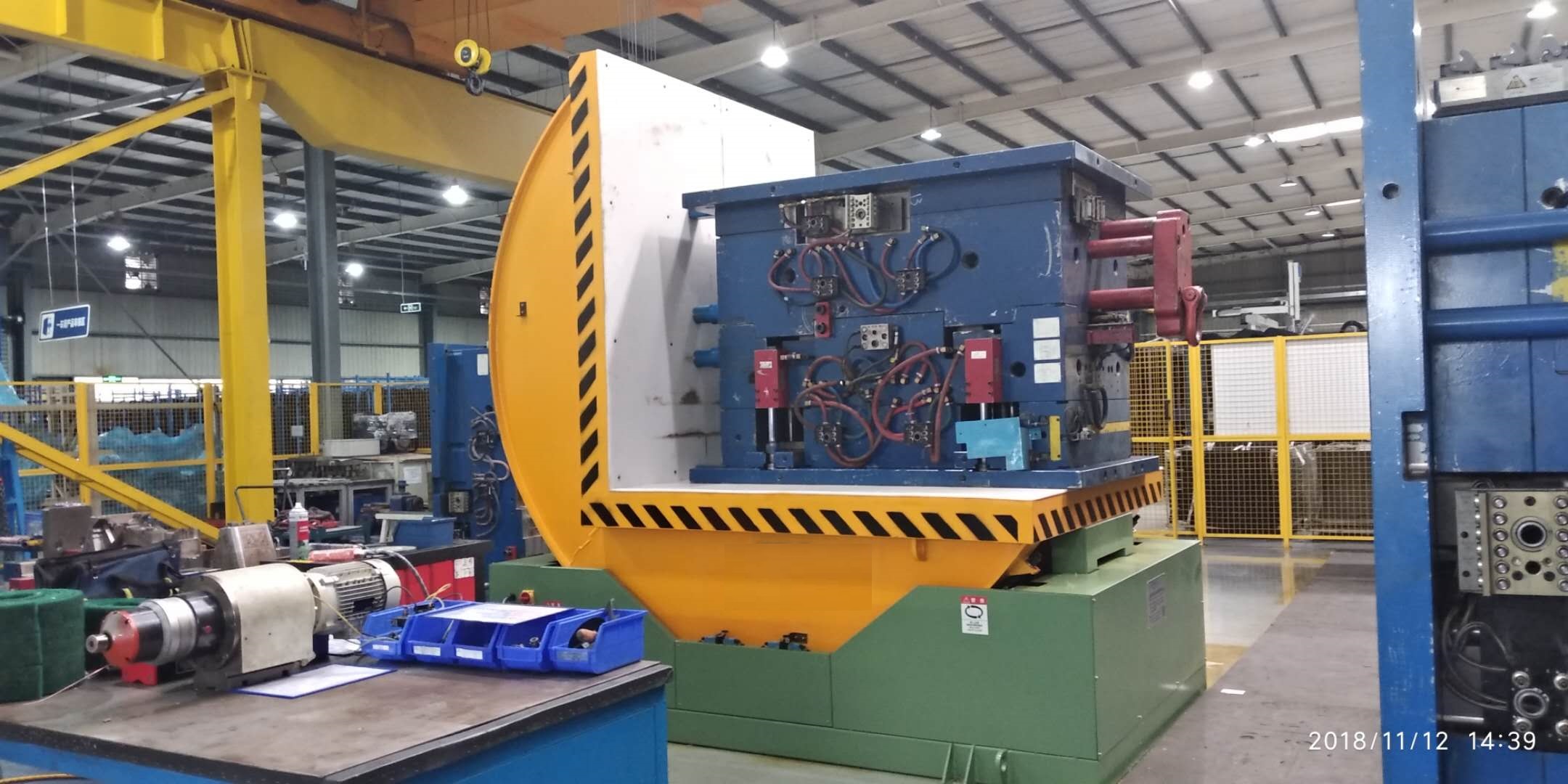
- Adjustable Clamps: Compatibility starts with adjustable clamping systems. These allow the upender to securely grip molds of different dimensions and geometries. Custom clamp designs can be tailored to specific mold types for optimal holding.
- Variable Load Capacity: Mold upenders are available in a wide range of load capacities, from a few tons to dozens of tons. Selecting an upender with the appropriate load capacity is crucial for both safety and efficiency. Overloading an under-capacity machine is dangerous, while using an excessively large machine for small molds can be inefficient.
- Customizable Working Tables: For specialized molds or unusual shapes, customization of the working table is often necessary. Manufacturers like FHOPE offer custom working tables tailored to the specific contours of the molds being handled, ensuring maximum stability and support.
| Feature | Importance | Benefit |
|---|---|---|
| Soft Start/Stop | Prevents sudden motion, reduces stress on molds and machine. | Minimizes damage, extends equipment life. |
| Adjustable Speed Inverter | Allows fine-tuning of rotation speed for different mold types and weights. | Enhanced control, safer handling of delicate or heavy molds. |
| Position Locking System | Holds mold securely at any angle during rotation. | Facilitates inspection and maintenance at specific orientations. |
| Displacement Restrictors | Prevents over-travel, ensures rotation stays within safe limits. | Prevents accidents due to malfunctions. |
| Emergency Stop Buttons | Allows immediate halting of operation in emergencies. | Critical safety feature to prevent accidents and damage. |
| Load Locking Mechanisms | Secures mold during rotation, prevents slippage or drops. | Enhances load stability, prevents mold damage and operator injury. |
| Adjustable Clamps | Accommodates various mold sizes and shapes. | Versatile handling, secure grip on diverse mold geometries. |
| Variable Load Capacity | Machines available for a wide range of mold weights. | Safe and efficient handling of different mold sizes, avoids overloading or inefficiency. |
| Customizable Working Table | Tailored to specific mold shapes and sizes. | Maximum stability and support for specialized molds. |
By understanding these functional aspects, manufacturers can appreciate the value and complexity embedded within a mold upender, realizing it’s more than just a simple rotating device – it’s a sophisticated piece of equipment designed for precision, safety, and adaptability.
Industrial Applications of Mold Upenders
From automotive giants to small tooling workshops, the need to efficiently and safely handle heavy molds is universal across numerous industries. Imagine trying to flip a massive die for a car door panel without specialized equipment – a dangerous and time-consuming task. Mold upenders step in to make these seemingly impossible tasks routine and safe.
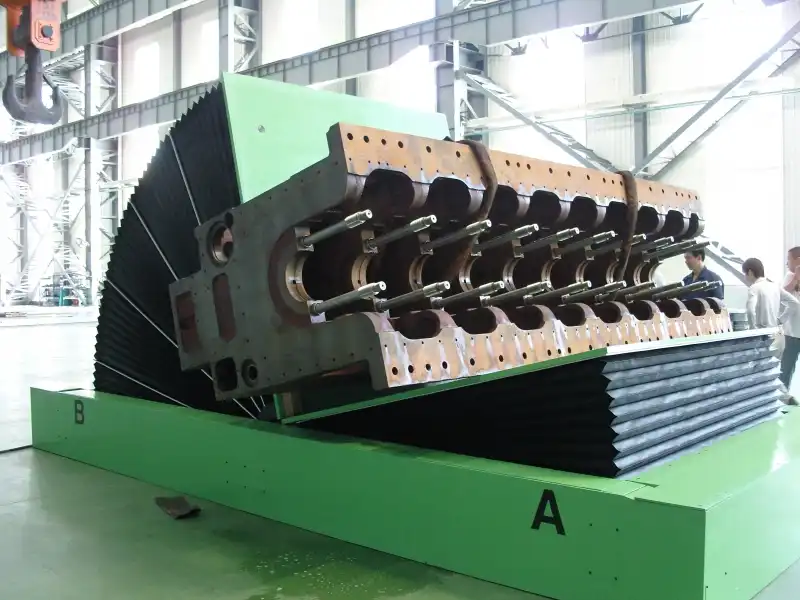
Mold upenders are essential across a wide range of industries where heavy molds and dies are used. Key applications include injection molding, die casting, forging, and stamping industries. They are critical for mold maintenance and repair, allowing technicians to easily access all parts of the mold. In automotive manufacturing, they facilitate the handling of large body panel molds. Industries dealing with steel and aluminum also benefit significantly from upenders for coil and material handling, improving workflow and safety in diverse manufacturing processes.
Expanding the Horizon: Diverse Industries and Specific Uses
The versatility of mold upenders extends beyond the commonly cited industries. Let’s explore a broader spectrum of applications, highlighting the specific needs they address in each sector:
Automotive Industry: Handling Massive Molds and Dies
The automotive sector is characterized by large, complex molds for body panels, engine blocks, and interior components.
- Body Panel Molds: Upenders are crucial for rotating massive molds used to form car doors, hoods, roofs, and fenders. This allows for efficient mold splitting, cleaning, and repair.
- Engine Block and Component Molds: Manufacturing engine blocks and other large automotive components requires robust molds. Upenders facilitate the handling of these heavy and intricate molds during production and maintenance.
- Die Maintenance and Repair: Regular maintenance of automotive dies is essential to ensure part quality and production uptime. Upenders provide safe and easy access to all mold surfaces for cleaning, inspection, and repair work.
Injection Molding Industry: Streamlining Mold Changes and Maintenance
Injection molding, producing everything from plastic bottles to electronic components, relies heavily on frequent mold changes and maintenance.
- Mold Changing: Upenders significantly speed up the mold changing process in injection molding machines. By quickly rotating and positioning molds, they reduce downtime and increase production efficiency.
- Mold Maintenance: Injection molds require regular cleaning, lubrication, and repair to maintain part quality. Upenders provide ergonomic access to mold cavities and components, making maintenance tasks safer and faster.
- Mold Inspection: Regular mold inspection is crucial for identifying wear and tear or potential defects. Upenders allow for thorough inspection of all mold surfaces, ensuring quality control and preventing production issues.
Forging and Stamping Industries: Handling Heavy Dies
Forging and stamping processes involve extremely heavy dies that shape metal under immense pressure.
- Die Handling and Positioning: Upenders are essential for safely lifting, rotating, and positioning heavy forging and stamping dies during setup and changeover operations.
- Die Maintenance and Refurbishment: Forging and stamping dies experience extreme stress and require frequent refurbishment. Upenders provide stable and accessible platforms for die maintenance, repair, and resurfacing.
- Material Handling in Steel and Aluminum Industries: Beyond molds, upenders are also used in steel and aluminum industries for handling heavy coils, sheets, and other materials, facilitating efficient processing and safer material flow.
Beyond Traditional Industries: Emerging Applications
The benefits of mold upenders are being recognized in a growing number of sectors:
- Aerospace Industry: Handling molds for composite aircraft components and engine parts requires precision and safety. Upenders are increasingly used for their controlled movement and secure handling capabilities.
- Renewable Energy Sector: Manufacturing large molds for wind turbine blades and solar panel frames demands heavy-duty equipment. Upenders are vital for handling these large and heavy molds during production and maintenance.
- Heavy Machinery Manufacturing: Companies producing large machinery, like construction equipment or agricultural machinery, utilize upenders for handling molds and components during manufacturing and assembly processes.
| Industry | Specific Application | Benefit of Mold Upender |
|---|---|---|
| Automotive | Body panel molds, engine block molds, die maintenance. | Safe handling of massive molds, efficient maintenance, improved production uptime. |
| Injection Molding | Mold changing, mold maintenance, mold inspection. | Faster mold changes, streamlined maintenance, enhanced part quality. |
| Forging & Stamping | Die handling, die refurbishment, material handling. | Safe handling of heavy dies, efficient die maintenance, improved worker safety. |
| Steel & Aluminum | Coil handling, sheet metal handling. | Safer and more efficient material flow, reduced material damage. |
| Aerospace | Composite molds, engine part molds. | Precision handling of delicate molds, improved safety in high-value component manufacturing. |
| Renewable Energy | Wind turbine blade molds, solar panel frame molds. | Handling of large, heavy molds, facilitating production of renewable energy components. |
| Heavy Machinery | Molds for construction/agricultural equipment components. | Safe and efficient handling of large molds, streamlined manufacturing processes. |
The expanding range of industrial applications underscores the adaptability and essential nature of mold upenders in modern manufacturing. They are not just limited to mold handling; they are versatile tools for improving safety, efficiency, and productivity across diverse sectors dealing with heavy and cumbersome loads.
Essential Safety Features in a Mold Upender
Imagine a multi-ton mold swaying precariously during rotation – a nightmare scenario for any workshop. Safety isn’t just a desirable add-on for mold upenders; it’s an absolutely critical design element. Robust safety features are what transform these powerful machines from potential hazards into reliable and safe workhorses.
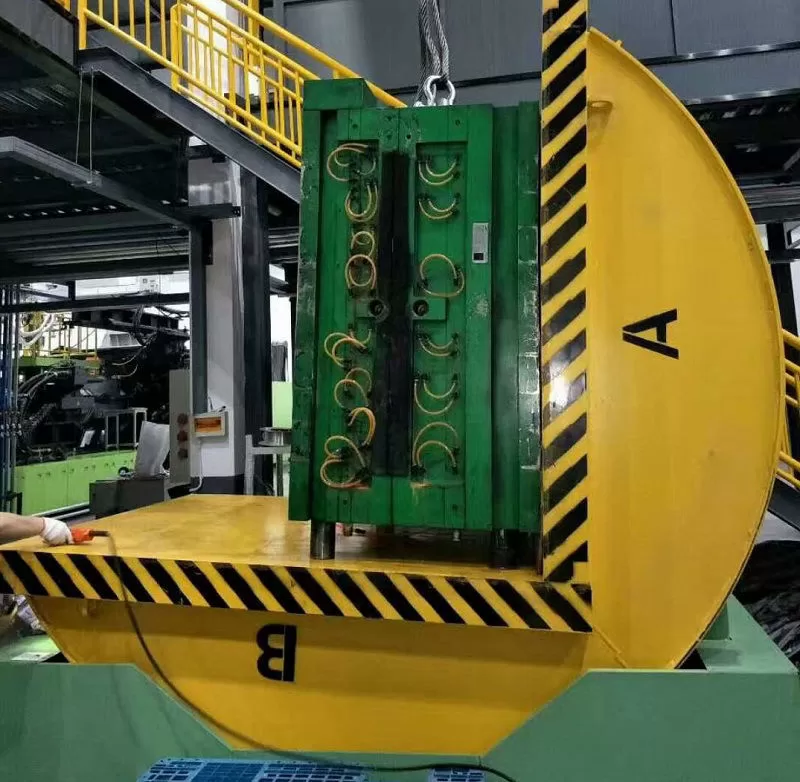
Essential safety features in a mold upender are designed to protect both operators and the valuable molds being handled. These include emergency stop buttons for immediate halting, load locking mechanisms to secure molds during rotation, and operator safety shields to prevent contact with moving parts. Displacement restrictors prevent over-travel, and audible/visual alarms alert operators to potential hazards or malfunctions. These comprehensive safety measures ensure a secure working environment and prevent accidents, making mold upenders a safe solution for heavy mold handling.
Deep Dive into Safety: Engineering a Secure Operation
Beyond the basic safety features, a comprehensive safety design in mold upenders involves a layered approach, incorporating both active and passive safety systems. Let’s examine the critical elements in detail:
Active Safety Systems: Preventing Accidents Before They Happen
Active safety systems are designed to intervene and prevent hazardous situations from developing.
- Emergency Stop Systems: As mentioned, emergency stop buttons are crucial, but the system behind them is equally important. A robust emergency stop system should immediately cut power to all moving parts and bring the machine to a complete halt in a controlled manner. Multiple, easily accessible emergency stop buttons around the machine enhance operator access in critical situations.
- Load Monitoring and Overload Protection: Advanced upenders can incorporate load sensors that continuously monitor the weight being handled. If an overload condition is detected, the machine will automatically stop, preventing potential structural damage to the upender or the mold and averting a hazardous situation.
- Infrared Safety Curtains or Light Curtains: These create a safety zone around the upender. If an operator or any object breaches this zone during operation, the machine will automatically stop. This is particularly useful in automated or semi-automated setups to prevent accidental entry into the operating area.
- Two-Handed Control Systems: For certain operations, requiring two-handed control ensures that the operator’s hands are safely away from the moving parts during critical phases of the rotation cycle. This is a common safety measure in many industrial machines.
Passive Safety Systems: Mitigating Consequences of Unforeseen Events
Passive safety systems are designed to minimize the impact of accidents if they do occur, despite preventative measures.
- Mechanical Load Locking Mechanisms (Fail-Safe Brakes): These are crucial for preventing the mold from free-falling in case of power failure or hydraulic system malfunction. Mechanical locking mechanisms engage automatically when power is lost, securely holding the load in place.
- Robust Structural Design and Material Selection: The overall structural integrity of the upender is a fundamental safety element. Using high-strength steel, robust welding, and a well-engineered design ensures that the machine can withstand operational stresses and potential shock loads without structural failure. CE certification, as mentioned in the provided text, often mandates specific structural and safety standards.
- Operator Safety Shields and Enclosures: Physical barriers, like safety shields or enclosures, prevent accidental contact with moving parts, pinch points, or potential flying debris. These are particularly important in high-speed or automated upender applications.
- Audible and Visual Warning Signals: Alarms, flashing lights, and other warning signals alert operators to machine operation, potential malfunctions, or hazardous conditions. These signals provide an extra layer of awareness, especially in noisy workshop environments.
| Safety Feature | Type | Function | Benefit |
|---|---|---|---|
| Emergency Stop Buttons | Active | Immediately halts operation in emergencies. | Prevents accidents and damage by quickly stopping processes. |
| Load Monitoring/Overload Protection | Active | Detects overloads and stops operation. | Prevents structural damage and hazardous situations due to overloading. |
| Infrared/Light Curtains | Active | Creates safety zone, stops machine if breached. | Prevents accidental entry into operating area, enhances safety in automated setups. |
| Two-Handed Control Systems | Active | Requires both hands on controls during operation. | Ensures operator hands are safely away from moving parts. |
| Mechanical Load Locking | Passive | Prevents load from falling in case of power failure. | Crucial fail-safe, prevents catastrophic load drops and injuries. |
| Robust Structural Design | Passive | High-strength materials and engineering for structural integrity. | Ensures machine can withstand stresses and loads, prevents structural failure. |
| Safety Shields/Enclosures | Passive | Physical barriers to prevent contact with moving parts. | Protects operators from accidental contact and flying debris. |
| Audible/Visual Alarms | Passive | Alerts operators to operation or hazardous conditions. | Provides enhanced awareness, especially in noisy environments. |
A comprehensive approach to safety, incorporating both active and passive systems, is crucial for ensuring that mold upenders are not just efficient but also fundamentally safe pieces of industrial equipment. Manufacturers prioritizing safety-focused design demonstrate a commitment to operator well-being and the longevity of their valuable tooling.
Streamlining Workflow with Mold Upenders
Manual mold handling is not only dangerous but also incredibly time-consuming and inefficient. Think about the lost production time, the manpower diverted, and the potential bottlenecks created. Mold upenders directly address these workflow inefficiencies, transforming mold handling from a cumbersome task into a smooth, integrated process.
Mold upenders significantly streamline workflows by automating and simplifying the process of rotating and positioning heavy molds. They are much faster and safer than using overhead cranes or manual methods for upending pallets or molds. By integrating seamlessly into material handling systems, mold upenders reduce setup times, minimize manual labor, and decrease the risk of product damage. This leads to increased throughput, reduced downtime, and a more efficient overall manufacturing operation.
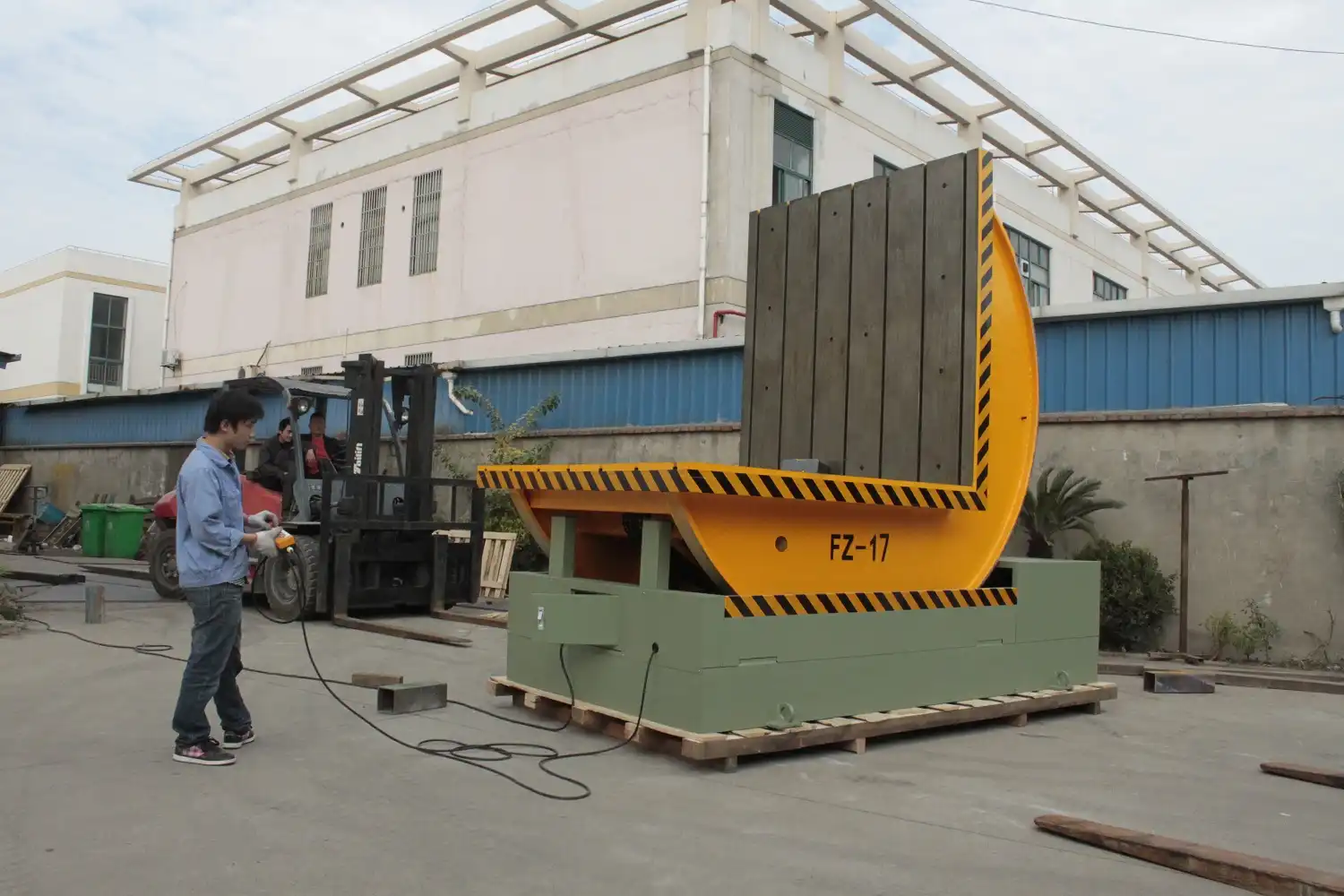
The integration of mold upenders into your operations offers a transformative approach to mold handling, boosting both efficiency and safety. By choosing the right upender, businesses can unlock significant improvements in productivity and create a safer, more streamlined manufacturing environment, ultimately contributing to long-term success in the injection molding industry and beyond.
Conclusion
In conclusion, the mold upender stands as a cornerstone of efficiency and safety in modern manufacturing. Its key functions extend beyond simple rotation, encompassing precision, control, and robust safety mechanisms. Across diverse industrial applications, from automotive to aerospace, mold upenders streamline workflows, reduce downtime, and minimize the risks associated with handling heavy molds and dies. By investing in a quality mold upender, industries can significantly enhance their operational capabilities and ensure a safer, more productive future for their manufacturing processes.








